 |
|
NEWS UPDATE
|
|
Japan boosts African Development Fund with Japanese yen (JPY) 51.67 billion concessional loan
|
|
Additional resources to drive much-needed development in Africa’s least-developed and fragile countries
|
|
|
|
TOKYO, Japan, October 17, 2024/ — The African Development Bank Group (www.AfDB.org) and the Japan International Cooperation Agency (JICA) have signed a landmark 51.67 billion Japanese yen (US$421 million) concessional donor loan (CDL) agreement towards the African Development Fund.
The loan, pledged by the Japanese government at the 16th general replenishment of the resources of the African Development Fund in December 2022, will support much-needed development in Africa’s least developed and fragile countries. The country is a top donor to the African Development Fund, having contributed the largest loans to the 14th, 15th and 16th replenishments of the Fund. Present at the signing ceremony on Tuesday 15 October, Deputy Vice Minister Daiho Fujii of the Finance Ministry expressed optimism that Japan’s concessional donor loan, together with grant contributions, would support African countries to address various challenges relating to climate change, lack of infrastructure, fragility, regional integration, private sector development, and debt management and transparency. “Through fruitful discussions, we reaffirmed that the African Development Fund has been playing a significant role in supporting low-income countries in Africa through its concessional loans and grants. We commit to working together toward a successful ADF-17 replenishment discussion next year,” Fujii said. Japan and other donor countries met in Cotonou last week to review the progress made against operational priorities and policy commitments at the midpoint of the ADF-16 period that ran from 2023 to 2025. Fujii congratulated the African Development Bank Group on the successful mid-term review of the 16th cycle of ADF. African Development Bank Group President Dr Akinwumi Adesina, who is marking his fifth visit to the Asian nation, commended Japan’s government for its unwavering support. He expressed the Bank Group’s appreciation for Japan’s broader partnership, particularly through JICA’s Enhanced Private Sector Assistance for Africa initiative – an innovative multi-component framework for resource mobilisation and development. Adesina said: “We wouldn’t have had a successful ADF-16 replenishment without Japan’s continued support for concessional donor lending. It is important to sign these agreements, but it is the lives we touch that matter. We deliver what we promise. We keep our word”. He highlighted the significant impact of projects completed under the African Development Fund. “This year alone, 500,000 people have been connected to electricity, one million provided with water and sanitation, 2.5 million to improved transport, and 2.7 million to health services.” In her speech, JICA Executive Senior Vice President Katsura Miyazaki described the signing ceremony as symbolic. She said: “African countries are facing multiple crises. Rising energy and food prices, supply chain disruptions, and worsening debt sustainability are having a serious impact on African countries. The African Development Fund is critical to addressing these challenges. Japan’s journey with the African Development Fund The African Development Fund (ADF), the concessional lending window of the Bank Group was established in 1972 and became operational in 1974. Japan joined the Fund in June 1973 and has contributed to all its replenishments, significantly increasing its contributions over time. Over the past 50 years, the ADF has played a pivotal role in providing concessional resources and knowledge services to low-income African countries, consistently demonstrating clear value for money. The ADF delivers transformative ideas and catalytic financing to these countries, including those in fragile situations. As a major source of financing, the ADF’s operations are efficient and deliver a strong development impact, cementing its reputation as a trusted and strategic partner for its stakeholders. Japan’s critical role in supporting the ADF was underscored by its extension of the largest concessional donor loan contributions to both ADF-15 and ADF-16, as well as the largest bridge loan provided to ADF-14. The Mid-Term Review (MTR) of ADF-16, successfully concluded in Cotonou in October 2024, highlighted several key achievements. Distributed by APO Group on behalf of African Development Bank Group (AfDB).
Click here for photos. https://apo-opa.co/ Media contact: About the African Development Bank Group: SOURCE |
Day: October 17, 2024
-
Government of Nigeria, IOM and Switzerland Partner to Strengthen Migration Governance
Government of Nigeria, IOM and Switzerland Partner to Strengthen Migration Governance
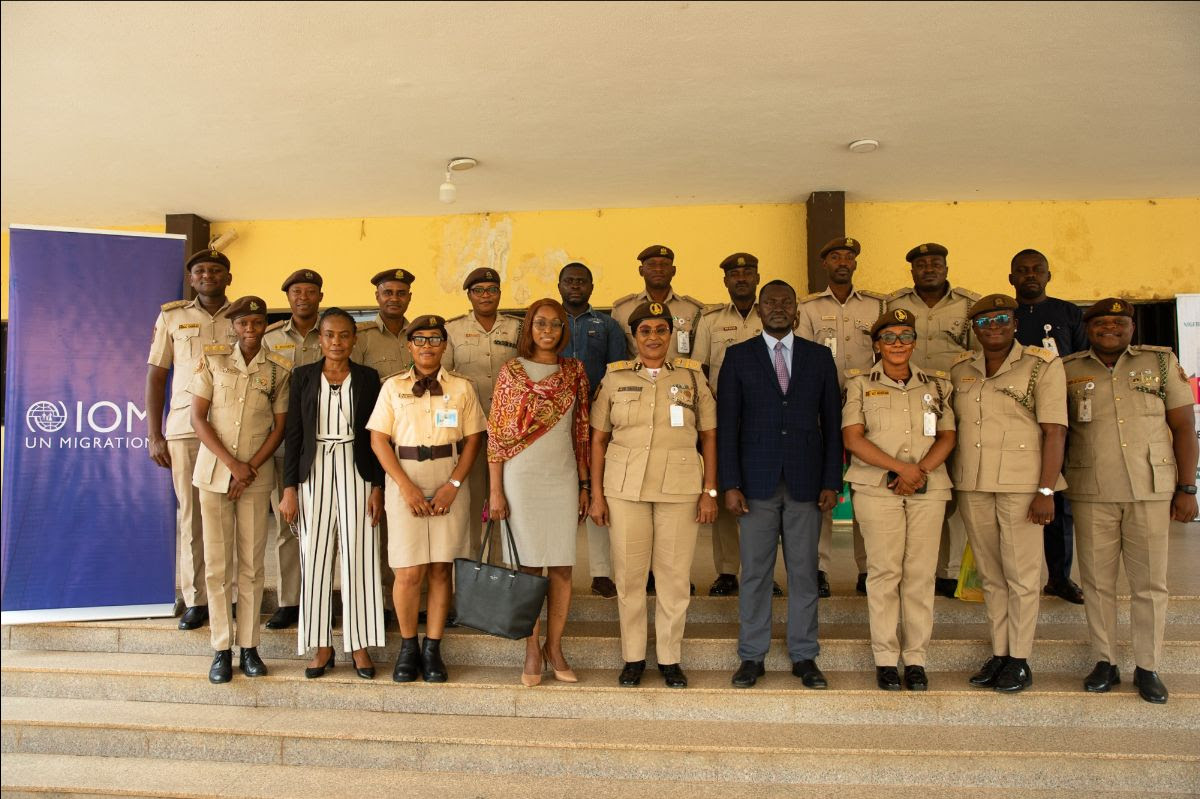
Nigeria Immigration Service and IOM officials pose after the project’s inception meeting held in Abuja in October 2024. Photo: IOM/Oluwafemi Iselowo 2024.
Abuja – The International Organization for Migration (IOM) is launching a new programme in partnership with the Governments of Nigeria and Switzerland to enhance migration governance including border management across the country. Spanning 24 months, the new programme will bolster the partnership between IOM and the Nigeria Immigration Service (NIS), supporting the assessment of three of the country’s key airports (Nnamdi Azikiwe International Airport (NAIA) Abuja, Port Harcourt International Airport (PHIA) Rivers, and Murtala Mohammed International Airport (MMIA) Lagos), the training of border officials in migration data management, and the deployment of key infrastructure to enhance border governance across the country.
“Today’s meeting signals the beginning of a project that promises to deliver a long-lasting impact on our national security infrastructure with the general support of the Swiss Government and the technical expertise of IOM which will focus on key areas including improved MIDAS data integration, forensic document examination and capacity building for our border personnel”, said Assistant Comptroller General ACG C.N Onuora, during the project’s inception meeting held in Abuja on 15 October.
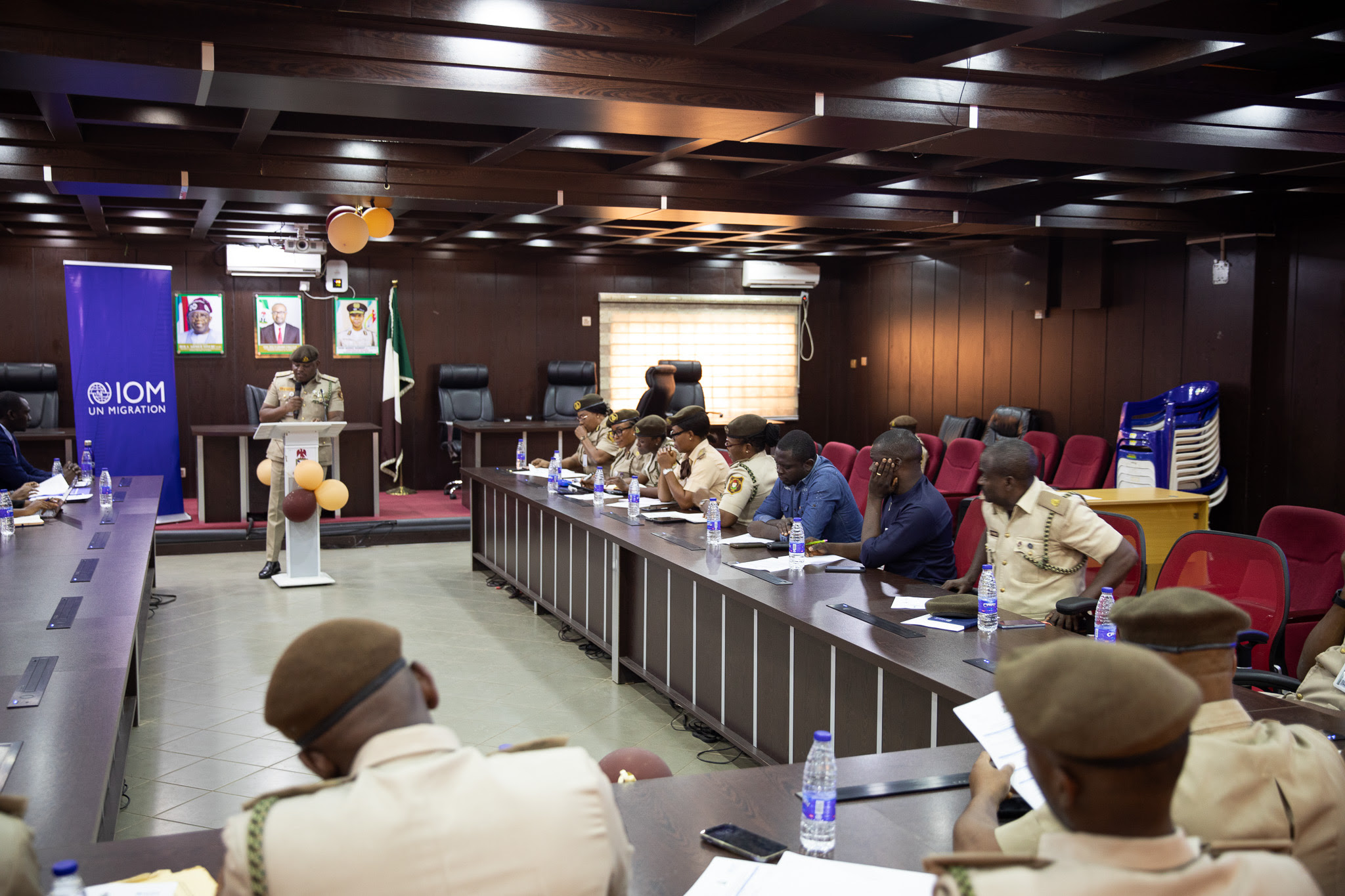
Participants during the project inception workshop. Photo: IOM/Oluwafemi Iselowo 2024“This project builds on the successes of previous initiatives such as the deployment of mobile MIDAS units at Seme border and the training of NIS officers on the use of forensic document examination tools. It is important to emphasize that this project is not just about upgrading our infrastructure and technology but also about equipping our officers with skills and knowledge to effectively combat transitional organized crime, enhance migration management and safeguard our borders”, she added.
“We are excited to be here to announce the launch of the border management project and our involvement in expanding the MIDAS network within Nigeria”, said Mrs. Ojoma Ali who represented the Swiss Secretariat for Migration (SEM) at the project inception meeting.
Since 2015, IOM has been a key technical partner of the Nigeria Immigration Service (NIS) in strengthening migration governance, including through data collection, immigration and border management. This partnership has enabled the Government of Nigeria to adopt the Migration Information and Data Analysis System (MIDAS) as the country’s primary Border Management Information System. The MIDAS is integrated into the national ICT architecture thereby forming a centralized operational database at the international airports in the country.
“Robust partnerships are essential to harness the full potential of human mobility and strengthen migration governance”, said Stephen Matete, Senior Programme Manager for Immigration and Border Governance with IOM. “We are thrilled to continue this partnership with the Nigeria Immigration Service guided by the leadership of the CGI, to enhance border governance”.
In addition to the infrastructural assessments and evaluations, the project will contribute to improving the capacities of NIS and border officials in forensic document examination though targeted trainings.
**
For further information, please contact François-Xavier Ada-Affana, Media and Communications Officer. Email: fadaaffana@iom.int.