Day: August 14, 2025

  • Statement of the Inter-Ministerial Committee on the National Dialogue on the state of readiness for the first National Convention.

    Statement of the Inter-Ministerial Committee on the National Dialogue on the state of readiness for the first National Convention.

    Statement of the Inter-Ministerial Committee on the National Dialogue on the state of readiness for the first National Convention


    South Africa Prepares for Historic First National Convention to Foster Inclusive National Dialogue PRETORIA, South Africa, August 14, 2025 – Deputy President Paul Mashatile convened the Inter-Ministerial Committee (IMC) on the National Dialogue this week to review preparations for the inaugural National Convention, scheduled for August 15-16, 2025, at the University of South Africa (UNISA) Muckleneuk Campus in Pretoria. The convention marks a significant milestone in South Africa’s commitment to fostering a citizen-led, inclusive national dialogue aimed at addressing pressing societal issues and promoting unity. The IMC, chaired by Deputy President Mashatile, comprises various government departments tasked with coordinating the government’s role in supporting the National Convention and the broader National Dialogue initiative. The committee has been diligently mobilizing resources and overseeing expenditures to ensure the event’s success, while adhering strictly to the Public Finance Management Act (PFMA) and applicable Treasury regulations. A comprehensive progress report was presented by Mr. Boichoko Ditlhake, Chairperson of the Convention Organizing Committee, and Mr. Makhukhu Mampuru, Executive Director of the National Economic Development and Labour Council (NEDLAC). The report confirmed that preparations are on track for the two-day event, with logistical, secretariat, and communication arrangements firmly in place. The IMC expressed confidence in the organizing committee’s ability to deliver a well-executed convention, emphasizing that all financial processes comply with public finance regulations and will be fully accounted for through standard mechanisms. The meeting was attended by premiers and mayors from various provinces and municipalities, who pledged their full support for the initiative. However, the IMC noted with concern the withdrawal of certain foundations from the convention’s preparations. Deputy President Mashatile was tasked with engaging these organizations to encourage their participation in this critical national process, underscoring the importance of inclusivity. The IMC commended efforts to minimize costs, with significant contributions from stakeholders providing in-kind support. Notably, UNISA has offered to host the convention at no cost, providing plenary and overflow venues with livestream capabilities, 10 breakaway rooms, a dining area, work spaces, and an operations center. Additional services include catering, ushers, audio-visual support, printing of discussion materials, signage, conference bags, notepads, pens, and WiFi access, all provided free of charge. The committee expressed deep appreciation to UNISA for its generous contribution, which has significantly reduced the financial burden of hosting the event.Funding for the convention is being sourced from existing budgets of NEDLAC and the Presidency, supplemented by in-kind contributions and donations. The IMC emphasized that all procurement and financial management processes will adhere strictly to PFMA guidelines, ensuring transparency and accountability. The National Convention is envisioned as a cornerstone of the National Dialogue, a citizen-led platform designed to address key national challenges through inclusive and participatory discussions. The IMC urged communities across South Africa to actively engage in the process, raising issues of concern to ensure they are comprehensively addressed. The committee reiterated that the dialogue must reflect the voices of all South Africans, fostering a sense of shared responsibility and collective action. Deputy President Mashatile welcomed the progress report and reaffirmed the government’s unwavering commitment to supporting the National Convention as the launchpad for the National Dialogue. “This is a historic opportunity for South Africans to come together, share ideas, and chart a collective path forward,” he said. The government will continue to mobilize resources, including donations and in-kind contributions, to ensure the success of this initiative while maintaining fiscal responsibility. The National Convention is expected to draw a diverse range of participants, including government officials, civil society organizations, community leaders, and citizens from all walks of life. By prioritizing inclusivity and transparency, the event aims to set a precedent for collaborative governance and meaningful public engagement in South Africa’s democratic journey. For further information on the National Dialogue and the National Convention, contact the Presidency or NEDLAC.
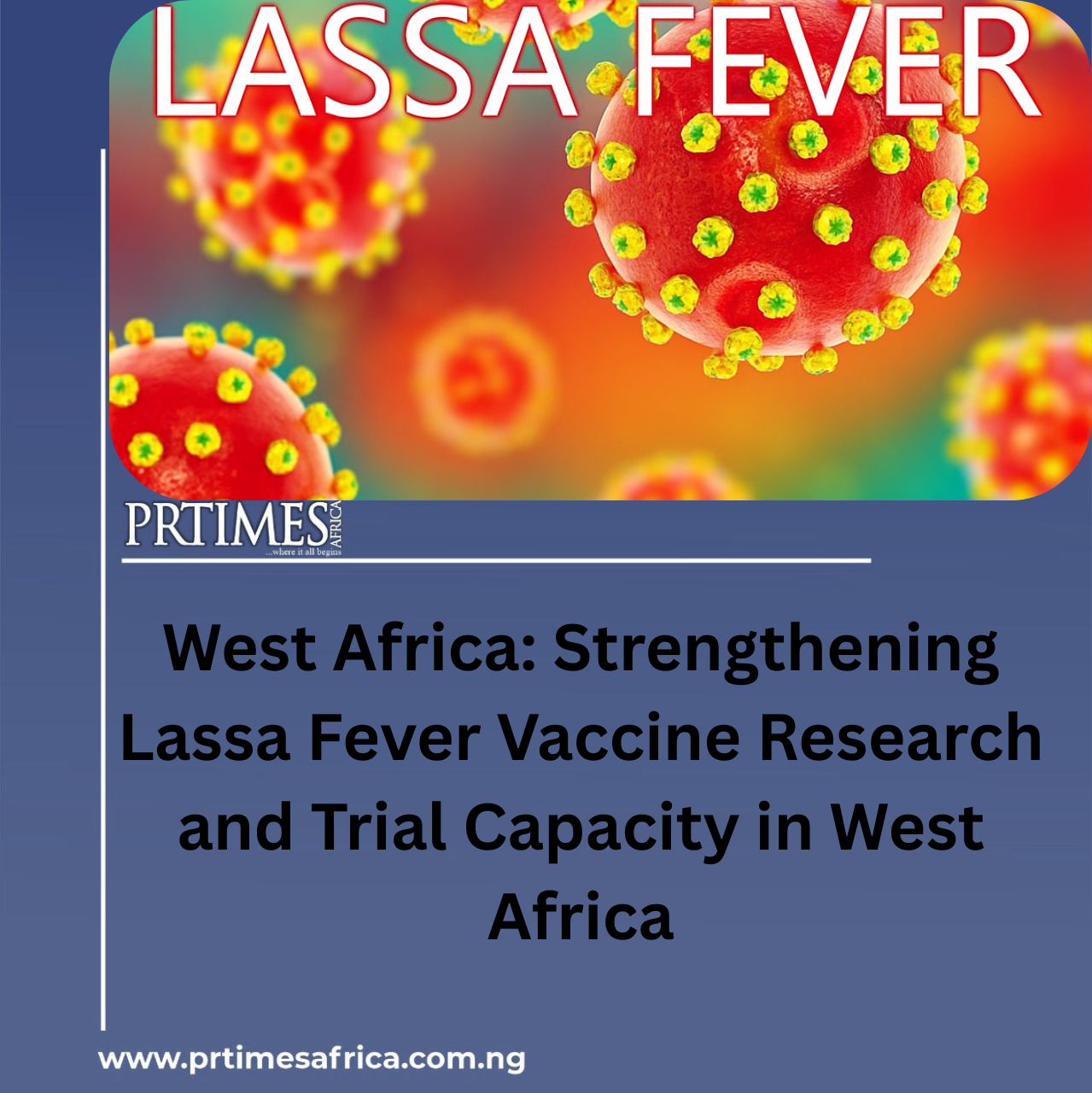
  • West Africa: Strengthening Lassa Fever Vaccine Research and Trial Capacity in West Africa

    West Africa: Strengthening Lassa Fever Vaccine Research and Trial Capacity in West Africa

    West Africa: Strengthening Lassa Fever Vaccine Research and Trial Capacity in West Africa.

    West Africa Advances Lassa Fever Vaccine Research Amid Rising Cases Abuja, Nigeria, August 14, 2025 – As Lassa fever continues to claim lives across West Africa, with Nigeria alone reporting 717 confirmed cases and 138 deaths in the first five months of 2025, regional and global efforts are intensifying to develop a vaccine and bolster research capacity. The viral hemorrhagic fever, endemic to countries like Nigeria, Ghana, Liberia, and Sierra Leone, underscores the urgent need for sustained investment in vaccine development and local manufacturing to curb its devastating impact. Breakthroughs in Vaccine Development A significant milestone was announced in June 2025 by Nigerian virologist Dr. Simeon Agwale of Innovative Biotech. His team developed a Lassa fever vaccine based on a Nigerian strain, achieving 100% protection in preclinical trials on mice and non-human primates. Licensed from Medigen USA, the vaccine is poised for Phase 1 clinical trials, pending upgrades to manufacturing facilities to meet Good Manufacturing Practice (GMP) standards. Globally, the Coalition for Epidemic Preparedness Innovations (CEPI) is supporting multiple vaccine candidates. The IAVI-developed rVSV-based vaccine, modeled on the Ebola vaccine platform, is now in Phase 2a trials across Nigeria, Ghana, and Liberia, enrolling over 600 participants to evaluate safety and immune response. Results are expected later in 2025. Additionally, Oxford University’s ChAdOx1 vaccine, leveraging the same platform as the Oxford/AstraZeneca COVID-19 vaccine, entered Phase 1 trials in London in early 2025, with plans to expand to West Africa. Building Research and Trial Capacity West Africa is strengthening its capacity to lead vaccine trials through regional collaboration and infrastructure development. The CEPI-funded Enable study, the largest Lassa fever research effort to date, is generating critical epidemiological and sero prevalence data to guide trial design and site selection. The study also enhances local infrastructure, improving cold-chain systems, laboratory diagnostics, ethical review processes, and data management. The West Africa Health Organization (WAHO) leads the Lassa Vaccine Coalition, uniting governments, researchers, and regulators across Nigeria, Sierra Leone, Liberia, and beyond to align vaccine development with regional needs. In Nigeria, the Lassa Vaccine Task Force, launched in 2023, coordinates efforts between the Nigeria Centre for Disease Control (NCDC) and the National Agency for Food and Drug Administration and Control (NAFDAC).Training programs are fostering a new generation of researchers. The Vanderbilt-Nigeria V-BRCH program and Nigeria’s Field Epidemiology Training Programme (NFETP) are equipping scientists with skills in ethics, Good Clinical Practice, and outbreak response. The Kano Independent Research Centre Trust (KIRCT) serves as a model trial site with advanced laboratories and community engagement systems.Manufacturing Challenges PersistDespite scientific progress, West Africa faces significant hurdles in vaccine manufacturing. While Senegal’s Institut Pasteur de Dakar leads regional production, most countries, including Nigeria, rely on imported vaccines. Nigeria’s National Veterinary Research Institute produces livestock vaccines but lacks GMP-compliant facilities for human vaccines. High costs, scarce raw materials, and inadequate infrastructure hinder progress toward WHO prequalification.Nigeria’s Presidential Initiative for Unlocking the Healthcare Value Chain (PVAC) aims to address these gaps by mobilizing investment and enhancing local manufacturing. However, a shortage of skilled researchers and outdated training curricula remain barriers. Traditional fellowships often fail to build sustainable research ecosystems, and limited mentorship and career pathways risk losing talent.A Path to Self-RelianceWith promising vaccine candidates and growing research capacity, West Africa is poised to shift from vaccine dependency to leadership in combating Lassa fever. Sustained investment in training, trial infrastructure, and manufacturing, alongside robust community engagement to address vaccine hesitancy, will be critical to success. As global and regional efforts converge, countries like Nigeria are laying the foundation for a future where they can independently tackle Lassa fever and other endemic threats.

  • Double Standards in Justice: Communicating Fairness to Win Investor Confidence in Africa  By: Musa Sunusi Ahmad

    Double Standards in Justice: Communicating Fairness to Win Investor Confidence in Africa By: Musa Sunusi Ahmad

    Double Standards in Justice: Communicating Fairness to Win Investor Confidence in Africa

    By: Musa Sanusi Ahmad

    “Justice must not only be done, but must also be seen to be done.” These words echo louder in Africa
    today, as the continent finds itself grappling with the dual challenge of building investor confidence
    while confronting the persistent perception, and reality, of double standards in justice.

    In the last two decades, Africa has made significant progress in becoming an attractive destination for
    global investment. From fintech in Nigeria to renewable energy in Kenya and minerals in the Democratic
    Republic of Congo, the continent is bursting with opportunity. Yet, a nagging issue continues to cloud
    investor sentiment: the perception that justice is selective, political interference is rampant, and legal
    protections for businesses vary depending on who holds the power.

    The Double Standard Dilemma

    Across many African jurisdictions, the justice system is seen as skewed, often favoring the politically
    connected while foreign or minority investors find themselves vulnerable to abrupt policy reversals,
    opaque legal proceedings, and bureaucratic stonewalling.

    Consider the examples:

     In some countries, multinational corporations have faced asset seizures or retrospective tax bills
    without due process.
     Local entrepreneurs with less political clout often face insurmountable legal delays when
    contesting unjust regulatory actions.
     In corruption probes, foreign investors are sometimes made scapegoats, while local facilitators
    escape scrutiny.

    This inconsistency breeds caution. For institutional investors and global corporations, rule of law and fair
    arbitration are as critical as market potential. Without predictable legal recourse, financial risk increases,
    and so do insurance premiums and exit plans.

    The Role of Communication in Restoring Trust

    This is where strategic communication comes in. It’s no longer enough for governments and business
    regulators to claim reform. They must communicate it effectively, credibly, and consistently.

    Here’s how PR and communications professionals can bridge the trust gap:

    1. Transparency Campaigns Rooted in Evidence

    Regulatory bodies and justice departments should launch proactive campaigns showcasing data-backed
    improvements: number of investor disputes resolved fairly, timeframes of legal recourse, and
    independent rulings against government interests. Communication must be supported by real reform,
    not just polished messaging.

    2. Third-Party Validation

    Credible third parties, international law firms, arbitration bodies, or NGOs—can validate justice system
    improvements. Quotes, reports, and endorsements from these organizations can be leveraged in media
    relations and investor briefings to shift the narrative from skepticism to cautious optimism.

    3. Narrative Framing Around Fairness, Not Just Growth

    Africa’s communications about investment have often leaned too heavily on GDP stats and untapped
    markets. Today’s investors want assurance of ethical conduct, ESG compliance, and fair business
    treatment. Reframing the narrative to emphasize judicial reform, investor protection, and anti-
    corruption milestones is critical.

    4. Real-Time Crisis Communication

    When disputes arise, silence is the enemy. Governments and investment promotion agencies must
    respond promptly, providing timelines for resolution and clear legal pathways. A proactive, respectful
    stance signals institutional maturity, even amidst tension.

    The Strategic Advantage of Fairness

    For Africa to truly rise as a global investment powerhouse, it must not only be rich in resources, it must
    be rich in rules that are consistently applied. In a world where capital is increasingly values-driven,
    perceptions of fairness can move markets.

    Justice and investment are deeply intertwined. And in the realm of international business, perception is
    reality. PR and communications professionals are uniquely positioned to help African institutions
    communicate fairness, not as a spin strategy, but as a pillar of sustainable development and investor
    trust.

    Because in the long game of economic reputation, integrity always outperforms impulse.

Hot daily news right into your inbox.

Headline

Never Miss A Story

Get our Weekly recap with the latest news, articles and resources.
Cookie policy
We use our own and third party cookies to allow us to understand how the site is used and to support our marketing campaigns.