
Day: September 8, 2025

  • Untitled post 3889

    DIVIDED BY A RIVER: THE TWO FACES OF TRADE IN THE CONGO BASIN

    CULTURAL TIES STRAINED BY DIFFERING TRADE REGIMES ACROSS BORDERS

    By Musa Sunusi Ahmad

    At the heart of Central Africa, the mighty Congo River snakes its way through a region rich in history, culture, and natural bounty. But today, this once-uniting waterway increasingly symbolizes division, not just geographical, but economic, political, and cultural. The Congo Basin, a region that has for centuries been home to vibrant cross-border trade and tightly knit communities, now finds itself grappling with two conflicting realities: shared heritage on one hand, and divergent trade regimes on the other.

    From Kinshasa to Brazzaville, from Goma to Gisenyi, cultural and familial ties often stretch across borders, yet so do bureaucratic red tape, tariffs, and conflicting regulatory systems. These friction points are turning a natural ecosystem of commerce and communication into a complex web of strained relations, fractured economies, and public frustration.

    Cross-Border Trade in a Cross-Purposed World

    The Congo River doesn’t just separate nations, it separates economic philosophies.

    On the western bank lies the Democratic Republic of Congo (DRC), a country whose trade regime has long been characterized by centralized control, high customs tariffs, and bureaucratic procedures that frequently slow commerce. On the eastern bank, across from Kinshasa, sits the Republic of Congo, which has moved toward a more open, investor-friendly system, particularly with regard to port operations and foreign trade.

    This divergence has created an unbalanced playing field. Traders in DRC often find themselves bogged down by inefficiencies, while their counterparts across the river benefit from lighter regulation and faster processing. In Goma and Gisenyi, cities that mirror each other across the DRC-Rwanda border, similar dynamics play out. Rwanda’s robust digital customs systems and streamlined border protocols contrast sharply with the DRC’s more paper-based, manual processes.

    For small-scale traders, many of whom are women, these differences aren’t just technical issues; they’re personal. “My sister is in Gisenyi, and we used to trade together every week,” says a market vendor in Goma. “Now, it’s too complicated. The paperwork, the taxes… it’s just not worth it.”

    The Cost of Miscommunication

    The challenges facing the Congo Basin are not merely logistical; they’re communicative. National governments, trade authorities, and regional blocs like ECCAS and COMESA often fail to harmonize messages or coordinate strategies. Border communities receive conflicting information about tariffs, trade bans, and health protocols, especially during crises like the COVID-19 pandemic or the Ebola outbreaks that have gripped the region.

    “This is where public relations and strategic communication become essential tools,” notes, a regional policy advisor based in Nairobi. “You can’t talk about economic integration without also addressing narrative integration. People need a consistent message about how trade works, what their rights are, and where the opportunities lie.”

    For communications professionals, the Congo Basin presents both a challenge and an opportunity. On one hand, the fragmentation of policy and practice makes unified messaging difficult. On the other, the region is a textbook case for the power of strategic communication to foster unity, across borders, sectors, and cultures.

    Cultural Ties, Frayed by Trade

    Historically, trade routes across the Congo Basin weren’t defined by customs booths or trade tariffs, but by kinship networks, shared languages, and traditional marketplaces. Communities on both sides of the river or the border often belong to the same ethnic groups, celebrate the same festivals, and speak the same languages.

    Today, these cultural ties are being strained by trade policies that fail to reflect the lived realities of local people. A grandmother in Bukavu finds it harder to send goods to her relatives in Cyangugu. Fishermen on Lake Tanganyika must navigate not just choppy waters, but competing regulations that vary from one shoreline to the next.

    The irony is clear: while governments preach Pan-African unity in political speeches, on the ground, hyper-local communities are being pulled apart by national trade policies. And the very river that once facilitated cultural convergence now acts as a policy divide.

    From Borders to Bridges

    Fixing the rift in the Congo Basin will require more than improved customs software or infrastructure investments, though those are certainly needed. What’s equally crucial is building a shared communications ecosystem: one where governments, NGOs, private sectors, and media work together to inform, educate, and engage border communities.

    Public relations professionals can play a key role in this transformation. By facilitating dialogue between stakeholders, crafting culturally sensitive campaigns, and promoting transparency around trade reforms, communicators can help restore trust and reconnect communities long divided by policy.

    As the African Continental Free Trade Area (AfCFTA) gradually takes shape, the Congo Basin will be a litmus test. Can nations with deep cultural ties but divergent economic strategies find common ground? Can communication help bridge what politics and paperwork have split?

    The answer, perhaps, lies not in rewriting the geography of the region, but in rewriting the story we tell about it, one that recognizes the river not as a border, but as a bridge.
  • Bridging Continents: Nigeria – Colombia Relations in Trade and Women’s Development

    Bridging Continents: Nigeria – Colombia Relations in Trade and Women’s Development

    Bridging Continents: Nigeria – Colombia Relations in Trade and Women’s Development

    By Alwalled K.Y:

    Across the Atlantic Ocean, Nigeria and Colombia, two vibrant countries each with rich histories and diverse cultures, are forging a relationship that goes beyond traditional diplomacy. Anchored in shared priorities such as trade diversification and women’s empowerment, this bilateral engagement is an exciting example of how South, South cooperation can reshape global partnerships.

    In August 2025, this relationship took a remarkable leap forward with the historic visit of Colombia’s Vice President Francia  Márquez to Nigeria. As an Afro-descended woman and a trailblazer in her own right, Márquez’s visit symbolized not only diplomatic goodwill but also a renewed commitment to collaboration that touches on economic growth, social inclusion, and gender equity.

    Setting the Tone for Collaboration

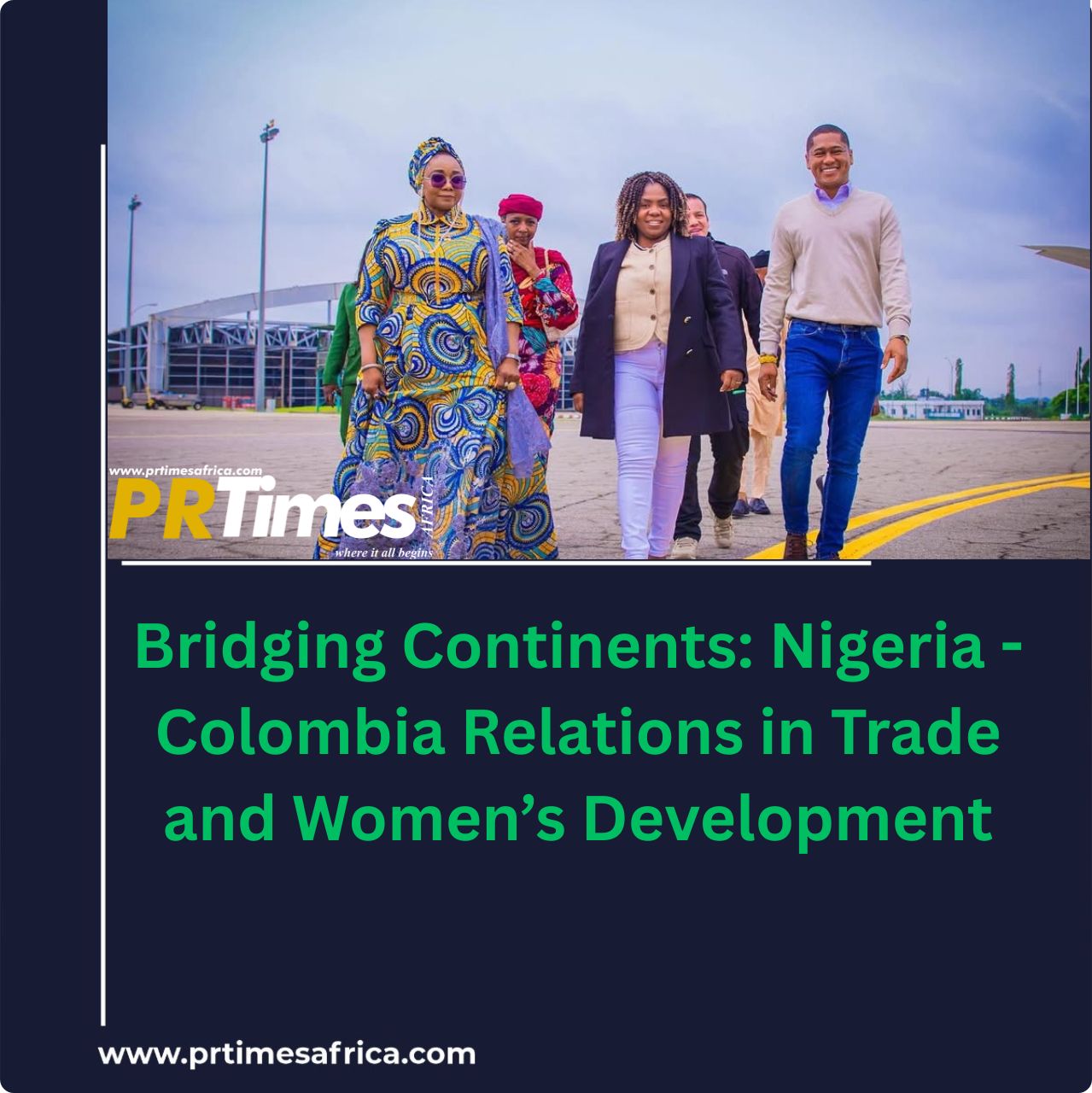
    Vice President Francia Márquez arrived in Abuja on August 30, 2025, in a delegation that included top Colombian officials, business leaders, and her husband. Her arrival was marked by a ceremonious reception at Nnamdi Azikiwe International Airport. Nigeria’s Minister of Women Affairs, Imaan Sulaiman‑Ibrahim, led the welcoming party, joined by senior ministers from the Ministries of Innovation, Science & Technology, and the Federal Capital Territory, symbolizing the government’s holistic approach to this visit.

    The warm reception was more than protocol. It was a message, a public affirmation that Nigeria views Colombia not only as a partner in trade but as a key ally in the pursuit of inclusive development. The presence of the Minister of Women Affairs, in particular, underscored the emphasis placed on gender inclusion and women’s empowerment as foundational pillars of this bilateral relationship.

    Meetings with Nigeria’s Top Leadership

    President Bola Tinubu and Vice President Kashim Shettima

    During her visit, Márquez held substantive meetings with President Bola Tinubu and Vice President Kashim Shettima at the State House in Abuja. These conversations went beyond the usual diplomatic courtesies, focusing on how to accelerate collaboration in trade, technology, aviation, and social development.

    President Tinubu expressed a clear vision for Nigeria-Colombia relations. Drawing on Nigeria’s recent agreements with Brazil, he emphasized the intention to replicate successful bilateral models with Colombia, especially in sectors like aviation and consular relations. He welcomed Colombian investments into Nigeria’s strategic sectors, oil and gas, agriculture, and emerging technology startups, positioning Nigeria’s youthful population and expanding middle class as prime drivers for future market growth.

    Vice President Shettima framed the visit as a “historic reconnection,” highlighting the shared heritage and cultural links between Nigeria and Colombia rooted in the African diaspora. He noted that this relationship is a chance to heal historical divisions and build a partnership that uplifts both nations through economic and social cooperation.

    Formalizing the Partnership: Signing of Key Memorandum of Understanding

    A highlight of the visit was the signing of a Memorandum of Understanding on Political Consultations between the Nigerian and Colombian governments. Signed by Nigeria’s Foreign Affairs Minister Yusuf Tuggar and Colombia’s Deputy Minister for Multilateral Affairs Mauricio Jaramillo Jassir, the MoU lays the groundwork for regular diplomatic dialogue, collaboration on regional and international issues, and smoother visa facilitation for diplomats.

    This MoU is a strategic milestone, creating a formal mechanism to ensure consistent communication and joint problem-solving. It is expected to accelerate bilateral projects and provide a stable platform for expanding economic and cultural cooperation.

    Trade Relations: Unlocking New Economic Opportunities

    Historically, Nigeria and Colombia’s trade has been limited and underexplored, but both nations recognize significant untapped potential. Nigeria’s push to diversify its economy beyond oil aligns with Colombia’s strengths in agriculture, pharmaceuticals, textiles, and processed foods.

    At the Nigeria – Colombia Business Forum, Márquez and Nigerian business leaders explored avenues for mutual growth. Colombian products like coffee, cocoa, and tropical fruits find potential new markets in Nigeria, while Nigerian exports such as cassava, shea butter, and manufactured goods present fresh opportunities for Colombia.

    The Vice President proposed establishing direct air cargo routes to facilitate faster, more reliable movement of goods, a move that could reduce shipping costs and increase trade volumes. Both parties emphasized leveraging their memberships in regional trade blocs, Nigeria in ECOWAS and Colombia in the Pacific Alliance, to broaden the reach of their goods and services.

    Private sector leaders from both countries were encouraged to explore joint ventures in manufacturing, agro-processing, and technology innovation, supported by the governments’ diplomatic goodwill and emerging trade frameworks.

    Women’s Development: A Cornerstone of Bilateral Cooperation

    Perhaps the most inspiring and forward-thinking aspect of this relationship is the central role of women’s development.

    Vice President Márquez, an acclaimed environmental and social activist before assuming office, embodies the spirit of female empowerment. Her presence as Colombia’s first Afro-descended woman Vice President was a poignant reminder of the shared struggles and aspirations of women on both continents.

    Throughout her visit, Márquez met with Nigeria’s Minister of Women Affairs, Imaan Sulaiman‑Ibrahim, and engaged with women leaders and grassroots activists. The focus was clear: how can Nigeria and Colombia work together to promote gender equality, political participation, entrepreneurship, and digital inclusion?

    Discussions touched on shared experiences of conflict-affected women, with Colombia’s successful peacebuilding programs offering valuable lessons for Nigeria’s northeast region. Collaborative programs such as “Her Voice Across Borders”, launched in 2024, were highlighted as effective platforms for women’s entrepreneurship and leadership development.

    The Minister of Women Affairs reinforced the government’s commitment to this agenda, emphasizing that empowering women is not only a moral imperative but a catalyst for sustainable economic growth and societal stability.

    Strategic Communication: Crafting the Narrative of Partnership

    Public Relations and communications teams played a vital role in amplifying the significance of Márquez’s visit. From managing media engagement to coordinating cultural events, the diplomatic missions and government agencies ensured that this historic moment was shared widely across Nigerian and Colombian media.

    Campaigns like “Nigeria-Colombia: United by Progress” featured human-interest stories of women entrepreneurs, trade innovators, and youth leaders benefiting from this growing partnership. Social media was strategically used to highlight behind-the-scenes moments, quotes from dignitaries, and the emotional resonance of Márquez’s remarks about reconnecting with ancestral roots.

    This strategic communication not only enhances public awareness but also invites private sector participation, NGO engagement, and broader citizen interest in the evolving relationship.

    A Roadmap for Future Collaboration

    The visit of Vice President Francia Márquez is more than a diplomatic milestone, it is a launchpad for sustained cooperation.

    The bilateral partnership is poised to deepen across several fronts:

    • Trade Expansion: Implementation of the MoU and direct air connectivity promises to boost trade volumes significantly.
    • Women’s Empowerment: Joint initiatives in entrepreneurship, education, and political leadership will empower the next generation of women leaders.
    • Cultural Exchange: Increased people-to-people connections, including student and professional exchange programs.
    • Technology and Innovation: Shared expertise in agritech, fintech, and sustainable energy development.

    As both countries embrace this new chapter, they demonstrate the power of collaboration rooted in respect, shared history, and a commitment to inclusive progress.

    Nigeria and Colombia are setting a compelling example for South, South cooperation, one where history, culture, economy, and gender equity intertwine to create a dynamic partnership.

    For communications professionals, this evolving story offers rich material to craft narratives that resonate emotionally and strategically. It underscores the role of public diplomacy in building bridges that not only advance national interests but uplift communities, especially women, who stand at the forefront of change.

  • The Edge of Confidence: Communicating Africa’s Economic Reality Without Fueling Panic

    The Edge of Confidence: Communicating Africa’s Economic Reality Without Fueling Panic

    The Edge of Confidence: Communicating Africa’s Economic Reality Without Fueling Panic

    By Musa Sunusi Ahmad:

    Africa is at a critical economic crossroads. From Accra to Nairobi, Dakar to Lusaka, public sector debt is rising to unsustainable levels, joblessness, especially among youth, is soaring, and productivity across key sectors is slipping. Economic turbulence is no longer a far-off concern but a day-to-day reality for millions of African citizens.

    But as governments scramble to stabilize their finances, a quieter crisis is brewing in parallel: a crisis of trust.

    Amid rising inflation, currency depreciation, IMF interventions, and subsidy removals, people are asking: “Can we trust our leaders to fix this?” The answer doesn’t just lie in policy—but in communication. What African governments say, how they say it, and when they say it may determine whether countries weather the storm, or plunge deeper into crisis.

    For government communication advisors, the mandate is clear: manage perception, build public trust, and calm economic anxiety. This article explores how to do just that, while staying rooted in transparency, empathy, and strategy.

    The Economic Fault Lines

    Before diving into communication strategies, let’s understand the core economic pain points shaping African narratives today.

    1. Rising Public Debt

    By 2025, over 20 African countries are either in or approaching debt distress, according to the IMF.

    Many borrowed heavily in the past decade to fund infrastructure and post-COVID recovery.

    As interest rates rise and revenues fall short, debt servicing is consuming up to 60% of some national budgets.

    1. Mass Unemployment

    Africa’s youth unemployment rate is over 12%, with underemployment and informality affecting many more.

    As governments cut spending and companies downsize, job creation has stalled.

    The mismatch between education systems and labor market needs deepens the crisis.

    1. Declining Productivity

    In agriculture, industry, and services, productivity growth is slowing due to:

    • Poor infrastructure
    • Inadequate skills
    • Low technology adoption
    • Climate shocks (e.g. floods and droughts impacting agriculture)

    This trifecta, debt, joblessness, and declining productivity, fuels not just economic hardship but political volatility and social unrest.

    Why Communication Now Determines Recovery

    In volatile economies, confidence is capital. Citizens decide whether to invest, save, protest, or migrate based on what they believe, not just what is true.

    The Danger of Communication Gaps

    When governments delay, distort, or downplay economic realities:

    • Investors lose faith.
    • Citizens withdraw savings or stop paying taxes.
    • International partners hesitate to support.
    • Disinformation and populist narratives fill the void.

    The Opportunity in Strategic Messaging

    But when communications are clear, honest, and forward-looking:

    • People feel informed and empowered.
    • Investors appreciate predictability.
    • Media allies amplify accurate narratives.
    • Governments buy time to implement reforms.

    A Playbook for Government Communication Advisors

    Here’s a 360° strategy guide for communications professionals navigating economic crises in Africa.

    1. Own the Narrative Before It Owns You

    In a digital world, silence is not neutrality, it’s surrender.

    • Be first with the facts, even if incomplete.
    • Frame the context: Explain why tough decisions are being made.
    • Pre-empt opposition narratives with proactive, values-based messaging.

    Case Example: Ghana (2022)

    During its IMF negotiations, the Ghanaian Ministry of Finance launched a public FAQ portal, social media explainers, and regular updates. Though not perfect, it helped temper panic during currency devaluation.

    1. Communicate with Empathy, Not Just Optimism

    Don’t “talk numbers” to people who are talking about survival. Data must be paired with empathy.

    Acknowledge real pain (“We know many are struggling to afford transport…”)

    Use relatable analogies (“Think of the national budget like a household budget, when income drops, we must cut costs.”)

    Avoid robotic statements like “We are on course” or “Things are under control.”

    1. Strengthen the Bridge Between Policy and People

    Too often, policy announcements are technocratic and aloof. Instead:

    • Translate complex reforms into plain language
    • Use visuals (infographics, short videos, animations)
    • Customize content for platforms people actually use (e.g., radio, WhatsApp, local newspapers)

    Tip: Invest in a national economic literacy campaign, explain debt, inflation, and subsidy reforms like a teacher, not a bureaucrat.

    1. Create Feedback Loops
    • Economic communication must be two-way.
    • Hold town halls and citizen dialogues.
    • Use polling and sentiment tracking to understand what people fear or misunderstand.
    • Empower spokespeople at local levels to answer questions and humanize policy.
    1. Align Internal and External Messaging
    • Ensure that what the government says internally (to staff, departments) matches what it says to the public.
    • Leaks happen, so train all public-facing staff on key messages.
    • Rehearse responses to worst-case questions (“Are we going bankrupt?” “Will we lose our jobs?”)
    1. Show Progress, Not Just Promises

    People tire quickly of words. Back up rhetoric with visible proof points:

    • Highlight infrastructure projects that are still ongoing.
    • Show cost-cutting actions taken by government (e.g. trimming travel budgets, eliminating ghost workers).
    • Spotlight young entrepreneurs or job creators as symbols of hope.

    Avoiding these requires discipline, agility, and constant engagement.

    In a Crisis, Words Are Currency

    As Africa’s economic future hangs in the balance, communicators are not bystanders, they are co-architects of recovery. What they say (and what they fail to say) can either maintain the public’s fragile trust or tip countries toward instability.

    It’s time for a new era of public communication that is strategic, human-centered, and courageously transparent. Because in an age of economic volatility, confidence is just as important as capital.

Hot daily news right into your inbox.

Headline

Never Miss A Story

Get our Weekly recap with the latest news, articles and resources.
Cookie policy
We use our own and third party cookies to allow us to understand how the site is used and to support our marketing campaigns.