Day: September 12, 2025

  • Under the Radar: Internal Communications and Crisis Management in Nigerian Government

    Under the Radar: Internal Communications and Crisis Management in Nigerian Government

    Under the Radar: Internal Communications and Crisis Management in Nigerian Government

    By Alwalled Kabir Yusuf:

    When crisis strikes, governments are expected to act swiftly, decisively, and coherently. But behind every press briefing or public statement lies a deeper, often overlooked layer: internal communication, the lifeblood of any effective government response. In Nigeria, a nation grappling with multifaceted crises ranging from security challenges to economic volatility and natural disasters, the cracks in internal communication within government institutions often become fault lines in public trust.

    The Internal Communication Blind Spot

    In most Nigerian federal and state ministries, internal communication is reactive rather than proactive. Siloed departments, hierarchical bottlenecks, and outdated information-sharing practices impede quick decision-making. While platforms like WhatsApp groups and emails are widely used, they lack formal structure and strategic integration. There’s often no centralized communication protocol in times of emergency, resulting in conflicting narratives, delayed responses, and a loss of public confidence.

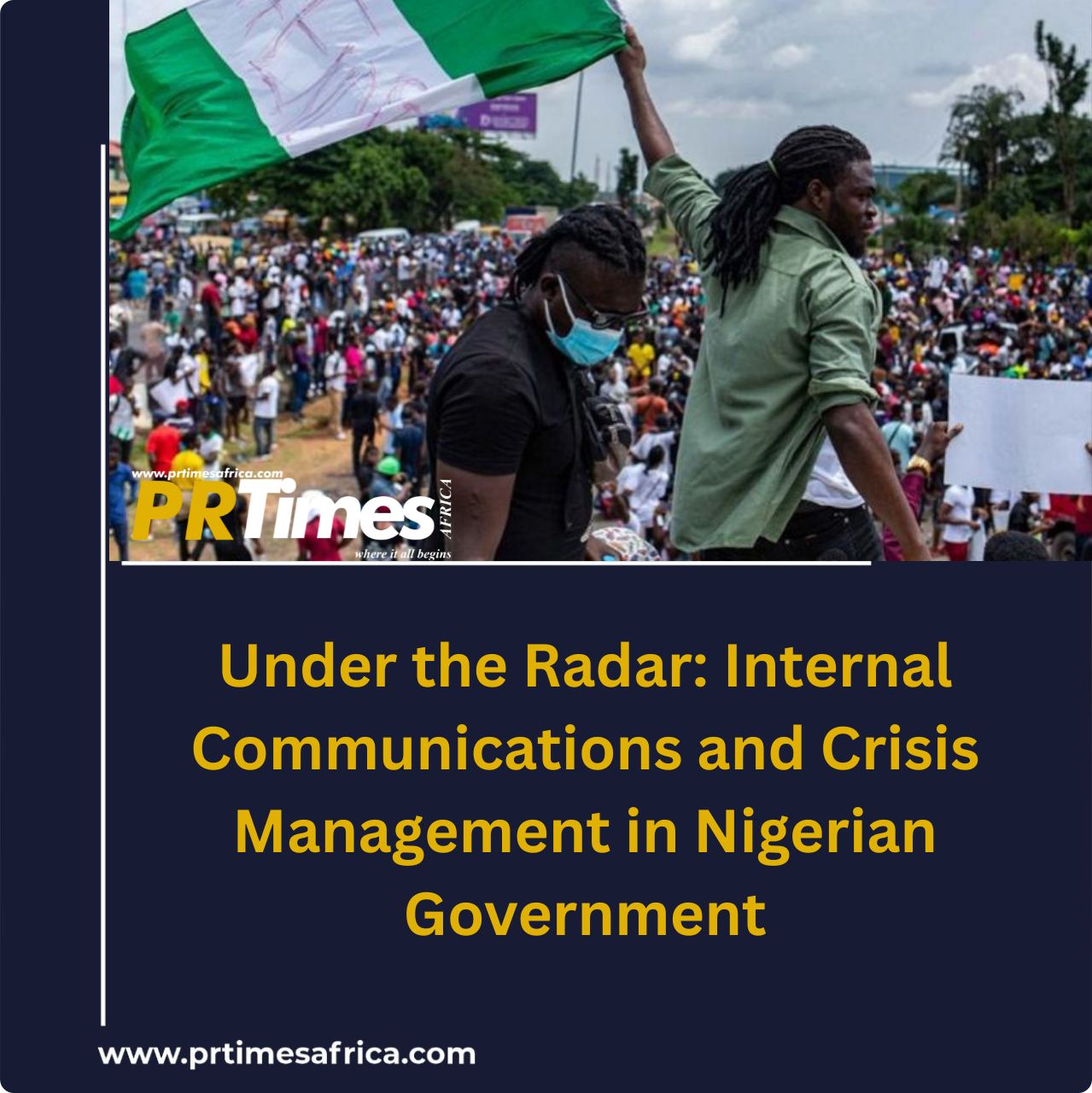
    In 2020, during the #EndSARS protests, a youth-led movement against police brutality, the Nigerian government’s internal communication was visibly strained. Misinformation circulated within agencies, different arms of government issued contradictory statements, and crisis response coordination was fragmented. The result was a communication vacuum that was quickly filled by social media influencers and citizen journalists, some accurate, many not.

    Crisis Communication Without Internal Alignment is a Recipe for Disaster

    Effective crisis communication begins before a crisis even occurs. In countries with robust internal comms systems, governments conduct scenario planning, simulations, and training exercises involving all key stakeholders. Unfortunately, Nigeria still treats crisis comms as an afterthought. Spokespersons are often not embedded in the policymaking loop, and communication teams rarely have access to real-time data or decision-makers during emergencies.

    Take the 2022 Kuje prison break as another example. Different agencies, Nigerian Correctional Service, Ministry of Interior, the military, and the police, released fragmented updates with little consistency. There was no unified voice, and the internal coordination between security agencies was publicly questioned. The lack of a coherent narrative allowed conspiracy theories to thrive and eroded citizen trust in security assurances.

    The Role of PR Professionals: From Messengers to Strategists

    For Nigeria to build a resilient internal communication framework, public relations professionals must move beyond the role of “messengers” to that of strategic advisors embedded within the highest levels of governance. This means:

    Institutionalizing Internal Comms Protocols: There must be clearly defined internal communication protocols across ministries and parastatals, with designated roles, escalation paths, and response templates for crisis scenarios.

    Training and Simulations: Crisis simulations involving communication officers and top officials can help prepare institutions to respond cohesively. Training should include risk communication, digital media management, and inter-agency collaboration.

    Technology-Enabled Communication Platforms: Secure, real-time platforms like internal dashboards, encrypted messaging systems, and shared crisis command centers should replace informal and inconsistent communication methods.

    Embedding Communications in Policy Development: Communications experts should be part of policy formulation so they understand the rationale behind decisions, allowing them to craft better narratives and anticipate public reaction.

    Transparency and Trust

    The future of government communication in Nigeria depends not just on what is said to the public, but how well government organs communicate within themselves. The difference between a managed crisis and a public relations disaster often lies in whether ministries, departments, and agencies are aligned in understanding, tone, and action.

    In a digitally connected age where citizens are not just consumers but producers of news, internal miscommunication becomes a public issue within minutes. Nigeria’s PR community has a unique opportunity to lead the charge in reforming government internal communications, promoting transparency, improving coordination, and, ultimately, restoring trust in public institutions.

  • Why You Need a PR Firm Not Just a Legal Team When You’re in Court

    Why You Need a PR Firm Not Just a Legal Team When You’re in Court

    Why You Need a PR Firm Not Just a Legal Team When You’re in Court

    In the court of public opinion, silence isn’t always golden. Strategic communications can make or break your reputation during litigation.

    By Musa Sunusi Ahmad:

    When companies or individuals face litigation, the first call they make is to a lawyer, and rightly so. Legal expertise is critical for navigating the complex and high-stakes arena of the justice system. But what too many overlook is the equally perilous and often less predictable arena: the court of public opinion.

    In high-profile cases or even localized legal battles, media coverage, social media commentary, and public perception can significantly impact reputations, sometimes irreversibly. This is where public relations professionals come in. A legal team may win your case in court, but a good PR firm ensures you don’t lose everything outside it.

    Litigation Is Not Just Legal, It’s Reputational

    Whether you’re a CEO defending against allegations, a startup in an IP battle, or a nonprofit caught in a contractual dispute, the reality is this: the public rarely waits for the verdict. News spreads quickly, headlines are often misleading, and silence is interpreted as guilt.

    A PR firm ensures your side of the story is heard, strategically, ethically, and without compromising your legal position. While lawyers are trained to say “no comment,” PR professionals know how to say the right comment, at the right time, to the right audience.

    Lawyers Manage Risk. PR Firms Manage Perception.

    Litigators are risk-averse by nature; their goal is to protect legal liability. PR practitioners, by contrast, are risk-conscious but outward-facing, they think in narratives, relationships, and long-term brand equity.

    Consider the following:

    Media Inquiries: Legal teams often decline to engage. A PR team, however, works with journalists to shape accurate, balanced coverage, or at the very least, ensure misinformation doesn’t dominate the narrative.

    Stakeholder Communications: Investors, employees, customers, and partners need reassurance. A PR firm helps craft tailored messages that build trust and reduce fallout.

    Digital Monitoring & Crisis Response: Online sentiment can turn on a dime. A PR firm uses tools to monitor real-time reactions and adjust communications accordingly.

    Case Study: The Reputation That Survived Because of PR

    Take the example of a tech company that was sued by a former employee alleging discrimination. The legal team focused on depositions and filings. But it was the PR team that:


    • Released a values-based statement reaffirming the company’s DEI commitment,
    • Facilitated an exclusive with a respected journalist for balanced coverage,
    • Supported internal leadership with talking points for employee town halls.

    The case was eventually dismissed, but thanks to the PR effort, the brand emerged with its reputation intact and its employee morale unshaken.

    Collaboration, Not Conflict

    PR and legal should not be at odds, they should work hand-in-hand. The best outcomes come when both teams collaborate early and often, aligning on strategy, reviewing each other’s materials, and balancing transparency with discretion.

    Some of the most effective litigation communication plans are those where legal strategy informs PR messaging, and vice versa. A unified front avoids contradictions and builds credibility.

    When to Bring PR Into the Room

    Don’t wait until the press calls or social media explodes. Bring in your PR team as soon as:

    • You anticipate a lawsuit or receive notice,
    • You believe the case could attract media or public interest,
    • You want to prepare messaging for internal or external stakeholders.

    Early involvement allows the PR team to conduct message testing, crisis simulations, and stakeholder mapping, before you’re in reactive mode.

    Silence is a Strategy, But Not Always the Right One

    In an era of viral content and 24/7 news cycles, no organization can afford to focus on legal strategy alone. A well-executed PR approach during litigation is not about spin, it’s about transparency, empathy, and protecting your most valuable asset: your reputation.

    So yes, you absolutely need a good legal team in your corner. But if you care about your future after the case is closed, you need a great PR firm standing beside them.

Hot daily news right into your inbox.

Headline

Never Miss A Story

Get our Weekly recap with the latest news, articles and resources.
Cookie policy
We use our own and third party cookies to allow us to understand how the site is used and to support our marketing campaigns.