SPEECHWRITERS FOR AFRICAN LEADERS AT THE 80TH UNGA: BUSINESS AS USUAL OR A SHIFT IN STRATEGY?
By Musa Sunusi Ahmad:
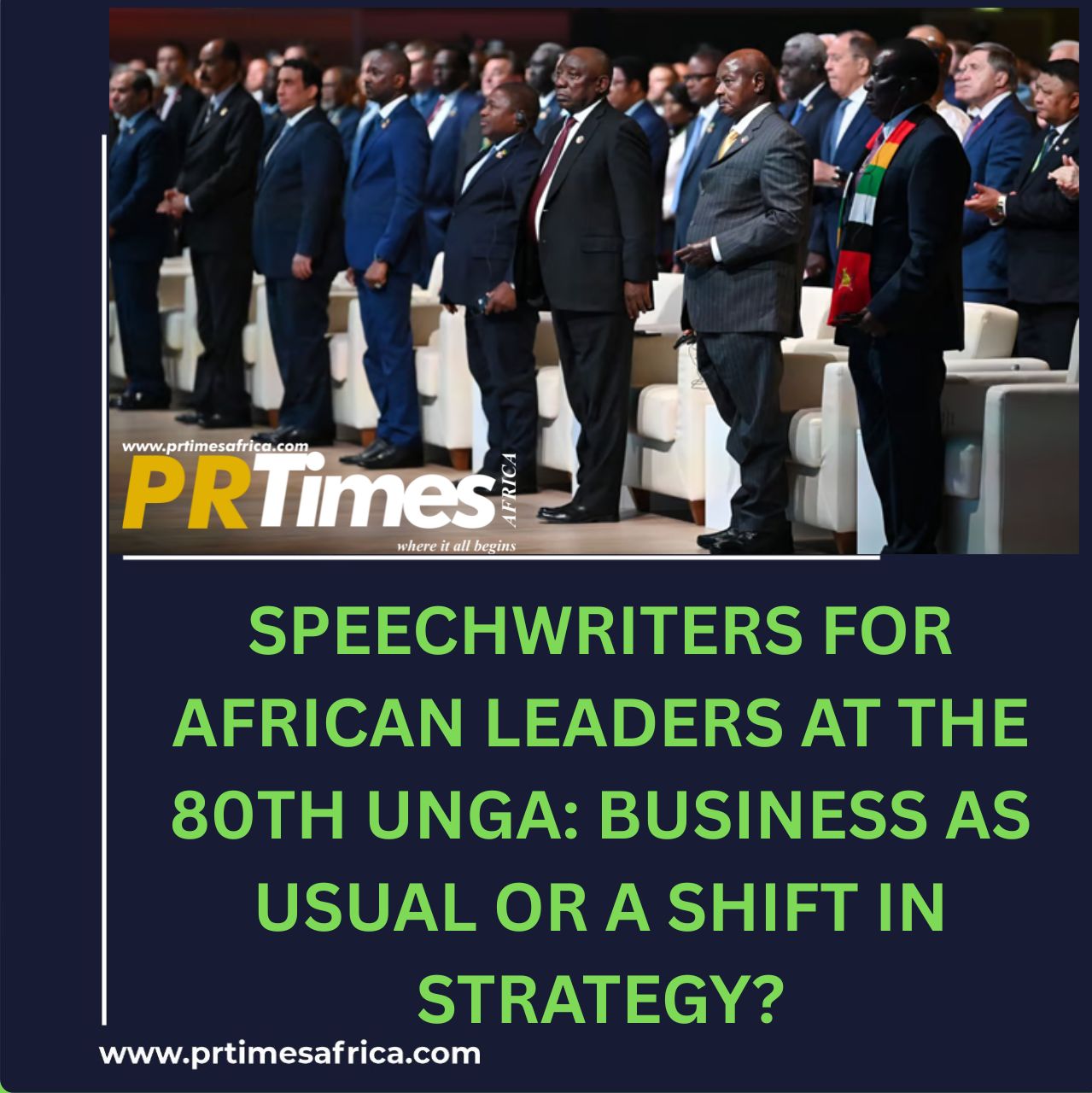
When African presidents took the podium at the 80th United Nations General Assembly (UNGA) this September, their words made global headlines. They spoke of climate injustice, unsustainable debt, peace and security, and the perennial call for reform of global institutions. But as the cameras zoomed in on the leaders, those who helped shape these messages remained, as usual, behind the curtain.
These quiet professionals, speechwriters, crafted not just speeches, but narratives that sought to project national interest, shape global perceptions, and elevate Africa’s collective voice.
But the question remains: at this historic UNGA, where conflicts raged and multilateralism was visibly strained—was it business as usual for African speechwriters, or is something changing?
Still the Power Behind the Podium
Speechwriting for African heads of state has always been an art of balancing diplomacy with urgency, legacy with immediacy. But the UNGA, the most high-profile diplomatic stage, raises the stakes.
Unlike domestic speeches or campaign rallies, UNGA speeches are designed for multiple audiences, the international community, domestic constituents, development partners, and increasingly, social media-savvy citizens across the continent.
And yet, until recently, many African presidential communications teams were under-resourced, overly reliant on bureaucratic drafts, or overly deferential to political language that lacked global resonance.
But this year felt different.
“We’re seeing a new class of African speechwriters who understand that a UN speech isn’t just about policy, it’s about presence,” says a political communications lecturer at the University of Ghana. “They’re strategic, younger, globally literate, and unafraid to be bold.”
Notable Shifts at UNGA 80
Several African leaders arrived in New York with more polished, more pointed, and more purposeful speeches than in previous years. These weren’t just updates on national progress, they were calls to action, rebuttals, and in some cases, reframes of Africa’s role in global systems.
Examples include:
Kenya’s President firmly positioning the Global South as a partner, not a petitioner, in climate finance discussions.
Namibia’s delegation invoking historical injustice in calls for intellectual property reform and equitable access to green tech.
Nigeria’s presidency delivering an uncharacteristically concise and business-minded speech, clearly targeting foreign investors and Diaspora engagement.
These speeches, observers noted, were tighter, less burdened by protocol, and more aligned with global media cycles. They sounded less like reports, and more like statements of intent.
“We’re finally seeing African leaders speak to the world, not at it,” says a Somali speech consultant who has worked with AU delegates.
Is It Still Business As Usual?
In some places, yes.
Some speeches still bore the signs of recycled rhetoric, broad clichés, or awkward phrasing, likely the result of rushed drafting, lack of coordination, or political micromanagement. In these cases, it was business as usual: bland delivery, missed media moments, and lost opportunities for narrative control.
But increasingly, especially in countries with strong presidential communication offices, there’s a shift happening.
Three indicators suggest we may be witnessing the beginning of a new era in African political speechwriting:
- Professionalization of the Craft
More African countries are now recruiting communication strategists, not just bureaucrats, into leadership messaging teams. Many of these professionals have backgrounds in journalism, international affairs, or even storytelling and film.
- Strategic Messaging for Global Forums
Instead of simply showcasing achievements, speechwriters are aligning speeches with global narratives: climate change, AI governance, debt restructuring. It’s a pivot from positioning to participation.
- Collaborative Drafting Processes
Some presidential teams now hold internal “speech labs” ahead of global events, involving ministries, think tanks, and even diaspora advisers. This helps ensure technical accuracy and thematic coherence.
Messaging as Soft Power
In a multilateral environment increasingly shaped by perception, words matter more than ever. For Africa, the stakes are especially high: a youthful population, a changing climate, a contested economic future. The speech at the UN is no longer ceremonial, it’s strategic.
The shift we saw at UNGA 80 suggests that African leaders and their speechwriters are beginning to recognize this. And while not every delegation has made the leap from “business as usual” to communications as diplomacy, the momentum is building.
In the words of a senior speechwriter from East Africa:
“We’re not just writing speeches anymore. We’re writing Africa’s voice into the future.”
For PR and communications professionals across Africa, the lessons are clear: storytelling, positioning, and authenticity are no longer optional. They are central to diplomacy, policy, and global influence.
As we look ahead to COP30, the African Union Summit, and future UNGAs, one thing is certain: behind every great speech will be someone, somewhere, choosing the right words, not just for the moment, but for the movement.