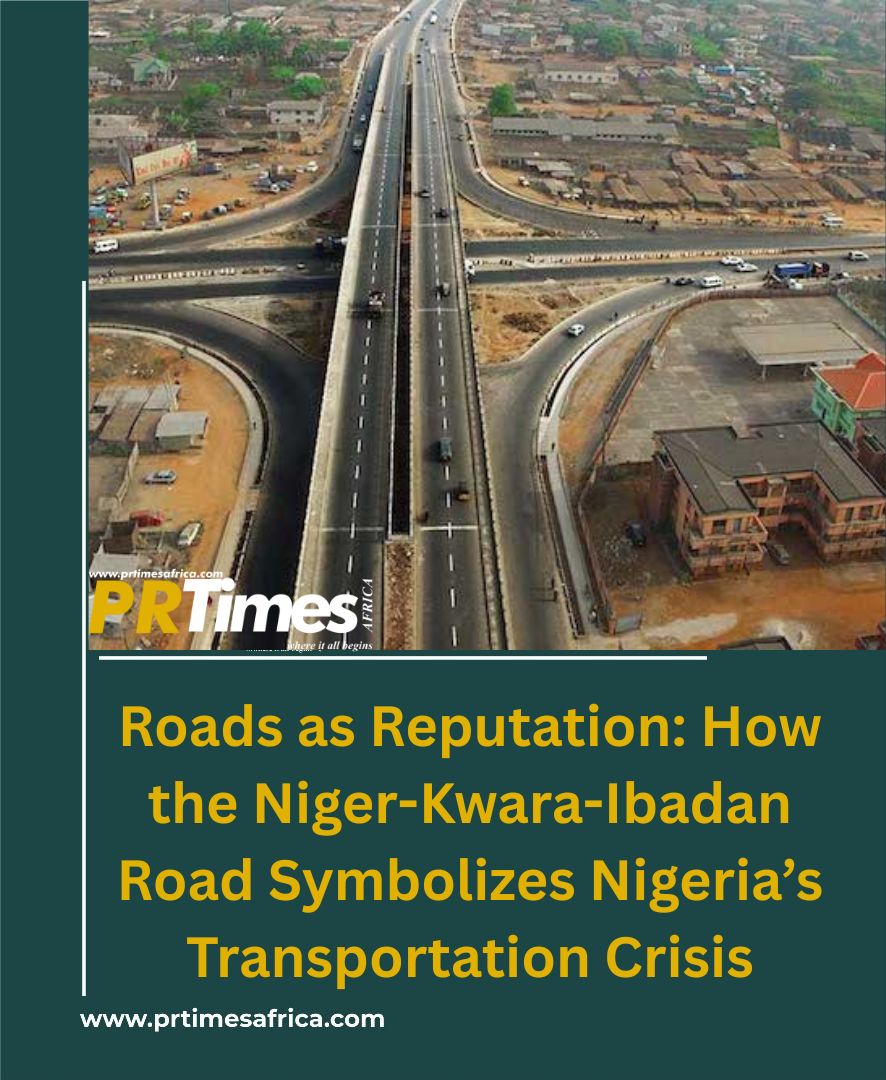
Roads as Reputation: How the Niger-Kwara-Ibadan Road Symbolizes Nigeria’s Transportation Crisis
By Musa Sunusi Ahmad:
In any country, the state of public infrastructure is a mirror reflecting governance, development priorities, and national cohesion. In Nigeria, that mirror is increasingly cracked, none more so than the road stretching from Niger State through Kwara to Ibadan. This critical artery, once a promising connector between agriculture-rich northern states and the commercial southwest, has now become a cautionary tale of neglect, poor image, and economic isolation.
For communications professionals, this is more than just a logistical issue, it’s a reputation crisis. The way we talk about, document, and advocate for infrastructure can shape both public perception and policy direction. In this light, the Niger-Kwara-Ibadan road isn’t just a transportation concern, it’s a national PR failure in urgent need of repair.
Nigeria’s Transportation Dilemma
Nigeria’s transportation industry is heavily road-dependent, with over 90% of internal goods and passenger movement relying on highways and inter-state routes. Despite this, a large proportion of federal and state roads are in disrepair. According to reports from the Federal Road Maintenance Agency (FERMA), less than 30% of Nigeria’s road network is in good condition.
Poor roads come with a heavy price:
– Increased transport costs
– Frequent accidents and vehicle damage
– Supply chain delays
– Commuter stress and economic loss
Yet, for all these challenges, one route tells the story with brutal clarity: Niger-Kwara-Ibadan.
A Broken Lifeline: The Niger-Kwara-Ibadan Corridor
Strategically positioned, this corridor connects central Nigeria’s agricultural heartland and tourism heaven with Ibadan, a southwestern hub for commerce, logistics, and distribution. In theory, it should be an economic superhighway. In practice, it’s a minefield.
Road users describe:
– Gaping potholes that swallow car tyres
– Long stretches of failed pavement
– Washed-out shoulders during the rainy season
– Insecurity at night due to broken-down vehicles and isolation
What should be a 6-7 hour drive frequently becomes a 12-15 hour ordeal. The result is more than frustration, it’s economic fragmentation.
Bad Image, Worse Consequences
The most visible effect of the road’s deterioration is the negative public image that has formed around it, both online and in public discourse. Across social media, WhatsApp groups, and local radio programs, the Niger-Kwara-Ibadan route is portrayed as:
– A “no-go zone” for inter-state commuters
– A high-risk stretch for transporters and logistics companies
– A metaphor for government failure in rural development
This bad image carries weight:
– Transporters increase fares or avoid the route, pushing up logistics costs
– Travelers opt for alternative, longer routes, reducing traffic and market activity along the original corridor
– Investors see the region as inaccessible, discouraging infrastructure and commercial development
– Citizens lose faith in government promises of road rehabilitation
Reputation, in infrastructure as in business, becomes reality when left unmanaged.
Economic Isolation in Plain Sight
The deterioration of the Niger-Kwara-Ibadan road has created an unspoken crisis: economic isolation of the communities and states it once served.
- Disrupted Agricultural Trade
Farmers in Kwara and Niger face difficulty transporting goods to urban markets. Perishable items are often lost in transit, and reduced supply drives up food prices in the southwest. The route’s condition has made agribusiness less attractive and less profitable.
- Missed Investment Opportunities
Due to poor access, companies avoid locating warehouses, factories, or depots along the corridor. Investors write off areas like Ilorin, Jebba, or Mokwa not for lack of resources but because bad roads equal bad business.
- Decline of Informal Economies
Market sellers, roadside traders, and small transport operators suffer from lower footfall, increased repair costs, and travel uncertainty. This disproportionately affects women and youth, many of whom rely on daily earnings from cross-regional trade.
- Youth Exodus and Regional Inequality
With mobility stifled, young people migrate to better-connected cities. This leads to brain drain, weakening local economies and reinforcing regional disparities.
- Weakening National Unity
When one road disconnects a region from the rest of the country, it feeds into wider narratives of neglect and marginalization. Infrastructure, when broken, isolates not just communities but identities.
Repairing the Reputation: A PR & Policy Playbook
While engineers focus on physical repair, communications experts and policy advocates must tackle the reputational rehabilitation of this corridor, and many like it. Here’s how:
– Visual Documentation
High-quality drone footage, before/after images, and real-time repair updates help create transparency and urgency.
– Data-Driven Storytelling
Use quantifiable impacts, cost of delays, number of accidents, inflation from food transport costs, to make the economic case for action.
– Community Testimonials
First-hand stories from drivers, traders, farmers, and students affected by the road’s condition personalize the problem and highlight its human cost.
– Showcasing Progress
When repairs are made, showcase them widely. Every kilometre rehabilitated should be a communication win that shifts the narrative from decay to renewal.
– Stakeholder Messaging
Frame road improvement not just as infrastructure, but as:
– A tool for national unity
– A platform for economic growth
– A visible proof of governance success
Patching the Road, Rebuilding Trust
The Niger-Kwara-Ibadan road may be physically broken, but the bigger damage is to trust, opportunity, and inclusion. For Nigeria to thrive, infrastructure must do more than connect places, it must connect people to possibility.
Rehabilitating this corridor means healing a key artery in the body of Nigeria’s economy. But fixing roads is not just the work of bulldozers and budgets. It’s also the work of narratives, voices, and strategic communication. If Nigeria is to turn the corner on its transport crisis, this road must not only be rebuilt, it must be reimagined as a symbol of what works when policy meets purpose.