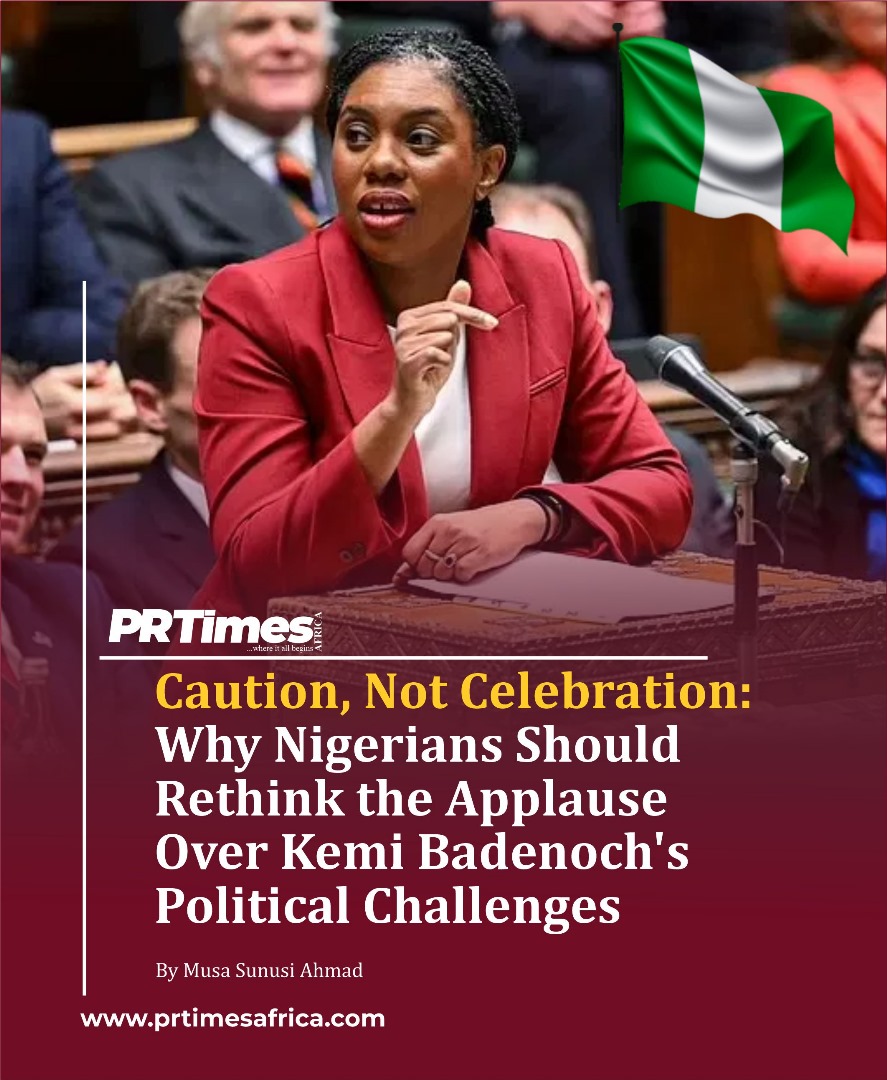
Caution, Not Celebration: Why Nigerians Should Rethink the Applause Over Kemi Badenoch’s Political Challenges.
Her decline in the UK political arena is no cause for celebration, it’s a mirror Nigeria mustn’t ignore.
By Musa Sunusi Ahmad:
As the United Kingdom approaches another critical general election, the Conservative Party is once again embroiled in internal reflection and leadership realignment. Among those in the spotlight is Kemi Badenoch, once seen as a frontrunner in shaping the future of the party and even a potential prime ministerial candidate.
But in recent months, Badenoch’s political capital has appeared to waver. She has faced criticism over her tone, policy gaps, and leadership style. For many, this is part of the natural ebb and flow of political life. For others, particularly in Nigeria, it has been interpreted and, alarmingly, celebrated as a form of failure.
Social media conversations, opinion pieces, and even public statements from some Nigerian figures have framed her political recalibration as just deserts for her so-called “rejection” of her Nigerian heritage. But this reaction is not only shortsighted; it is dangerous and ultimately counterproductive to the national discourse Nigeria needs.
When Critique Becomes Betrayal in the Eyes of the Offended
Kemi Badenoch has never minced words about the dysfunction she witnessed growing up in Nigeria, corruption, weak governance, and systemic inequality. Her reflections were never baseless. They echo the experiences of countless Nigerians at home and abroad.
But instead of engaging her critique with maturity, much of the reaction from Nigerian leaders and influencers has been defensive, an insistence that she’s betrayed her roots, and worse, that her political struggles are evidence of karma.
Let’s be clear: criticism is not betrayal. If Nigeria cannot handle honest assessments from those who have lived its challenges, then it risks insulating itself from accountability, from truth, and from progress.
Why This Celebration Is Misguided
- Her Political Struggles Are Not a Win for Nigeria
Kemi Badenoch’s leadership decline, if it is to be called that, has far more to do with internal Conservative Party dynamics, strategic miscalculations, and messaging missteps than with anything she said about Nigeria.
To celebrate her waning influence is to confuse correlation with causation. Worse, it sends the message that Nigerians would rather see their diaspora fail than see themselves reflected in a painful truth.
What does that say about the country’s self-perception?
- It Diminishes the Power of the Diaspora
Nigeria’s diaspora is one of its greatest soft power assets. From finance and education to politics and the arts, Nigerians abroad have excelled despite the odds. Badenoch is part of that story, even if her political ideology doesn’t align with the views of every Nigerian.
To ridicule her efforts simply because she speaks hard truths or aligns with a British political party many disagree with is to weaken the transnational networks Nigeria desperately needs to thrive in a globalized world.
- It Reflects Leadership Insecurity, Not Strength
When those in public office celebrate the downfall of someone who dared to speak about Nigeria’s challenges from afar, they expose their own discomfort with accountability. It’s a classic deflection, mock the messenger to avoid facing the message.
Instead of deflecting, Nigerian leaders should be asking:
What has Badenoch said about us that might actually be true? And what are we doing about it?
A Moment for Reflection, Not Ridicule
Kemi Badenoch’s political career in the UK has been defined by sharp rhetoric, strong opinions, and a deeply personal story of survival and reinvention. Whether or not she continues to rise in Conservative ranks, her journey remains symbolic of Nigerian potential.
But symbols require interpretation, and that interpretation must be constructive, not petty.
Her decline should prompt reflection, not ridicule. If a woman who escaped a dysfunctional system can rise to political prominence in another country, the question is not why she distanced herself, but why she had to.
Takeaways for Political Communications in Nigeria
For those in PR, political strategy, and public affairs, there are deeper insights to extract from this discourse:
– Critique Is Not the Enemy of Patriotism
Branding critique as unpatriotic weakens national credibility and alienates valuable voices.
– Diaspora Relations Require Maturity
Nigeria must foster nuanced, respectful engagement with its Diaspora, not reactive nationalism.
– Narrative Control Is a Strategic Imperative
Allowing the public discourse to devolve into bitterness undermines Nigeria’s international image.
– Celebrate Constructive Engagement, Not Schadenfreude
Mature nations understand that diaspora success, especially in politics, is a lever for influence, not a threat.
Leadership Requires Big Thinking
Kemi Badenoch’s recent political challenges in the UK are not a loss for Nigeria, nor a victory for her critics. They are a reminder of the global playing field Nigerians are already on, and how easily we can fumble the ball with the wrong mindset.
If Nigeria’s leaders and media voices want a better future, they must stop confusing discomfort with disrespect. Criticism, especially from the outside, is not always an attack. Sometimes, it’s the clearest form of care, the kind that doesn’t flatter, but forces reflection.
So no, her political recalibration is not a cause for celebration.
It is a moment of introspection, one Nigeria cannot afford to waste.
Her decline in the UK political arena is no cause for celebration, it’s a mirror Nigeria mustn’t ignore.
By Musa Sunusi Ahmad
As the United Kingdom approaches another critical general election, the Conservative Party is once again embroiled in internal reflection and leadership realignment. Among those in the spotlight is Kemi Badenoch, once seen as a frontrunner in shaping the future of the party and even a potential prime ministerial candidate.
But in recent months, Badenoch’s political capital has appeared to waver. She has faced criticism over her tone, policy gaps, and leadership style. For many, this is part of the natural ebb and flow of political life. For others, particularly in Nigeria, it has been interpreted and, alarmingly, celebrated as a form of failure.
Social media conversations, opinion pieces, and even public statements from some Nigerian figures have framed her political recalibration as just deserts for her so-called “rejection” of her Nigerian heritage. But this reaction is not only shortsighted; it is dangerous and ultimately counterproductive to the national discourse Nigeria needs.
When Critique Becomes Betrayal in the Eyes of the Offended
Kemi Badenoch has never minced words about the dysfunction she witnessed growing up in Nigeria, corruption, weak governance, and systemic inequality. Her reflections were never baseless. They echo the experiences of countless Nigerians at home and abroad.
But instead of engaging her critique with maturity, much of the reaction from Nigerian leaders and influencers has been defensive, an insistence that she’s betrayed her roots, and worse, that her political struggles are evidence of karma.
Let’s be clear: criticism is not betrayal. If Nigeria cannot handle honest assessments from those who have lived its challenges, then it risks insulating itself from accountability, from truth, and from progress.
Why This Celebration Is Misguided
- Her Political Struggles Are Not a Win for Nigeria
Kemi Badenoch’s leadership decline, if it is to be called that, has far more to do with internal Conservative Party dynamics, strategic miscalculations, and messaging missteps than with anything she said about Nigeria.
To celebrate her waning influence is to confuse correlation with causation. Worse, it sends the message that Nigerians would rather see their diaspora fail than see themselves reflected in a painful truth.
What does that say about the country’s self-perception?
- It Diminishes the Power of the Diaspora
Nigeria’s diaspora is one of its greatest soft power assets. From finance and education to politics and the arts, Nigerians abroad have excelled despite the odds. Badenoch is part of that story, even if her political ideology doesn’t align with the views of every Nigerian.
To ridicule her efforts simply because she speaks hard truths or aligns with a British political party many disagree with is to weaken the transnational networks Nigeria desperately needs to thrive in a globalized world.
- It Reflects Leadership Insecurity, Not Strength
When those in public office celebrate the downfall of someone who dared to speak about Nigeria’s challenges from afar, they expose their own discomfort with accountability. It’s a classic deflection, mock the messenger to avoid facing the message.
Instead of deflecting, Nigerian leaders should be asking:
What has Badenoch said about us that might actually be true? And what are we doing about it?
A Moment for Reflection, Not Ridicule
Kemi Badenoch’s political career in the UK has been defined by sharp rhetoric, strong opinions, and a deeply personal story of survival and reinvention. Whether or not she continues to rise in Conservative ranks, her journey remains symbolic of Nigerian potential.
But symbols require interpretation, and that interpretation must be constructive, not petty.
Her decline should prompt reflection, not ridicule. If a woman who escaped a dysfunctional system can rise to political prominence in another country, the question is not why she distanced herself, but why she had to.
Takeaways for Political Communications in Nigeria
For those in PR, political strategy, and public affairs, there are deeper insights to extract from this discourse:
– Critique Is Not the Enemy of Patriotism
Branding critique as unpatriotic weakens national credibility and alienates valuable voices.
– Diaspora Relations Require Maturity
Nigeria must foster nuanced, respectful engagement with its Diaspora, not reactive nationalism.
– Narrative Control Is a Strategic Imperative
Allowing the public discourse to devolve into bitterness undermines Nigeria’s international image.
– Celebrate Constructive Engagement, Not Schadenfreude
Mature nations understand that diaspora success, especially in politics, is a lever for influence, not a threat.
Leadership Requires Big Thinking
Kemi Badenoch’s recent political challenges in the UK are not a loss for Nigeria, nor a victory for her critics. They are a reminder of the global playing field Nigerians are already on, and how easily we can fumble the ball with the wrong mindset.
If Nigeria’s leaders and media voices want a better future, they must stop confusing discomfort with disrespect. Criticism, especially from the outside, is not always an attack. Sometimes, it’s the clearest form of care, the kind that doesn’t flatter, but forces reflection.
So no, her political recalibration is not a cause for celebration.
It is a moment of introspection, one Nigeria cannot afford to waste.