Day: November 21, 2025

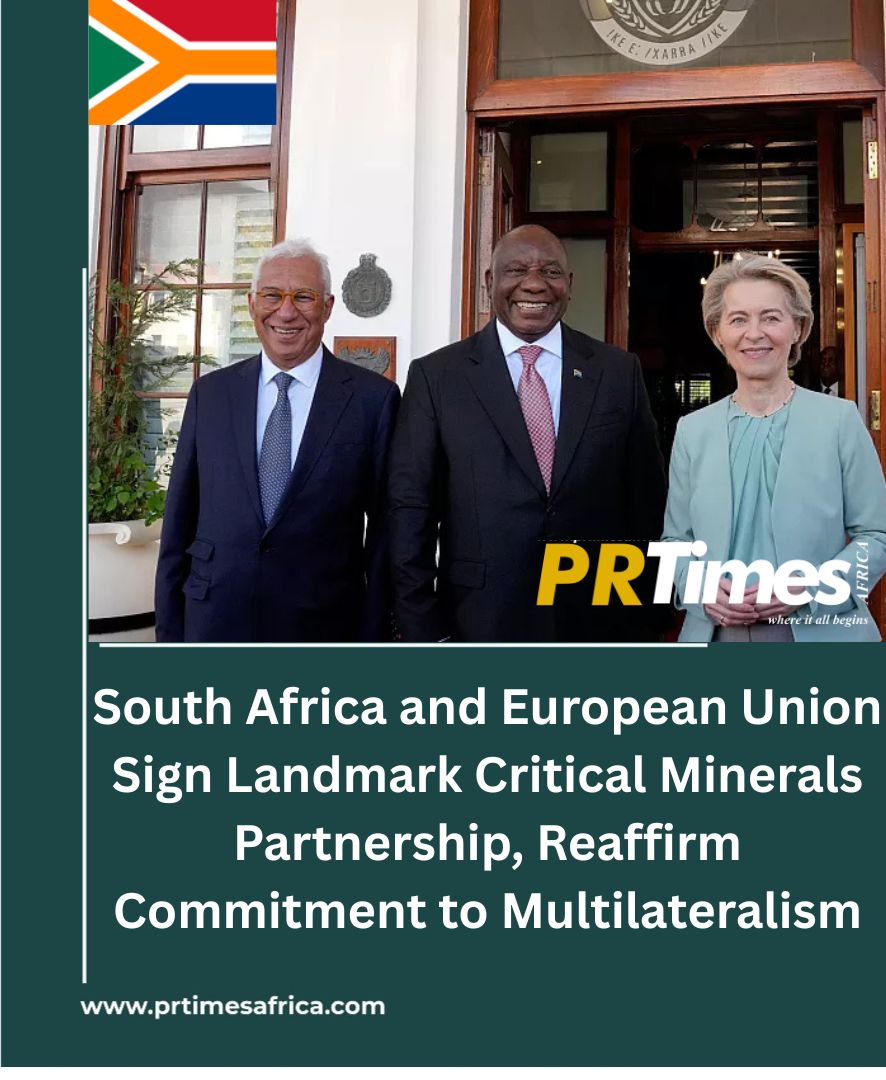
  • South Africa and European Union Sign Landmark Critical Minerals Partnership, Reaffirm Commitment to Multilateralism

    South Africa and European Union Sign Landmark Critical Minerals Partnership, Reaffirm Commitment to Multilateralism

    South Africa and European Union Sign Landmark Critical Minerals Partnership, Reaffirm Commitment to Multilateralism

    By: Keziah Biya

    Pretoria/Brussels – 20 November 2025
    South Africa and the European Union have formally signed a strategic partnership on critical minerals and renewable energy value chains, in a move both sides hailed as a cornerstone of “fair, sustainable and rules-based” global trade in the materials essential for the green and digital transitions.

    The agreement was signed on the sidelines of the 17th South Africa–EU Summit in Pretoria by South African President Cyril Ramaphosa and European Commission President Ursula von der Leyen, in the presence of Trade and Industry Minister Parks Tau, EU Trade Commissioner Valdis Dombrovskis and Energy Commissioner Kadri Simson.


    Key pillars of the pact

    The partnership rests on five main work streams:

    1. Joint development of sustainable raw materials value chains
      • Mapping and co-financing of bankable mining, refining and recycling projects in South Africa (especially manganese, platinum-group metals, vanadium, chromium and graphite).
      • Commitment to ESG (environmental, social and governance) standards aligned with the EU’s forthcoming Critical Raw Materials Act and South Africa’s own Just Energy Transition framework.
    2. Integration into downstream industries
      • Support for local beneficiation (refining and manufacturing) of battery-grade manganese sulphate, vanadium redox flow batteries, fuel-cell catalysts and green steel using South African chromium and manganese.
    3. Research, innovation and skills
      • €150 million initial contribution from the EU’s Global Gateway initiative for geological surveys, R&D centres and vocational training programmes.
      • Establishment of a joint South Africa–EU Critical Minerals Development Institute.
    4. Infrastructure and energy
      • Co-financing of grid upgrades and renewable energy projects to power new processing facilities.
      • Exploration of green hydrogen partnerships using South Africa’s abundant platinum and renewable resources.
    5. Trade and investment facilitation
      • Streamlined permitting and investment protection measures.
      • Commitment to avoid export restrictions on critical minerals destined for the partner (a direct response to recent Indonesian and Chinese export curbs).

    Strategic and geopolitical significance

    President Ramaphosa described the deal as “a new chapter of equitable partnership” that moves away from the historic pattern of Africa exporting raw materials and importing finished goods.

    “This is not charity; it is mutually beneficial industrial cooperation,” he said. “South Africa brings the resources and the workforce; Europe brings capital, technology and market access. Together we reduce risky dependencies on single suppliers

    .”President von der Leyen explicitly framed the agreement as a victory for multilateralism at a time of rising protectionism:“In an era where some prefer unilateral restrictions and coercive diplomacy, South Africa and the EU are proving that open, rules-based cooperation remains the best path to secure supply chains and accelerate the green transition.

    ”The pact is widely seen as Europe’s strongest push yet to diversify away from China, which currently dominates refining of many battery and renewable-energy metals (controlling ~90 % of manganese refining, ~85 % of cobalt and ~65 % of lithium processing capacity globally).


    Economic implications

    South Africa is the world’s largest producer of manganese (38 % of global supply), platinum (72 %), rhodium (82 %) and chromium (42 %), and holds significant vanadium and graphite deposits. The country aims to capture a larger share of the estimated $400 billion annual battery value chain by 2035.Analysts estimate the partnership could unlock up to €12 billion in new investments in South Africa’s mining and processing sectors over the next decade, creating tens of thousands of direct and indirect jobs in Mpumalanga, Limpopo and the Northern Cape.


    Reactions

    • Business Unity South Africa (BUSA) welcomed the deal, saying it “finally gives policy certainty to investors who have been waiting for a clear green-industrialization  road map”.
    • The Congress of South African Trade Unions (COSATU) cautiously supported the pact but demanded “iron-clad guarantees” on local procurement and skills transfer.
    • Environmental groups such as groundwork and the Centre for Environmental Rights called for strict oversight to prevent the expansion of mining in ecologically sensitive areas.

    The agreement will be overseen by a high-level South Africa–EU Critical Minerals Council that meets annually, with the first technical working groups scheduled to convene in Brussels in February 2026.

    With this partnership, South Africa consolidates its position as a pivotal swing supplier in the global critical-minerals chessboard, while the European Union takes its most concrete step yet toward “de-risking” its green industrial strategy through trusted, values-aligned partners.
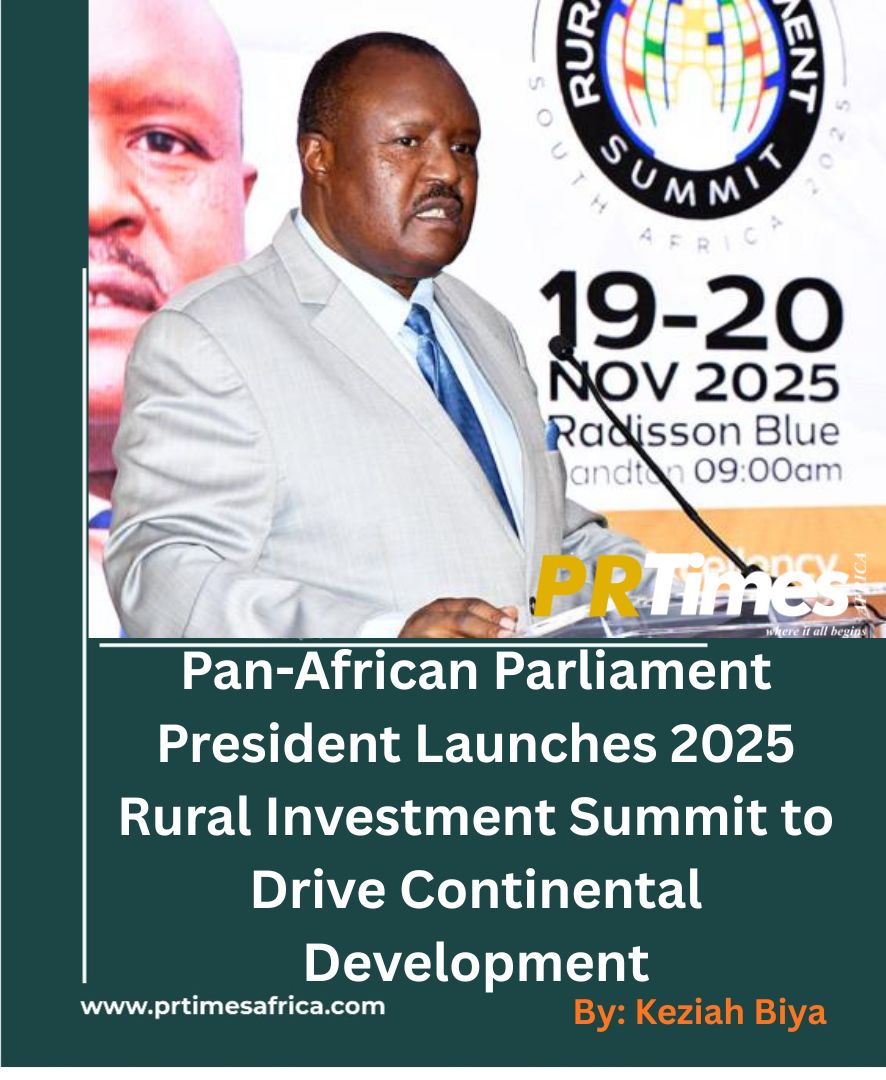
     

  • Pan-African Parliament President Launches 2025 Rural Investment Summit to Drive Continental Development

    Pan-African Parliament President Launches 2025 Rural Investment Summit to Drive Continental Development

    Pan-African Parliament President Launches 2025 Rural Investment Summit to Drive Continental Development


    Midrand, South Africa. His Excellency Chief Fortune Zephania Charumbira, President of the Pan-African Parliament (PAP), today officially launched the 2025 Rural Investment Summit, a landmark event aimed at mobilizing resources, policy support, and cross-continental partnerships to transform Africa’s rural economies.

    Speaking at the opening ceremony, Chief Charumbira underscored the urgency of targeted investment in rural areas, calling them “the bedrock of Africa’s future.” He highlighted that while cities often capture headlines and capital flows, rural communities remain critical to food security, social stability, and inclusive prosperity.

    “It is time that our collective development does not leave behind our rural brothers and sisters,” Charumbira said. “Through strategic investment, innovation, and partnership, we can unlock the latent potential in our villages, farmlands, and small towns, and deliver sustainable change across the continent.”

    Key Themes & Strategic Pillars

    The 2025 Rural Investment Summit will center around four main pillars:

    1. Agricultural Innovation & Sustainability

    Promote climate-smart agriculture, mechanization, and agri-technology to boost productivity

    Invest in agribusiness value chains, from smallholder farmers to processing and distribution

    1. Infrastructure & Connectivity

    Expand rural infrastructure, including roads, water supply, energy, and sanitation

    Bridge the digital divide by improving broadband access and digital literacy in remote regions

    1. SME & Rural Finance

    Facilitate access to affordable financing for rural enterprises

    Encourage private-sector partnerships to scale locally driven businesses

    1. Social Development & Community Services

    Strengthen education, healthcare, and social protection services in rural communities

    Empower youth and women in rural areas through skills development and entrepreneurship

    Major Announcements & Commitments

    As part of the Summit launch, several high-profile commitments were made:

    PAP announced the creation of a Pan-African Rural Investment Facility (PARIF), a multi-year investment vehicle that will pool public and private funding for rural development projects.

    The Summit has secured partnerships with several African development banks, regional economic communities, and international financial institutions to co-finance infrastructure and agricultural ventures.

    A continental “Rural Digital Inclusion Initiative” was unveiled, with a goal to bring affordable high-speed internet to underserved rural zones by 2030.

    Stakeholder Engagement & High-Level Participation

    The Summit will run for three days and bring together a diverse range of stakeholders:

    Heads of State and Government from PAP member parliaments

    Agricultural firms, agri-tech innovators, and agribusiness investors

    Multilateral development agencies, including regional development banks

    Parliamentarians from national legislatures, local governments, and rural constituencies

    Civil society organizations focused on rural empowerment, gender inclusion, and youth development

    Several policy roundtables will focus on harmonizing rural development strategies across regions, and there will also be innovation showcases that spotlight scalable, grassroots solutions.

    Strategic Alignment with Continental Goals

    The Summit aligns closely with Agenda 2063, the African Union’s long-term blueprint for socio-economic transformation. In his remarks, Chief Charumbira stressed that rural investment is not just about economic returns but also about achieving continental integration, reducing inequality, and strengthening food security.

    He also referenced PAP’s role as a continental legislative body, urging African parliaments to champion enabling laws, regulatory reforms, and budget allocations that support rural transformation.

    Quotes from Key Figures

    Chief Fortune Charumbira, PAP President:

    “Our mission is not only to legislate but also to catalyze action, to make our Pan-African Parliament a real driver of development in every African community.”

    Hon. Dr. Fatimetou Habib, 1st Vice-President of PAP:

    “Investing in rural areas is an investment in our people, in their dignity, creativity, and resilience. This Summit is a call to us all: governments, financiers, and civil society  to walk together.”

    Expected Outcomes & Next Steps

    By the close of the Summit, organizers expect to:

    1. Finalize a multi-stakeholder roadmap for rural development across PAP’s member states
    2. Secure binding commitments from governments and investors to support rural projects
    3. Launch pilot projects in several regions to test scalable models for sustainable rural growth

    PAP also announced plans for a mid-term review in 2027 to assess progress and adjust strategies as needed.

    About the Pan-African Parliament (PAP)

    The Pan-African Parliament, established under the African Union, is a continental legislative body that gives African citizens a voice in broader continental decision-making. PAP works to promote democracy, human rights, integration, and sustainable development across member states. Its Bureau — led by President Chief Fortune Charumbira — is responsible for guiding its strategic direction and oversight.


Hot daily news right into your inbox.

Headline

Never Miss A Story

Get our Weekly recap with the latest news, articles and resources.
Cookie policy
We use our own and third party cookies to allow us to understand how the site is used and to support our marketing campaigns.