Day: January 7, 2026

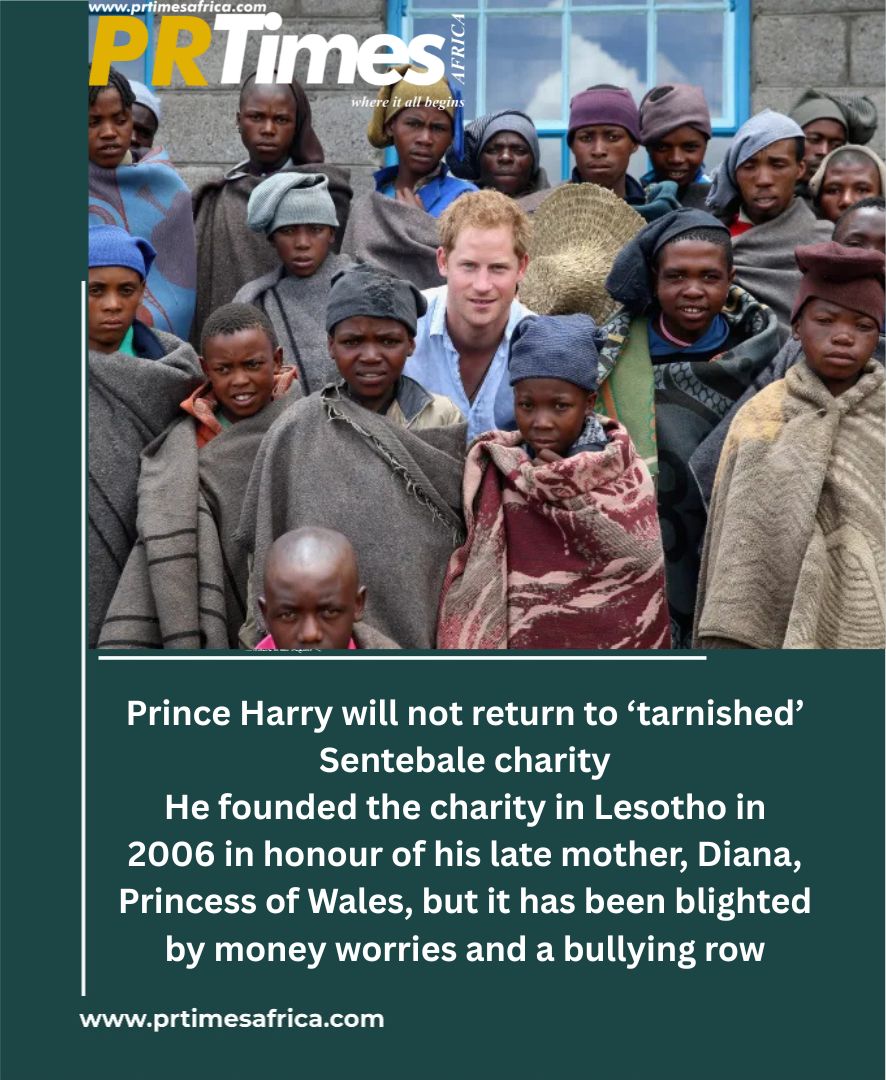
  • Prince Harry Permanently Severs Ties with Sentebale: No Return to ‘Tarnished’ Charity Amid Lingering Fallout from Bullying Row and Financial Woes

    Prince Harry Permanently Severs Ties with Sentebale: No Return to ‘Tarnished’ Charity Amid Lingering Fallout from Bullying Row and Financial Woes

    In a decisive move that closes a poignant chapter in his post-royal life, Prince Harry, the Duke of Sussex, has confirmed through close sources that he will not return to Sentebale, the HIV/AIDS charity he co-founded in 2006 in honor of his late mother, Diana, Princess of Wales. The organization, once a cornerstone of Harry’s philanthropic legacy and a deeply personal tribute to Diana’s humanitarian work in Africa, has been described by insiders as “irreparably tarnished” following a protracted and highly public leadership dispute, allegations of bullying, and mounting financial pressures.The announcement, first reported in recent days by multiple outlets including the Daily Mail and The Times, comes nearly a year after Harry stepped away from his role as patron in March 2025 amid escalating tensions. Sources close to the 41-year-old prince emphasize that “there’s absolutely no way” he would reconsider involvement, citing the emotional toll of the controversy and the damage to the charity’s reputation. “It’s all too tarnished now,” one insider told reporters. “Harry poured his heart into Sentebale for nearly two decades, but the fallout has left it in a place where his return would only prolong the pain.”Sentebale—meaning “forget me not” in Sesotho—was established by Harry alongside Prince Seeiso of Lesotho to support children and young people affected by HIV/AIDS in Lesotho and Botswana. Inspired by Diana’s famous visits to Africa and her compassionate outreach to those living with the virus, the charity quickly became one of Harry’s most cherished causes. He hosted high-profile fundraising events, including glamorous polo matches, and made regular visits to the region, often sharing emotional stories of the vulnerable youth the organization helped. At its peak, Sentebale raised millions, funding camps, education programs, and health initiatives that reached thousands.However, the charity’s fortunes began to unravel in early 2025 with a explosive boardroom battle. The crisis centered on Dr. Sophie Chandauka, the chair of the board, who clashed bitterly with Harry and several trustees. When trustees requested her resignation amid concerns over governance, Chandauka went public with serious allegations, accusing the Duke of “harassment and bullying at scale,” as well as racism and misogyny. The claims, which Harry vehemently denied, spilled into the media, prompting a formal investigation by Britain’s Charity Commission.The regulator’s report, released in August 2025, cleared Harry and the charity of any evidence of “widespread or systemic bullying, harassment, misogyny, or misogynoir.” It criticized “all parties” for allowing the dispute to “play out publicly,” noting that the public infighting had caused significant reputational harm. While Harry was personally exonerated, the watchdog highlighted mismanagement issues and chided the involved parties for contributing to a toxic environment that distracted from the charity’s mission.The scandal triggered a wave of resignations, including Harry’s own departure as patron—along with Prince Seeiso—and the exit of key staff members. Fundraising suffered a sharp blow: iconic polo events, long associated with Harry’s star power, were scrapped in October 2025. Annual accounts revealed shrinking programs and financial difficulties, with insiders warning that the organization had been “bled dry” by the prolonged crisis. Donations dipped, and the charity scaled back operations in Botswana and Lesotho, raising fears for the vulnerable communities it serves.For Harry, the saga has been described as “devastating.” Sources say he felt “emotionally drained” by the betrayal of trust within an organization he built from the ground up as a living memorial to his mother. “Sentebale was Harry’s way of keeping Diana’s legacy alive in Africa,” one friend noted. “To see it marred by this kind of acrimony, especially allegations that struck at his character, was heartbreaking.” Reports suggest Harry has even considered launching a new charity to continue similar work, free from the baggage of the past.From his home in Montecito, where he lives with wife Meghan, Duchess of Sussex, and their children Archie and Lilibet, Harry has remained largely silent on the matter publicly since the Charity Commission’s findings. His focus has shifted to other ventures, including Invictus Games and Archewell Foundation projects. Yet, the decision to permanently walk away underscores a broader pattern in Harry’s life post-2020 royal exit: severing ties with institutions embroiled in conflict to protect his mental health and family.Sentebale, meanwhile, issued statements welcoming the regulatory closure and reaffirming its commitment to its core mission. Under new leadership, it vows to rebuild, though the absence of its famous founder looms large. As one former supporter lamented, “Diana’s spirit was in every part of Sentebale. It’s tragic that politics and personalities have overshadowed that.”As 2026 begins, this final severance marks the end of an era for Prince Harry—one where a charity born of love and loss has been overshadowed by division, leaving both its founder and its beneficiaries to chart uncertain paths forward.
  • UK and France commit to deploying troops in Ukraine

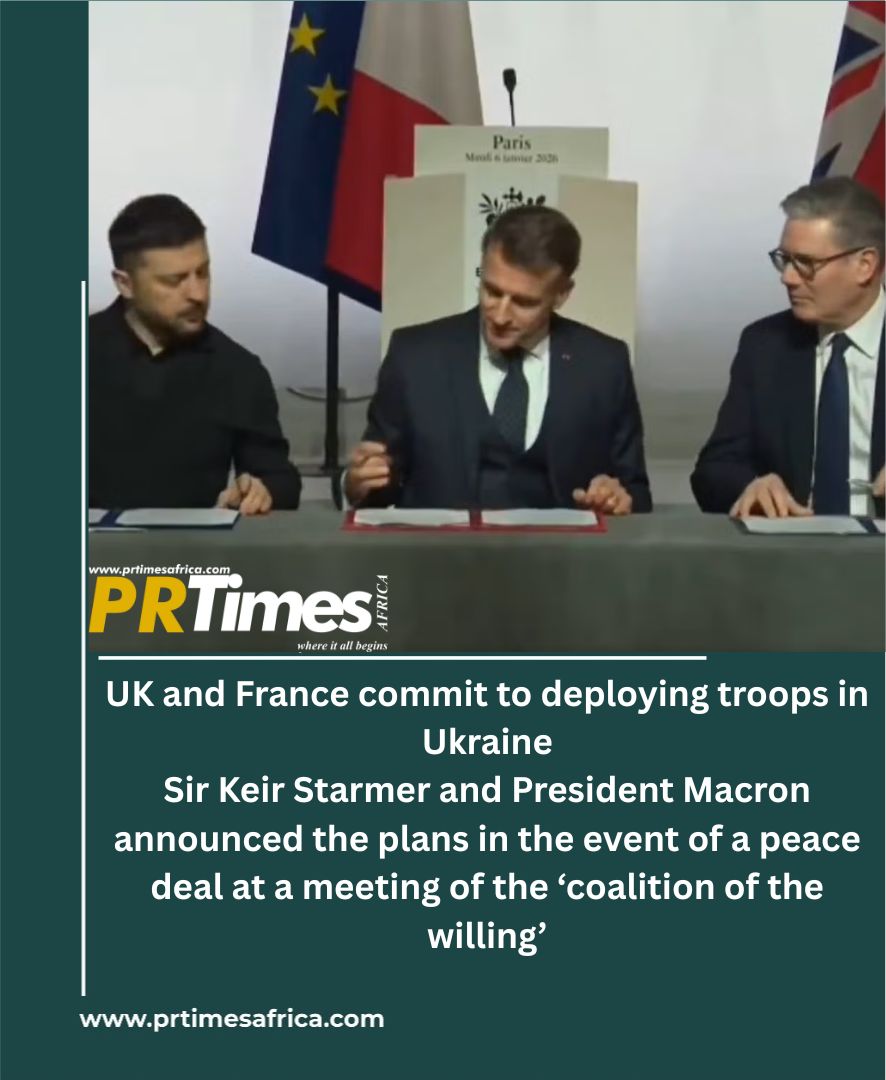
    UK and France commit to deploying troops in Ukraine

    UK and France commit to deploying troops in Ukraine

    On a crisp winter afternoon in Paris on January 6, 2026, the Élysée Palace buzzed with an air of cautious optimism mixed with the weight of history. Diplomats, military advisors, and leaders from 35 nations gathered for a high-stakes summit dubbed the “Coalition of the Willing.” This ad-hoc alliance, co-led by the United Kingdom and France, had been quietly forming over the previous year as negotiations for a potential ceasefire in the Russo-Ukrainian War gained tentative momentum. The nearly four-year conflict, which had reshaped European security and claimed countless lives, appeared on the brink of a fragile turning point.At the center of the room stood three key figures: British Prime Minister Sir Keir Starmer, French President Emmanuel Macron, and Ukrainian President Volodymyr Zelenskyy, who had flown in from Kyiv amid tightened security. Flanking them were representatives from across Europe, North America, and beyond—countries committed to going beyond mere arms supplies and financial aid. The coalition’s name evoked memories of past international efforts, but this one was laser-focused: crafting ironclad security guarantees for Ukraine that could deter future Russian aggression without immediately provoking escalation.The summit’s agenda was ambitious. For months, behind closed doors, officials had debated how to make any peace deal “lasting,” as Starmer often phrased it. Russia, under President Vladimir Putin, had repeatedly demanded demilitarization and neutrality for Ukraine, while Kyiv insisted on robust protections against renewed invasion. The coalition’s proposal emerged as a compromise bridge: no full NATO membership for Ukraine in the short term, but a multinational force to enforce a ceasefire and rebuild trust.As the meeting progressed into the evening, discussions grew intense. Zelenskyy, ever the steadfast advocate, pressed for “binding commitments, not just words.” He argued that without a visible Western presence on the ground, Moscow would view any agreement as temporary. Starmer, drawing on Britain’s long-standing support for Ukraine, emphasized the need for “boots on the ground and planes in the air” to signal resolve. Macron, hosting the event, echoed this, stressing Europe’s responsibility to lead in its own backyard. The breakthrough came late in the day. After hours of negotiations, Starmer and Macron announced a historic joint declaration, signed trilateraly with Zelenskyy. In the event of a negotiated peace deal and ceasefire with Russia, the United Kingdom and France committed to deploying troops to Ukraine. This wasn’t an open-ended occupation but a targeted “reassurance force”—a multinational contingent designed to monitor compliance, protect key infrastructure, and provide rapid deterrence. Details emerged in the post-summit press conference under the chandeliers of the palace’s grand hall. Starmer, speaking first, declared: “This is a vital part of our iron-cast commitment to stand with Ukraine. Following a ceasefire, the UK and France will establish military hubs across Ukraine to support its defense, facilitate rapid deployment, and construct protected facilities.” He clarified that British forces would contribute significantly, potentially including air and maritime elements, though exact numbers remained classified pending final agreements. Macron followed, adding gravitas: “We are ready to deploy several thousand French soldiers if needed, positioned away from any contact line, to demonstrate long-term support in air, sea, and land domains.” He dismissed notions that Russia’s approval was required, asserting that such a force would operate under a UN or bilateral mandate to maintain peace. The hubs, he explained, would serve as forward operating bases for training Ukrainian forces, stockpiling equipment, and enabling quick response to violations. Zelenskyy, visibly moved, hailed the declaration as “substantial documents, not just words.” For Ukraine, scarred by broken promises like the 1994 Budapest Memorandum, this pledge represented a tangible shift. The coalition’s broader plan included joint funding mechanisms for 2026 and beyond, high-tech surveillance to monitor borders, and contributions from other members—perhaps logistics from Canada, intelligence from the US, or engineering from Germany. The announcement rippled across the world. In London and Paris, it was framed as a bold step toward European strategic autonomy. The United States, though not committing troops directly, offered backing for the guarantees, aligning with ongoing diplomatic efforts. In Moscow, reactions were predictably sharp—Kremlin spokespeople decried it as provocation, with Putin reportedly ruling out any NATO-linked presence on Ukrainian soil.Yet, amid the geopolitics, the human element lingered. Soldiers from the UK and France, many of whom had trained Ukrainian troops in Europe or provided indirect support, now faced the prospect of deployment in a post-war landscape still littered with mines and mistrust. Families in Britain and France pondered the risks, while Ukrainians dared to hope for a peace enforced not just by paper, but by allies willing to stand shoulder-to-shoulder. As the leaders departed Paris that night, the declaration marked a pivotal chapter. It wasn’t the end of the war, nor a guarantee of peace, but a clear message: if a deal is struck, Ukraine would not stand alone. The Coalition of the Willing had transformed from rhetoric into resolve, setting the stage for what could be the most significant European security arrangement since the Cold War’s end. Whether it would deter aggression or invite new tensions remained to be seen—but on that January evening, hope flickered brighter than it had in years.

Hot daily news right into your inbox.

Headline

Never Miss A Story

Get our Weekly recap with the latest news, articles and resources.
Cookie policy
We use our own and third party cookies to allow us to understand how the site is used and to support our marketing campaigns.