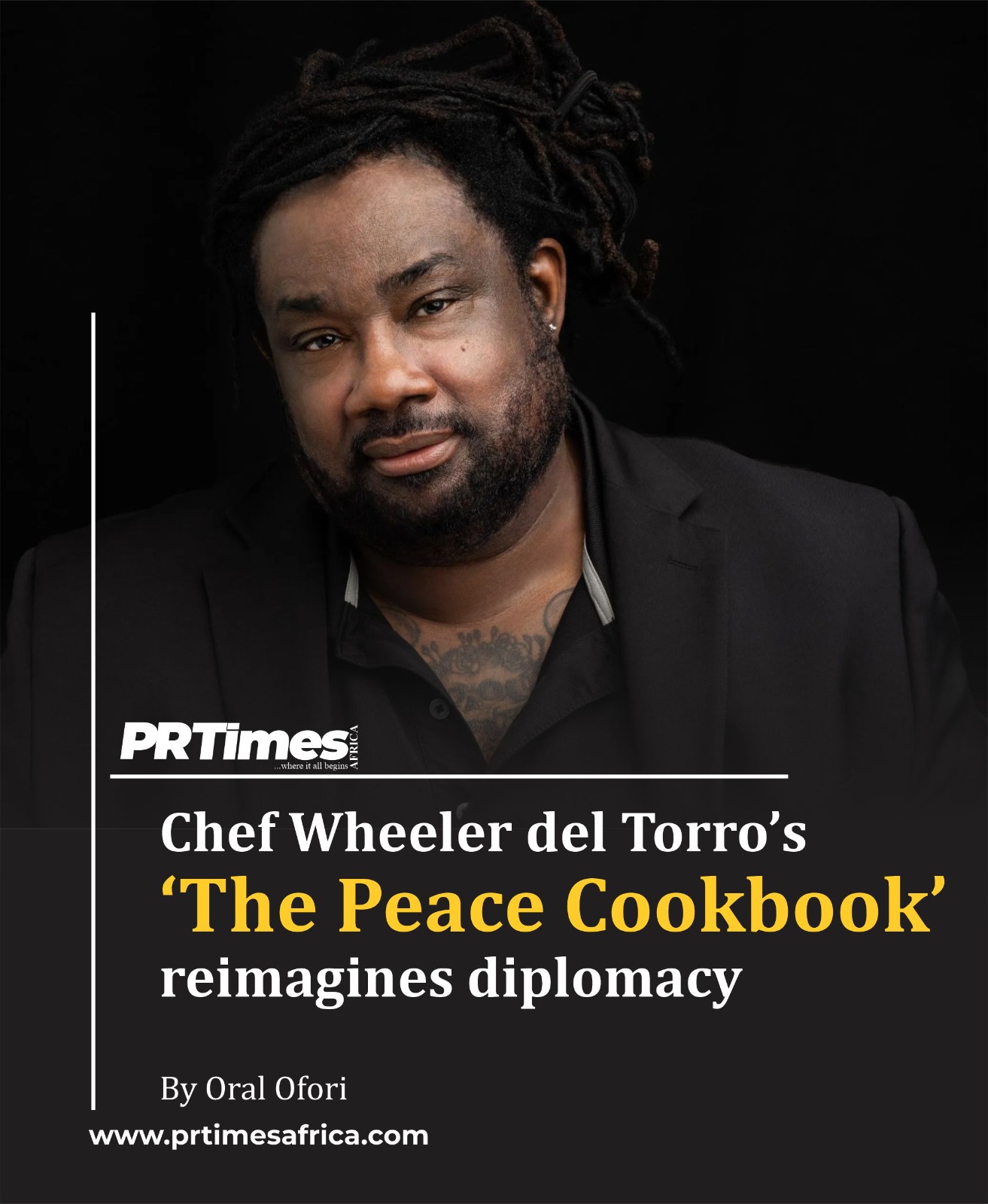
Wheeler del Torro’s new book The Peace Cookbook is released as both a culinary work and a cultural diplomacy initiative, bringing together recipes and stories drawn from G7 nations and post-conflict regions across the globe, each chapter tied to a country where del Torro’s Foundation for Post Conflict Development has worked or built lasting partnerships.
Its introduction is written by H.S.H. Prince Albert II of Monaco, and the foreword comes from President and Nobel Peace Prize laureate José Ramos-Horta of Timor-Leste. The result is something difficult to categorise and harder to dismiss.
Del Torro has spent decades watching food do what formal language cannot, across more than a hundred countries. He has observed the same pattern: a meal lowers defenses, softens posture, and opens a conversation that a policy brief could not have begun. The Peace Cookbook is, in many ways, the accumulated observation of those years.
“The project brings together recipes and cultural stories connected to diplomacy, cooperation, and cultural exchange. The goal is to position the book as both a culinary work and a cultural diplomacy platform that highlights how shared traditions can open the door to conversation during complex global times,” said del Torro to TheAfricanDream.net.
A New Framework for Cultural Exchange
The Peace Cookbook, he suggests, offers a practical way to activate cultural identity. It can anchor cultural dinners and shape national events that move beyond speeches into lived exchange.
For post-conflict countries, it offers a different frame, allowing diplomats to present their country through what it sustains, not just what it has endured.
The rollout strategy reflects the book’s ambitions. A soft launch is planned for Monaco in June during Formula 1 week. The broader release is timed to coincide with the United Nations General Assembly in New York this fall, the largest gathering of global leadership in the world.
Del Torro’s aim is for the book to move across delegations as what he calls a “working tool” for cultural connection. Given the caliber of its contributors and the seriousness of its institutional backing, that ambition does not seem misplaced.
Diplomacy Beyond Formal Structures
As someone who lived through conflict and led a nation’s recovery, Ramos-Horta recognized a partner whose work he could genuinely stand behind. His foreword carries the weight of that experience.
Del Torro is explicit about one of the book’s intended audiences: diplomatic missions. He sees embassies as among the most underused cultural tools in modern diplomacy, even though they carry the full identity of a nation. Instead, they often confine their engagement to formal channels.
Strategic Collaboration and Global Reach
The involvement of Prince Albert II and President Ramos-Horta was facilitated through the Foundation for Post Conflict Development, a women-led institution with decades of field experience in some of the world’s most complex environments. The credibility of that organization opened doors that an individual creative project could not have accessed alone.
The structure of the book reflects this logic. G7 nations anchor it because they anchor global decision-making. But they share space with communities navigating post-conflict recovery, including Sierra Leone, Timor-Leste, Afghanistan, Cyprus, and others. The pairing is deliberate.
“Peace,” del Torro said, “is not a conversation reserved only for the powerful.”
Food as a Universal Connector
One of the book’s most considered choices is its emphasis on plant-based cuisine. Del Torro is clear that this is not a rejection of tradition but a strategic selection.
Plant-based food crosses most dietary, religious, and cultural boundaries. For a project centered on bringing different people to the same table, that practicality matters enormously.
The culinary traditions throughout the book were chosen for what they represent, and what they reveal about a people’s identity before conflict and after it. Reading the chapters, one gets the sense that del Torro is less interested in recipes as instructions than in recipes as documents. They record something about how a culture feeds itself, and therefore how it survives.
From Concept to Practice
The project found its clearest expression at a dinner in Cambridge, Massachusetts, held to celebrate the creation of the Nasir Jones Fellowship at Harvard University. Around the table were Nas, Henry Louis Gates Jr., Jamaica Kincaid, Lawrence Bobo, and Professor Marcyli ena Morgan. Plant-based dishes moved from hand to hand.
Del Torro says the concept of the book became clear to him in that room, and it became necessary for him to write it.
Conclusion
The Peace Cookbook is more than a collection of recipes. It is a structured attempt to reframe how nations engage with one another, using something universally human: food.
In a world where formal diplomacy often struggles to create connection, del Torro’s work suggests that the table may still be one of the most powerful places to begin.