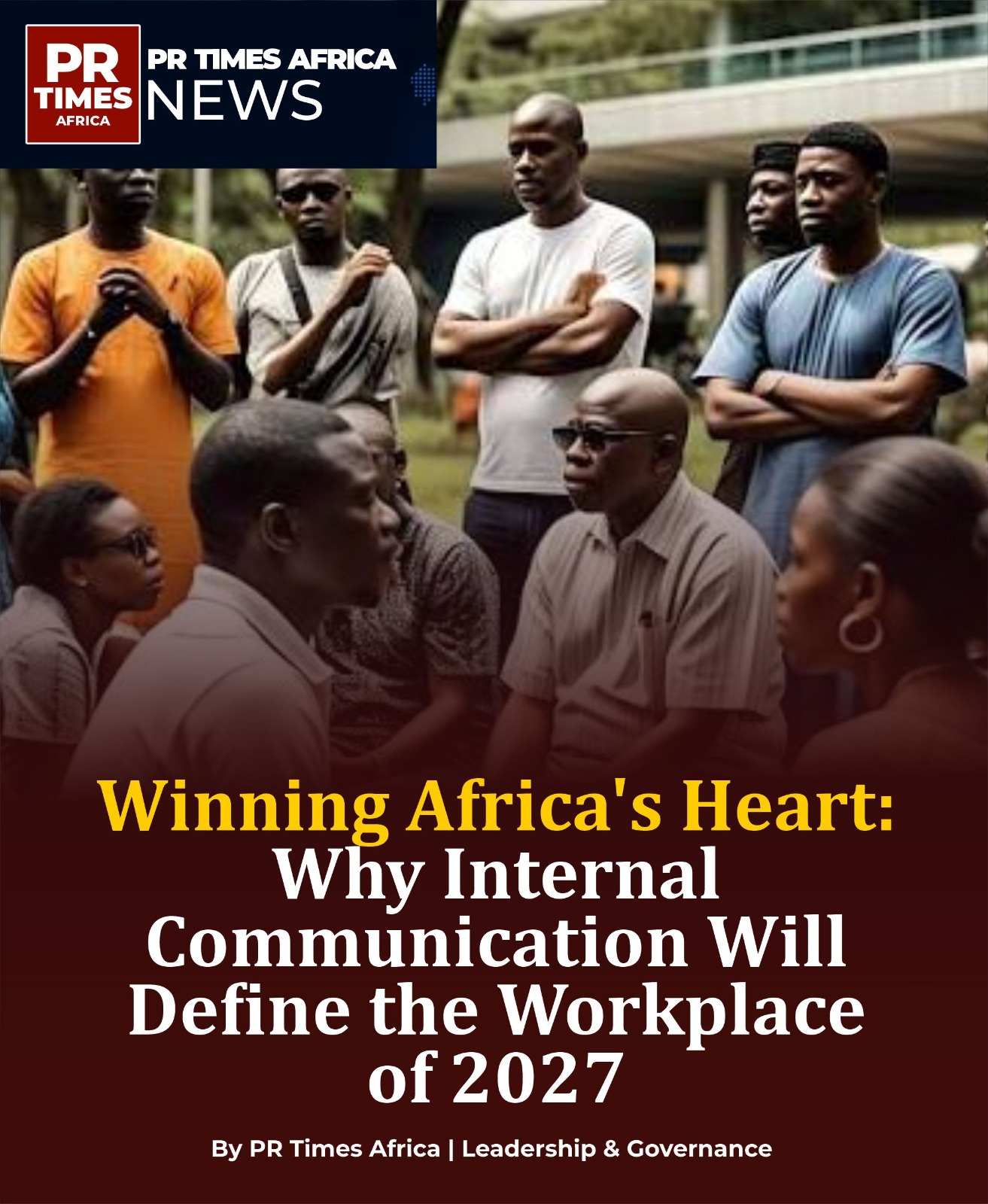

As technology reshapes African workplaces and employee expectations rise, the organisations that succeed will be those that move beyond broadcasting messages to building trust, belonging and genuine human connection.
By PR Times Africa
Africa’s workplace is changing faster than many organisations are prepared to communicate.
Artificial intelligence, digital collaboration platforms, hybrid work and an increasingly young, mobile and ambitious workforce are transforming how people work and what they expect from employers. Yet amid the race to adopt new technologies, a more fundamental challenge is emerging: How do organisations keep their people connected, informed and emotionally invested in a shared future?
That question could define the next chapter of internal communication across Africa.
By 2027, internal communication will no longer be judged simply by how many emails were sent, how many employees opened a newsletter or how frequently leadership addressed staff. The real measure of success will be whether communication creates trust, strengthens culture and gives employees a genuine sense that they matter.
For African organisations, this is not merely a communications challenge. It is increasingly a leadership and business imperative.
From Broadcasting Messages to Building Trust
For decades, internal communication in many organisations has largely followed a top-down model. Leadership speaks; employees listen. Policies are announced, memos are circulated and decisions are communicated after they have been made.
But today’s workforce expects something different.
Employees want transparency. They want context. They want to understand not only what a company is doing, but why it is doing it and how those decisions affect their future. More importantly, they increasingly expect the opportunity to be heard.
The organisations that will lead Africa’s workplace transformation are likely to be those that understand one simple truth: communication is not complete when a message is deliveredit is complete when understanding, trust and meaningful engagement have been created.
That requires a shift from corporate broadcasting to conversation.
It means leaders must become better listeners. Managers must become more effective communicators. And internal communications teams must evolve from being message distributors into strategic architects of organisational trust.
Africa Cannot Simply Import Its Communication Culture
Africa’s internal communications challenge also comes with a unique reality: diversity.
The continent’s workforce brings together different languages, cultures, generations, educational experiences and expectations of leadership. A communication strategy developed in London, New York or Silicon Valley cannot simply be copied and expected to produce the same results in Lagos, Nairobi, Johannesburg, Accra or Kigali.
Winning Africa’s heart requires local intelligence.
It requires organisations to understand how culture shapes communication, how employees receive authority, how trust is built and how communities influence the workplace. In some environments, employees may be reluctant to openly challenge leadership. In others, informal networks may carry information faster than official communication channels.
This means African organisations must design communication strategies around the realities of their own people rather than relying exclusively on imported corporate templates.
The future belongs to organisations that can combine global standards with local understanding.
Technology Will Make Communication FasterBut Not Necessarily Better
Artificial intelligence and digital workplace technologies are creating powerful new possibilities. Messages can be personalised, translated, automated and distributed across multiple platforms in seconds.
But faster communication does not automatically create stronger communication.
There is a growing danger that organisations will mistake technological sophistication for employee connection. A company may have the latest communications platform and still have a workforce that feels unheard. It may send perfectly designed messages and still struggle with distrust.
Technology should therefore be treated as an enablernot a replacement for human connection.
The most effective internal communication strategies of 2027 will likely combine digital efficiency with emotional intelligence. Data can help organisations understand engagement patterns, but conversations will still reveal what employees truly feel. Artificial intelligence can accelerate communication, but leadership authenticity cannot be automated.
The New Battle Is for Attentionand Belief
Africa’s employees are now living in a world of constant information.
WhatsApp groups, social media platforms, online news, workplace chats and personal networks compete for attention every hour of the day. In this environment, employees are not simply asking whether they received a message. They are deciding whether the message is credible enough to believe.
That places trust at the centre of internal communication.
When employees trust leadership, difficult messages can be understood even when they are unpopular. When trust is absent, even positive announcements can be viewed with suspicion.
This is why consistency between words and actions will become increasingly important. Leaders cannot speak about inclusion while employees experience exclusion. They cannot promote wellbeing while rewarding burnout. They cannot talk about transparency while withholding information that affects people’s futures.
Employees may forget the exact wording of a corporate message, but they rarely forget whether an organisation’s actions matched its promises.
Communication Must Finally Become Measurable
Business leaders are also demanding stronger evidence that communication is contributing to organisational performance.
The era of measuring internal communications solely through email open rates and event attendance is rapidly losing relevance. Organisations increasingly need to understand whether communication is influencing employee confidence, retention, engagement, productivity and alignment with strategic priorities.
This does not mean every human interaction canor shouldbe reduced to a spreadsheet.
It means communication professionals must become more sophisticated in demonstrating value. They must connect communication outcomes to business outcomes while continuing to protect the human dimension of the workplace.
The strongest teams will combine data with insight: measuring what employees do, while also listening carefully to what employees say and, equally importantly, what they may be afraid to say publicly.
Why Leaders Must Take Ownership
Internal communication can no longer be delegated entirely to the communications department.
Every executive communicates. Every manager communicates. And increasingly, every decision communicates something about an organisation’s values.
A delayed salary communicates. A promotion process communicates. The way a crisis is handled communicates. Who is invited into important conversations communicates.
For that reason, the future of internal communication will depend heavily on whether senior leaders recognise communication as a core leadership responsibility.
The organisations that succeed will invest not only in communication platforms but also in helping leaders and managers communicate with clarity, empathy and credibility.
Winning Africa’s Heart
By 2027, Africa’s most successful organisations may discover that their greatest communication advantage is not the most advanced technology.
It is trust.
It is the ability to make employees feel that they are part of something larger than their job descriptions. It is creating a culture where people understand the organisation’s direction, believe leadership is listening and feel confident enough to contribute their ideas and concerns.
That is what it means to win Africa’s heart.
The next era of internal communication will belong to organisations that replace one-way announcements with meaningful dialogue, combine technology with humanity and understand that employee engagement cannot be demandedit must be earned.
For African businesses, governments and institutions navigating an increasingly complex future, the message is clear: people are not simply audiences for organisational communication. They are participants in the organisation’s success.
Those who understand that will not only communicate better.
They will lead better.
PR Times Africa is a platform focused on the ideas, leadership and conversations shaping Africa’s business, society and future.














 444444444444744444444444444444444444444444444444