ECOWAS expels Guinea-Bissau after army general seizes power
By: Keziah Biya
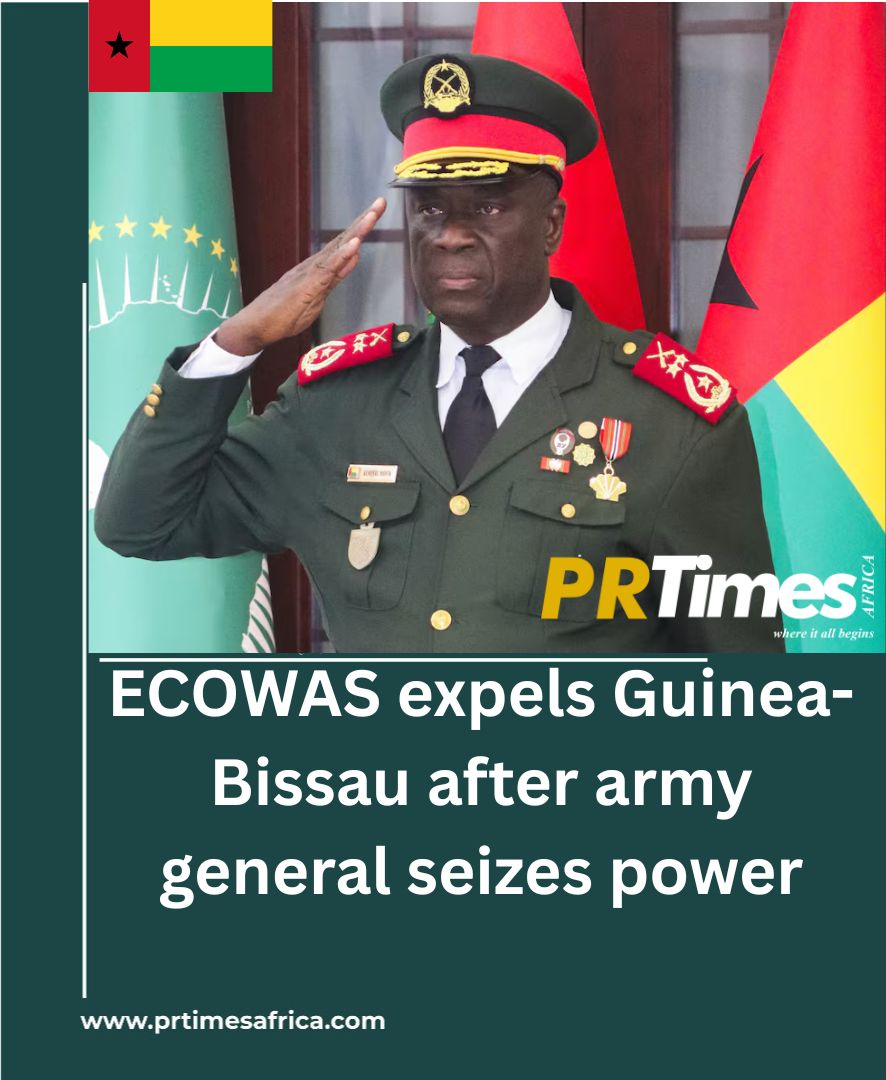
On 26 November 2025, army officers in Guinea-Bissau declared they had seized power — just before provisional results from a hotly contested presidential election were to be announced.
The soldiers announced the suspension of the electoral process, closure of borders, enforcement of a curfew, and formation of a junta they call the “High Military Command for the Restoration of National Security and Public Order.”
The next day (27 November), Horta N’Tam (also spelled Horta Inta-A or Horta Nta Na Man in some reports) was sworn in as transitional president and head of the High Military Command, for a one-year transition.
Meanwhile, the then-president, Umaro Sissoco Embaló, along with other officials including election and ministerial figures, were reportedly arrested by the military.
How ECOWAS Responded
ECOWAS held an emergency virtual session of its Mediation and Security Council (MSC) on 27–28 November 2025, chaired by the President of Sierra Leone (as bloc chair).
The bloc strongly condemned the coup as an “illegal abortion of the democratic process” and called for “unconditional restoration of constitutional order.”
Consequently, ECOWAS suspended Guinea-Bissau from all its decision-making bodies and regional activities until a legitimate constitutional order is restored.
The bloc also demanded the immediate release of all detained political figures — including the former president, electoral officials, and other key actors.
Additionally, ECOWAS said it reserves the right to use “all available options” under its protocols — including potential sanctions — if the junta does not comply.
A high-level mediation team — including leaders from Togo, Cabo Verde, Senegal — was assembled to engage with the coup leaders.
Why This Matters Regionally
The coup interrupts a democratic electoral process; the provisional results of the November election (which might have decided a new president) were never announced.
Guinea-Bissau now joins a growing list of West African countries where recent years have seen military takeovers — undermining regional democratic stability. Observers worry about contagion effects in the region.
The international community (including the African Union) also condemned the takeover.
What’s Next / What to Watch
Whether the junta complies with ECOWAS demands: release political detainees, restore the electoral process, and return to constitutional order.
The work of the ECOWAS mediation mission in Guinea-Bissau — whether it can persuade the military leadership to step back or negotiate transition terms.
International reaction beyond ECOWAS — sanctions, diplomatic pressure, humanitarian implications, foreign investment.
How this event affects regional stability and democracy in West Africa, given rising trends of coups in countries in the region.
You Might Be Interested In
- Conference of Parties (COP28): Global and African partners pledge $175m to the Alliance for Green Infrastructure in Africa (AGIA).
- Dialogues strengthen Unity women’s role in peace and security.
- Patrick Drahi is a Moroccan-Israeli billionaire, founder, and controlling shareholder of Altice, a European telecom group. He has significant interests in media and telecommunications, shaping the industry with his vision and investments.
- Nigeria: Regulator must help protect human rights by ensuring no conflict of interest in assessing Shell’s proposed sale
- The International Day of Remembrance and Tribute to the Victims of Terrorism
- NEWS UPDATE: Economic Community of West African States (ECOWAS) and TradeMark Africa Partner to Boost Trade Efficiency and Economic Prosperity in West Africa.