Under the Radar: Internal Communications and Crisis Management in Nigerian Government
By Alwalled Kabir Yusuf:
When crisis strikes, governments are expected to act swiftly, decisively, and coherently. But behind every press briefing or public statement lies a deeper, often overlooked layer: internal communication, the lifeblood of any effective government response. In Nigeria, a nation grappling with multifaceted crises ranging from security challenges to economic volatility and natural disasters, the cracks in internal communication within government institutions often become fault lines in public trust.
The Internal Communication Blind Spot
In most Nigerian federal and state ministries, internal communication is reactive rather than proactive. Siloed departments, hierarchical bottlenecks, and outdated information-sharing practices impede quick decision-making. While platforms like WhatsApp groups and emails are widely used, they lack formal structure and strategic integration. There’s often no centralized communication protocol in times of emergency, resulting in conflicting narratives, delayed responses, and a loss of public confidence.
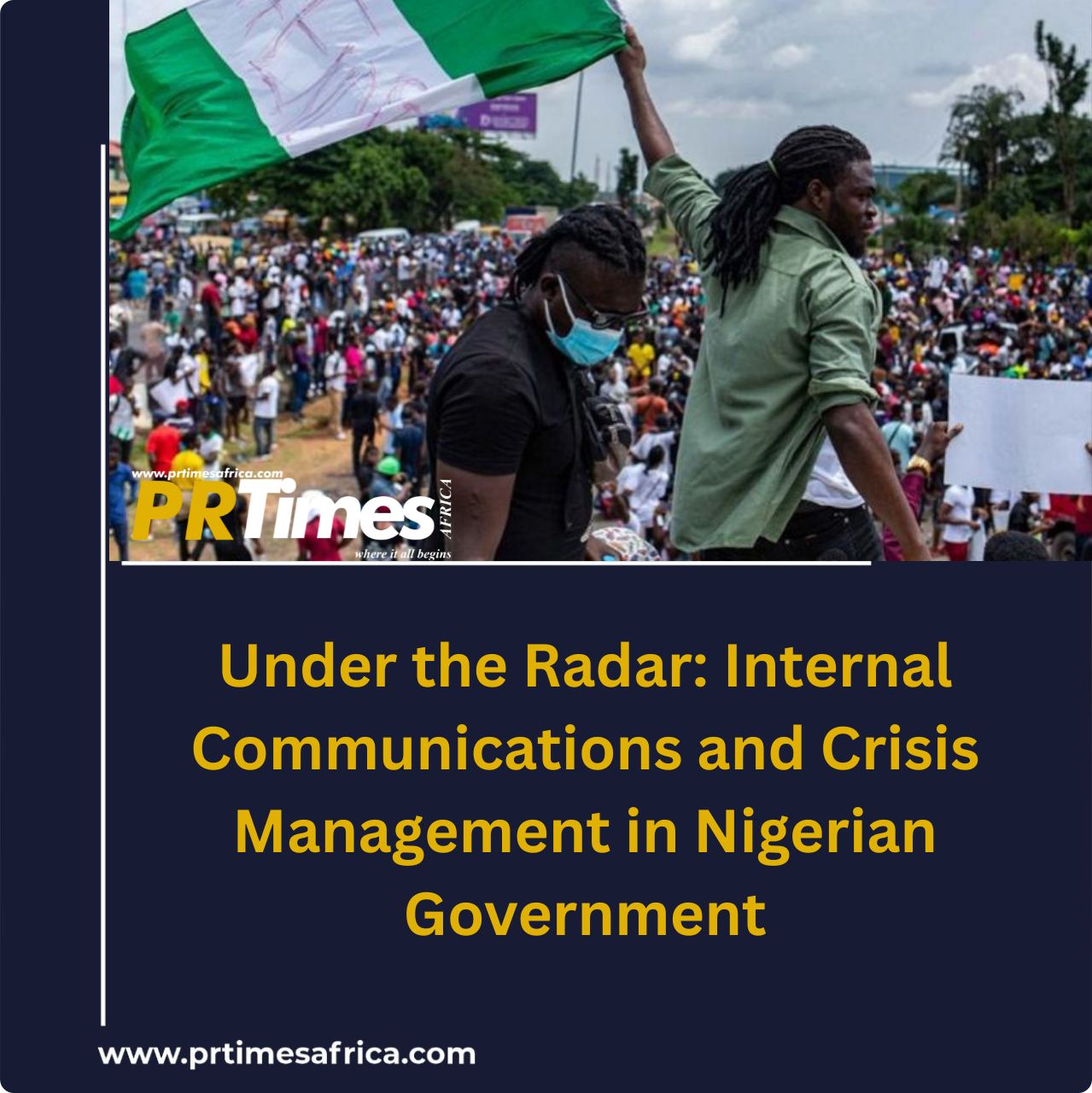
In 2020, during the #EndSARS protests, a youth-led movement against police brutality, the Nigerian government’s internal communication was visibly strained. Misinformation circulated within agencies, different arms of government issued contradictory statements, and crisis response coordination was fragmented. The result was a communication vacuum that was quickly filled by social media influencers and citizen journalists, some accurate, many not.
Crisis Communication Without Internal Alignment is a Recipe for Disaster
Effective crisis communication begins before a crisis even occurs. In countries with robust internal comms systems, governments conduct scenario planning, simulations, and training exercises involving all key stakeholders. Unfortunately, Nigeria still treats crisis comms as an afterthought. Spokespersons are often not embedded in the policymaking loop, and communication teams rarely have access to real-time data or decision-makers during emergencies.
Take the 2022 Kuje prison break as another example. Different agencies, Nigerian Correctional Service, Ministry of Interior, the military, and the police, released fragmented updates with little consistency. There was no unified voice, and the internal coordination between security agencies was publicly questioned. The lack of a coherent narrative allowed conspiracy theories to thrive and eroded citizen trust in security assurances.
The Role of PR Professionals: From Messengers to Strategists
For Nigeria to build a resilient internal communication framework, public relations professionals must move beyond the role of “messengers” to that of strategic advisors embedded within the highest levels of governance. This means:
Institutionalizing Internal Comms Protocols: There must be clearly defined internal communication protocols across ministries and parastatals, with designated roles, escalation paths, and response templates for crisis scenarios.
Training and Simulations: Crisis simulations involving communication officers and top officials can help prepare institutions to respond cohesively. Training should include risk communication, digital media management, and inter-agency collaboration.
Technology-Enabled Communication Platforms: Secure, real-time platforms like internal dashboards, encrypted messaging systems, and shared crisis command centers should replace informal and inconsistent communication methods.
Embedding Communications in Policy Development: Communications experts should be part of policy formulation so they understand the rationale behind decisions, allowing them to craft better narratives and anticipate public reaction.
Transparency and Trust
The future of government communication in Nigeria depends not just on what is said to the public, but how well government organs communicate within themselves. The difference between a managed crisis and a public relations disaster often lies in whether ministries, departments, and agencies are aligned in understanding, tone, and action.
In a digitally connected age where citizens are not just consumers but producers of news, internal miscommunication becomes a public issue within minutes. Nigeria’s PR community has a unique opportunity to lead the charge in reforming government internal communications, promoting transparency, improving coordination, and, ultimately, restoring trust in public institutions.
- India to lead worldwide consumer growth with 31% of new consumers; digital economy to surpass US$1 trillion in Latin America (LatAm) and Africa
- Visa Denied, History Delayed: Somali Referee’s World Cup Dream Sparks Global Debate
- Founders and Investors Find ROI in ME
- PRESS RELEASE: The African Development Bank plans to invest USD 10.5 million in the capital of Seedstars Africa Ventures to boost investment in innovative businesses.
- Tips On How To Begin A Bookkeeping Business
- Integrating Nutrition Surveillance into Routine Health Services in the Amhara Region, Ethiopia