Crisis Management in the Diamond Economy: Botswana’s Strategic Response to Economic Anxiety
By Musa Sunusi Ahmad:
In the realm of economic storytelling, Botswana has long stood apart.
The Southern African nation, hailed for decades as a model of stability and prudent resource management, owes much of its success to one sparkling asset: diamonds. Since independence in 1966, the country transformed itself from a near-impoverished state into a middle-income economy, thanks in large part to the carefully managed exploitation of its mineral wealth.
But now, the sheen is fading.
A significant decline in diamond output, global market pressures, and shifting demand have revealed a structural vulnerability. For a country where diamonds contribute more than 70% of export revenue and roughly one-third of GDP, the consequences are more than economic, they’re deeply psychological. Public confidence is shaken. Revenue gaps are growing. And the question reverberates across policy tables and kitchen tables alike: What happens after diamonds?
More importantly for our field: how does a government communicate through economic unease?
The Cracks in the Crown Jewel
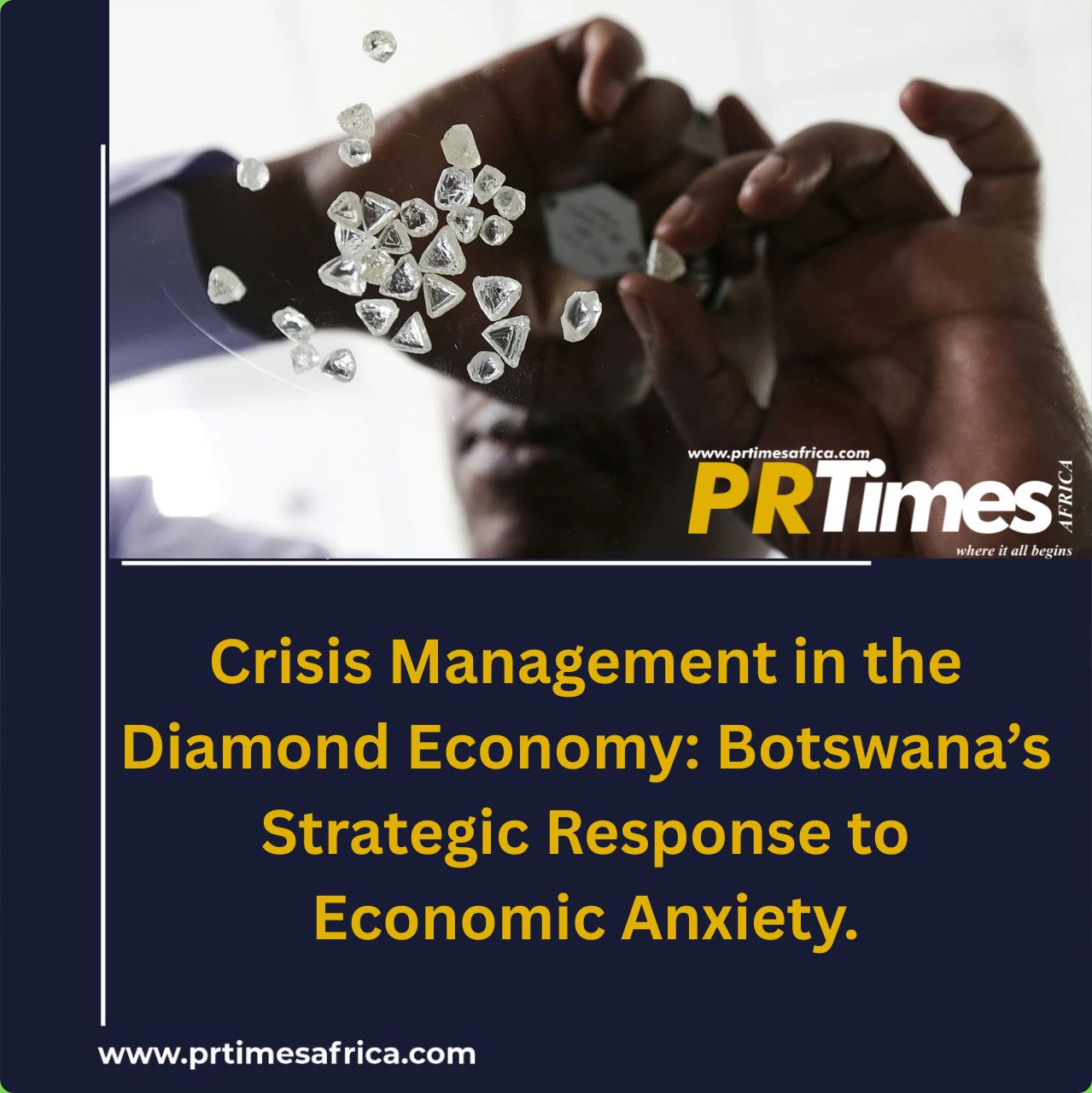
Botswana’s troubles began surfacing in late 2024. Debswana, the joint venture between the government and diamond giant De Beers, reported a staggering 31% drop in production in Q4 compared to the previous year. By mid-2025, rough diamond sales had plummeted nearly 50%. The reasons are multifaceted: weakening global demand, the rise of lab-grown alternatives, and market saturation, particularly in Asia.
These figures translated swiftly into fiscal strain. Government revenue projections were slashed, non-essential projects paused, and discussions around wage payment delays began surfacing in both public sector unions and press columns. While Botswana’s economic managers have long been lauded for their discipline, even the most robust fiscal frameworks struggle under prolonged pressure.
But in Botswana’s case, it isn’t just about numbers. It’s about trust, and the messaging around it.
When the Economy Shakes, So Does the Public Mood
For a nation built on economic confidence, public perception is a vital currency. And in times of turbulence, communication becomes a core policy tool, not just an accessory.
The economic challenges facing Botswana have elicited a growing sense of unease among its citizens. Youth unemployment remains high, access to formal employment is tightening, and fears of recession loom. In communities where diamond-linked employment, direct or indirect, is a lifeline, the emotional stakes are rising.
That’s where strategic communication steps in.
The Government’s Communication Response: A Balancing Act
In 2025, Botswana’s government embarked on a multi-layered approach not just to economic management, but to message management. From a public relations and communications perspective, it provides a revealing case study in crisis messaging, expectation shaping, and long-term narrative control.
- Reframing the National Conversation: From Diamonds to Diversification
At the core of Botswana’s messaging is a pivot from reliance to resilience. The state has accelerated its Economic Diversification Drive (EDD), positioning the initiative as a national imperative rather than a technocratic policy. Strategic communications teams have been tasked with rebranding sectors like tourism, agriculture, and technology as the “new diamonds”, symbols of a future not anchored in the past.
Crucially, this isn’t just about content, it’s about consistency. Government spokespeople, ministry press offices, and trade envoys have maintained tight message discipline, underscoring a single narrative: Botswana is evolving.
- Transparency Without Alarmism
Botswana’s leadership has also walked a delicate tightrope: acknowledging the crisis without inciting panic. Public addresses from the Office of the President and the Ministry of Finance have been notably candid, openly discussing fiscal shortfalls, production declines, and the impact on state services.
But alongside realism comes reassurance. Communiqués emphasize the country’s sovereign wealth fund (the Pula Fund), strong reserves, and enduring investor confidence as buffers against a worst-case scenario. This careful blend of candor and calm reflects a textbook example of reputational risk management in government communications.
- Protecting the Social Contract
Public trust is not only maintained through information, but through action. Recognizing the social risk of discontent, the government has prioritized job protection within the diamond sector where possible, and launched high-visibility up-skilling programs for youth and displaced workers.
Communications around these efforts have emphasized inclusion and access. National TV, radio, and social media have carried a unified message: You are not being left behind. For Botswana’s communications professionals, this has been a case of not just announcing programs, but making citizens feel seen within them.
- Strategic Media Engagement
In a country with high media literacy and strong independent journalism, Botswana’s public information strategy has leaned into proactive engagement. Press briefings, editorial outreach, and collaborative storytelling with local journalists have allowed government messages to reach audiences via trusted intermediaries. In times of uncertainty, credibility is often best borrowed from respected voices.
Lessons for Communications Professionals
From a PR and communications perspective, Botswana’s handling of its diamond decline offers several insights:
Messaging must evolve with the economic narrative. When the engine of growth shifts, so must the symbols and language used to describe the future. Botswana’s shift from “diamond capital” to “regional innovation hub” is still embryonic, but communicatively essential.
Public reassurance depends on more than optimism. Botswanese citizens haven’t been pacified with platitudes. The government’s approach, grounded in data, tempered by realism, has retained public trust even in a downturn.
Trust is built through visibility and voice. In moments of economic panic, governments must speak with their people, not at them. Botswana’s use of vernacular media, community radio, and inclusive language has made a technical crisis feel humanely addressed.
Beyond the Diamonds: Crafting the Next National Identity
Botswana’s economic crossroads is more than a fiscal dilemma, it’s a branding challenge. The country’s global reputation has long rested on a glittering stone. Now, it must be reimagined.
For PR professionals, communications strategists, and policymakers across Africa, Botswana’s transition underscores an important truth: managing public sentiment during economic transition is as much a communications task as a financial one.
If diamonds once shaped Botswana’s story, storytelling may shape its next chapter.
- China’s Premier Visits Zambia in Landmark Trip as Global Powers Compete for Investment Influence.
- Winning Africa’s Heart: Why Internal Communication Will Define the Workplace of 2027
- Rwanda Announces Visa-Free Entry for All African Citizens
- Why Africa’s Smartest Communicators Should Keep Their Critics Close
- Why Tinubu’s Tough Reforms Demand Unified, Strategic Government Communication
- International Men’s Day 2025: Celebrating Men and Boys Across Africa and the World.