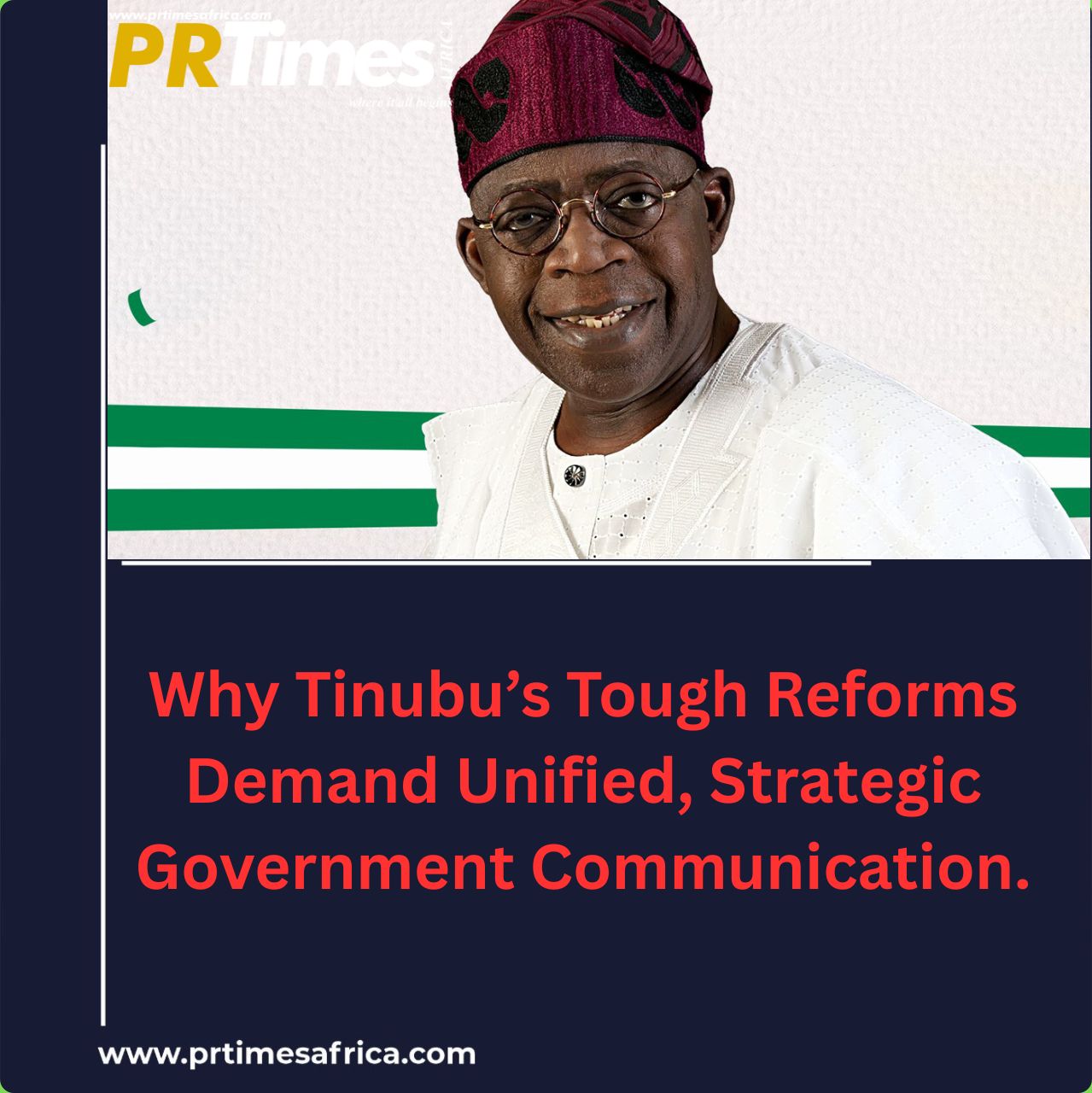
Why Tinubu’s Tough Reforms Demand Unified, Strategic Government Communication
By Musa Sunusi Ahmad:
“When leadership takes bold steps, communication must step up too.”
In the first two years of President Bola Ahmed Tinubu’s administration, a new governing philosophy has emerged, decisive, market-oriented, reform-driven. Dubbed informally by analysts as the Tinubu Doctrine, it prioritizes long-term structural change over short-term political comfort. From eliminating fuel subsidies to floating the naira and reforming the tax system, the administration has leaned into bold, often painful decisions in pursuit of economic stabilization and national renewal.
But there’s a problem. While the doctrine may be economically sound and strategically bold, its public communication has often lagged behind. The result? Confusion, anxiety, and resistance from a population that’s not always sure what’s happening, or why.
The solution? Synchronized messaging at the highest levels of government.
The Burden of Boldness
Tinubu did not inherit an easy political landscape. Upon taking office, he was immediately faced with a fiscal crisis, inflationary pressures, and declining public trust in institutions. His response was not to delay, but to act, and act hard. “Subsidy is gone,” he declared on day one, instantly changing the economic temperature of the nation.
This approach, direct, unapologetic, urgent, has defined his presidency. But a doctrine built on hard choices requires a carefully calibrated communication ecosystem to support it. In Nigeria, where over 200 million people absorb news in different languages, cultures, and levels of media literacy, clarity isn’t just important, it’s essential.
“When the message is fragmented, the policy is weakened, even if it’s the right policy.”
-Communications strategist, Abuja
What Is the Tinubu Doctrine?
Though not formally codified, the Tinubu Doctrine can be understood through three main tenets:
- Reform over populism: Embracing unpopular but necessary economic decisions.
- Market-driven governance: Prioritizing private-sector-led growth and deregulation.
- Decisive leadership: Swift action over prolonged deliberation.
These pillars demand not just effective execution, but strategic storytelling, both to inform and to sustain public buy-in during periods of discomfort. This is where communication becomes a core part of governance.
The Messaging Gap
Despite having a talented team across ministries, Nigeria’s communication landscape has often appeared uncoordinated. Key announcements are sometimes made without pre-briefing the public or aligning talking points across government entities. This leads to:
- Conflicting explanations from ministers
- Reactive media engagement instead of proactive storytelling
- Missed opportunities to build empathy and consensus
- Amplification of misinformation via social media and informal networks
One notable example was the rollout of subsidy removal. The economic rationale was strong, but the messaging was fragmented, some ministers soft-pedaled the impact, while others were overly technical. Meanwhile, citizens struggled to understand how the change would affect their daily lives.
Why Synchronization Matters
Synchronized messaging is more than having everyone say the same thing, it’s about ensuring that the narrative is aligned, empathetic, and strategic.
Here’s what synchronized messaging under the Tinubu Doctrine should look like:
- Unified Voice: Ministers, agency heads, and spokespersons speaking from the same script, with room for contextual nuance.
- Coordinated Timing: Avoiding policy surprises; preparing the public through phased messaging before implementation.
- Crisis Preparedness: Real-time coordination during economic shocks, protests, or misinformation campaigns.
- Audience-Specific Messaging: Adapting communications for different demographic, linguistic, and cultural segments.
The Case for Institutionalizing Communication Strategy
To operationalize synchronization, the administration could adopt a number of institutional tools:
- Messaging Councils Within FEC
A sub-committee of the Federal Executive Council (FEC) focused solely on narrative alignment, media strategy, and crisis messaging for all major policy actions.
- Central Messaging Playbooks
Before any major reform or policy rollout, a communications playbook should be developed, including objectives, key messages, talking points, FAQs, and designated spokespersons.
- Training for Ministers and Media Aides
Not all government officials are natural communicators, but they can be trained. Two sessions per year for media handling, crisis comms, and digital strategy would dramatically improve public messaging.
“This is not spin; it’s strategic clarity. Nigerians deserve to know the what, the why, and the how.”
-Analyst
Governance in the Age of Perception
In today’s world, perception can be as powerful as policy. If the public doesn’t understand a policy, or perceives it as hostile, the government loses moral authority, no matter how technically sound the decision may be.
President Tinubu has shown he can lead with firmness. But in a democracy, firmness must walk hand in hand with transparency, empathy, and clarity. These are not just PR values, they are governance tools.
Speak as One, Govern as One
The Tinubu Doctrine is ambitious, and it may well deliver long-term transformation. But without synchronized messaging, it risks being undermined by misunderstanding, fear, and politicized misinformation.
By embedding strategic communication at the core of governance, through synchronized messaging, media training, and narrative discipline, the administration can ensure that its doctrine is not just heard, but understood, respected, and ultimately embraced.
In a complex country like Nigeria, leadership must not only act boldly, it must speak wisely, clearly, and with one voice.
- Emirates returns to Nigeria from 1 October Airline to resume daily operations to Lagos offering unrivalled connectivity for Nigerian travellers
- PRESS RELEASE: Western Cape Government and Hisense partner for new Tevolution Museum.
- PR TIMES AFRICA MEDIA PERSONALITY OF THE WEEK: Sophie Mokoena: Shining a Light on African Stories:
- What Is Green PR? How to Promote Environmental Initiatives and Avoid Greenwashing
- Tanzania Set for Political Shift as Former Finance Minister Mwigulu Nchemba Nominated Prime Minister
- Zimbabwe: Authorities must end massive crackdown on dissent before Southern African Development Community (SADC) summit