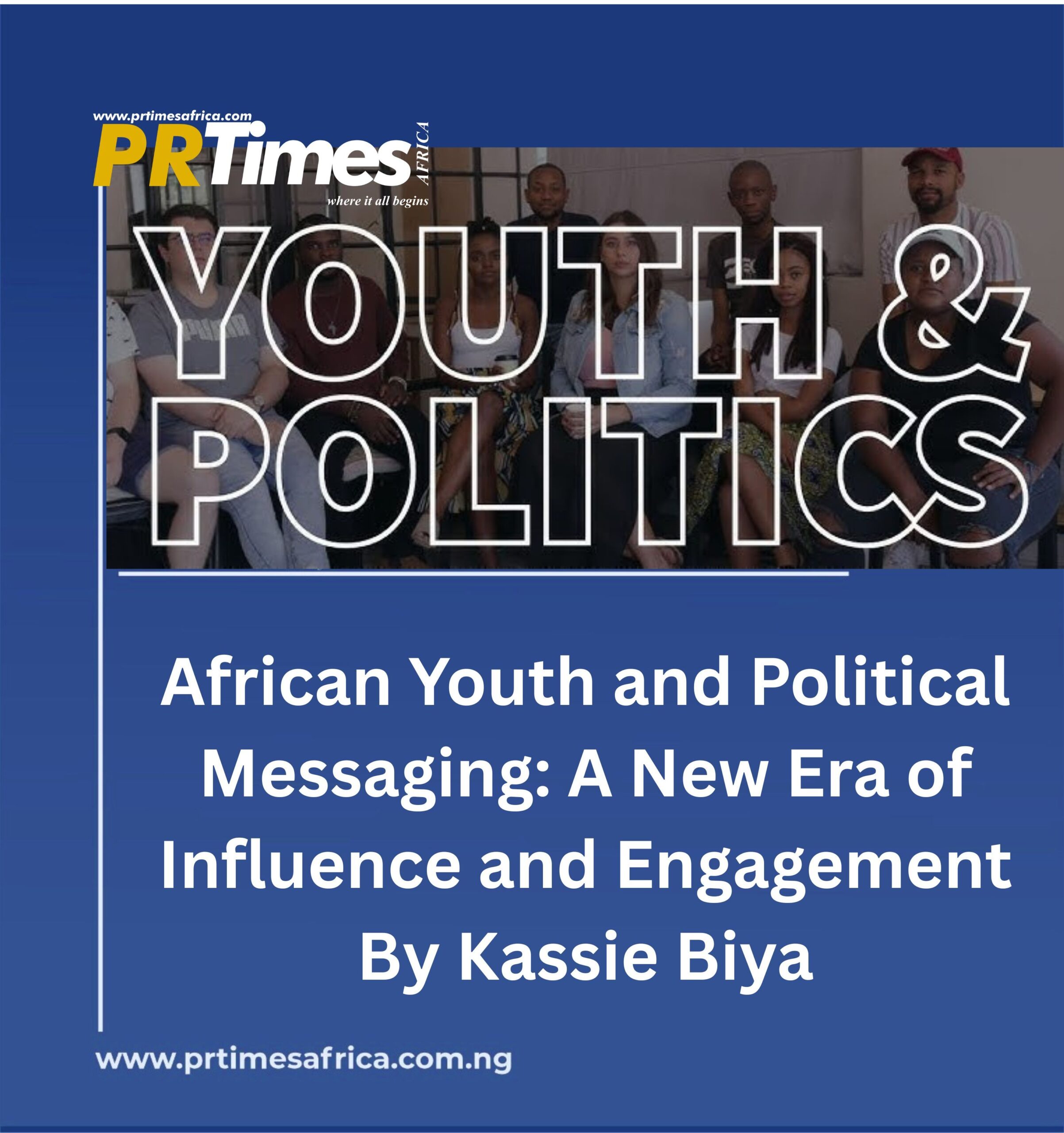
African Youth and Political Messaging: A New Era of Influence and Engagement
By Kassie Biya:
In the age of digital activism and hashtag revolutions, Africa’s youth are not just consuming political messaging, they’re reshaping it.
From #EndSARS in Nigeria to #FeesMustFall in South Africa, political engagement across Africa has taken on a new, dynamic form. Central to this evolution are young Africans, who now make up over 60% of the continent’s population. This demographic shift is rewriting the rules of political communication, forcing governments, political parties, and advocacy groups to rethink how, and where, they craft their messages.
A Generational Awakening
Historically sidelined in policy-making, African youth are no longer willing to be passive spectators. Increased access to education, mobile connectivity, and social media has elevated their awareness of civic rights and political accountability.
Political messaging that once relied heavily on traditional media, radio jingles, party rallies, and newspaper spreads, now competes with sharp, socially-driven content on TikTok, X (formerly Twitter), Instagram, and WhatsApp. Young people are not just the audience; they are creators, influencers, and amplifiers of political discourse.
Messaging That Misses the Mark
Many political campaigns still underestimate this shift. When youth-focused messages are crafted without their input or understanding of digital culture, they often come across as tone-deaf or manipulative. Attempts to use slang, memes, or influencers without authenticity can backfire, creating ridicule instead of resonance.
Worse still, messaging that ignores the real economic and social struggles of young people, unemployment, poor infrastructure, repression, alienates this powerful bloc. The continent’s youth want more than flashy slogans. They want substance, accountability, and platforms for participation.
The Rise of Issue-Based Advocacy
Rather than aligning with party politics, many young Africans are rallying around issues: police brutality, climate justice, education, gender rights, and unemployment. Political messaging that connects with these real-life concerns, and offers viable solutions, gains far more traction than party loyalty ever could.
This is creating a golden opportunity for NGOs, independent candidates, and grassroots movements. Messaging that is community-rooted, inclusive, and delivered in local languages is gaining trust. Influencers, musicians, and comedians are also playing a pivotal role in shaping narratives, often becoming accidental opinion leaders through viral content.
Lessons for PR and Communications Professionals
Communicators working in political or civic spaces across Africa must rethink how they approach young audiences. Here are a few takeaways:
- Co-create, don’t dictate
Collaborate with youth-led groups and digital creators. Involve them in the strategy, not just the rollout.
- Embrace digital-first storytelling
Use visuals, short-form video, and authentic voices. Long speeches and outdated slogans don’t stick.
- Center lived experiences
Frame messages around issues that young people care about, and present real, actionable pathways for change.
- Track sentiment, not just likes
Engagement is more than views. Monitor online conversations, listen actively, and adapt to changing sentiments.
- Be real
Authenticity wins. Young Africans can detect insincerity faster than ever. If it’s fake, they’ll call it out, publicly.
The Road Ahead
Africa’s youth are not just the future, they are the present. Political messaging that fails to reflect this reality risks irrelevance. But for those who listen, engage, and communicate with intention, the opportunity is immense.
In this era, the messenger matters as much as the message, and increasingly, that messenger is a 22-year-old with a smartphone, a cause, and a digital audience of millions.