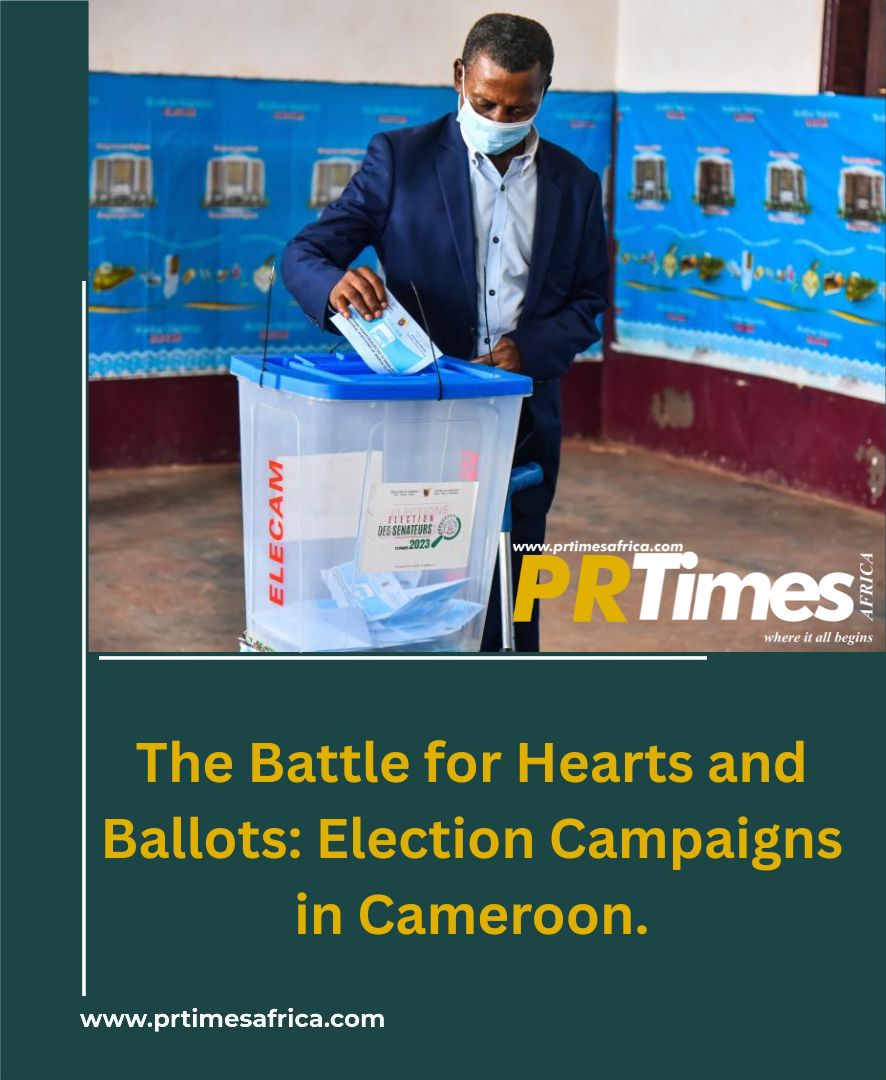
The Battle for Hearts and Ballots: Election Campaigns in Cameroon
By Kassie Biya:
Cameroon’s election campaigns are as complex as the country’s multicultural identity. With over 250 ethnic groups, two official languages (French and English), and a long history of political centralization, crafting and executing an effective election campaign in Cameroon is both an art and a high-stakes strategic endeavor. In a landscape where communication, perception, and public sentiment can make or break political futures, public relations (PR) and communications professionals play a pivotal role.
This article explores the evolution of election campaign strategies in Cameroon, the unique challenges faced by political communicators, and how digital media is reshaping the electoral narrative.
A Legacy of Controlled Messaging
Since independence in 1960, Cameroon’s political sphere has been dominated by the Cameroon People’s Democratic Movement (CPDM), led by President Paul Biya since 1982. For decades, election campaigns were largely symbolic, with limited space for opposition or dissenting voices. Communication was heavily centralized, state-controlled media reigned supreme, and grassroots mobilization followed a top-down model.
In this environment, PR was less about persuasion and more about visibility and reinforcement of loyalty. The party’s presence was emphasized through posters, rallies, and nationalistic rhetoric, with little room for policy-based debate or transparent discourse.
However, the introduction of multiparty politics in the 1990s slowly opened up space for competitive campaigning, albeit within a still tightly controlled system.
Messaging in a Multilingual, Multicultural Society
Campaigning in Cameroon means speaking to a deeply diverse population, not just linguistically, but culturally and politically. Francophone regions dominate in numbers, but the Anglophone crisis in the Northwest and Southwest regions has highlighted the consequences of neglecting regional grievances in national messaging.
To resonate with voters, political campaigns must localize their communication strategies. Language, symbolism, and even candidate selection are adapted to specific constituencies. For PR professionals, this means conducting in-depth cultural research and crafting messages that respect and reflect regional identities.
For example, slogans in the Littoral region might emphasize economic opportunity, while those in the Far North might focus on security and agricultural support. In Anglophone regions, any campaign that fails to address marginalization risks alienating entire communities.
Digital Awakening: The Rise of Social Media Campaigning
Over the past decade, Cameroon has witnessed a slow but steady digital transformation. With internet penetration increasing (despite periodic government shutdowns), social media platforms like Facebook, WhatsApp, and TikTok have become critical tools for both ruling and opposition parties.
For younger, urban voters especially, these platforms offer a counter-narrative to state media and allow political actors to bypass traditional gatekeepers. Opposition figures such as Maurice Kamto of the Cameroon Renaissance Movement (CRM) have used digital campaigns to galvanize support, especially among youth and the diaspora.
PR consultants now work closely with digital strategists, content creators, and influencers to shape online discourse. Hashtag campaigns, viral videos, and livestreamed rallies are becoming standard fare. Yet, the digital shift also raises concerns about misinformation, hate speech, and cybersecurity.
Challenges in Ethical Communications
Despite advances, election campaigns in Cameroon are still marred by misinformation, political intimidation, and a lack of transparency. Fake news spreads quickly, sometimes orchestrated by political actors themselves, and fact-checking remains underdeveloped.
Moreover, the lines between government communication and campaign messaging are often blurred, raising ethical concerns about the misuse of state resources for partisan purposes.
For PR professionals committed to ethical practice, this environment poses dilemmas: How can you advocate for your client while maintaining integrity? How do you navigate censorship, surveillance, or politically motivated violence?
The Road Ahead: What Next for Political PR in Cameroon?
As Cameroon approaches the 2025 presidential election, the stakes are high. With growing discontent over unemployment, governance issues, and the unresolved Anglophone crisis, voters are more skeptical than ever.
To win hearts and ballots, future campaigns must go beyond slogans. Voters demand substance, policies that address their daily realities, and candidates who listen. This is where strategic communications will be decisive.
Campaigns that invest in research-driven messaging, community engagement, and transparent digital strategies will have a competitive edge. The days of one-size-fits-all campaigning are over. Political communications in Cameroon is entering an era where authenticity, adaptability, and accountability will be the ultimate currency.
PR at the Heart of Democracy
In Cameroon, as elsewhere, elections are not just about votes, they are about voices. And it is the role of PR and communications professionals to amplify, shape, and sometimes challenge those voices. Whether in Yaoundé or Bamenda, Douala or Maroua, the future of democratic engagement will depend not just on who speaks, but on how, and to whom, they are speaking.
For communicators, the message is clear: in the race for political legitimacy, strategy matters. But trust matters more.