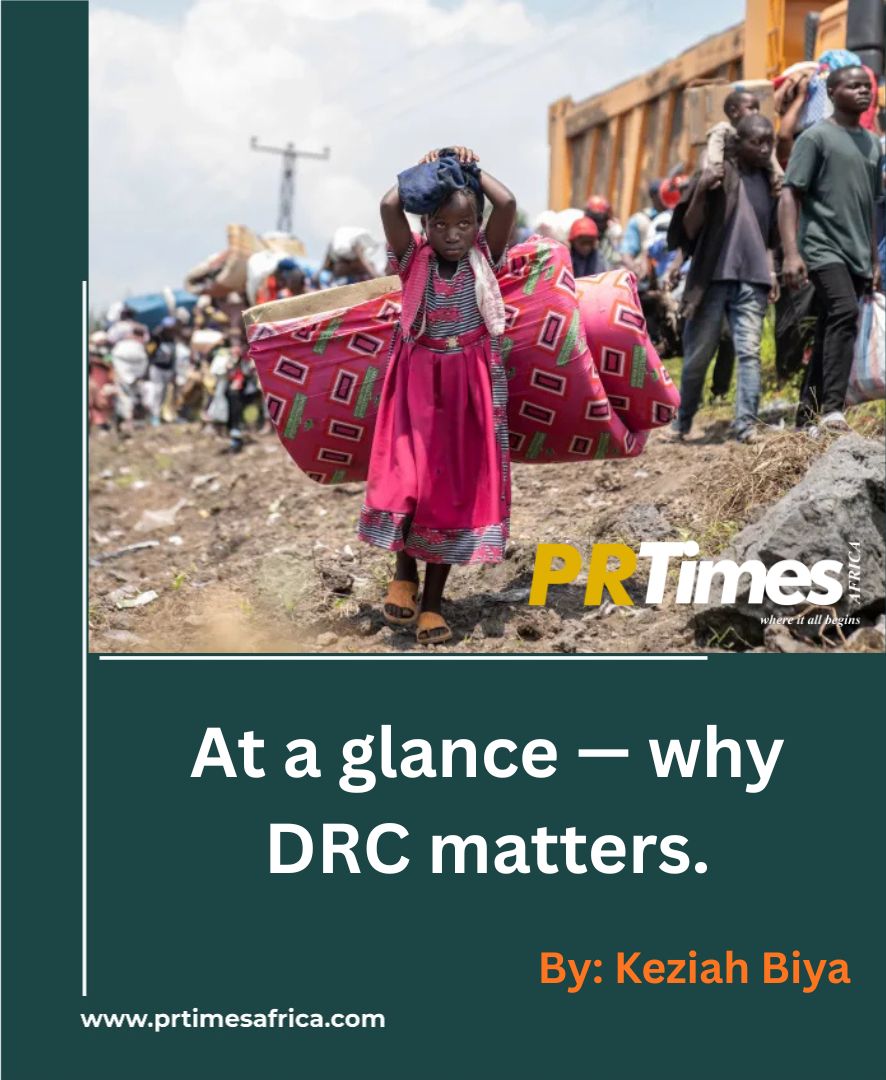
At a glance — why DRC matters
The DRC holds the world’s dominant share of cobalt reserves and supplies the majority of global cobalt used in batteries; it’s also a top global producer of copper, and an important source of gold, tin (cassiterite), tantalum (coltan), tungsten and other strategic minerals.
Main minerals & markets
Cobalt used in lithium-ion batteries and specialty alloys. The DRC supplies the lion’s share of global cobalt (estimates commonly 70% of refined market share at times), making its policies and output critical for EV and electronics supply chains. Major buyers and processors are heavily concentrated in China.
Copper large industrial-scale mines (both foreign and state/joint ventures) produce copper that largely flows to global smelters and industrial buyers; copper is central to DRC export earnings.
Gold, tin (cassiterite), tantalum (coltan), tungsten often produced both by large companies and by artisanal and small-scale miners (ASM). Tin/tantalum/tungsten/gold (3TG) are the classic “conflict minerals” historically linked to insecurity in the eastern provinces.
How minerals are produced and traded (formal vs. informal)
Industrial mining: large-scale, licensed operations (often joint ventures with foreign companies) extract ore, which is sold/exported or processed locally if refineries exist. Foreign capital, particularly from Chinese firms — plays a major role in financing mines and infrastructure.
Artisanal & small-scale mining (ASM): millions of Congolese depend on ASM for livelihoods. ASM is often informal, poorly regulated, and hard to trace, this creates major human-rights, child-labour and conflict-financing risks, plus difficulties for responsible sourcing. Recent efforts aim to formalize traceability of artisanal cobalt.
Recent and high-impact policy moves (2024–2025)
Export controls and quotas on cobalt: The Congolese authorities have used export suspensions and quotas on cobalt to try to stabilize prices and encourage local processing. In 2025 there were temporary export suspensions and later a quota regime introduced to control volumes and support prices. These measures directly affect global supply and prices because DRC supplies most cobalt.
Moves to formalize artisanal cobalt: State and parastatal actors have begun traceability initiatives for artisanal cobalt (e.g., the first recorded shipments of traceable artisanal cobalt), aiming to improve ESG compliance and access to responsible buyers.
Major commercial and geopolitical players
China: Chinese mining firms and state-backed investments are deeply embedded in DRC mining (infrastructure-for-minerals deals, mine investments, and downstream processing). China is the biggest single market/processor for many DRC minerals.
Global miners & traders: Multinationals (major miners, traders and refiners) operate mines, purchase concentrates, or source refined metal; they are affected by DRC export rules and by buyer due-diligence demands from Western OEMs and smelters.
Supply-chain risks & governance challenges
Conflict & financing of armed groups: Minerals from parts of eastern DRC have historically financed armed groups. International policy responses (e.g., regulatory due-diligence regimes and corporate sourcing policies) target this risk, but impacts on peace and local welfare are mixed.
Illicit trade & smuggling: Porous borders, weak governance in certain regions, and complex trading networks create avenues for smuggling, often rerouting minerals through neighboring countries and complicating traceability.
Human rights & labor risks: Child labor, hazardous working conditions, and lack of social protections are persistent problems in ASM operations. Traceability and formalization programs aim to tackle this but scale and enforcement are challenges.
International regulation & corporate due diligence
OECD Guidance: Companies sourcing from conflict-affected and high-risk areas are urged to follow the OECD due-diligence guidance for responsible mineral supply chains; this is the prevailing international standard for corporate traceability and risk-mitigation.
U.S. Dodd-Frank (Section 1502) and disclosure rules: U.S. regulation has required, in different forms over time, traceability and disclosures for 3TG minerals from the DRC/adjoining countries and public reporting/ enforcement debates continue about their effectiveness. GAO and other reviews have questioned how much disclosure rules alone have improved peace and security.
Economic impacts and revenue management.
Revenue potential vs. capture: Minerals are a huge revenue potential for DRC but translating resource wealth into inclusive development is hampered by limited processing capacity, governance shortfalls, illicit trade and renegotiations over royalties/terms. Recent export policies (quotas, bans) are explicitly intended to capture more value domestically (e.g., by favoring local processing) and to stabilize export revenue.
Recent trends you should know (2024–late-2025)
Price and policy volatility: Oversupply and price drops in cobalt markets have driven government interventions (export suspensions/quotas) to support prices. Those interventions materially reshape global supply expectations.
Traceability experiments scaling: The first significant batches of traceable artisanal cobalt were reported (2025), showing pilots that could unlock responsible buyers for ASM-sourced cobalt if scaled.
Large Chinese investments continue: Chinese firms keep committing large capital (both for mines and associated infrastructure), shifting the investment and geopolitical balance of DRC mineral trade.
Practical implications for different actors
Buyers / OEMs: Need robust due-diligence (OECD framework), multi-tier traceability, and monitoring of regulatory changes (quotas, export bans) to manage supply risks.
Investors / traders: Must model political risk (export controls, quota enforcement) and ESG liabilities tied to ASM and conflict-area sourcing.
Policymakers / advocates: Should balance revenue capture and local processing goals with protecting ASM livelihoods and preventing unintended displacements or illicit markets. Traceability pilots show promise but need scale and safeguards.