PR Times Africa Woman of the Week: 
 Reni Folawiyo: Nigerian lawyer turned fashion entrepreneur, founder of Alara (West Africa’s first luxury fashion store) and owner of NOK restaurants, promoting African cuisine
Day: July 2, 2025
-
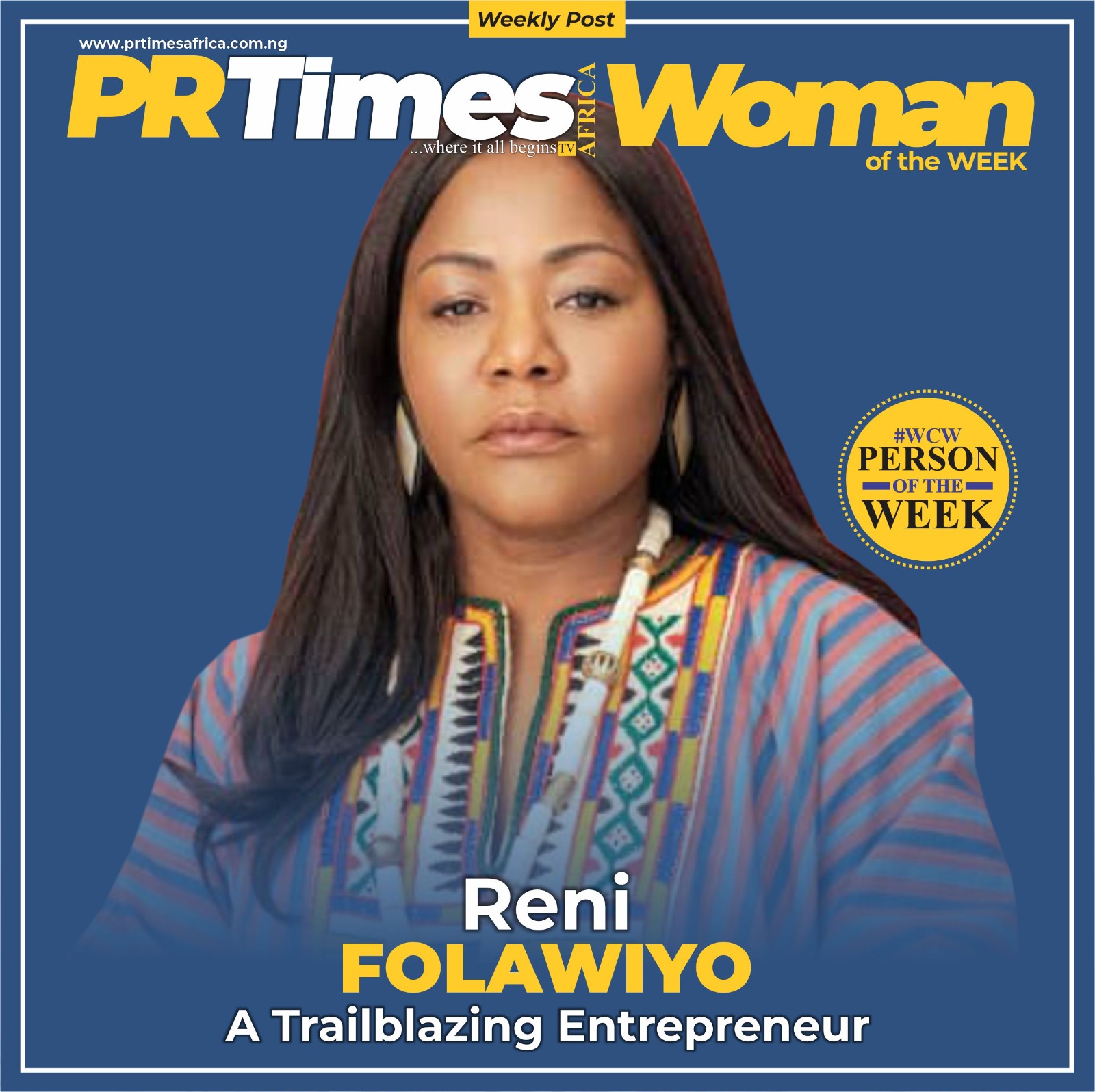
PR Times Africa Woman of the Week:Reni Folawiyo: Nigerian lawyer turned fashion entrepreneur, founder of Alara (West Africa’s first luxury fashion store) and owner of NOK restaurants, promoting African cuisine.
-
The European Union (EU) and World Food Programme (WFP) enhance self-reliance and food security for refugees and host communities in Uganda.
The European Union (EU) and World Food Programme (WFP) enhance self-reliance and food security for refugees and host communities in Uganda.
This contribution from the EU will support the food security for 12,600 refugees in the Nakivale and Oruchinga refugee settlements and 5,400 host community members
The United Nations World Food Programme (WFP) has welcomed a contribution of EUR 5 million from the European Union (EU) to support income-generating activities to enhance self-reliance and food security for refugees and host communities in Uganda.
Uganda hosts 1.9 million refugees and asylum seekers, making it the largest refugee-hosting country in Africa. The Government of Uganda’s national refugee policy allows refugees to work and move freely, but economic opportunities remain scarce in and around refugee settlements, meaning that humanitarian and development assistance are a lifeline for refugee families as they seek to build a self-reliant life in safety.
“Empowering refugees in Uganda to become self-reliant has never been more important,” said Genevieve Chicoine, WFP’s Acting Country Director in Uganda. “This vital contribution from the European Union will enable WFP to support thousands of refugees and host communities with the skills they need to earn a living and put food on the table.”
WFP supports 660,000 refugees in Uganda with cash transfers and in-kind food assistance, as well as programmes to increase self-reliance and improve the nutrition of mothers and their children.
This contribution from the EU will support the food security for 12,600 refugees in the Nakivale and Oruchinga refugee settlements and 5,400 host community members. It includes training on best farming practices like regenerative agriculture, financial literacy skills for business management and resource growth, and nutrition assistance for pregnant and breastfeeding women.
“This partnership reflects a shift from delivering aid to delivering opportunity,” said Guillaume Chartrain, European Union Deputy Head of Delegation to Uganda. “Refugees and host communities are gaining the tools they need to shape their own futures. By investing in people’s skills and potential, we are supporting more stable, self-reliant communities—and that benefits everyone.”
This initiative is part of the European Union’s Action for Protection, Assistance and Durable Solutions for Displaced Populations in Sub-Saharan Africa (EUPADS), supporting efforts to address the root causes of displacement while reinforcing national policies for displaced people living in countries like Uganda.
WFP’s food assistance programmes in Uganda are facing critical funding shortfalls. In May, the agency was forced to halt food assistance for nearly one million refugees and reduce food rations for others to an unprecedented low of 22 percent.
-
International Rescue Committee (IRC) Chad prepares for cholera outbreak as World Health Organisation (WHO) warns of regional spread.
International Rescue Committee (IRC) Chad prepares for cholera outbreak as World Health Organisation (WHO) warns of regional spread.
“Following concerns expressed by the World Health Organisation (WHO) about the spread of the unprecedented Cholera epidemic in Sudan to neighbouring countries, the International Rescue Committee (IRC) is launching prevention efforts, including raising awareness amongst vulnerable communities of how to prevent the spread of disease, to prepare for a possible cholera outbreak. With the rainy season approaching in Chad, health teams warn that the risk of an epidemic is increasing. We know how quickly flooding can overwhelm sanitation systems and create ideal conditions for the rapid spread of cholera. We’re working closely with communities to raise awareness and reduce risks before the disease reaches eastern Chad. This includes surveillance at the borders and awareness-raising in the camps, where the IRC is actively involved, alongside coordination with the Ministry of Health, local authorities, and partners to strengthen overall response preparedness.”
In Sudan, which is now the largest displacement crisis in the world, the epidemic saw a dramatic resurgence at the end of May, with more than 82,000 cases and over 2,100 deaths reported across the country, with Khartoum, South Darfur and East Darfur showing increasing trends.
-
The World Health Organization (WHO) actively responds to anthrax epidemic in the Democratic Republic of the Congo (DRC)
The World Health Organization (WHO) actively responds to anthrax epidemic in the Democratic Republic of the Congo (DRC).
The World Health Organization (WHO) actively responds to anthrax epidemic in the Democratic Republic of the Congo (DRC) The close collaboration between the human, animal and environmental health services is designed to protect lives in response to health emergenciesGOMA, Democratic Republic of the Congo, In mid-May, 57-year-old Pierre* was admitted to a health centre in the Lubero area after suffering from severe itching on his right hand, followed by pruritus and a swelling of his forearm. He was treated and, given the unusual symptoms, samples were collected and sent for analysis at the laboratory of the Institut National de Recherche Biomédicale (INRB) in Goma. An alert was previously issued at the end of March 2025 following the death of dozens of buffalo and hippopotamuses in Virunga National Park in North Kivu. Samples taken on 29 March from a recently deceased hippopotamus and examined at the Goma veterinary laboratory revealed the presence of spores of the bacillus responsible for anthrax.Anthrax is a bacterial zoonosis (disease transmissible from animals to humans) that generally affects ruminants (cows, sheep and goats). Humans can become infected through contact with a sick animal or contaminated products (such as meat, blood, wool, hides and bones). All forms of human anthrax (cutaneous, gastrointestinal and respiratory) require hospitalization and medical treatment. To ensure a multi-sectoral response to this concerning health situation, the national departments of health, environment, fisheries and livestock, with support from partners including the World Health Organization (WHO), UNICEF, FAO and CDC Africa, have put the “One Health” approach into practice. The close collaboration between the human, animal and environmental health services is designed to protect lives in response to health emergencies. A delegation from these departments and organisations visited the Binza and Rutshuru health zones from 25 to 28 May 2025 to strengthen surveillance and the response to outbreaks of suspected cases of anthrax in the Binza and Lubero health zones. “One of the high-impact measures led by the national authorities with the support of partners was the development of the national multi-sector anthrax preparedness and response plan. Through this common approach to the response, we can ensure a comprehensive response, from prevention activities to the clinical management of patients. We are confident that this health threat will soon be over,” said Dr Aline Katerekwa Ntamushigo, Medical Supervisor at the National Programme for Emergencies and Humanitarian Action (NPEHA). “Our discussions with those involved on the ground are helping us to manage this risk effectively to protect people, animals and the environment.” Since the announcement of the epidemic, WHO has supported the response on several levels. Dr Célestin Ndaliko, epidemiologist in charge of surveillance at the WHO Office in the DRC, was a member of the response team that went to Binza. “There are major challenges in terms of disease detection. So, every anthrax investigation becomes an act of resilience, a glimmer of hope to prevent the spread of this devastating disease.” As of 26 May 2025, 24 suspected human anthrax cases had been reported, alongside the deaths of 9 goats, one cow, 60 hippopotamuses and 27 buffalo reported in four health zones in the eastern province of North Kivu.“Our support has been provided at several levels, and we are particularly keen to provide appropriate care for those affected. In most cases, the disease can be cured with antibiotics, which must be prescribed by a health professional,” explained Dr Leopold Ouedraogo, Emergency Manager in the provinces of North and South Kivu.WHO has made more than four tonnes of medicines available to 12 health facilities, a large quantity of which has been handed over to the authorities in the Binza health zone in Rutshuru territory. “So far, even if our Binza health zone has not yet recorded any human cases, we have what it takes to prevent and be ahead of what could happen,” said Dr Bernard Kakule, Chief Medical Officer for the Binza health zone.WHO has played a central role in cross-border coordination between the Democratic Republic of Congo and Uganda, facilitating communication and collaboration between the two countries in response to the re-emergence of anthrax in humans and animals. Surveillance has thus been strengthened, notably by activating the “One Health” unit in Rutshuru, to ensure early detection and rapid response in high-risk health zones by integrating the human, animal and environmental dimensions of health. To build local capacity, the WHO has also supported the training of community relays, the development of awareness-raising materials and the conduct of public and door-to-door awareness-raising campaigns on disease prevention measures. The Organization also donated prevention kits (chlorine, hand sanitizers), essential medicines and medical equipment for treatment, and encouraged collaboration with technical partners such as INRB to improve epidemiological surveillance. Despite security and logistical challenges, WHO’s support has enabled the foundations to be laid for a coordinated response, while highlighting the need for greater commitment to community awareness-raising, the safe management of carcasses and the vaccination of animals at risk. Since the epidemic was announced, 24 people have been treated in health facilities in the Binza and Lubero health zones, including Pierre, who has been discharged from the hospital and resumed his life. On the ground, our teams are still working hard to continue protecting people and their herds, working together in the face of a common threat. -
 Malawi Secures Gains Against Polio, Strengthens Health SystemsMalawi is taking strategic steps to sustain its hard-won gains against polio and strengthen its broader health system after officially closing its reimported wild poliovirus outbreak. The country has made significant progress in:– Polio Transition Planning: Malawi held a National Polio Transition Planning meeting to ensure the infrastructure built to eradicate polio continues to serve communities.– Sustaining Gains*: The transition plan aims to protect polio assets, including trained personnel and disease surveillance systems, and integrate them into the national health system.– Long-Term Resilience: Malawi’s plan supports national ownership of essential polio functions, including surveillance, immunization, and outbreak response.Key Highlights:– Malawi was certified free of indigenous wild poliovirus in 2020 but detected a reimported case in 2022.– The country responded swiftly and successfully interrupted transmission by May 2024.– The Polio Transition Plan will help secure critical capacities and align them with the Ministry of Health-led Immunization Programme.Expert Insights– Dr. Patrick Wataya Chirwa emphasized the need to strengthen Malawi’s ability to manage core functions nationally.– Sarah Wanyoike highlighted the importance of integrating service delivery and strengthening surveillance across the board.Next Steps:– Malawi will focus on optimizing existing systems, integrating surveillance efforts, and building multisectoral collaboration.– The country will require cross-cutting collaboration among government agencies, local health authorities, partners, and civil society.ConclusionMalawi’s National Polio Transition Plan is a blueprint for sustaining polio eradication efforts and advancing universal health coverage and equity. With support from WHO and partners, Malawi is committed to staying polio-free and healthier for generations to come.
 -
Building local value through skills development at the Learning and Knowledge Development Facility (LKDF) Forum 2025.
Building local value through skills development at the Learning and Knowledge Development Facility (LKDF) Forum 2025.
LKDF Forum 2025: Boosting Local Skills for Sustainable Global Supply ChainsGOTHENBURG, Sweden, July 2, 2025 — The United Nations Industrial Development Organization (UNIDO), backed by the Swedish International Development Cooperation Agency (Sida), hosted the Learning and Knowledge Development Facility (LKDF) Forum 2025 at the World of Volvo in Gothenburg and online. Themed “Skills Development and Local Value Addition: Ensuring Sustainable Growth in Global Supply Chains,” the event emphasized the critical role of localized skills in sectors like manufacturing, energy, healthcare, and industrial processing for fostering resilient economies and enabling multinational corporations and developing nations to prosper.UNIDO’s Director General Gerd Müller opened the Forum, urging increased investment in skills to build competitive, resilient supply chains with greater local value, market access, and prosperity. Sida’s Maria Tegborg reinforced the importance of technical and vocational education (TVET) in closing skills gaps and enhancing economic outcomes responsibly.The Forum highlighted systemic workforce development, supported by strong policies and transparent supply chains, as vital for sustainable growth. Local priorities were a key focus, with Enabel’s Charlotte Vanstallen stressing that initiatives must align with community ambitions to ensure scalability and impact. Discussions also emphasized soft skills, sustainability literacy, ESG compliance, and professionalizing the informal economy through social procurement to promote fair wages and ethical sourcing.Cross-sectoral partnerships, such as UNIDO’s Public-Private Development Partnerships (PPDP), were showcased as effective models for aligning vocational training with industry needs, integrating technical and sustainability skills. The event drew 37 in-person and 231 online participants from diverse sectors, including Sida, the European Commission, the African Union, Volvo Group, Siemens Healthineers, and others.Day one concluded with a call to align industrial policies with education reforms, strengthen global cooperation, and prioritize local communities. On day two, a co-creation workshop with UNIDO and Volvo Group sparked 13 new PPDP project ideas, followed by a visit to the Volvo Trucks Experience Facility, where participants explored innovations and tested vehicles.The Forum underscored that sustainable industrialization hinges on inclusive, partnership-driven approaches to skills development and local value creation.