Day: November 13, 2025

  • Nigeria Reverses Planned 15% Fuel Import Duty Amid Supply and Market Concerns

    Nigeria Reverses Planned 15% Fuel Import Duty Amid Supply and Market Concerns

                Nigeria Reverses Planned 15% Fuel Import Duty Amid Supply and 
    market Concerns
    Nigeria has abandoned plans to introduce a 15 percent import duty on petrol and diesel, the Nigerian Midstream and Downstream Petroleum Regulatory Authority (NMDPRA) announced on Thursday, citing confidence in maintaining stable fuel supplies through the upcoming holiday season.
    The proposed tariff, which had received presidential approval from Bola Ahmed Tinubu as part of broader fiscal reforms to boost non-oil revenue, was originally expected to take effect in December. Its existence came to light last month following the leak of an internal government memo, sparking public debate and concern within the energy sector.
    In a statement, the NMDPRA confirmed that the measure had been shelved:
    > “The implementation of the 15 percent ad-valorem import duty on imported premium motor spirit (PMS) and automotive gas oil (AGO) is no longer in view.”
    Fuel marketers and industry stakeholders had strongly opposed the planned levy, warning that it could deter fuel imports, distort market competition, and increase Nigeria’s dependence on the Dangote Petroleum Refinery, which began limited operations last year. Despite the refinery’s potential capacity of 650,000 barrels per day, Africa’s largest oil producer continues to rely heavily on costly fuel imports to meet domestic demand.
    The NMDPRA moved to reassure consumers that fuel availability will remain stable throughout the festive period, urging the public to avoid panic buying or hoarding.
    Analysts say the government’s reversal reflects a balancing act between fiscal policy and public stability, as Nigeria grapples with inflation, currency pressure, and widespread concern over rising energy costs
  • Tanzania Set for Political Shift as Former Finance Minister Mwigulu Nchemba Nominated Prime Minister

    PR Times Africa Media prtimesafrica@gmail.com

    1:33 PM (0 minutes ago)

    to me
    Tanzania Set for Political Shift as Former Finance Minister Mwigulu Nchemba Nominated Prime Minister:
    Tanzania is on the brink of a major political reshuffle as former Finance Minister Mwigulu Nchemba is poised to become the nation’s next Prime Minister, following his nomination by President Samia Suluhu Hassan. Parliament is expected to endorse the appointment during a vote scheduled for Thursday, a move that could redefine the direction of Hassan’s administration amid mounting political tensions.
    The nomination follows President Hassan’s highly disputed re-election last month, where she was declared winner with an overwhelming 97 percent of the vote. Opposition parties, however, have rejected the results, accusing the ruling Chama Cha Mapinduzi (CCM) party of widespread electoral fraud, including vote rigging and ballot manipulation.
    The aftermath of the polls has been marred by violent unrest, with demonstrators taking to the streets in several cities before and after the vote. According to United Nations reports, hundreds of people have lost their lives in the clashes, while opposition figures claim the death toll exceeds one thousand, alleging that security forces used excessive force against protesters. The Tanzanian government maintains that the number of casualties is far lower but has yet to release an official figure.
    Since assuming office in 2021, President Hassan—Tanzania’s first female head of state—has faced increasing international scrutiny over her human rights record and crackdown on dissent. Her government has been criticized by rights groups for restricting media freedom, detaining opposition leaders, and suppressing civic activism.
    Analysts say the nomination of Mwigulu Nchemba, a seasoned economist and long-serving CCM insider, could be part of a broader strategy to restore confidence within the government and calm domestic unrest, while signaling continuity in economic policy. However, with global attention fixed on Tanzania’s democratic trajectory, observers warn that the coming days will test both Hassan’s political resolve and her government’s commitment to transparency and reform.
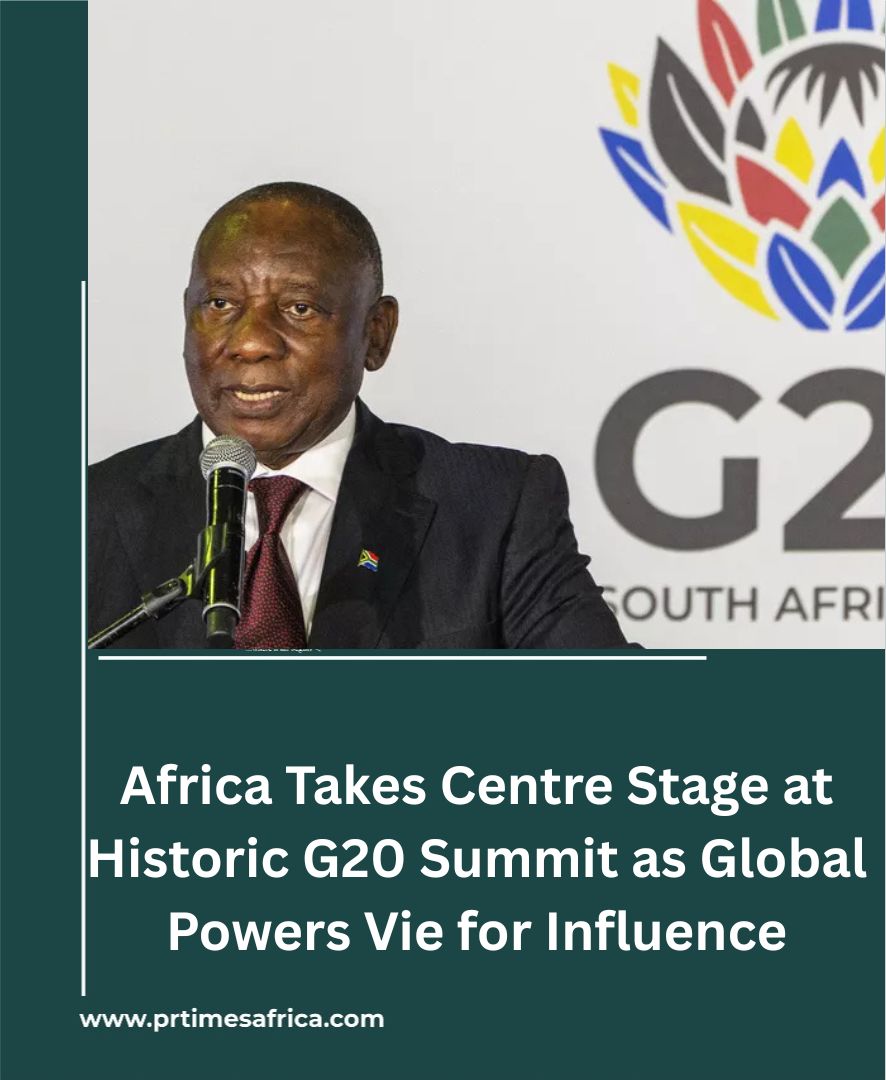
  • Africa hosts G20 for the first time: what the summit means for global influence

    Africa hosts G20 for the first time: what the summit means for global influence

    Africa hosts G20 for the first time: what the summit means for global influence

    History was made in Johannesburg as Africa hosted the first-ever G20 Summit on African soil, signaling a new chapter in the continent’s role in global governance. Under the theme “Solidarity, Equality, Sustainability,” the landmark event positioned Africa not as a policy recipient but as a driving force shaping the world’s economic agenda.
    In his opening address, President Cyril Ramaphosa set a resolute tone, urging global leaders to act decisively on issues that directly affect millions across the continent.
     “Debt distress, climate vulnerability, and unfair trade rules are not abstract issues—they impact millions of African lives daily. This summit must deliver real solutions,” he stated.
    South Africa’s presidency placed Africa’s priorities firmly on the agenda, with discussions centered on:
    Debt relief and restructuring to foster sustainable growth
    Climate finance to support adaptation and green transitions
    Global trade reform for equitable market access
    Reinforcing multilateral institutions to ensure stronger African representation
    Representing the African Union, Chairperson Moussa Faki Mahamat described the summit as “a turning point for inclusive global governance,” emphasizing the continent’s readiness to engage as an equal partner in international decision-making.
    However, the summit was not without controversy. The United States’ decision to boycott—citing concerns over South Africa’s land reform policies—cast a diplomatic shadow over proceedings. Former U.S. President Donald Trump publicly criticized Pretoria’s stance, drawing mixed reactions from delegates and observers alike.
    Despite the geopolitical tensions, the Johannesburg G20 Summit will be remembered as the moment Africa’s voice resonated at the highest level of global diplomacy—assertive, united, and ready to lead.
  • SOUTH SUDAN: THE FALL OF A SUCCESSOR   
    THE MIDNIGHT PURGEJUBA, South Sudan – At 11:47 p.m. on November 12, 2025, the state broadcaster cut into regular programming. A lone anchor read a presidential decree in clipped Arabic and English: “Benjamin Bol Mel is relieved of his duties as Vice President of the Republic of South Sudan, effective immediately. ”Within hours, armored vehicles sealed off Bol Mel’s riverside mansion in the Tong ping district. National Security Service (NSS) agents disarmed his 40-man guard detail. Ugandan troops—quietly stationed for his protection under a bilateral agreement—were ordered to stand down. By dawn, the once-powerful businessman-turned-politician had been stripped of his party post, demoted from general to private, and vanished from public view. No official reason was given. No successor was named. Bol Mel, 52, had been appointed only nine months earlier as Vice President for Economic Affairs. By May, he was first deputy chairman of the ruling Sudan People’s Liberation Movement (SPLM)—a trajectory that fueled persistent rumors he was President Salva Kiir’s chosen heir. That ascent ended in a single stroke.
    A NATION ON THE BRINK The purge extends far beyond one man. In the same decree, Kiir sacked the Central Bank governor and the head of the National Revenue Authority—both seen as Bol Mel loyalists. The moves signal a wider consolidation of power amid escalating instability.  Bol Mel has long been a lightning rod. Since 2017, he has been under U.S. sanctions for alleged corruption, accused of funneling millions through his company, ABMC Limited. A recent UN report claims entities linked to him received $1.7 billion for road projects that were never built—contracts awarded during South Sudan’s oil-fueled boom years, now a symbol of systemic plunder.
    He has never publicly responded to the allegations.


    A Fragile Peace Unravels South Sudan’s political architecture—five vice presidents mandated by the 2018 peace deal—was meant to prevent a return to war. That structure is now in tatters.In March 2025, First Vice President Riek Machar, Kiir’s civil war rival, was arrested in a nighttime raid. Charged with treason and murder, he remains under house arrest. His party, the SPLM-IO, declared the peace agreement “effectively dead. ”Elections, originally due in 2024, have been postponed twice—now slated for December 2026. Critics call it a stalling tactic. The government cites unfinished census and constitutional reforms. Citizens see only unpaid salaries and rising hunger.


    Violence ReturnsSince January, fighting between Kiir’s forces and splinter armed groups has displaced 370,000 people. Clashes in Greater Pibor, Jonglei, and Equatoria states have destroyed clinics, schools, and farms.The UN warns of a “renewed slide into full-scale conflict.” Over 300,000 have fled across borders since the Machar arrest. Another 2.6 million remain internally displaced—many still scarred from the 2013–2018 civil war that killed nearly 400,000.


    What Happens Next?With no clear successor, no functioning peace deal, and no elections in sight, South Sudan teeters on the edge.Kiir, 74, rules by decree. Bol Mel’s fall removes a powerful rival—but also a potential bridge to younger elites. The vacuum risks deeper factionalism within the SPLM and the military.International calls for dialogue grow louder. The African Union and IGAD have urged mediation. The UN Security Council has renewed sanctions threats. But enforcement remains weak.For the people of South Sudan—12 million strong, oil-rich, and war-weary—the question is no longer who will lead, but whether the country can survive another collapse.

  • Gabon researchers test promising single-dose malaria treatment

    Gabon researchers test promising single-dose malaria treatment

    Gabon researchers test promising single-dose malaria treatment

    Global Health Breakthrough: Single-Dose Malaria Treatment Offers Hope Against Drug Resistance in Endemic Regions Researchers in Gabon have achieved a significant milestone in malaria control with a novel single-dose treatment that demonstrates efficacy comparable to standard multi-day regimens, potentially transforming management of the disease in high-transmission areas world wide. The clinical trial, led by Dr. Ghyslain Mombo-Ngoma at the Medical Research Centre of Lambaréné (CERMEL), evaluated a fixed-dose combination of four well-established antimalarial compounds: sulfadoxine, pyrimethamine, artesunate, and pyronaridine. Administered as a one-time oral therapy, the regimen successfully cleared Plasmodium parasites from the bloodstream in 93% of participants within 28 days—matching the cure rate of the World Health Organization-recommended three-day artemisinin-based combination therapy (ACT).“This is not a new drug discovery, but a strategic repurposing of existing, affordable medicines,” Dr. Mombo-Ngoma explained. “With Plasmodium falciparum developing partial resistance to artemisinin derivatives across Southeast Asia and emerging reports in Africa, we urgently need alternatives that preserve treatment efficacy without requiring complex supply chains or prolonged patient follow-up.”The study enrolled patients across urban and rural sites in Gabon, reflecting real-world conditions in sub-Saharan Africa, where malaria accounts for approximately 94% of global cases and deaths. Gabon’s 2024 surveillance data from the National Malaria Control Program documented over 154,000 confirmed infections, with children under five comprising the majority of severe cases and fatalities. Program director Hugues Ronel Essanga Ngomo described malaria as “a leading cause of childhood mortality and a persistent barrier to socioeconomic development.”Patient adherence remains a critical challenge in malaria-endemic settings. Multi-day treatments often see completion rates below 60% due to logistical barriers, cost, side effects, or symptom resolution after initial doses—creating selective pressure that accelerates drug resistance. A single-dose option addresses these gaps directly.Libreville resident Julicia Nfono, a mother of three who has experienced recurrent malaria, highlighted the daily burden: “We sleep under insecticide-treated nets, eliminate standing water, and take every precaution, yet the disease returns with the rains. A treatment that works in one visit would change everything for families like mine.”Beyond compliance, the four-drug synergy targets multiple parasite metabolic pathways simultaneously, reducing the likelihood of resistance emergence. Pyronaridine, a longer-acting partner drug, provides post-treatment prophylaxis for up to 42 days, potentially lowering reinfection rates in high-transmission zones.The WHO’s 2024 World Malaria Report warns that global progress against the disease has stalled, with 249 million cases and 608,000 deaths recorded in 2023—figures largely unchanged since 2015. Partial artemisinin resistance now confirmed in Rwanda, Uganda, and Eritrea underscores the urgency of diversified therapeutic strategies.While regulatory approval and large-scale production remain pending, the Gabon trial—published in a forthcoming peer-reviewed journal—has drawn attention from the Global Fund, African Medicines Agency, and Medicines for Malaria Venture. Pilot implementation studies are being planned in the Democratic Republic of Congo and Nigeria.If validated at scale, the single-dose regimen could integrate into seasonal malaria chemoprevention campaigns, mass drug administration efforts, and routine outpatient care—delivering a cost-effective, resistance-mitigating tool to the world’s most vulnerable populations.

Hot daily news right into your inbox.

Headline

Never Miss A Story

Get our Weekly recap with the latest news, articles and resources.
Cookie policy
We use our own and third party cookies to allow us to understand how the site is used and to support our marketing campaigns.