Day: November 14, 2025

  • Akon Arrested in Georgia on Bench Warrant for Missing Court Date Tied to Suspended Driver’s License.

    Akon Arrested in Georgia on Bench Warrant for Missing Court Date Tied to Suspended Driver’s License.

    Akon Arrested in Georgia on Bench Warrant for Missing Court Date Tied to Suspended Driver’s License.


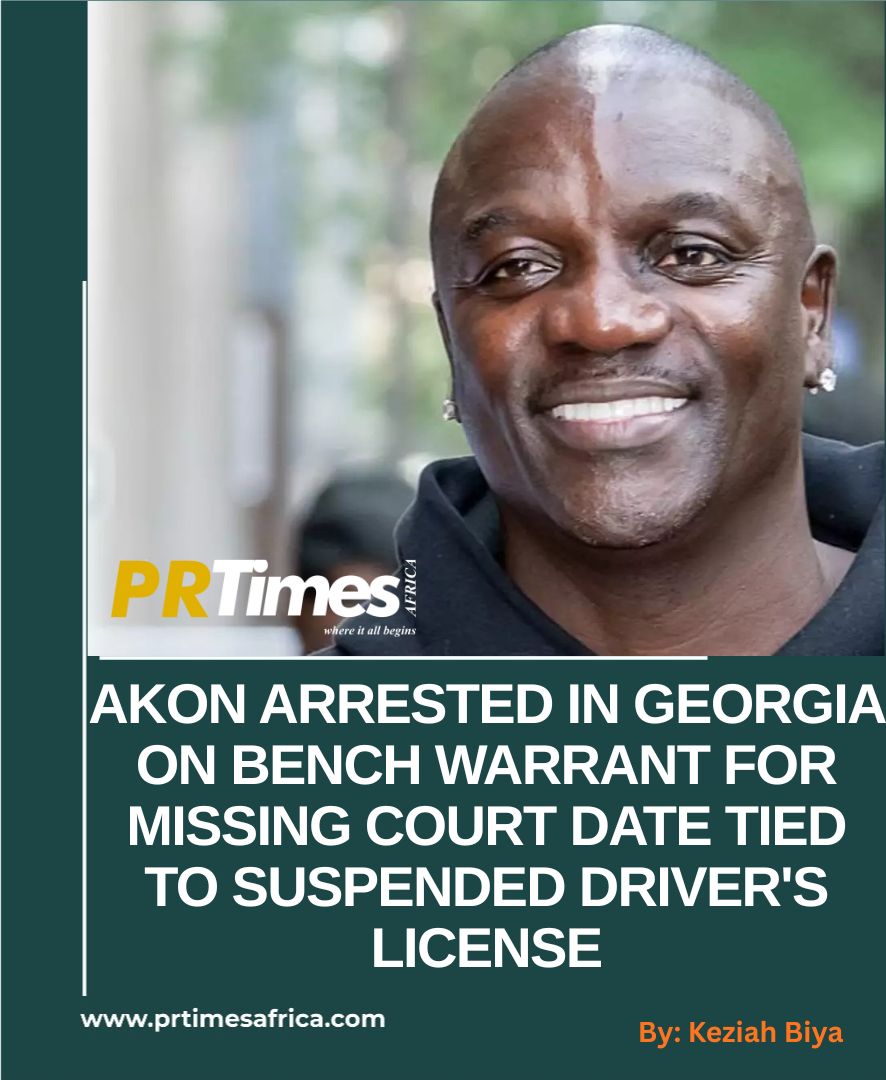
    Chamblee, Ga. – Grammy-nominated singer and producer Akon, whose real name is Aliaune Badara Thiam, was arrested last week in suburban Atlanta on an outstanding bench warrant stemming from his failure to appear in court over a suspended driver’s license, according to multiple law enforcement reports and news outlets. The incident, which unfolded on November 7, 2025, highlights a routine traffic violation that escalated due to unresolved administrative issues, but the artist was released within hours and continued his international tour schedule without missing performances.

    The arrest occurred outside a window-tinting business called Tint World in Chamblee, DeKalb County, when local police were alerted by a traffic surveillance camera to the presence of a Tesla Cybertruck linked to an active warrant. Officers approached the vehicle, confirmed Akon’s identity via his driver’s license photo, and took him into custody peacefully. He was booked at DeKalb County Jail on charges related to the warrant before being released later that evening, approximately six hours after his detention


    Roots in a September Traffic Stop


    The chain of events traces back to September 10, 2025, when Roswell police in Fulton County encountered Akon stranded on a busy street in the same white Tesla Cybertruck, which had a dead battery. While awaiting a tow truck, officers conducted a routine license plate check and discovered the vehicle lacked valid insurance and that Akon’s Georgia driver’s license had been suspended since January 2023 for failing to appear in court on an unrelated prior traffic matter.

    Akon was issued a citation for driving on a suspended license at the scene, and his physical license was confiscated, but he was not arrested then. However, when he subsequently missed a required court date to address the citation, a bench warrant was issued by Roswell authorities, leading directly to the November arrest.

    During the September stop, police also seized an “illegal vape” from the vehicle’s center console, though no additional charges were filed related to that item.

    Akon, who maintains a residence in the gated Alpharetta community near Atlanta, reportedly remained cooperative throughout both interactions. No weapons or other contraband were found during a search of his person or vehicle.


    A Clerical Mix-Up, According to Akon’s Team


    In a statement to media outlets, a representative for Akon attributed the license suspension—and the ensuing warrant—to a “clerical issue.” They explained that the underlying fine had been paid but was not properly updated in the court system, causing the matter to escalate unnecessarily. “This will be soon rectified in the courts in early December,” the rep added, emphasizing that the resolution was already in progress.

    Akon himself has not issued a public comment on the arrest.The DeKalb County Sheriff’s Office confirmed the booking details to TMZ, including Akon’s mugshot, which quickly circulated online and drew attention from fans familiar with his early-2000s hits like “Locked Up,” “Lonely,” and “Smack That.”


    Impact on Akon’s Career and Personal Life


    Despite the brief detention, Akon wasted no time resuming his professional commitments. He flew out shortly after his release to continue a tour in India, performing in Delhi on November 9—just two days later—to a crowd of thousands.

    The 52-year-old Senegalese-American artist, a five-time Grammy nominee with an estimated net worth exceeding $80 million, has shifted much of his focus in recent years to philanthropy, including his Akon Lighting Africa initiative for renewable energy in underserved African communities and new music projects.

    On the personal front, Akon has faced scrutiny amid a high-profile divorce filing earlier this year by his wife of 28 years, Tomeka Thiam, who sought joint legal custody of their 17-year-old daughter and spousal support. Court documents revealed Akon is a father of nine children.

    Legal experts note that cases like this are common in Georgia, where minor traffic infractions can snowball into warrants due to missed court appearances, often exacerbated by administrative delays. Akon’s upcoming court date in December could resolve the issue with a simple fine adjustment, barring any further complications.

    As the story garners viral attention, it serves as a reminder of how everyday oversights can ensnare even global celebrities in the intricacies of local law enforcement. For now, Akon appears unfazed, channeling his energy back into the stage lights of his ongoing tour.



  • Dangote Signs Historic $1 Billion Deal with Zimbabwe to Build 2,000km Pipeline from Namibia, Boosting Regional Energy Security.

    Dangote Signs Historic $1 Billion Deal with Zimbabwe to Build 2,000km Pipeline from Namibia, Boosting Regional Energy Security.

    Dangote Signs Historic $1 Billion Deal with Zimbabwe to Build 2,000km Pipeline from Namibia, Boosting Regional Energy Security.


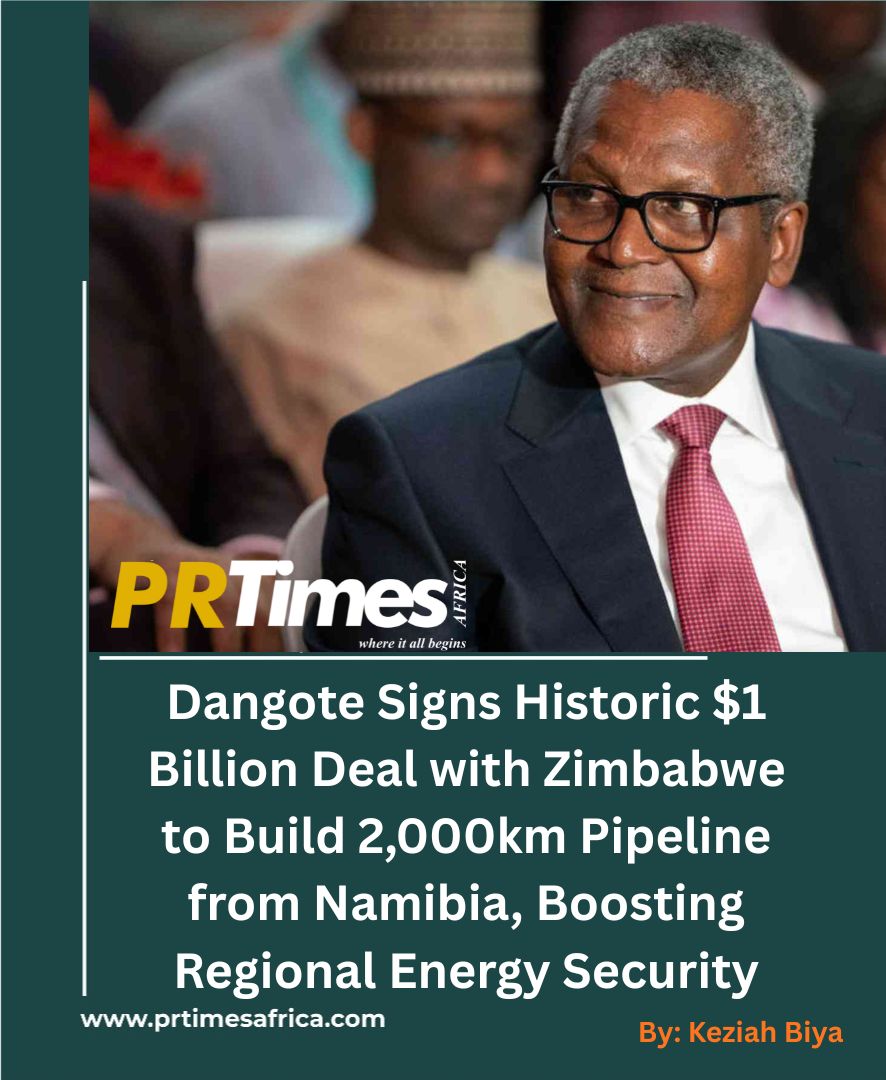
    Harare, Zimbabwe – In a landmark agreement poised to transform Southern Africa’s energy landscape, Nigerian billionaire Aliko Dangote and the Zimbabwean government have signed a $1 billion investment pact, including the construction of a 2,000-kilometer fuel pipeline stretching from Namibia’s Walvis Bay port through Botswana to Bulawayo, Zimbabwe’s industrial hub.


    The deal, announced on Wednesday during a high-level meeting at State House between Dangote, Africa’s richest man and founder of the Dangote Group, and President Emmerson Mnangagwa, encompasses investments in energy, cement, fertilizer, and infrastructure sectors. It marks a significant vote of confidence in Zimbabwe’s economic reforms under the Vision 2030 agenda, aimed at accelerating industrialization and reducing reliance on imported fuels from Europe and Asia.


    “This partnership reflects growing investor confidence in Zimbabwe’s economic transformation,” Mnangagwa said in a statement released by his office. The agreement was formally inked by Zimbabwe’s Finance, Economic Development and Investment Promotion Minister Mthuli Ncube on behalf of the government.


    A Game-Changing Pipeline Project


    At the heart of the deal is the ambitious transnational pipeline, estimated at over $1 billion in total scope, which will facilitate the transport of refined petroleum products across the Southern African Development Community (SADC) region. The infrastructure will connect to a massive 1.6-million-barrel storage facility that Dangote Petroleum Refinery is already developing in Walvis Bay, Namibia. From there, the line will traverse more than 2,200 kilometers—slightly longer than the headline figure—through Botswana before terminating in Bulawayo, with potential extensions to Zambia and South Africa.


    Dangote, speaking to journalists after the signing, emphasized the project’s scale: “We are in the business of producing oil and have the largest refinery in the world, single train, in Nigeria. We’re bringing it to Walvis Bay and then piping it down here to Southern Africa.” He added that the broader investments “will be over a billion because of the pipeline,” underscoring its role in lowering fuel import costs and enhancing regional trade integration.


    Presidential spokesperson George Charamba hailed the initiative as a “key transnational matter for Zimbabwe,” noting it could fundamentally alter the country’s production structure by making fuel more affordable and reliable for industries. The pipeline is expected to reduce transportation times and costs, positioning Zimbabwe as a central energy corridor for the subcontinent.


    Broader Investments to Fuel Industrial Growth


    Beyond the pipeline, the Dangote Group—Africa’s largest diversified industrial conglomerate, with operations in 18 countries—pledged commitments across multiple fronts:

    • Cement Production: Expansion of manufacturing facilities to support infrastructure projects like roads, housing, and industrial parks, building on Dangote Cement’s status as the continent’s top producer.
    • Fertilizer Sector: Investments leveraging Zimbabwe’s agricultural strengths to boost food security and exports, including a new plant to produce affordable inputs for regional farmers.
    • Energy and Power: Development of a coal-fired thermal power station and potential coal mining operations to address chronic electricity shortages and power industrial operations.

    These initiatives align with Zimbabwe’s push for self-sufficiency, with Dangote expressing enthusiasm for the country’s “stable and investor-friendly environment.” The group, known for its massive refinery in Nigeria and recent fertilizer plant, aims to consolidate its Southern African footprint, where it already has projects in Namibia, Zambia, and South Africa.


    Revival of Stalled Ambitions


    This deal revives Dangote’s long-standing interest in Zimbabwe, dating back to 2015 when he proposed a $400 million cement plant and energy ventures under then-President Robert Mugabe. Those plans faltered amid bureaucratic hurdles, demands for kickbacks from officials, and currency instability. “What went wrong the first time? Regulatory red tape and corruption,” one analyst noted, but Mnangagwa’s administration has since implemented reforms, including eased foreign investment rules and anti-corruption measures.


    Dangote’s return signals a “turned around” Zimbabwe, as described by observers. His visit, which included meetings with business leaders and a nod to late investor Harpal Randhawa’s widow, underscores improved bilateral ties. “The Dangote Group’s confidence in our economy is a powerful endorsement,” Mnangagwa added.


    Regional and Economic Implications


    Economists predict the pipeline could slash fuel prices by up to 20% in Zimbabwe and neighboring countries, spurring manufacturing and agriculture while creating thousands of jobs in construction and operations. For SADC nations, it promises greater energy security amid global supply chain disruptions.


    However, challenges remain, including securing right-of-way agreements across borders, environmental assessments for the coal components, and funding timelines. The Dangote Group has not disclosed exact construction start dates, but sources indicate feasibility studies could begin in early 2026.


    As Southern Africa eyes deeper integration, this deal positions Dangote as a pivotal player in the continent’s industrial renaissance. “We’re committed to long-term development,” Dangote affirmed, closing the ceremony on a note of optimism for a more connected, prosperous region.


  • YOUR BRAND AT THE TABLE: REPUTATION THAT SPEAKS IN YOUR ABSENCE.

    YOUR BRAND AT THE TABLE: REPUTATION THAT SPEAKS IN YOUR ABSENCE.

    YOUR BRAND AT THE TABLE: REPUTATION THAT SPEAKS IN YOUR ABSENCE.


    In today’s fast-paced communication landscape, the most powerful brands are not just those with visibility—they are the brands whose reputation carries weight even when no one from the organization is in the room. A truly enduring brand is one that commands respect, credibility, and recognition without constant self-promotion. It speaks for you, represents your values, and influences conversations long before you arrive at the table.


    The Power of an Autonomous Reputation


    A strong brand reputation functions like a trusted ambassador. It precedes you. It shapes first impressions. It sets expectations. When stakeholders—investors, partners, regulators, customers, or the media—can confidently speak about your brand without your presence or explanation, you have built something resilient.


    This is the level of equity every brand should aim for: a reputation rooted so deeply in integrity, consistency, and value that it becomes a reference point for others.


    What Makes a Reputation Speak for Itself?


    To reach this level, your brand must embody three core pillars:


    1. Consistency Across All Touchpoints


    Your messaging, behaviour, customer experience, and leadership tone must align—always. A reputation weakened by inconsistency cannot advocate for you in absentia.


    1. Credibility Backed by Action


    People trust what they can verify. Delivering on your promises, maintaining transparency, and honouring commitments allow your brand to grow into something others confidently vouch for.


    1. Values That Are Lived, Not Declared


    Your brand’s values should be evident in how you operate, not simply in what you claim. When your values become visible through decisions and actions, your reputation carries your story on its own.


    Why Your Brand Must Speak When You’re Not in the Room


    Because crucial decisions—partnerships, funding, collaborations, invitations, opportunities—often happen long before you arrive. Your seat at the table is secured not when you show up, but when others already believe in the strength of your brand.


    A reputation built on excellence ensures that whether you’re leading the conversation or far away from it, your brand remains part of the discussion. That is influence. That is presence. That is longevity.


    Final Thought


    Your brand is not what you tell people it is—it is what they say when you’re not there. Build it with intention. Strengthen it with authenticity. Guard it with excellence. And ensure that its voice is powerful enough to speak confidently in your absence.

    In today’s fast-paced communication landscape, the most powerful brands are not just those with visibility—they are the brands whose reputation carries weight even when no one from the organization is in the room. A truly enduring brand is one that commands respect, credibility, and recognition without constant self-promotion. It speaks for you, represents your values, and influences conversations long before you arrive at the table.


    The Power of an Autonomous Reputation


    A strong brand reputation functions like a trusted ambassador. It precedes you. It shapes first impressions. It sets expectations. When stakeholders—investors, partners, regulators, customers, or the media—can confidently speak about your brand without your presence or explanation, you have built something resilient.


    This is the level of equity every brand should aim for: a reputation rooted so deeply in integrity, consistency, and value that it becomes a reference point for others.


    What Makes a Reputation Speak for Itself?


    To reach this level, your brand must embody three core pillars:


    1. Consistency Across All Touchpoints


    Your messaging, behaviour, customer experience, and leadership tone must align—always. A reputation weakened by inconsistency cannot advocate for you in absentia.


    1. Credibility Backed by Action


    People trust what they can verify. Delivering on your promises, maintaining transparency, and honouring commitments allow your brand to grow into something others confidently vouch for.


    1. Values That Are Lived, Not Declared


    Your brand’s values should be evident in how you operate, not simply in what you claim. When your values become visible through decisions and actions, your reputation carries your story on its own.


    Why Your Brand Must Speak When You’re Not in the Room


    Because crucial decisions—partnerships, funding, collaborations, invitations, opportunities—often happen long before you arrive. Your seat at the table is secured not when you show up, but when others already believe in the strength of your brand.


    A reputation built on excellence ensures that whether you’re leading the conversation or far away from it, your brand remains part of the discussion. That is influence. That is presence. That is longevity.


    Final Thought


    Your brand is not what you tell people it is—it is what they say when you’re not there. Build it with intention. Strengthen it with authenticity. Guard it with excellence. And ensure that its voice is powerful enough to speak confidently in your absence.


  • ICSID Dismisses Niger’s Bid to Remove Arbitrator in Orano–Cominak Dispute.

    ICSID Dismisses Niger’s Bid to Remove Arbitrator in Orano–Cominak Dispute.

    ICSID Dismisses Niger’s Bid to Remove Arbitrator in Orano–Cominak Dispute.


    Abuja / Paris — 14 November 2025


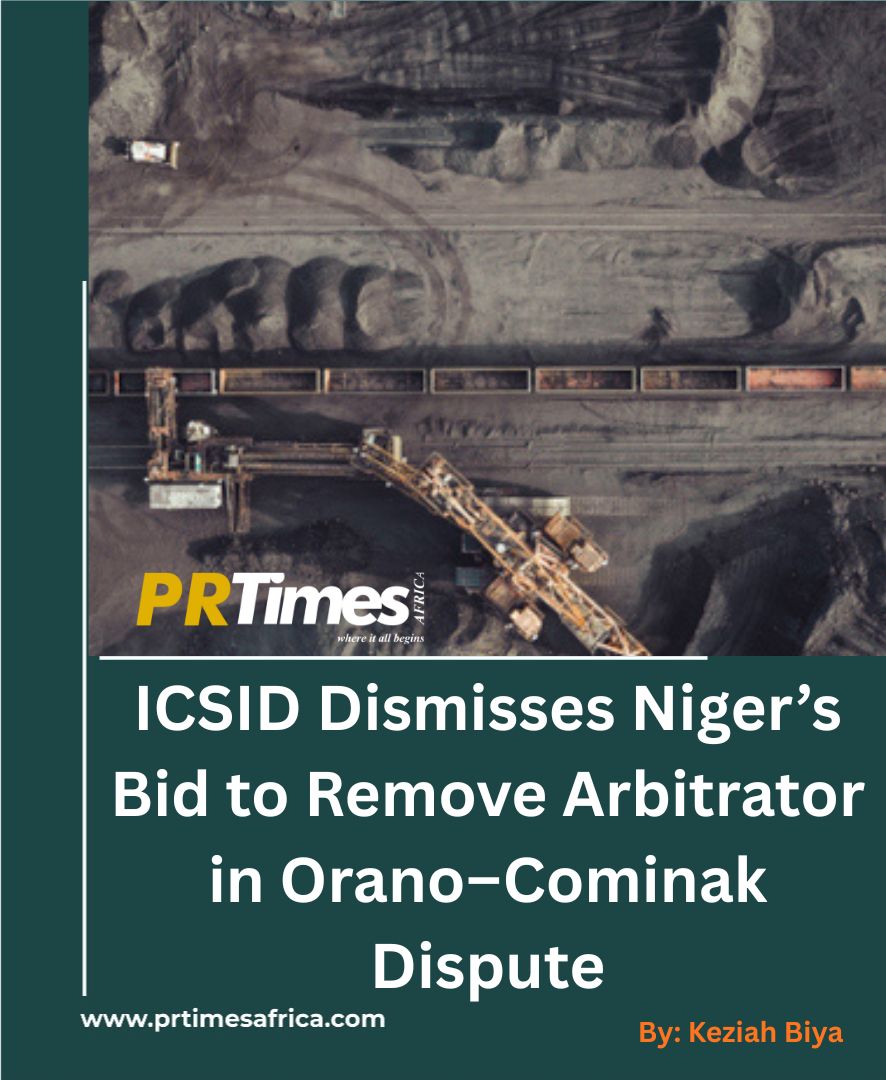
    The International Centre for Settlement of Investment Disputes (ICSID) has rejected the request by the Republic of Niger (Niger) to disqualify an arbitrator appointed in the ongoing dispute with the French mining-and-nuclear-materials company Orano (formerly AREVA) over its investments in the uranium-mining venture Compagnie Minière d’Akouta (COMINAK). The decision marks a procedural defeat for Niger and an important development in the high-stakes arbitration (ICSID Case No ARB/25/8) between the two parties.


    Background to the dispute


    Orano holds a majority interest in COMINAK (and also in its partner mine Société des mines de l’Aïr (SOMAÏR)) in northern Niger. Together with Niger’s state-mining asset company SOPAMIN, they have operated uranium production in the region for decades.

    In December 2024 Orano acknowledged that it had lost operational control of SOMAÏR after Nigerien authorities intervened, and shortly afterwards Orano filed arbitration with ICSID in January 2025.

    Among the many issues in play: the suppression of Of-take rights, restrictions on sales of uranium produced, changes to mining licences, and the broader political shift in Niger towards asserting state control of extractive activity.


    The bid to remove the arbitrator


    Niger had formally moved to challenge the impartiality of an arbitrator selected in the Orano-Niger proceedings, arguing conflict of interest or bias in favour of Orano. According to legal commentators, the motion was denied on 27 August 2025.

    The ICSID tribunal’s rejection of Niger’s bid to remove the arbitrator thus stands as a signal that the arbitrator selection will remain unchanged and the proceedings will proceed in their current composition.


    What the decision means


    For Orano – The rejection of Niger’s challenge strengthens Orano’s procedural position in the arbitration. It avoids what would have been a potential delay and uncertainty arising from arbitrator substitution.


    For Niger – The decision is a setback. Niger’s strategy to tilt the arbitration dynamics by seeking a different arbitrator has been unsuccessful. The government may now face greater pressure to defend its substantive positions in the tribunal rather than rely on procedural tactics.


    For the mining-investment community – This decision underscores how investor-state arbitration under ICSID treats arbitrator-challenge motions: such motions are difficult to sustain unless strong proof of lack of independence is shown. The case reiterates that once an arbitrator is appointed, removing or substituting them can be a high hurdle.


    Timing and broader context – The decision comes at a moment when Niger has been asserting more national control over its uranium resources, including moves to restrict exports and to re-negotiate or cancel mining licences. Orano’s filings and ICSID’s decisions are occurring amid this shifting political landscape.


    Next steps & implications


    With the tribunal’s composition confirmed, the arbitration between Orano and Niger will proceed to the merits phase. Key issues likely to be addressed include:


    Whether Niger breached investment protections (under treaty or agreement) by interfering with Orano’s rights at SOMAÏR / COMINAK;


    Whether Orano is entitled to compensation for loss of operational control, halted exports or withheld uranium production;


    The quantum of any damages or relief to which Orano may be entitled;


    Niger’s counters—such as arguments of sovereign regulatory power, changes of government policy, or compliance with local law.


    For Niger the immediate implication is that its leverage via procedural tactics is diminished and it must engage substantively. For Orano, the confirmation of the arbitrator means fewer variables to navigate and greater clarity in the path ahead.


    Broader significance


    This case sits at the nexus of extractive-industry investment, geopolitical change in West Africa and investor-state arbitrations. Niger, which produces one of the world’s larger proportions of uranium, has in recent years reasserted state-control over mining activities and re-examined foreign-investor partnerships. The Orano arbitration is a litmus test for how such disputes will play out under ICSID in a context of resource nationalism.

    From the global finance/investment perspective, it sends a message that while states remain free to revisit or reform mining frameworks, doing so may trigger significant liability and that procedural defences such as arbitrator challenges may rarely succeed.


    Conclusion


    The ICSID tribunal’s dismissal of Niger’s bid to remove the arbitrator in the Orano-Niger arbitration is both procedurally and symbolically important. It clears a path for the substantive arbitration to move ahead in its current format, placing the focus squarely on the underlying merits of the dispute. For Niger this marks the end of a procedural gambit; for Orano it represents a partial procedural victory; and for the wider mining-investment world it re-emphasises the stability of ICSID arbitration processes even in politically charged resource-disputes.


  • Webinar Explores Africa’s Pivotal Critical Minerals Market Position.

    Webinar Explores Africa’s Pivotal Critical Minerals Market Position.

    Webinar Explores Africa’s Pivotal Critical Minerals Market Position.


    Industry Experts Highlight Opportunities, Challenges, and the Continent’s Rising Global Influence


    A high-level webinar held this week brought together government representatives, mining executives, economists, and sustainability experts to examine Africa’s increasingly vital role in the global critical minerals market. With global demand for minerals such as cobalt, lithium, manganese, graphite, and rare earth elements expected to surge over the next decade, speakers emphasized that Africa is poised to become a central force in the global clean-energy transition.


    Hosted by a consortium of regional industry bodies and international development partners, the virtual event attracted participants from more than 25 countries. The discussion centered on investment potential, regulatory reforms, supply-chain diversification, and the strategic importance of Africa’s mineral wealth in supporting technologies such as electric vehicles, renewable energy systems, semiconductors, and battery storage.


    Key topics addressed during the webinar included:


    1. Africa’s Critical Role in Global Supply Chains


    Panelists noted that Africa currently supplies a significant share of the world’s cobalt, manganese, and platinum-group metals—resources essential to meeting global net-zero targets. With new discoveries across East, West, and Southern Africa, experts argued that the continent could soon emerge as one of the world’s largest hubs for responsibly sourced critical minerals.


    1. Investment Trends and Market Outlook


    Analysts presented updated market projections showing rapid year-on-year growth in mineral demand driven by electric vehicle and battery manufacturers. Several speakers highlighted the rising flow of foreign direct investment into African mining jurisdictions, especially from Europe, China, and the United States, all seeking to secure stable long-term supply chains.


    1. Regulatory Reforms and Regional Collaboration


    Government representatives emphasized ongoing policy reforms designed to improve transparency, strengthen environmental standards, and increase local value addition. Regional collaboration—particularly through the African Continental Free Trade Area (AfCFTA)—was identified as a critical enabler for harmonized regulations and more efficient cross-border trade.


    1. Sustainability and Ethical Mining Practices


    Sustainability experts spoke on the importance of responsible extraction, community engagement, and environmental safeguards. They stressed that global buyers increasingly prioritize ESG-aligned suppliers, giving African producers an opportunity to differentiate themselves through stronger compliance and certification programs.


    1. Opportunities for Local Processing and Industrialization


    Speakers also explored strategies to move African economies beyond raw mineral exports by developing local processing, refining, and manufacturing capacity. Establishing domestic battery production and value-added mineral processing was highlighted as a major economic multiplier for job creation and industrial growth.


    Closing Remarks


    The webinar concluded with a unified message: Africa stands at the forefront of a historic economic opportunity. By leveraging its rich mineral reserves, adopting forward-looking policies, and embracing sustainable practices, the continent can secure a commanding position in the global critical minerals market while accelerating its own development trajectory.


    Organizers confirmed that a comprehensive report summarizing the discussions and strategic insights will be released in the coming weeks.


Hot daily news right into your inbox.

Headline

Never Miss A Story

Get our Weekly recap with the latest news, articles and resources.
Cookie policy
We use our own and third party cookies to allow us to understand how the site is used and to support our marketing campaigns.