
The billions Africa spends seeking influence in Washington raise a bigger question: Why is a continent rich in minerals, markets, people and strategic resources still behaving like a supplicant on the global stage?
Across Africa, governments are spending substantial sums on Washington-based lobbying firms to strengthen relationships with the United States and, increasingly, to gain access to the Trump administration.
Kenya reportedly agreed to pay $175,000 a month to Continental Strategy, a firm founded by former Trump administration official Carlos Trujillo, ahead of President William Ruto’s engagement with Washington.
Nigeria entered a reported $9 million agreement with DCI Group to communicate its security efforts and seek continued U.S. support for counterterrorism cooperation. The contract was filed under the U.S. Foreign Agents Registration Act.
Rwanda’s state development board signed a lobbying agreement worth $80,000 a month with Yorktown Solutions. Morocco spent a reported $3.49 million on U.S. lobbying in 2025, much of it connected to its effort to maintain American backing for its position on Western Sahara.
Somalia also signed a $600,000 annual agreement with BGR Group, a Washington lobbying firm with Republican connections.
Angola, meanwhile, has been reported as paying $312,500 a month to Squire Patton Boggs in a lobbying arrangement linked to promoting the Lobito Corridor and related economic interests.
These figures should provoke more than political controversy.
They should provoke a fundamental conversation about African leadership.
The Question Africa Must Ask
There is nothing inherently wrong with diplomatic engagement or professional lobbying. Governments everywhere employ public-affairs firms to explain their policies, build relationships and advance national interests.
The problem begins when lobbying becomes a substitute for strategic power, credible institutions, economic leverage and serious diplomacy.
Why should African governments have to spend millions of dollars to convince powerful countries to pay attention to a continent that possesses some of the world’s most important natural resources, strategic waterways, minerals, agricultural potential and rapidly growing consumer markets?
- Africa is home to critical minerals required for the global energy transition.
- Africa controls strategic maritime routes.
- Africa has some of the world’s largest reserves of cobalt, copper, lithium, uranium, manganese, oil and gas.
- Africa has a population of more than a billion people and one of the world’s youngest consumer markets.
Yet too often, African governments arrive in Washington asking:
“How can we gain access?”
The question should increasingly be:
“What does America want from Africa, and what is Africa prepared to negotiate in return?”
From Lobbying to Leverage
This is where Africa needs a new turn.
The continent cannot continue approaching international relations as a collection of individual countries competing for attention from powerful foreign capitals.
Africa needs collective bargaining power.
Imagine an African diplomatic and economic strategy in which access to strategic minerals, infrastructure projects, energy resources, major markets and investment opportunities becomes part of a coordinated negotiation.
Imagine African leaders saying:
You want our minerals? What value are you bringing to Africa?
You want access to our markets? What jobs, technology and industrial capacity will Africa receive?
You want strategic partnerships? What infrastructure and security commitments come with them?
That is not confrontation.That is diplomacy from a position of strength.
- Africa’s Resources Should Create Power
- The tragedy is not that African countries are engaging Washington.
- The tragedy would be if Africa’s enormous resources continue to generate strategic advantages for everyone except Africans.
For decades, Africa has exported raw materials while importing finished products.
- It has exported minerals while importing technology.
- It has exported crude oil while importing refined petroleum products.
- It has provided markets while struggling to build globally competitive African companies.
- And now, in some cases, governments are spending millions of dollars lobbying foreign political networks for influence.
That model deserves to be challenged.
- A New Generation of African Leadership
- Africa does not necessarily need less diplomacy.
- It needs better diplomacy.
- It does not need to withdraw from Washington.
- It needs to enter Washington with a clearer understanding of its own value.
- African leaders should build permanent strategic relationships with Washington, Beijing, Brussels, Moscow, Riyadh, New Delhi and other global centresnot as petitioners, but as partners.
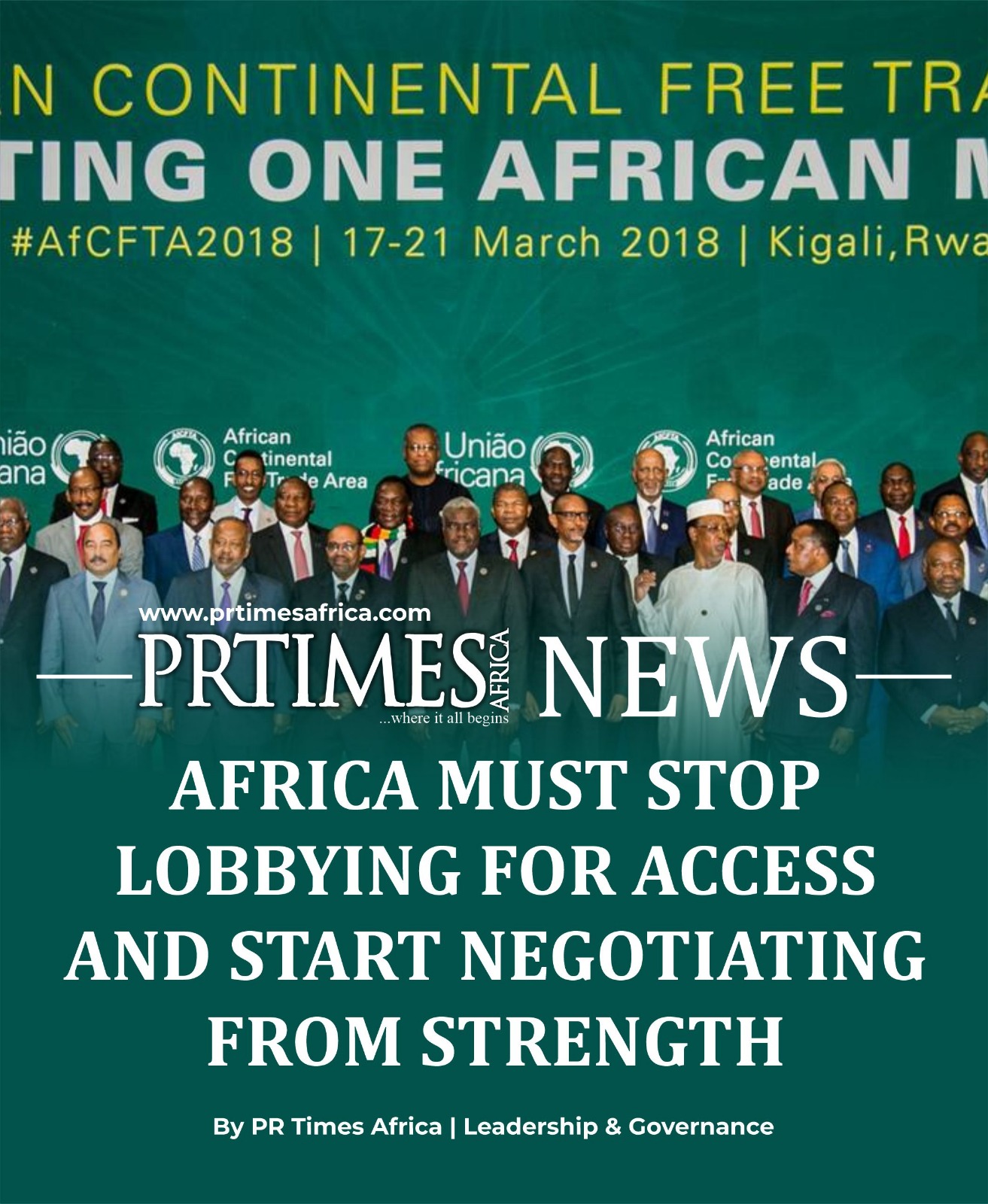
The African Continental Free Trade Area should become more than a trade agreement. It should become a source of geopolitical leverage.
African countries should coordinate positions on critical minerals, energy, agriculture, technology, defence, infrastructure and investment.
The African Union should be empowered to help member states negotiate major strategic partnerships.
And African governments should invest more aggressively in their own diplomatic intelligence, policy research, global communications and international media capacity.
Because if Africa does not tell its own story and define its own interests, somebody else will.
The Real Cost Is Bigger Than the Lobbying Bill
- The millions spent on lobbying are only part of the issue.
- The deeper cost is psychological.
- A continent that repeatedly approaches the world’s major powers seeking approval risks reinforcing an outdated perception of Africa as dependent rather than decisive.
- Africa must move from aid-seeking diplomacy to investment diplomacy.
- From access-seeking politics to partnership politics.
- From individual bargaining to continental strategy.
- From exporting raw materials to building value chains.
- And from asking the world to determine Africa’s future to Africa determining its own future.
The New African Question
The debate should therefore not simply be about how much Kenya, Nigeria, Somalia, Rwanda, Morocco or Angola spend on Washington lobbyists.
The bigger question is:
What would happen if Africa invested those same resources in building the institutions, industries, infrastructure, technology, diplomatic capacity and continental partnerships that would make foreign powers compete for African attention?
That is the leadership conversation Africa needs.
The world does not need Africa to become anti-American.
- It does not need Africa to become anti-Chinese or anti-European.
- It needs Africa to become pro-African.
- A confident Africa should be open to every serious partnerbut dependent on none.
- The next chapter of African leadership must therefore be about leverage, dignity, strategic bargaining and economic sovereignty.
Africa has spent generations asking the world to invest in its future.
Perhaps it is time for Africa to build enough power that the world has to negotiate for a place in Africa’s future.
Africa does not need a seat at someone else’s table.
Africa needs to build a table powerful enough that the world comes to negotiate.