Author: prtimesafrica
-

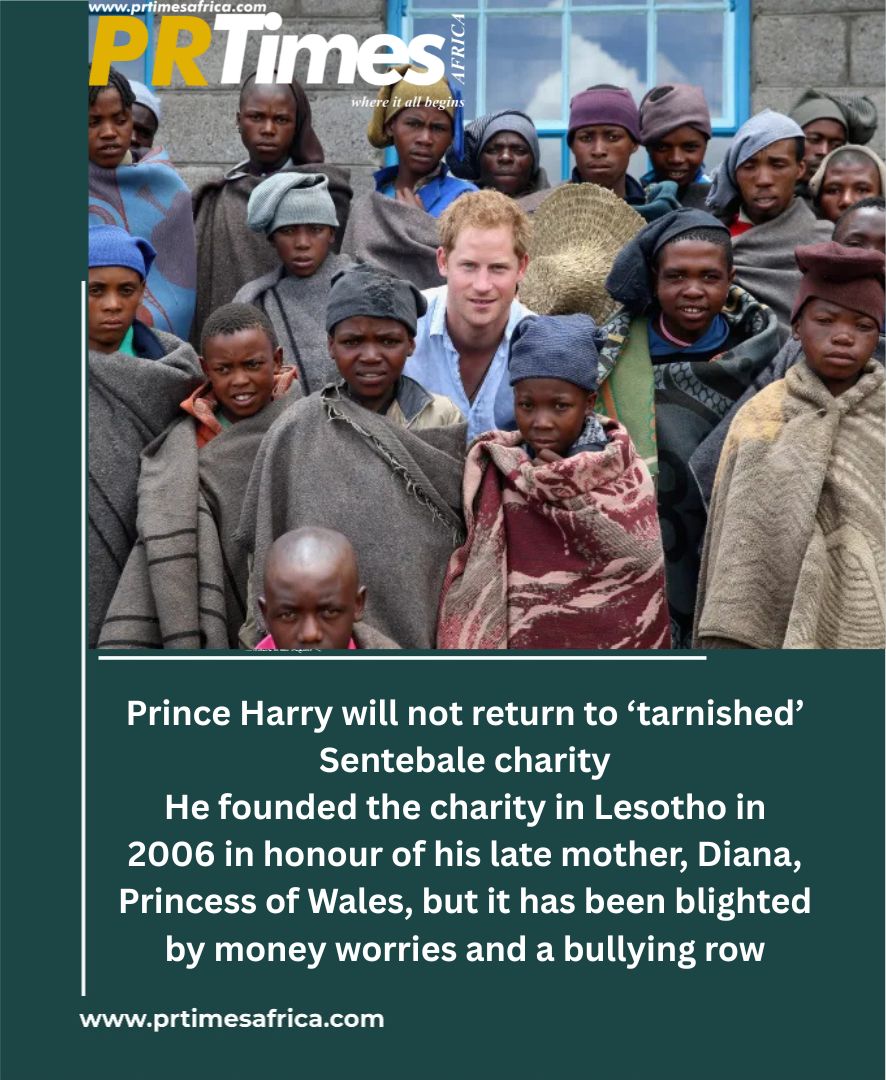
Prince Harry Permanently Severs Ties with Sentebale: No Return to ‘Tarnished’ Charity Amid Lingering Fallout from Bullying Row and Financial Woes
In a decisive move that closes a poignant chapter in his post-royal life, Prince Harry, the Duke of Sussex, has confirmed through close sources that he will not return to Sentebale, the HIV/AIDS charity he co-founded in 2006 in honor of his late mother, Diana, Princess of Wales. The organization, once a cornerstone of Harry’s philanthropic legacy and a deeply personal tribute to Diana’s humanitarian work in Africa, has been described by insiders as “irreparably tarnished” following a protracted and highly public leadership dispute, allegations of bullying, and mounting financial pressures.The announcement, first reported in recent days by multiple outlets including the Daily Mail and The Times, comes nearly a year after Harry stepped away from his role as patron in March 2025 amid escalating tensions. Sources close to the 41-year-old prince emphasize that “there’s absolutely no way” he would reconsider involvement, citing the emotional toll of the controversy and the damage to the charity’s reputation. “It’s all too tarnished now,” one insider told reporters. “Harry poured his heart into Sentebale for nearly two decades, but the fallout has left it in a place where his return would only prolong the pain.”Sentebale—meaning “forget me not” in Sesotho—was established by Harry alongside Prince Seeiso of Lesotho to support children and young people affected by HIV/AIDS in Lesotho and Botswana. Inspired by Diana’s famous visits to Africa and her compassionate outreach to those living with the virus, the charity quickly became one of Harry’s most cherished causes. He hosted high-profile fundraising events, including glamorous polo matches, and made regular visits to the region, often sharing emotional stories of the vulnerable youth the organization helped. At its peak, Sentebale raised millions, funding camps, education programs, and health initiatives that reached thousands.However, the charity’s fortunes began to unravel in early 2025 with a explosive boardroom battle. The crisis centered on Dr. Sophie Chandauka, the chair of the board, who clashed bitterly with Harry and several trustees. When trustees requested her resignation amid concerns over governance, Chandauka went public with serious allegations, accusing the Duke of “harassment and bullying at scale,” as well as racism and misogyny. The claims, which Harry vehemently denied, spilled into the media, prompting a formal investigation by Britain’s Charity Commission.The regulator’s report, released in August 2025, cleared Harry and the charity of any evidence of “widespread or systemic bullying, harassment, misogyny, or misogynoir.” It criticized “all parties” for allowing the dispute to “play out publicly,” noting that the public infighting had caused significant reputational harm. While Harry was personally exonerated, the watchdog highlighted mismanagement issues and chided the involved parties for contributing to a toxic environment that distracted from the charity’s mission.The scandal triggered a wave of resignations, including Harry’s own departure as patron—along with Prince Seeiso—and the exit of key staff members. Fundraising suffered a sharp blow: iconic polo events, long associated with Harry’s star power, were scrapped in October 2025. Annual accounts revealed shrinking programs and financial difficulties, with insiders warning that the organization had been “bled dry” by the prolonged crisis. Donations dipped, and the charity scaled back operations in Botswana and Lesotho, raising fears for the vulnerable communities it serves.For Harry, the saga has been described as “devastating.” Sources say he felt “emotionally drained” by the betrayal of trust within an organization he built from the ground up as a living memorial to his mother. “Sentebale was Harry’s way of keeping Diana’s legacy alive in Africa,” one friend noted. “To see it marred by this kind of acrimony, especially allegations that struck at his character, was heartbreaking.” Reports suggest Harry has even considered launching a new charity to continue similar work, free from the baggage of the past.From his home in Montecito, where he lives with wife Meghan, Duchess of Sussex, and their children Archie and Lilibet, Harry has remained largely silent on the matter publicly since the Charity Commission’s findings. His focus has shifted to other ventures, including Invictus Games and Archewell Foundation projects. Yet, the decision to permanently walk away underscores a broader pattern in Harry’s life post-2020 royal exit: severing ties with institutions embroiled in conflict to protect his mental health and family.Sentebale, meanwhile, issued statements welcoming the regulatory closure and reaffirming its commitment to its core mission. Under new leadership, it vows to rebuild, though the absence of its famous founder looms large. As one former supporter lamented, “Diana’s spirit was in every part of Sentebale. It’s tragic that politics and personalities have overshadowed that.”As 2026 begins, this final severance marks the end of an era for Prince Harry—one where a charity born of love and loss has been overshadowed by division, leaving both its founder and its beneficiaries to chart uncertain paths forward.
-

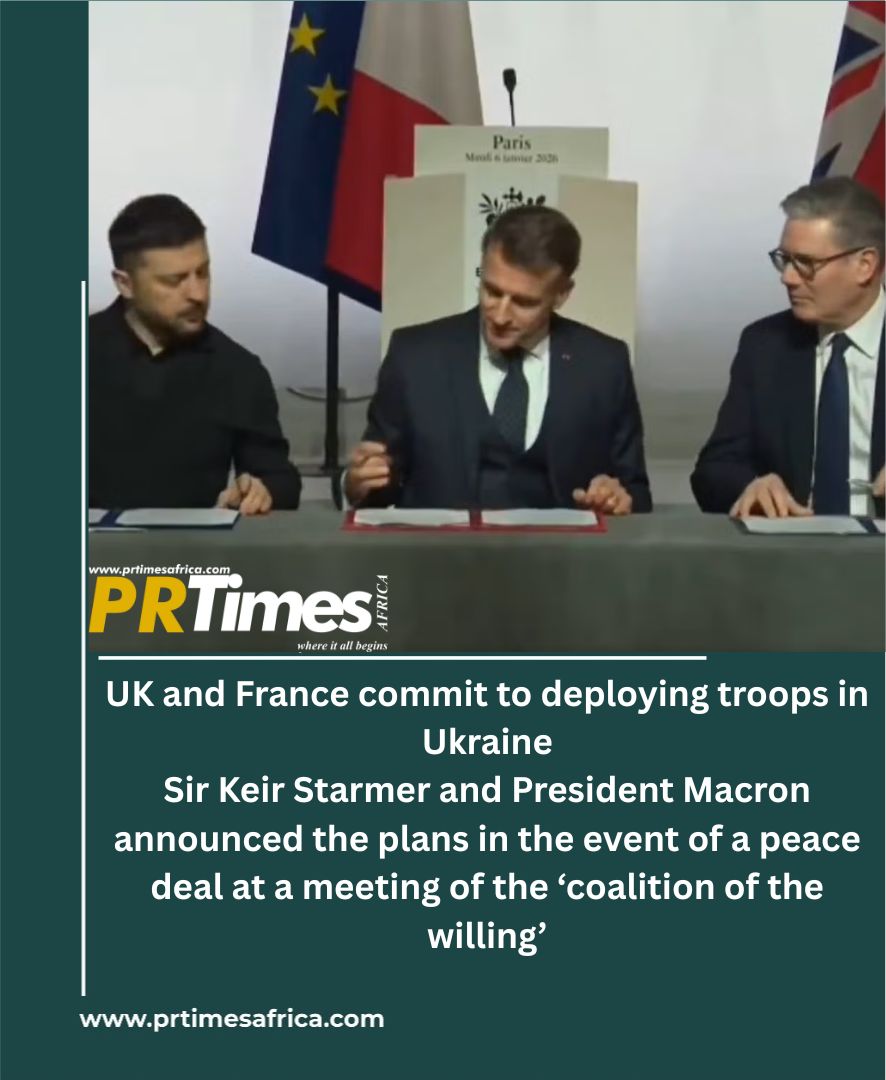
UK and France commit to deploying troops in Ukraine
On a crisp winter afternoon in Paris on January 6, 2026, the Élysée Palace buzzed with an air of cautious optimism mixed with the weight of history. Diplomats, military advisors, and leaders from 35 nations gathered for a high-stakes summit dubbed the “Coalition of the Willing.” This ad-hoc alliance, co-led by the United Kingdom and France, had been quietly forming over the previous year as negotiations for a potential ceasefire in the Russo-Ukrainian War gained tentative momentum. The nearly four-year conflict, which had reshaped European security and claimed countless lives, appeared on the brink of a fragile turning point.At the center of the room stood three key figures: British Prime Minister Sir Keir Starmer, French President Emmanuel Macron, and Ukrainian President Volodymyr Zelenskyy, who had flown in from Kyiv amid tightened security. Flanking them were representatives from across Europe, North America, and beyond—countries committed to going beyond mere arms supplies and financial aid. The coalition’s name evoked memories of past international efforts, but this one was laser-focused: crafting ironclad security guarantees for Ukraine that could deter future Russian aggression without immediately provoking escalation.The summit’s agenda was ambitious. For months, behind closed doors, officials had debated how to make any peace deal “lasting,” as Starmer often phrased it. Russia, under President Vladimir Putin, had repeatedly demanded demilitarization and neutrality for Ukraine, while Kyiv insisted on robust protections against renewed invasion. The coalition’s proposal emerged as a compromise bridge: no full NATO membership for Ukraine in the short term, but a multinational force to enforce a ceasefire and rebuild trust.As the meeting progressed into the evening, discussions grew intense. Zelenskyy, ever the steadfast advocate, pressed for “binding commitments, not just words.” He argued that without a visible Western presence on the ground, Moscow would view any agreement as temporary. Starmer, drawing on Britain’s long-standing support for Ukraine, emphasized the need for “boots on the ground and planes in the air” to signal resolve. Macron, hosting the event, echoed this, stressing Europe’s responsibility to lead in its own backyard. The breakthrough came late in the day. After hours of negotiations, Starmer and Macron announced a historic joint declaration, signed trilateraly with Zelenskyy. In the event of a negotiated peace deal and ceasefire with Russia, the United Kingdom and France committed to deploying troops to Ukraine. This wasn’t an open-ended occupation but a targeted “reassurance force”—a multinational contingent designed to monitor compliance, protect key infrastructure, and provide rapid deterrence. Details emerged in the post-summit press conference under the chandeliers of the palace’s grand hall. Starmer, speaking first, declared: “This is a vital part of our iron-cast commitment to stand with Ukraine. Following a ceasefire, the UK and France will establish military hubs across Ukraine to support its defense, facilitate rapid deployment, and construct protected facilities.” He clarified that British forces would contribute significantly, potentially including air and maritime elements, though exact numbers remained classified pending final agreements. Macron followed, adding gravitas: “We are ready to deploy several thousand French soldiers if needed, positioned away from any contact line, to demonstrate long-term support in air, sea, and land domains.” He dismissed notions that Russia’s approval was required, asserting that such a force would operate under a UN or bilateral mandate to maintain peace. The hubs, he explained, would serve as forward operating bases for training Ukrainian forces, stockpiling equipment, and enabling quick response to violations. Zelenskyy, visibly moved, hailed the declaration as “substantial documents, not just words.” For Ukraine, scarred by broken promises like the 1994 Budapest Memorandum, this pledge represented a tangible shift. The coalition’s broader plan included joint funding mechanisms for 2026 and beyond, high-tech surveillance to monitor borders, and contributions from other members—perhaps logistics from Canada, intelligence from the US, or engineering from Germany. The announcement rippled across the world. In London and Paris, it was framed as a bold step toward European strategic autonomy. The United States, though not committing troops directly, offered backing for the guarantees, aligning with ongoing diplomatic efforts. In Moscow, reactions were predictably sharp—Kremlin spokespeople decried it as provocation, with Putin reportedly ruling out any NATO-linked presence on Ukrainian soil.Yet, amid the geopolitics, the human element lingered. Soldiers from the UK and France, many of whom had trained Ukrainian troops in Europe or provided indirect support, now faced the prospect of deployment in a post-war landscape still littered with mines and mistrust. Families in Britain and France pondered the risks, while Ukrainians dared to hope for a peace enforced not just by paper, but by allies willing to stand shoulder-to-shoulder. As the leaders departed Paris that night, the declaration marked a pivotal chapter. It wasn’t the end of the war, nor a guarantee of peace, but a clear message: if a deal is struck, Ukraine would not stand alone. The Coalition of the Willing had transformed from rhetoric into resolve, setting the stage for what could be the most significant European security arrangement since the Cold War’s end. Whether it would deter aggression or invite new tensions remained to be seen—but on that January evening, hope flickered brighter than it had in years. -

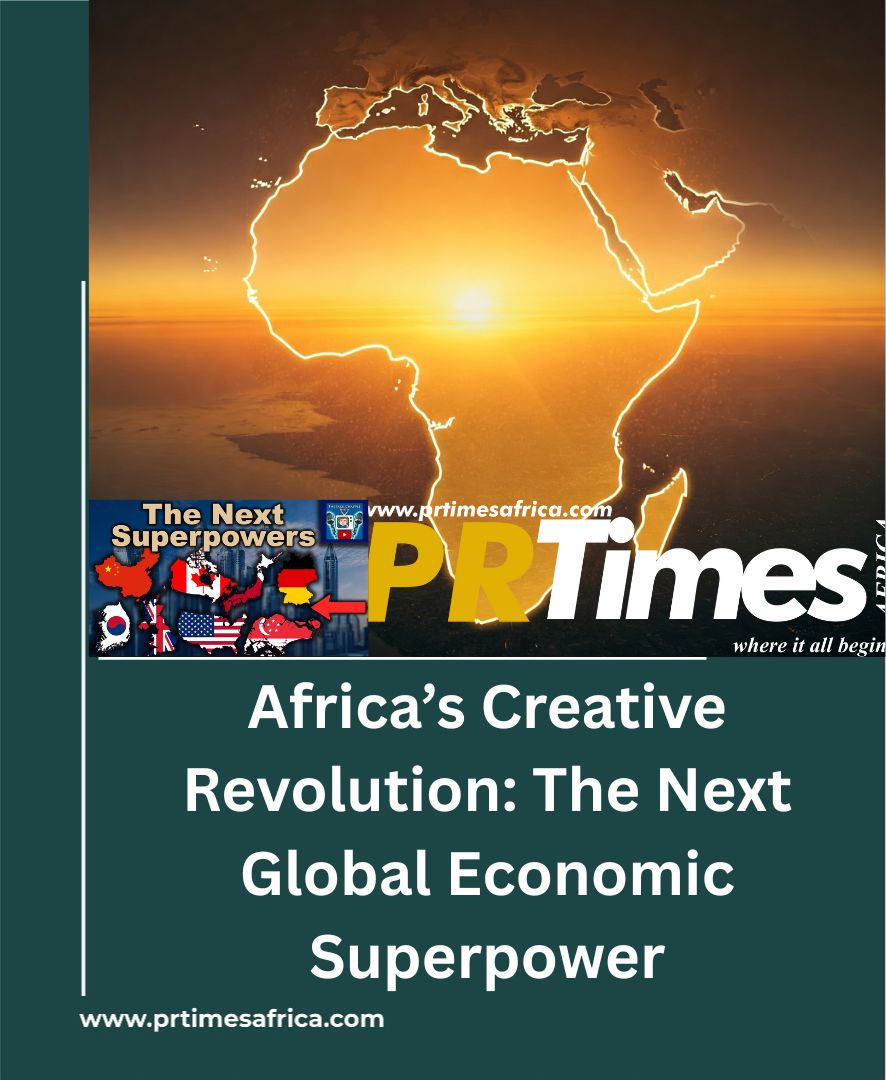
Africa’s Creative Revolution: The Next Global Economic Superpower
By Alwalled Kabir Yusuf:Lead Consultant / MD, PR Times AfricaWhat if Africa’s greatest goldmine isn’t oil, gas, or minerals—but creativity?Across the continent, a powerful transformation is unfolding, driven not by pipelines or factories, but by imagination, innovation, and the unstoppable talent of Africa’s young population. From fashion and film to music, gaming, digital content, and storytelling, creative industries are redefining how the world sees Africa. And at the center of this cultural and economic rise stands Nigeria—a nation inspiring the continent with its creative courage and global impact.Today, Africa is no longer on the sidelines of global culture. It is shaping it.Afrobeats sells out arenas across Europe and America.Nollywood’s stories reach audiences far beyond the continent.African fashion houses influence luxury trends from Paris to Milan.Digital creators build pan-African communities that reach millions daily.Nigeria alone—home to one of Africa’s most vibrant creative sectors—is valued at over $25 billion and projected to hit $250 billion. A bold reminder that creativity is not merely entertainment.It is an industry. A pathway. A future.Africa Must Revalue Its Creative GoldmineFor decades, many African countries underestimated the power of arts and entertainment. Yet the new generation has proven something undeniable:Creativity reshapes mindsets, strengthens economies, and builds national identity.1. Creativity drives positive thinking among youth.Young Africans now see people like themselves succeed globally—not because of political connections, but because of talent, discipline, and digital skills. This shift is boosting confidence and reducing hopelessness on a continent where youth make up the majority.2. It creates real, scalable employment.The creative economy is an entire ecosystem: stylists, producers, editors, set designers, animators, writers, developers, photographers, digital marketers, sound engineers, costume makers, and many more.3. It positions Africa as a global cultural influencer.Culture is soft power. When African music, fashion, and film dominate global spaces, they bring investment, visibility, and new economic opportunities.4. It keeps youth engaged and productive.Instead of drifting into negative activity, millions of African youths channel their energy into content creation, tech innovation, music, film, and storytelling.5. It diversifies national economies.Oil declines. Creativity scales.Africa needs industries that are renewable, youth-driven, and globally relevant—and the creative sector is one of the continent’s strongest contenders.The Evidence: Nigeria’s Creative Economy Is BoomingNigeria’s entertainment sector continues to grow at an unprecedented pace.Sector Growth: The arts, entertainment, and recreation industry grew by 4.74% in Q3 2024.Quarterly Contribution: In Q1 2024, the sector contributed N728.80 billion to the economy—up from N576.67 billion in Q1 2023.This growth is driven by both domestic demand and expanding global recognition of Nigerian content, from Nollywood films to Afrobeats tours.A Call to African Leaders, Investors & PolicymakersAfrica cannot afford to ignore the industry shaping its identity in real time.The creative economy needs stronger policies, financing structures, training hubs, and cross-border collaboration—not for entertainment’s sake, but for nation-building.Because:Every creative idea is a job.Every film is a story the world needs.Every song is a bridge between cultures.Every empowered young person becomes an asset not just to their country, but to the continent.Africa is not just a market.Africa is a maker.A maker of culture.A maker of global influence.A maker of trends the world follows.The youth are ready.The world is listening.Now Africa must invest. -

How Northern Nigeria’s Film Industry Is Quietly Shaping Culture Across Continents
Could Kannywood Be the Next Big Thing in Global Cinema?
How Northern Nigeria’s Film Industry Is Quietly Shaping Culture Across Continents
For years, global audiences have searched for fresh storytelling beyond the familiar corridors of Hollywood, Bollywood, and Nollywood. In that search, one cinematic force, quiet yet powerful, has been steadily gaining momentum across Africa and the diaspora. It is Kannywood, the Hausa-language film industry of Northern Nigeria, and it might just be the next breakout voice the world has been waiting for.
While Nollywood dazzles with global premieres and red-carpet acclaim, Kannywood has grown its influence more discreetly. It has become the cultural heartbeat of West Africa’s Hausa-speaking population and an essential voice for communities stretched across the Sahel, the Middle East, and beyond. And now, as the global film landscape shifts toward authenticity, cultural depth, and regional storytelling, Kannywood stands on the brink of international discovery.
A Cinematic Giant Hiding in Plain Sight
Kannywood emerged in the early 1990s from Kano, a city known for its ancient scholarship, bustling trade, and centuries-old storytelling traditions. Unlike film industries born from studio glamour, Kannywood began with modest tools, local crews, and a deep desire to narrate the everyday lives of Northern Nigerians.
The industry blended a unique array of influences:
– Hausa oral poetry and folklore
– Islamic moral storytelling
– Bollywood’s colorful musicals
– Classic West African community-centered narratives
The result was a film culture that prioritized heart over hype, focusing on moral lessons, family ties, faith, and the social pressures shaping Northern society.
Today, its reach is enormous: over 80 million people across Nigeria, Niger, Cameroon, Chad, Ghana, Sudan, and diaspora communities consume Kannywood films, often daily.
Why Kannywood’s Storytelling Style Resonates
At the core of Kannywood’s success is a storytelling identity rooted in cultural values. Its films explore:
– generational conflict
– modest romance
– community relationships
– education and women’s empowerment
– justice, faith, and dignity
At a time when global audiences seek cinema that feels real, grounded, and unfiltered by Western norms, Kannywood’s films deliver genuine emotional connection.
This authenticity is what makes Korean dramas trend, Turkish series go global, and Indian cinema transcend borders. Kannywood fits into this same global appetite, yet has not been fully discovered.
A Market Much Bigger Than the World Realizes
One of Kannywood’s greatest untold strengths is the size of its audience. The Hausa-speaking world stretches across borders, forming one of the largest linguistic networks in Africa. This gives Kannywood an organic market larger than that of many European countries.
And unlike casual Western film consumption, Hausa communities watch Kannywood with loyalty, cultural pride, and daily regularity. Films are shared through cinemas, DVDs, satellite TV, YouTube channels, and increasingly, streaming platforms.
For content studios looking for built-in markets, Kannywood is a goldmine.
A Highly Organized Industry with Untapped Global Potential
Few international observers know that Kannywood is one of Africa’s most structured film industries. Actors, directors, producers, editors, and writers all belong to organized guilds that regulate quality and protect member rights.
This professionalism, combined with relatively low production costs, creates an environment perfect for:
– international co-productions
– cross-continental storytelling
– cultural exchange films
– streaming platform investment
As India, Saudi Arabia, Egypt, Morocco, and Pakistan explore cultural partnerships across Africa, Kannywood sits at a naturally aligned intersection of language, values, and narrative style.
The Rise of a New Generation of Creatives
Perhaps the most exciting chapter in Kannywood’s journey is unfolding now. A wave of young actors, cinematographers, screenwriters, and digital creators is infusing the industry with new energy. Many have received international training, bringing modern techniques and global awareness back home.
Their films reflect:
– sharper visuals
– tighter scripts
– richer sound quality
– a blend of local authenticity with global relatable themes
This evolution positions Kannywood as a rising contender in the international film ecosystem.
The Soft Power of Hausa Cinema
Beyond entertainment, Kannywood is a cultural ambassador. Its films preserve and promote:
– Hausa language
– Islamic ethics
– social dialogue
– peace and tolerance
– cultural identity in a globalizing world
In an era when cinema is increasingly seen as a tool of diplomacy and cultural influence, Kannywood wields substantial soft power across Africa and the diaspora.
So, Could Kannywood Be the Next Big Thing in Global Cinema?
Absolutely, and the signs are clear.
Global audiences are shifting toward regional stories. Streaming platforms are hunting for non-Western content. Cultural diversity is no longer optional; it’s demanded. And Africa is emerging as one of the most important creative markets on the planet.
Kannywood has:
– a massive existing audience
– distinctive storytelling
– low production barriers
– a rising generation of talent
– built-in cultural alignment with major global markets
All it needs is the spotlight.
As the world widens its cinematic gaze, Northern Nigeria’s film industry is ready, not just to participate, but to lead. And when the world finally looks north, it may find that Kannywood is not merely the next big thing in African cinema, it may be one of the next big things in global cinema.
The northern star is rising. The world just has to look up.
-

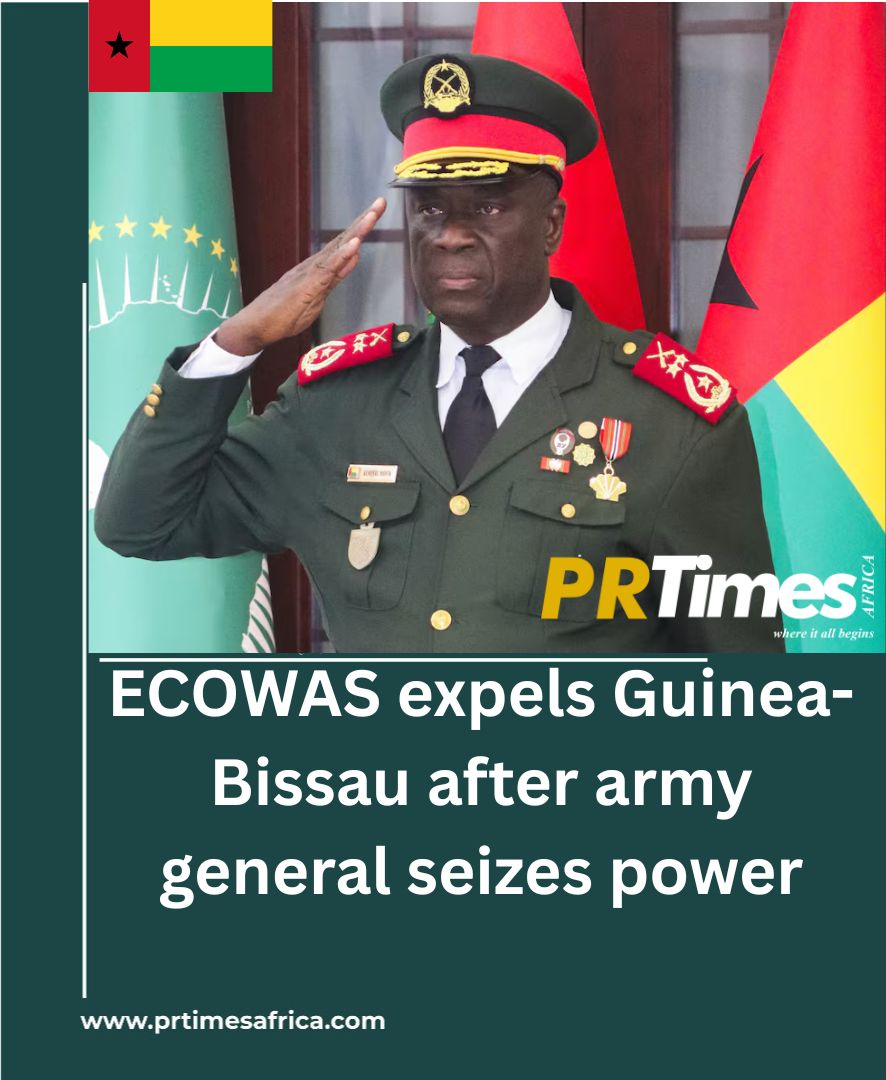
ECOWAS expels Guinea-Bissau after army general seizes power
By: Keziah Biya
On 26 November 2025, army officers in Guinea-Bissau declared they had seized power — just before provisional results from a hotly contested presidential election were to be announced.The soldiers announced the suspension of the electoral process, closure of borders, enforcement of a curfew, and formation of a junta they call the “High Military Command for the Restoration of National Security and Public Order.”The next day (27 November), Horta N’Tam (also spelled Horta Inta-A or Horta Nta Na Man in some reports) was sworn in as transitional president and head of the High Military Command, for a one-year transition.Meanwhile, the then-president, Umaro Sissoco Embaló, along with other officials including election and ministerial figures, were reportedly arrested by the military.How ECOWAS RespondedECOWAS held an emergency virtual session of its Mediation and Security Council (MSC) on 27–28 November 2025, chaired by the President of Sierra Leone (as bloc chair).The bloc strongly condemned the coup as an “illegal abortion of the democratic process” and called for “unconditional restoration of constitutional order.”Consequently, ECOWAS suspended Guinea-Bissau from all its decision-making bodies and regional activities until a legitimate constitutional order is restored.The bloc also demanded the immediate release of all detained political figures — including the former president, electoral officials, and other key actors.Additionally, ECOWAS said it reserves the right to use “all available options” under its protocols — including potential sanctions — if the junta does not comply.A high-level mediation team — including leaders from Togo, Cabo Verde, Senegal — was assembled to engage with the coup leaders.Why This Matters RegionallyThe coup interrupts a democratic electoral process; the provisional results of the November election (which might have decided a new president) were never announced.Guinea-Bissau now joins a growing list of West African countries where recent years have seen military takeovers — undermining regional democratic stability. Observers worry about contagion effects in the region.The international community (including the African Union) also condemned the takeover.What’s Next / What to WatchWhether the junta complies with ECOWAS demands: release political detainees, restore the electoral process, and return to constitutional order.The work of the ECOWAS mediation mission in Guinea-Bissau — whether it can persuade the military leadership to step back or negotiate transition terms.International reaction beyond ECOWAS — sanctions, diplomatic pressure, humanitarian implications, foreign investment.How this event affects regional stability and democracy in West Africa, given rising trends of coups in countries in the region. -

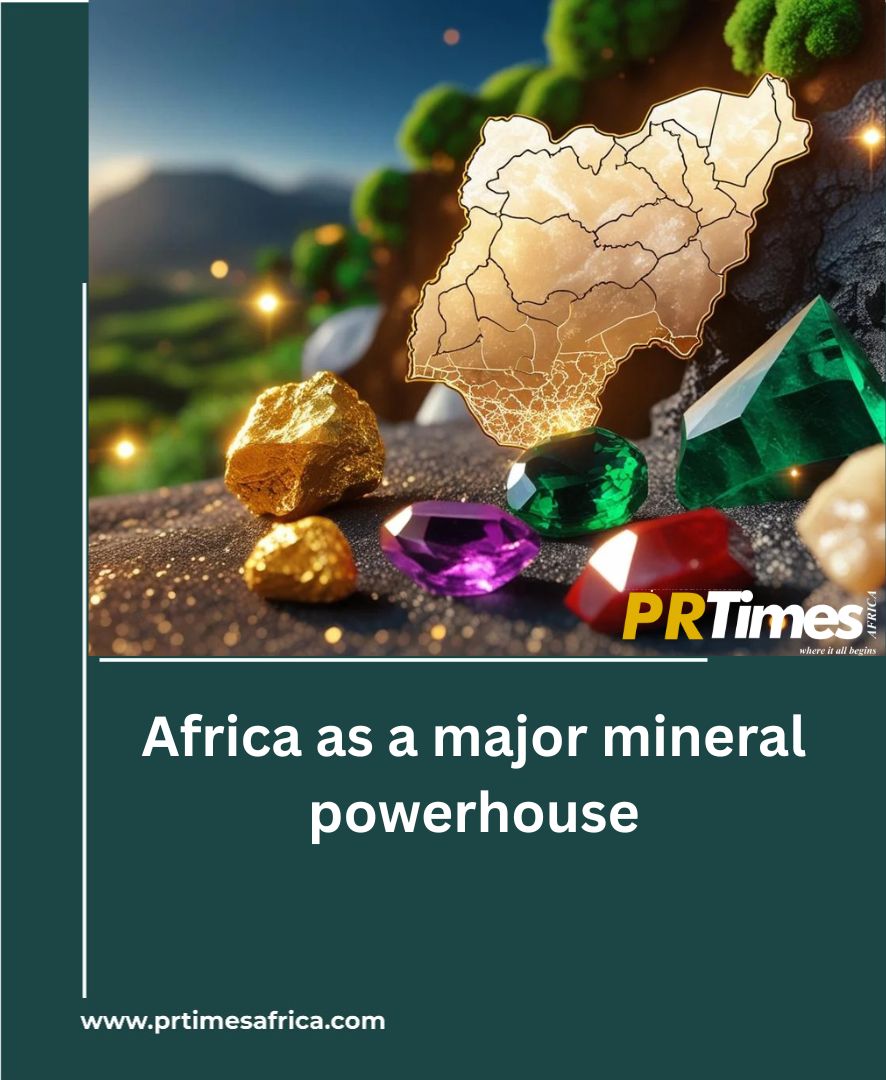
Africa as a major mineral powerhouse
By: Keziah Biya
Africa remains one of the world’s richest regions when it comes to minerals and natural resources. The continent holds very large shares of global reserves for many critical and strategic commodities, including platinum group metals (PGMs), chromium, manganese, cobalt, diamonds, bauxite, and many others.
According to recent data, Africa produces a large fraction of the world’s supply of certain minerals and metals: e.g. a dominant share of global platinum, manganese, chromium, and substantial shares of cobalt, diamonds, bauxite, gold, copper, lithium, uranium and graphite among others.
Yet, despite this wealth, the continent faces challenges: many resources are exported as raw materials, rather than processed locally. Infrastructure gaps, policy uncertainty, and high operational costs continue to hamper transformation of mineral wealth into broader economic development.
The “Big Five” mining countries: South Africa, Nigeria, Algeria, Angola, Libya
These five countries are often identified as the top contributors to Africa’s mineral wealth, together accounting for over two-thirds of the continent’s mineral output/value.
Here’s a breakdown per country:
South Africa
Leads the continent in mineral wealth: estimates put its annual mineral-resource revenue (all minerals combined) at around US$ 125 billion per year.
Produces a wide range of minerals: gold, platinum-group metals, diamonds, coal, iron ore, chromium among others.
Globally, South Africa remains a major player: leading producer of platinum, manganese, chromium; among the top producers of coal, iron ore, titanium, zirconium, and more.
Nigeria
Estimated to generate around US$ 52–53 billion per year from minerals/oil.
Nigeria’s mineral wealth is not limited to its famous oil: the country also has significant deposits of gold, iron ore, columbite, and other minerals.
However, as in many African mining nations, the sector is “underdeveloped,” meaning many mineral deposits remain under-exploited.
Algeria
Generates around US$ 38–39 billion per year in mineral/hydrocarbon revenue (the exact mix is heavily skewed toward hydrocarbons).
Though mostly known for oil and natural gas, Algeria has been flagged as having “potential” for further mineral development beyond hydrocarbons, especially if non-oil mineral deposits are more systematically developed.
Angola
Annual mineral/oil revenues estimated at around US$ 32 billion.
Angola’s resource base includes oil, diamonds, gold, and other minerals.
As with many other African nations, there is likely room for growth, particularly if infrastructure, regulation, and mining investments are improved.
Libya
Estimated mineral (and hydrocarbon) wealth: about US$ 27 billion per year.
Libya’s strengths are largely in oil, but it also possesses industrial minerals (e.g. salt, cement-clay related materials) and other extractives.
Key Challenges & Structural Issues
Under-development despite wealth: In many of these countries, the mining sectors remain underdeveloped. That is, even with large reserves, the full potential is often unexploited because of limited infrastructure, insufficient investment, or regulatory challenges.
Export of raw materials rather than value-added products: A common issue is that many African nations export raw ores instead of processing them locally. This means much of the value and jobs that come from processing and manufacturing is lost.
Dependence on commodities & price volatility: Because many African economies rely heavily on mineral exports (especially oil and metals), they are vulnerable to fluctuations in global commodity prices. This can lead to boom-and-bust cycles.
Need for regulatory, infrastructural and institutional improvements: To fully benefit from mineral wealth, there’s a need for better governance, investment in infrastructure (roads, rail, power), fair policies, and incentives to process minerals domestically.
What This Means (For Africa and for Nigeria)
Africa’s vast mineral wealth, from platinum to iron ore to oil, gives it real potential to drive economic growth, industrialisation, and export-led development.
For countries like Nigeria (where you are), these resources represent major opportunities beyond just oil: if mining is properly developed, diversified, and regulated, mineral wealth could become a big driver of jobs, revenue and economic diversification.
But to harness this potential, it’s important for governments and stakeholders to invest in infrastructure, create transparent and stable regulation, and shift from just exporting raw materials toward processing, value-addition, and sustainable mining.
The more African countries manage to do this, and collaborate (domestically and across borders), the more likely it is that the continent’s mineral wealth will translate into long-term improvements in living standards, industrial capacity, and economic resilience.
But to unlock that potential sustainably, there needs to be better governance, investment in processing/refining, infrastructure development, and policies that ensure mining benefits local communities and economies, not just multinational firms or foreign export profits.
-

New healthcare facility enhances community well-being in Sierra Leone
By: Keziah Biya
New Healthcare Facility Strengthens Community Well-Being in Sierra Leone
The Church of Jesus Christ of Latter-day Saints partners with Sierra Leone’s Ministry of Health to expand access to essential medical services
24 Nov 2025 | 11:00 a.m. MST
A significant milestone in community health was reached on October 11, 2025, as The Church of Jesus Christ of Latter-day Saints officially handed over a newly constructed community healthcare facility to the people of Moriba Town, Sierra Leone. The project, completed in close partnership with the Ministry of Health, underscores ongoing efforts to enhance healthcare availability and improve quality of life across the region.
Prior to the opening of this facility, residents of Moriba Town often faced long travel distances to access basic healthcare services, adding strain to already limited regional medical infrastructure. The new center is designed to address these challenges by providing vital services—including maternal care, child health support, elderly care, consultations, and a fully equipped dispensary. It also includes dedicated consultation rooms and a maternity ward, significantly expanding local capacity for primary healthcare.
During the handover ceremony, President Peter B. Kpaka of the Sierra Leone Bo West Stake expressed the Church’s continued commitment to serving communities in need.
“The Church of Jesus Christ of Latter-day Saints continues to reach out to bless lives and strengthen communities,” said President Kpaka. “We want the people of Moriba Town to know that we love them, and we will continue to support them in every way we can, as disciples of Jesus Christ.”
The event was attended by community members, Church leaders, missionaries, and government representatives. Many expressed appreciation for the partnership that made the project possible.
Member of Parliament Fatmata Bintu Bockarie, who played a pivotal role in initiating the facility, explained that the idea emerged during a conversation with Elder Kenneth Pambu, Area Seventy, during a flight. Recognizing the urgent need for improved healthcare access, she formally submitted a proposal to the Church’s Material Aid department—one that was later approved and brought to life through collaborative efforts.
“I am grateful for the progress made in the building of the Moriba Town Community Health Center,” Bockarie said. “My aim has always been to ensure that the people of this community have access to proper health facilities, and I am truly happy to see this vision become a reality.”
President Kpaka noted that the project embodies the Church’s core values of love, service, and compassion.
“This building stands today as a symbol of that love, made possible through the generous contributions of faithful members and kind donors,” he said.
Community members celebrated the handover, recognizing the facility as a major step forward for Moriba Town and the surrounding areas. The new center is expected to provide long-term benefits by improving local health outcomes and reducing barriers to essential medical care.
-

Rwanda Announces Visa-Free Entry for All African Citizens
By: Keziah Biya
The government of Rwanda has formally declared that citizens of all African countries can now enter Rwanda without needing a visa.
The announcement was made by Paul Kagame during the 23rd Global Summit of the World Travel and Tourism Council (WTTC), held in Kigali.
The new policy applies across all official entry points, whether by air, land or sea.
What the Policy Means For Travelers & Africa
This move has several immediate and long-term implications:
Visa-free access for all African passport holders: Whether for tourism, business, visiting family, conferences or other purposes, any African national can now travel to Rwanda without applying for a visa.
Simplified entry requirements: Travelers will still need a passport (valid for at least six months beyond date of entry), proof of accommodation or address in Rwanda, and sufficient funds or a travel itinerary when requested.
Duration of stay governed by immigration rules: While Rwanda did not publicize a special “forever stay” rule for all Africans, stays generally follow the country’s existing immigration rules (often 30–90 days depending on purpose, with possible extensions).
Boost for tourism, business, and regional integration: By eliminating visa barriers, Rwanda aims to attract more visitors from across Africa, stimulate tourism, facilitate business travel, and promote continental integration. In Kagame’s words, the move underscores Africa’s “enormous potential as a unified destination.”
Why It Matters Strategic & Regional Significance
Rwanda leads in visa openness in Africa: According to the latest Africa Visa Openness Index (AVOI), Rwanda ranks first on the continent in visa openness a position it has maintained since 2023 thanks to its visa-free regime.
Reflection of Pan-African ideals: The policy aligns with broader continental efforts for free movement of people, trade, and cooperation under frameworks like the African Union (AU). It signals Rwanda’s commitment to continental unity and economic cooperation.
Encouraging others & setting precedent: Rwanda joins a small but growing group of African countries (like Seychelles, The Gambia, and Benin) that have adopted full Africa-wide visa-free entry.
Potential upsides for trade, tourism, mobility: Easier intra-African travel can increase tourism revenue, cross-border business, academic exchanges, cultural exchange contributing to Rwanda’s economic growth and to pan-African integration.
What to Watch, Important Notes & Considerations
Not unconditional, entry rules still apply: Visa-free travel does not mean “no entry requirements”. Travelers still need a valid passport (6 months validity), proof of accommodation/address, possibly evidence of funds or itinerary.
Stay duration subject to existing immigration rules: Rwanda has not said that African visitors can stay indefinitely; stay durations follow existing immigration limits (commonly 30–90 days, depending on circumstances).
Reciprocity is not guaranteed: While Rwanda gives visa-free access to all African citizens, that does not automatically mean Rwandan citizens enjoy the same elsewhere. According to AVOI data, Rwandans still need visas or visa-on-arrival for many African countries.
Logistics still matter: Even with visa-free entry, flights, accommodation, travel insurance, clearances at border, and local immigration rules remain relevant.
What This Means for You (From Abuja / Nigeria)
If you hold a Nigerian passport (or any other African passport), this policy means:
You can travel to Rwanda without applying for a visa in advance — a simple passport stamp on arrival should be enough.
You only need to prepare basic travel documents (passport with 6 months validity, proof of accommodation or address in Rwanda, possibly funds or itinerary).
Planning a holiday, business trip, or visit to friends/family in Rwanda is now more straightforward — with fewer bureaucratic hurdles.
Rwanda becomes a more accessible destination for African travellers seeking tourism, business opportunities, or cross-continental travel routes.
-

Wizkid’s Lagos–to–Global Journey Hits Your Screen in HBO’s “Long Live Lagos”
By: Keziah Biya
HBO has released the trailer for “Music Box: Wizkid: Long Live Lagos,” a documentary tracing Wizkid’s rise from Surulere to headlining Tottenham Hotspur Stadium.
The new documentary is titled Music Box: Wizkid: Long Live Lagos. It’s part of the “Music Box” doc-series created by Bill Simmons.It’s directed by Karam Gill, who previously worked on other music-industry documentaries.The documentary will debut on December 11, 2025, and will be available on HBO Max (and on HBO, per local scheduling) worldwide.What the Documentary Covers — Wizkid’s Journey & ImpactIt traces Wizkid’s roots — from growing up in Lagos/Surulere to becoming a global music star.It highlights major milestones, including his historic headline performance at London’s Tottenham Hotspur Stadium — making him one of the first African artists to headline a 60,000-capacity stadium in that context.The film also reflects on how Wizkid’s success and Afrobeats more broadly helped shift global perceptions of African music and culture, connecting his personal story to larger conversations about identity, representation, and diaspora. -

DAR ES SALAAM — Tanzania’s tourism sector has received a significant boost as government officials, industry leaders and international partners reaffirm the country’s status as one of Africa’s safest and most peaceful destinations. The reassurance comes as global travel demand continues to rise, with Tanzania positioning itself as a premier hub for wildlife, culture and coastal tourism. Speaking at a press briefing this week, the Ministry of Natural Resources and Tourism emphasized that Tanzania remains “stable, secure, and fully prepared” to welcome international visitors. Officials highlighted the country’s strong security frameworks, community-based conservation partnerships, and ongoing investment in safe travel infrastructure across major tourist circuits—including Kilimanjaro, Zanzibar, Serengeti and the Southern Highlands. Tourism stakeholders noted that Tanzania’s consistent peace has allowed the sector to flourish, with travellers reporting positive experiences ranging from smooth airport procedures to safe transport and professional hospitality services. Operators also pointed to increased cooperation between security agencies and tourism businesses, ensuring rapid response capabilities and proactive safety management in popular destinations. International travel agencies and foreign missions echoed these sentiments, citing Tanzania’s long-standing reputation as one of the most politically stable and welcoming nations in the region. Many highlighted the country’s vibrant culture, warm communities and preserved natural heritage as key attractions driving repeat visits and strong word-of-mouth promotion. Local tourism boards have amplified the message through global campaigns aimed at restoring traveller confidence and strengthening Tanzania’s brand as a peaceful getaway. The campaigns showcase the diversity of the country’s offerings—from the iconic Serengeti migration to Zanzibar’s historic Stone Town and pristine coastlines. As the high season approaches, officials project a steady rise in arrivals, driven by renewed trust in Tanzania’s safety record and its commitment to delivering memorable, secure travel experiences. Tourism leaders expressed optimism that the reassurance will not only boost visitor numbers but also reinforce Tanzania’s position as a world-class destination rooted in peace and hospitality.
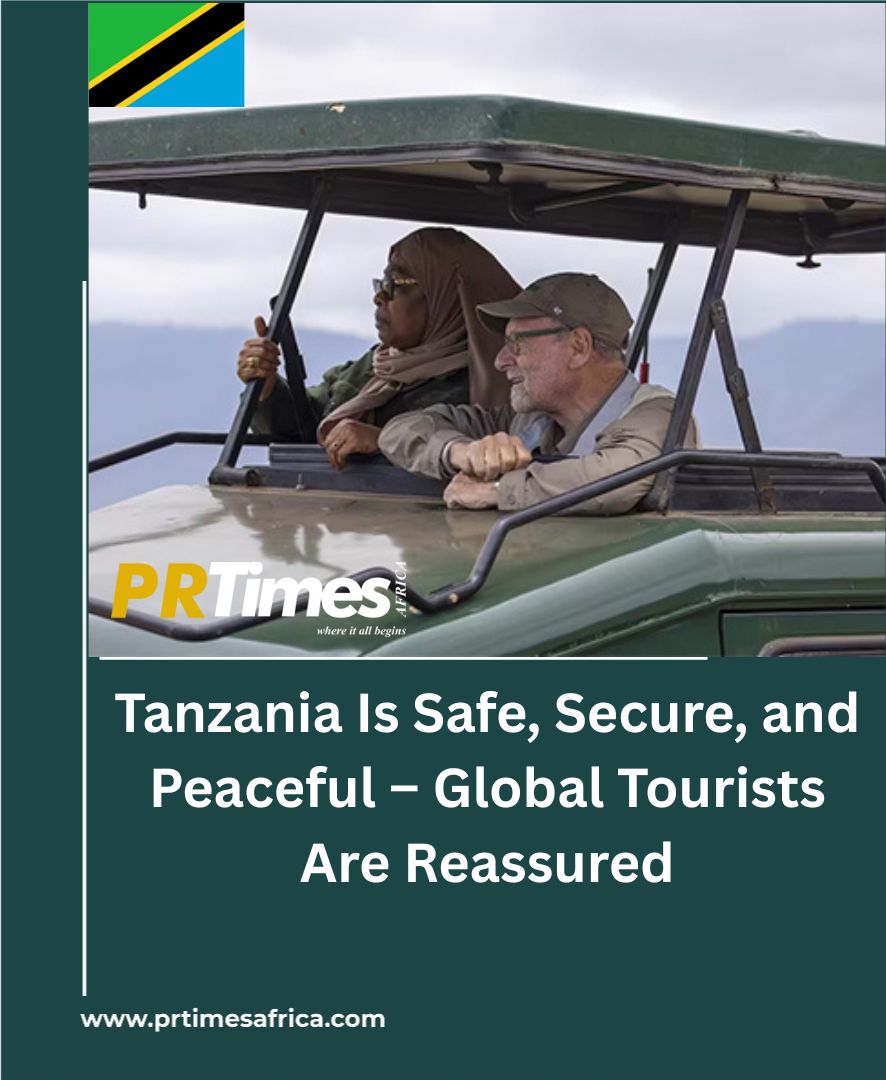
Tanzania Is Safe, Secure, and Peaceful – Global Tourists Are Reassured
By: Keziah Biya
DAR ES SALAAM — Tanzania’s tourism sector has received a significant boost as government officials, industry leaders and international partners reaffirm the country’s status as one of Africa’s safest and most peaceful destinations. The reassurance comes as global travel demand continues to rise, with Tanzania positioning itself as a premier hub for wildlife, culture and coastal tourism.
Speaking at a press briefing this week, the Ministry of Natural Resources and Tourism emphasized that Tanzania remains “stable, secure, and fully prepared” to welcome international visitors. Officials highlighted the country’s strong security frameworks, community-based conservation partnerships, and ongoing investment in safe travel infrastructure across major tourist circuits, including Kilimanjaro, Zanzibar, Serengeti and the Southern Highlands.
Tourism stakeholders noted that Tanzania’s consistent peace has allowed the sector to flourish, with travelers reporting positive experiences ranging from smooth airport procedures to safe transport and professional hospitality services. Operators also pointed to increased cooperation between security agencies and tourism businesses, ensuring rapid response capabilities and proactive safety management in popular destinations.
International travel agencies and foreign missions echoed these sentiments, citing Tanzania’s long-standing reputation as one of the most politically stable and welcoming nations in the region. Many highlighted the country’s vibrant culture, warm communities and preserved natural heritage as key attractions driving repeat visits and strong word-of-mouth promotion.
Local tourism boards have amplified the message through global campaigns aimed at restoring traveler confidence and strengthening Tanzania’s brand as a peaceful getaway. The campaigns showcase the diversity of the country’s offerings, from the iconic Serengeti migration to Zanzibar’s historic Stone Town and pristine coastlines.
As the high season approaches, officials project a steady rise in arrivals, driven by renewed trust in Tanzania’s safety record and its commitment to delivering memorable, secure travel experiences. Tourism leaders expressed optimism that the reassurance will not only boost visitor numbers but also reinforce Tanzania’s position as a world-class destination rooted in peace and hospitality.