Author: prtimesafrica
-

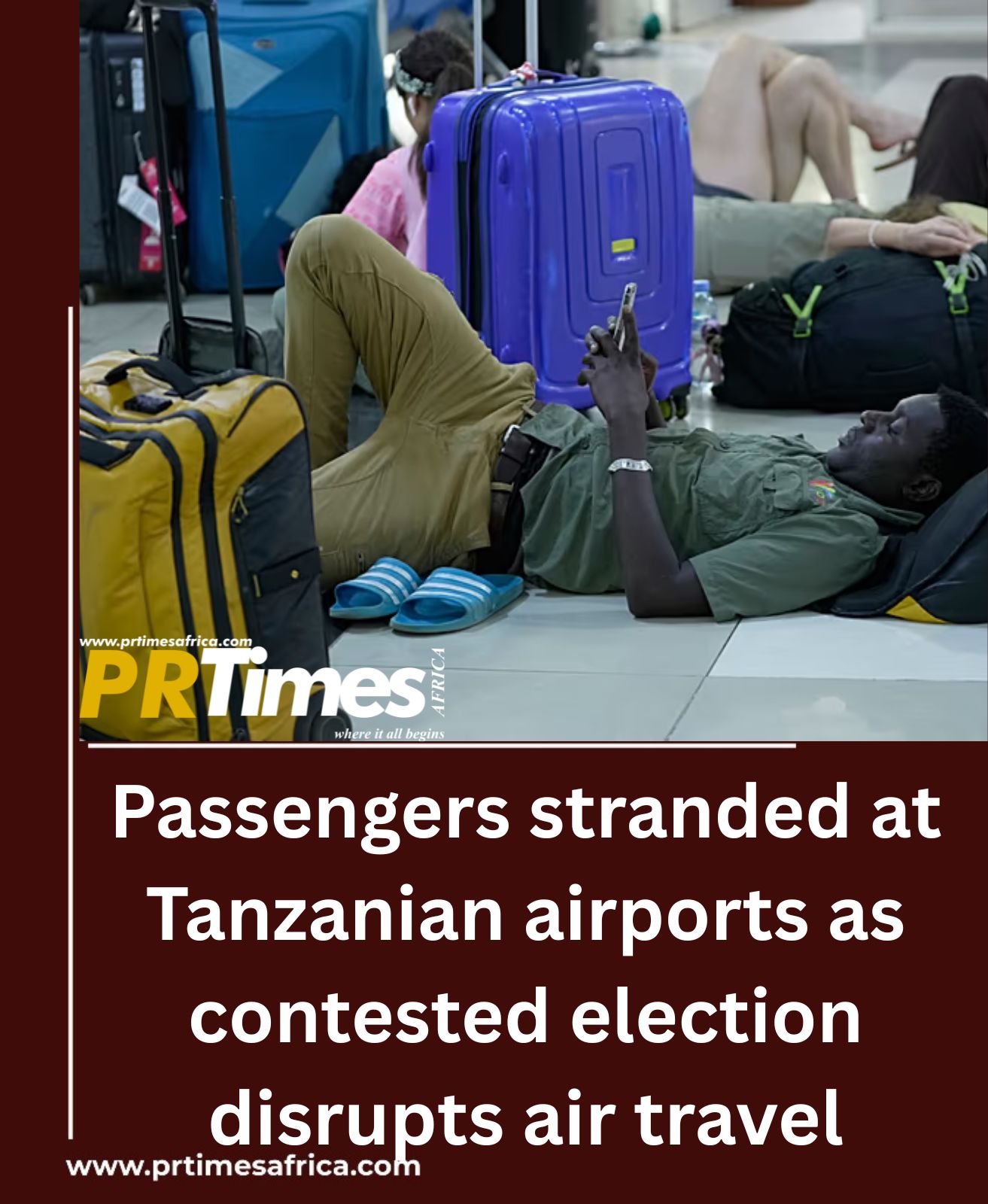
Passengers stranded at Tanzania airports as contested election disrupts air travel
Hundreds of travelers were left stranded at airports across Tanzania this weekend following President Samia Suluhu Hassan’s official re-election victory with over 97% of the vote in a widely contested poll. All domestic flights were grounded, and many international passengers could not access booking information due to a widespread internet blackout.“We’re trying to get from Zanzibar to Paris, but the Zanzibar–Nairobi leg has been cancelled, so we’re stuck,” said French tourist Irvine René at Zanzibar Airport. “We don’t know where to stay or sleep tonight. We’ll see what happens.” The UK, US, and Canada have issued travel warnings advising against all trips to Tanzania after last week’s election was marred by violence. Protesters flooded major cities, demanding a halt to vote counting and denouncing the results. Security forces, backed by the military, were deployed to suppress riots. Internet access has been intermittent, severely disrupting travel and daily life.The outcome has heightened criticism from opposition groups and observers who described the election as a “coronation” rather than a genuine contest. President Hassan’s two leading challengers — Tundu Lissu of Chadema and Luhaga Mpina of ACT-Wazalendo — were barred from running, leaving her effectively unchallenged. Tanzanian officials have not disclosed casualty figures from the unrest.UN human rights spokesman Seif Magango reported credible accounts of at least 10 deaths in Dar es Salaam, Shinyanga, and Morogoro. UN Secretary-General António Guterres expressed concern over the situation and called on all sides to avoid further escalation. In a joint statement, the foreign ministers of the UK, Canada, and Norway cited “credible reports of numerous deaths and serious injuries” stemming from the security response to protests. The European Union urged authorities to show “maximum restraint to protect human life.” -

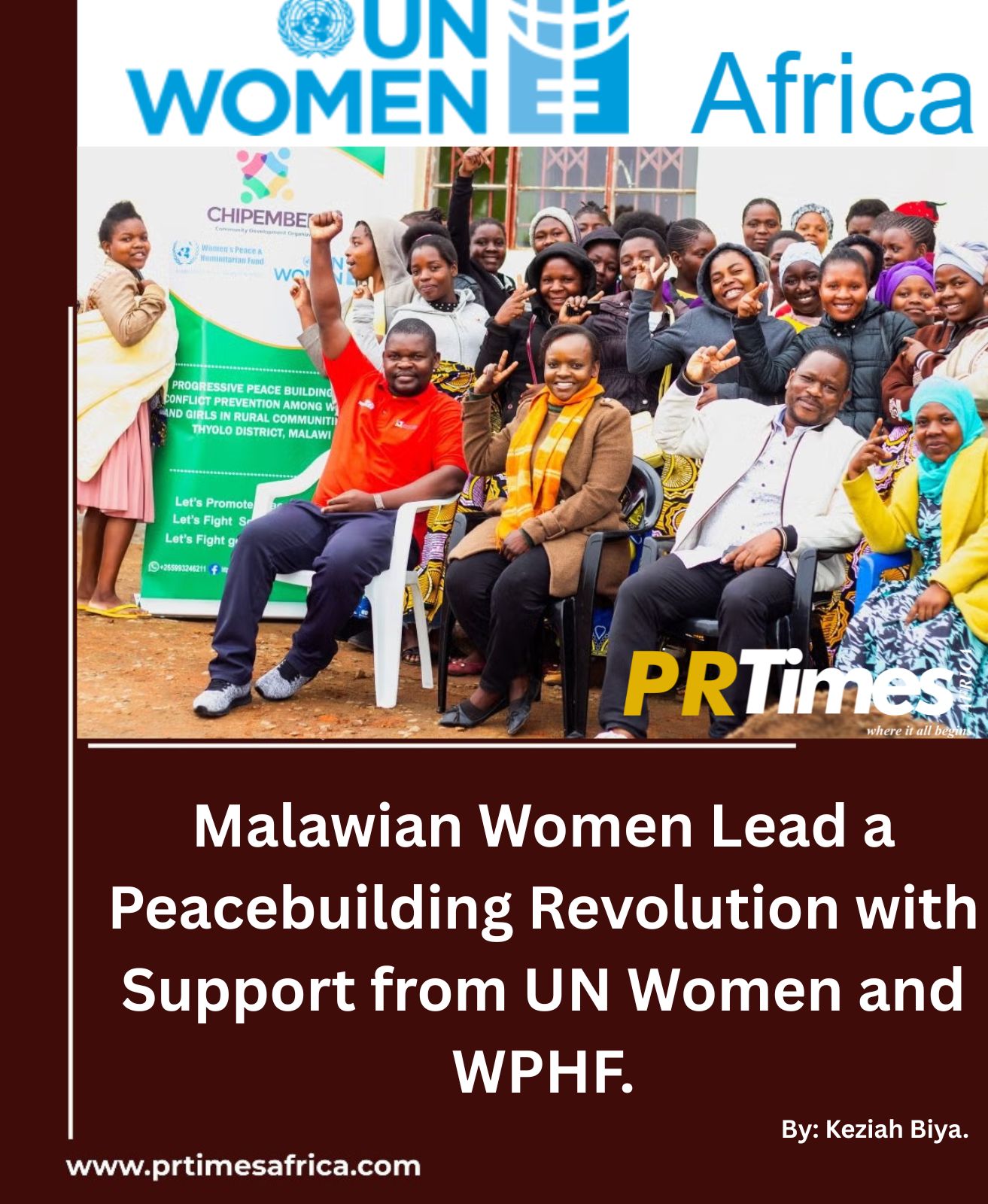
Malawian Women Lead a Peacebuilding Revolution with Support from UN Women and WPHF
NEW YORK, USA, October 23, 2025 – In the southern districts of Malawi, a powerful transformation is taking root. Communities once torn apart by land conflicts, political rivalries, and gender-based violence are now finding healing and unity—thanks to women who have stepped forward as mediators, advocates, and leaders in peacebuilding.
Supported by the Women’s Peace and Humanitarian Fund (WPHF) through UN Women, these women are redefining leadership, resolving conflicts, and challenging deep-seated gender norms across Malawi’s rural communities.
Women Taking the Lead in Nsanje
In the Mbenje area of Nsanje, women’s groups such as Chisomo, Yankho, and Tadala are reshaping the community’s approach to peace. Trained in mediation and advocacy by the Youth Coalition for the Consolidation of Democracy (YCD), these women now play key roles in resolving disputes and promoting peaceful elections.
Ahead of the tense 2025 primary elections, Tadala Women Movement successfully convened a peace dialogue with representatives from six political parties—averting potential violence and giving women a voice in electoral processes.
“We’re not just victims anymore—we’re problem-solvers,” says Stella Davie Maguza, Chairperson of the Yankho Women Movement.
Through their advocacy, the women have secured 17 Memoranda of Understanding with local chiefs to ensure that women are included in community decision-making and conflict resolution.
Healing Divides and Restoring Trust in Machinga
In Machinga District, a long-standing feud between two brothers—one of them a local chief—was peacefully resolved not by traditional elders, but by women trained in mediation by Youth Net and Counselling (YONECO). Their empathy-driven approach restored peace and earned the chief’s public support for women’s leadership.
Since December 2024, women in Machinga and Phalombe have mediated 42 community conflicts, addressing land disputes, domestic violence, and child marriage cases. More than 896 women and girls have been empowered, with 11 now holding formal leadership positions.
“Even chiefs’ wives are influencing decisions,” notes Chief Sitola, one of the few female traditional leaders in the area.
Peace Circles: A Model of Empowerment
For Brenda Charly, a Peace Circle Facilitator in Machinga, peacebuilding has been life-changing. Once financially dependent, she now runs a thriving tomato and red maize business that supports her children’s education.
“This Peace Circle saved my life,” she says. “We uplift one another, share ideas, and grow together. I’m no longer just surviving—I’m building a future.”
Brenda was trained under YONECO’s Sustaining Community Women Movement for Peacebuilding and Humanitarian Response in Malawi Project, supported by WPHF and UN Women.
Through collective farming, her group earns and shares profits to assist survivors of abuse and fund agricultural initiatives. Brenda’s recent harvest brought in MK380,000 (US$216)—enough to pay school fees for her daughter and send her youngest child to nursery school.
Voices of Change: Ednah and Lezita
In Mizinga, Machinga, facilitator Ednah Zuze has mediated dozens of disputes through inclusive community dialogues involving people with disabilities, faith leaders, and youth.
“Women need to take on these roles because we’re often the ones most affected by conflict,” Ednah says.
Trained in gender-based violence prevention, leadership, peacebuilding, and humanitarian response, Ednah is one of 60 women facilitators promoting peace and social cohesion through the WPHF-supported program.
Since March 2025, her group has engaged over 900 community members, building trust and transforming attitudes toward women’s leadership.
Meanwhile in Thyolo, 25-year-old Lezita Mukhiwa is making her mark as a councilor aspirant and mentor at Bvumbwe Girls Club. Her mission: empower young women to claim their space in politics and leadership.
“Someone must step up. Why not me?” she says confidently.
Through mentorship programs, Lezita encourages girls to stay in school and teaches them to recognize and report abuse, helping shift cultural perceptions on gender equality.
A Blueprint for Sustainable Peace
Across Malawi, these women are proving that peacebuilding goes beyond conflict resolution—it transforms lives and strengthens communities.
“These women didn’t wait for outsiders to fix their problems. They became the change,” says Francis Folley of YCD.
Their courage and resilience are offering a model of inclusive peacebuilding—one that communities across Africa, and the world, can learn from.
As the world faces increasing instability, Malawi’s story serves as a powerful reminder: when women lead, peace follows.
-

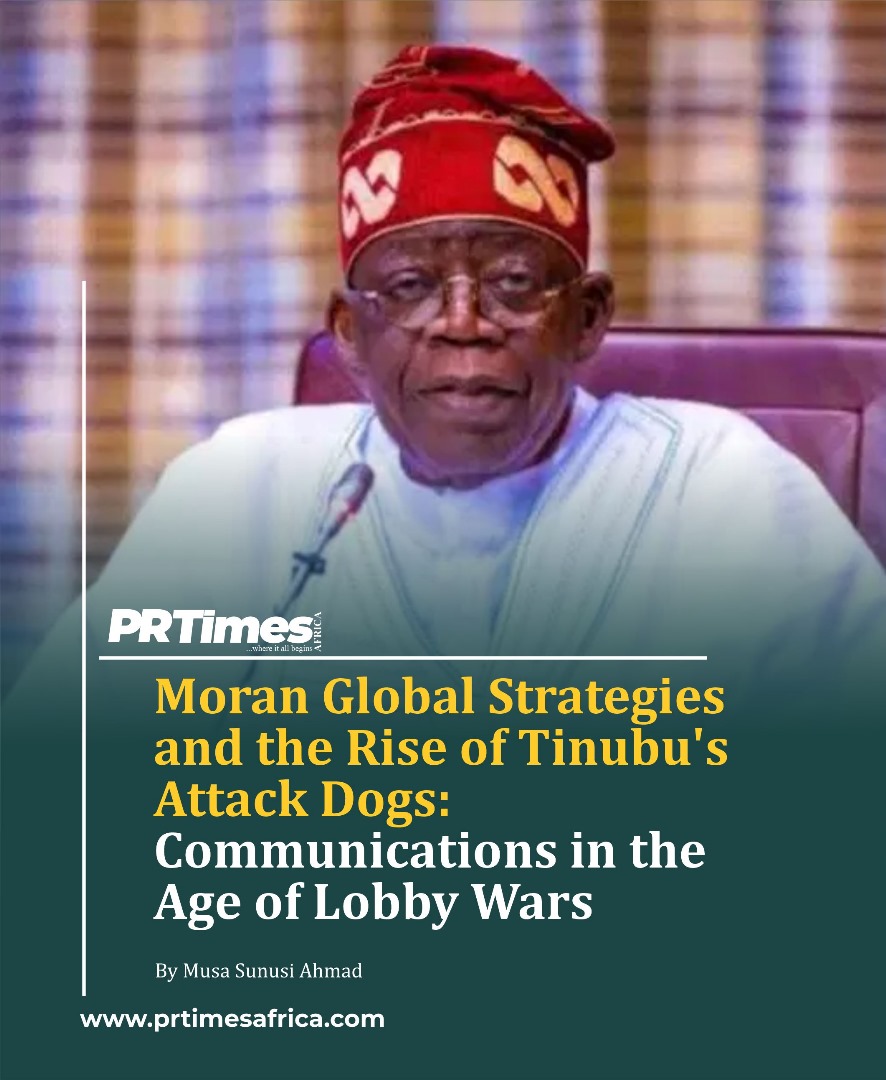
Moran Global Strategies and the Rise of Tinubu’s Attack Dogs: Communications in the Age of Lobby Wars
By Musa Sunusi Ahmad:
When U.S.-based lobbying firm Moran Global Strategies began making headlines in Nigerian political circles earlier this year, it didn’t take long for the machinery of government-affiliated public relations to swing into motion especially as it link to Biafra. What followed was predictable but troubling: a familiar barrage of attacks, counterattacks, and spin, this time deployed by a growing cadre of online and offline influencers many now dub “Tinubu’s Attack Dogs.”
While political communications has always had its aggressive edges, the current strategy raises serious questions for PR professionals, lobbyists, and policymakers alike: What happens when legacy attack-style messaging clashes with a globalized lobbying architecture? And is the aggressive defensive posture of state-affiliated communicators helping or hurting the Tinubu administration?
The Global Lobbying Game: Welcome to a New Arena
Moran Global Strategies, a firm with access to high-value U.S. political and diplomatic networks, was reportedly contracted by Nigerian stakeholders critical of the current administration. Their task? Shaping the narrative in Washington D.C., possibly influencing policy and perceptions at the State Department, Capitol Hill, and international media outlets.
For the Tinubu administration, the emergence of such a firm wasn’t merely a PR nuisance, it was seen as a threat to international credibility. But instead of quietly countering through backchannel diplomacy or soft power strategy, the response was loud, sharp, and relentless.
The Domestic Strategy: Defend, Attack, Distract
In what has become a pattern, the Nigerian digital media space was flooded with defensive op-eds, combative tweets, and orchestrated smear campaigns. A growing ecosystem of influencers, spokespersons, and anonymous accounts took up the task of discrediting the motives behind Moran Global’s client base, questioning the patriotism of the opposition, and painting the lobbying efforts as “unpatriotic” or even “foreign interference.”
This is classic attack PR, aggressively controlling the narrative by questioning the messenger instead of engaging with the message. It’s a strategy that has worked domestically in Nigeria, where loyalty often matters more than nuance. But on the international stage, this approach can backfire.
Why the “Attack Dog” Strategy Falls Flat Abroad
Unlike domestic audiences, international actors, especially in diplomatic, media, and lobbying circles, don’t respond well to emotional counter-narratives or perceived propaganda. They are trained to detect overreach. When spokespersons and affiliated influencers go on the offensive without offering substance or alternative facts, they risk reinforcing the very narratives they aim to dismantle.
Furthermore, firms like Moran Global thrive on transparency, connections, and credibility. They are not easily intimidated by public tirades. In fact, heavy-handed attacks may embolden them or attract more attention to their messaging.
A Smarter Strategy: Engagement Over Emotion
For a government serious about shaping its international image, engagement, not aggression, should be the preferred tool. This means:
– Leveraging strategic relationships via security attachés and foreign service operatives in Washington and London.
– Contracting rival lobbying firms that can quietly counter narratives and provide an alternative story to foreign policymakers and journalists.
– Using media diplomacy, not Twitter wars, to craft narratives that resonate with international stakeholders.
There is also a need for internal capacity building: PR strategy at this level requires professionals who understand geopolitical nuance, not just digital virality.
Beyond Noise, Toward Strategy
The episode with Moran Global Strategies highlights the evolving nature of political communications in an era of transnational influence warfare. As Nigeria’s global profile grows, the old tactics of silencing opposition through domestic noise will no longer suffice.
If the Tinubu administration wants to protect its image internationally, it must retire the “attack dog” approach and embrace a more sophisticated, strategic, and diplomatic communication model.
In the new global PR battlefield, winning hearts and minds isn’t about shouting the loudest, it’s about speaking the language of influence.
-

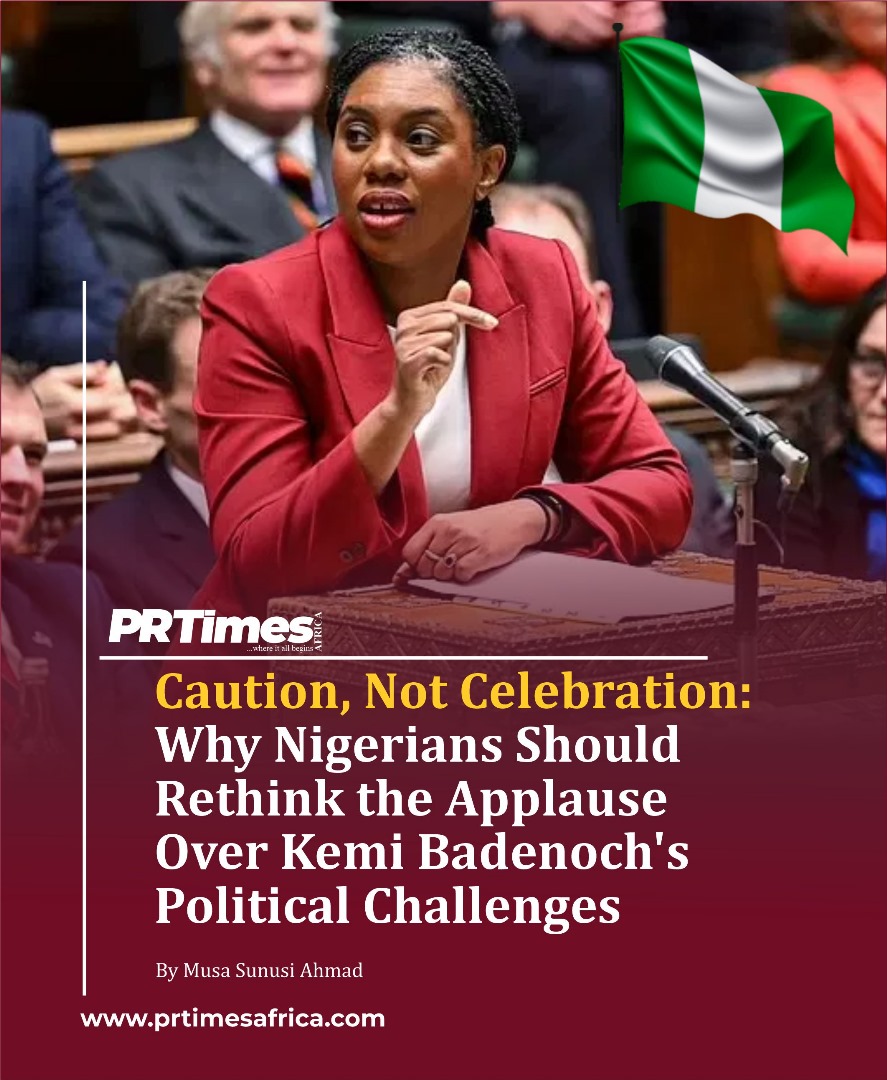
Caution, Not Celebration: Why Nigerians Should Rethink the Applause Over Kemi Badenoch’s Political Challenges
Caution, Not Celebration: Why Nigerians Should Rethink the Applause Over Kemi Badenoch’s Political Challenges.
Her decline in the UK political arena is no cause for celebration, it’s a mirror Nigeria mustn’t ignore.
By Musa Sunusi Ahmad:
As the United Kingdom approaches another critical general election, the Conservative Party is once again embroiled in internal reflection and leadership realignment. Among those in the spotlight is Kemi Badenoch, once seen as a frontrunner in shaping the future of the party and even a potential prime ministerial candidate.
But in recent months, Badenoch’s political capital has appeared to waver. She has faced criticism over her tone, policy gaps, and leadership style. For many, this is part of the natural ebb and flow of political life. For others, particularly in Nigeria, it has been interpreted and, alarmingly, celebrated as a form of failure.
Social media conversations, opinion pieces, and even public statements from some Nigerian figures have framed her political recalibration as just deserts for her so-called “rejection” of her Nigerian heritage. But this reaction is not only shortsighted; it is dangerous and ultimately counterproductive to the national discourse Nigeria needs.
When Critique Becomes Betrayal in the Eyes of the Offended
Kemi Badenoch has never minced words about the dysfunction she witnessed growing up in Nigeria, corruption, weak governance, and systemic inequality. Her reflections were never baseless. They echo the experiences of countless Nigerians at home and abroad.
But instead of engaging her critique with maturity, much of the reaction from Nigerian leaders and influencers has been defensive, an insistence that she’s betrayed her roots, and worse, that her political struggles are evidence of karma.
Let’s be clear: criticism is not betrayal. If Nigeria cannot handle honest assessments from those who have lived its challenges, then it risks insulating itself from accountability, from truth, and from progress.
Why This Celebration Is Misguided
- Her Political Struggles Are Not a Win for Nigeria
Kemi Badenoch’s leadership decline, if it is to be called that, has far more to do with internal Conservative Party dynamics, strategic miscalculations, and messaging missteps than with anything she said about Nigeria.
To celebrate her waning influence is to confuse correlation with causation. Worse, it sends the message that Nigerians would rather see their diaspora fail than see themselves reflected in a painful truth.
What does that say about the country’s self-perception?
- It Diminishes the Power of the Diaspora
Nigeria’s diaspora is one of its greatest soft power assets. From finance and education to politics and the arts, Nigerians abroad have excelled despite the odds. Badenoch is part of that story, even if her political ideology doesn’t align with the views of every Nigerian.
To ridicule her efforts simply because she speaks hard truths or aligns with a British political party many disagree with is to weaken the transnational networks Nigeria desperately needs to thrive in a globalized world.
- It Reflects Leadership Insecurity, Not Strength
When those in public office celebrate the downfall of someone who dared to speak about Nigeria’s challenges from afar, they expose their own discomfort with accountability. It’s a classic deflection, mock the messenger to avoid facing the message.
Instead of deflecting, Nigerian leaders should be asking:
What has Badenoch said about us that might actually be true? And what are we doing about it?
A Moment for Reflection, Not Ridicule
Kemi Badenoch’s political career in the UK has been defined by sharp rhetoric, strong opinions, and a deeply personal story of survival and reinvention. Whether or not she continues to rise in Conservative ranks, her journey remains symbolic of Nigerian potential.
But symbols require interpretation, and that interpretation must be constructive, not petty.
Her decline should prompt reflection, not ridicule. If a woman who escaped a dysfunctional system can rise to political prominence in another country, the question is not why she distanced herself, but why she had to.
Takeaways for Political Communications in Nigeria
For those in PR, political strategy, and public affairs, there are deeper insights to extract from this discourse:
– Critique Is Not the Enemy of Patriotism
Branding critique as unpatriotic weakens national credibility and alienates valuable voices.
– Diaspora Relations Require Maturity
Nigeria must foster nuanced, respectful engagement with its Diaspora, not reactive nationalism.
– Narrative Control Is a Strategic Imperative
Allowing the public discourse to devolve into bitterness undermines Nigeria’s international image.
– Celebrate Constructive Engagement, Not Schadenfreude
Mature nations understand that diaspora success, especially in politics, is a lever for influence, not a threat.
Leadership Requires Big Thinking
Kemi Badenoch’s recent political challenges in the UK are not a loss for Nigeria, nor a victory for her critics. They are a reminder of the global playing field Nigerians are already on, and how easily we can fumble the ball with the wrong mindset.
If Nigeria’s leaders and media voices want a better future, they must stop confusing discomfort with disrespect. Criticism, especially from the outside, is not always an attack. Sometimes, it’s the clearest form of care, the kind that doesn’t flatter, but forces reflection.
So no, her political recalibration is not a cause for celebration.
It is a moment of introspection, one Nigeria cannot afford to waste.
Her decline in the UK political arena is no cause for celebration, it’s a mirror Nigeria mustn’t ignore.
By Musa Sunusi Ahmad
As the United Kingdom approaches another critical general election, the Conservative Party is once again embroiled in internal reflection and leadership realignment. Among those in the spotlight is Kemi Badenoch, once seen as a frontrunner in shaping the future of the party and even a potential prime ministerial candidate.
But in recent months, Badenoch’s political capital has appeared to waver. She has faced criticism over her tone, policy gaps, and leadership style. For many, this is part of the natural ebb and flow of political life. For others, particularly in Nigeria, it has been interpreted and, alarmingly, celebrated as a form of failure.
Social media conversations, opinion pieces, and even public statements from some Nigerian figures have framed her political recalibration as just deserts for her so-called “rejection” of her Nigerian heritage. But this reaction is not only shortsighted; it is dangerous and ultimately counterproductive to the national discourse Nigeria needs.
When Critique Becomes Betrayal in the Eyes of the Offended
Kemi Badenoch has never minced words about the dysfunction she witnessed growing up in Nigeria, corruption, weak governance, and systemic inequality. Her reflections were never baseless. They echo the experiences of countless Nigerians at home and abroad.
But instead of engaging her critique with maturity, much of the reaction from Nigerian leaders and influencers has been defensive, an insistence that she’s betrayed her roots, and worse, that her political struggles are evidence of karma.
Let’s be clear: criticism is not betrayal. If Nigeria cannot handle honest assessments from those who have lived its challenges, then it risks insulating itself from accountability, from truth, and from progress.
Why This Celebration Is Misguided
- Her Political Struggles Are Not a Win for Nigeria
Kemi Badenoch’s leadership decline, if it is to be called that, has far more to do with internal Conservative Party dynamics, strategic miscalculations, and messaging missteps than with anything she said about Nigeria.
To celebrate her waning influence is to confuse correlation with causation. Worse, it sends the message that Nigerians would rather see their diaspora fail than see themselves reflected in a painful truth.
What does that say about the country’s self-perception?
- It Diminishes the Power of the Diaspora
Nigeria’s diaspora is one of its greatest soft power assets. From finance and education to politics and the arts, Nigerians abroad have excelled despite the odds. Badenoch is part of that story, even if her political ideology doesn’t align with the views of every Nigerian.
To ridicule her efforts simply because she speaks hard truths or aligns with a British political party many disagree with is to weaken the transnational networks Nigeria desperately needs to thrive in a globalized world.
- It Reflects Leadership Insecurity, Not Strength
When those in public office celebrate the downfall of someone who dared to speak about Nigeria’s challenges from afar, they expose their own discomfort with accountability. It’s a classic deflection, mock the messenger to avoid facing the message.
Instead of deflecting, Nigerian leaders should be asking:
What has Badenoch said about us that might actually be true? And what are we doing about it?
A Moment for Reflection, Not Ridicule
Kemi Badenoch’s political career in the UK has been defined by sharp rhetoric, strong opinions, and a deeply personal story of survival and reinvention. Whether or not she continues to rise in Conservative ranks, her journey remains symbolic of Nigerian potential.
But symbols require interpretation, and that interpretation must be constructive, not petty.
Her decline should prompt reflection, not ridicule. If a woman who escaped a dysfunctional system can rise to political prominence in another country, the question is not why she distanced herself, but why she had to.
Takeaways for Political Communications in Nigeria
For those in PR, political strategy, and public affairs, there are deeper insights to extract from this discourse:
– Critique Is Not the Enemy of Patriotism
Branding critique as unpatriotic weakens national credibility and alienates valuable voices.
– Diaspora Relations Require Maturity
Nigeria must foster nuanced, respectful engagement with its Diaspora, not reactive nationalism.
– Narrative Control Is a Strategic Imperative
Allowing the public discourse to devolve into bitterness undermines Nigeria’s international image.
– Celebrate Constructive Engagement, Not Schadenfreude
Mature nations understand that diaspora success, especially in politics, is a lever for influence, not a threat.
Leadership Requires Big Thinking
Kemi Badenoch’s recent political challenges in the UK are not a loss for Nigeria, nor a victory for her critics. They are a reminder of the global playing field Nigerians are already on, and how easily we can fumble the ball with the wrong mindset.
If Nigeria’s leaders and media voices want a better future, they must stop confusing discomfort with disrespect. Criticism, especially from the outside, is not always an attack. Sometimes, it’s the clearest form of care, the kind that doesn’t flatter, but forces reflection.
So no, her political recalibration is not a cause for celebration.
It is a moment of introspection, one Nigeria cannot afford to waste.
-

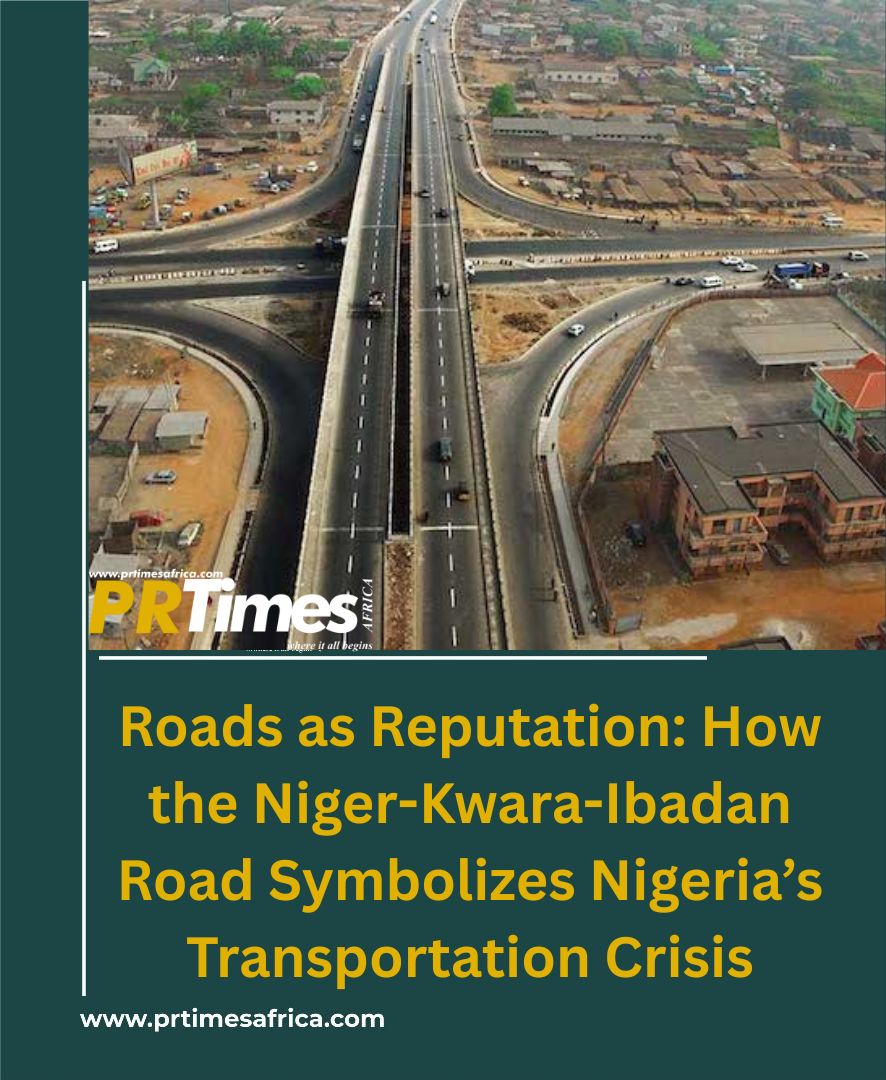
Roads as Reputation: How the Niger-Kwara-Ibadan Road Symbolizes Nigeria’s Transportation Crisis
By Musa Sunusi Ahmad:
In any country, the state of public infrastructure is a mirror reflecting governance, development priorities, and national cohesion. In Nigeria, that mirror is increasingly cracked, none more so than the road stretching from Niger State through Kwara to Ibadan. This critical artery, once a promising connector between agriculture-rich northern states and the commercial southwest, has now become a cautionary tale of neglect, poor image, and economic isolation.
For communications professionals, this is more than just a logistical issue, it’s a reputation crisis. The way we talk about, document, and advocate for infrastructure can shape both public perception and policy direction. In this light, the Niger-Kwara-Ibadan road isn’t just a transportation concern, it’s a national PR failure in urgent need of repair.
Nigeria’s Transportation Dilemma
Nigeria’s transportation industry is heavily road-dependent, with over 90% of internal goods and passenger movement relying on highways and inter-state routes. Despite this, a large proportion of federal and state roads are in disrepair. According to reports from the Federal Road Maintenance Agency (FERMA), less than 30% of Nigeria’s road network is in good condition.
Poor roads come with a heavy price:
– Increased transport costs
– Frequent accidents and vehicle damage
– Supply chain delays
– Commuter stress and economic loss
Yet, for all these challenges, one route tells the story with brutal clarity: Niger-Kwara-Ibadan.
A Broken Lifeline: The Niger-Kwara-Ibadan Corridor
Strategically positioned, this corridor connects central Nigeria’s agricultural heartland and tourism heaven with Ibadan, a southwestern hub for commerce, logistics, and distribution. In theory, it should be an economic superhighway. In practice, it’s a minefield.
Road users describe:
– Gaping potholes that swallow car tyres
– Long stretches of failed pavement
– Washed-out shoulders during the rainy season
– Insecurity at night due to broken-down vehicles and isolation
What should be a 6-7 hour drive frequently becomes a 12-15 hour ordeal. The result is more than frustration, it’s economic fragmentation.
Bad Image, Worse Consequences
The most visible effect of the road’s deterioration is the negative public image that has formed around it, both online and in public discourse. Across social media, WhatsApp groups, and local radio programs, the Niger-Kwara-Ibadan route is portrayed as:
– A “no-go zone” for inter-state commuters
– A high-risk stretch for transporters and logistics companies
– A metaphor for government failure in rural development
This bad image carries weight:
– Transporters increase fares or avoid the route, pushing up logistics costs
– Travelers opt for alternative, longer routes, reducing traffic and market activity along the original corridor
– Investors see the region as inaccessible, discouraging infrastructure and commercial development
– Citizens lose faith in government promises of road rehabilitation
Reputation, in infrastructure as in business, becomes reality when left unmanaged.
Economic Isolation in Plain Sight
The deterioration of the Niger-Kwara-Ibadan road has created an unspoken crisis: economic isolation of the communities and states it once served.
- Disrupted Agricultural Trade
Farmers in Kwara and Niger face difficulty transporting goods to urban markets. Perishable items are often lost in transit, and reduced supply drives up food prices in the southwest. The route’s condition has made agribusiness less attractive and less profitable.
- Missed Investment Opportunities
Due to poor access, companies avoid locating warehouses, factories, or depots along the corridor. Investors write off areas like Ilorin, Jebba, or Mokwa not for lack of resources but because bad roads equal bad business.
- Decline of Informal Economies
Market sellers, roadside traders, and small transport operators suffer from lower footfall, increased repair costs, and travel uncertainty. This disproportionately affects women and youth, many of whom rely on daily earnings from cross-regional trade.
- Youth Exodus and Regional Inequality
With mobility stifled, young people migrate to better-connected cities. This leads to brain drain, weakening local economies and reinforcing regional disparities.
- Weakening National Unity
When one road disconnects a region from the rest of the country, it feeds into wider narratives of neglect and marginalization. Infrastructure, when broken, isolates not just communities but identities.
Repairing the Reputation: A PR & Policy Playbook
While engineers focus on physical repair, communications experts and policy advocates must tackle the reputational rehabilitation of this corridor, and many like it. Here’s how:
– Visual Documentation
High-quality drone footage, before/after images, and real-time repair updates help create transparency and urgency.
– Data-Driven Storytelling
Use quantifiable impacts, cost of delays, number of accidents, inflation from food transport costs, to make the economic case for action.
– Community Testimonials
First-hand stories from drivers, traders, farmers, and students affected by the road’s condition personalize the problem and highlight its human cost.
– Showcasing Progress
When repairs are made, showcase them widely. Every kilometre rehabilitated should be a communication win that shifts the narrative from decay to renewal.
– Stakeholder Messaging
Frame road improvement not just as infrastructure, but as:
– A tool for national unity
– A platform for economic growth
– A visible proof of governance success
Patching the Road, Rebuilding Trust
The Niger-Kwara-Ibadan road may be physically broken, but the bigger damage is to trust, opportunity, and inclusion. For Nigeria to thrive, infrastructure must do more than connect places, it must connect people to possibility.
Rehabilitating this corridor means healing a key artery in the body of Nigeria’s economy. But fixing roads is not just the work of bulldozers and budgets. It’s also the work of narratives, voices, and strategic communication. If Nigeria is to turn the corner on its transport crisis, this road must not only be rebuilt, it must be reimagined as a symbol of what works when policy meets purpose.
-

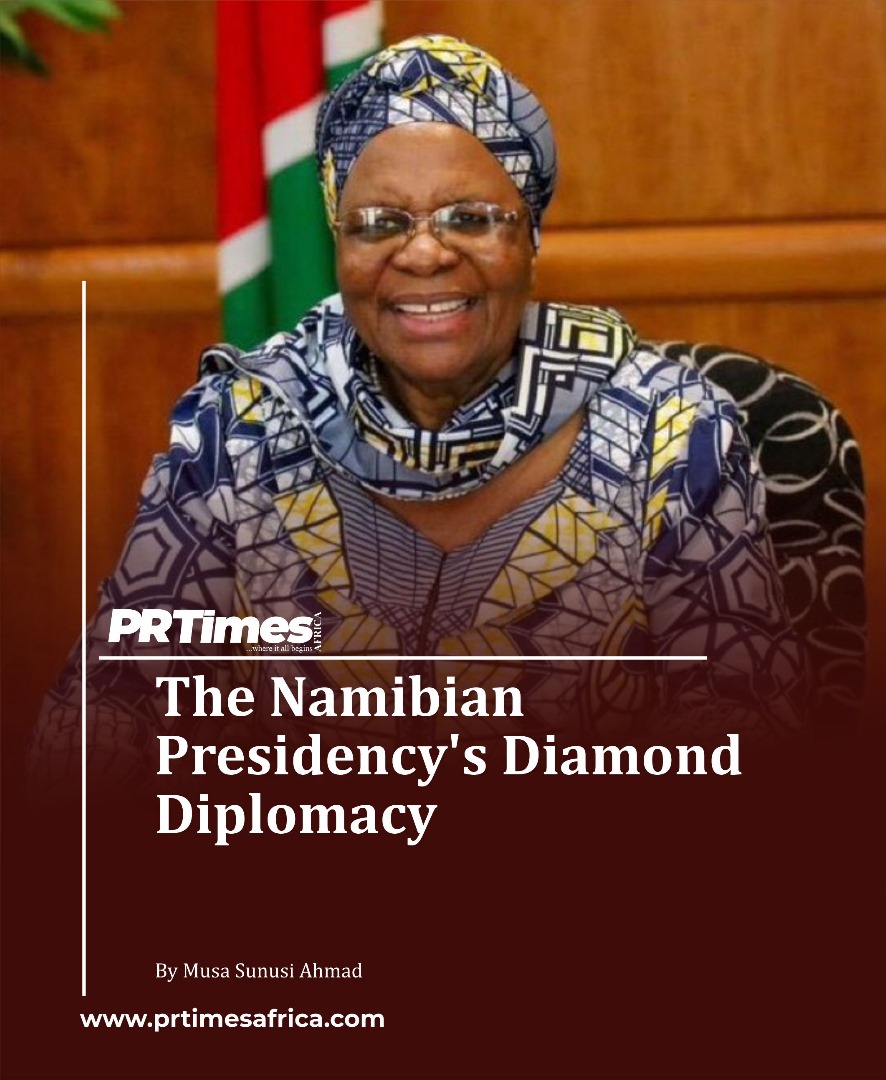
The Namibian Presidency’s Diamond Diplomacy
By Musa Sunusi Ahmad
In an age of resurging resource nationalism across Africa, Namibia is making waves, not through radical reforms, but through the quiet power of strategic communication.
At the heart of this strategy is one of the country’s most symbolic resources: diamonds.
Under President Nangolo Mbumba, the Namibian Presidency has not only continued the nation’s drive toward ownership and beneficiation of its diamond wealth, it has also expertly communicated that ownership to its people and to the world.
Through messaging steeped in national pride, transparency, and global diplomacy, the Presidency has constructed a narrative that is less about extraction, and more about empowerment, equity, and economic dignity.
Reframing the Resource: A Diamond is Not Just a Gem
Namibia’s diamond industry has long been dominated by multinational players, particularly De Beers, with much of the wealth historically leaving the country unprocessed. This created a communication vacuum around resource ownership and led to growing discontent among citizens.
That changed with the 2016 creation of Namdia (Namib Desert Diamonds), a state-owned enterprise mandated to market and sell a portion of Namibia’s rough diamonds independently of private partners. It was a bold statement: Namibians would no longer be silent shareholders in their own wealth.
But asserting sovereignty was just the first step. Communicating it, and ensuring the public saw and felt that change, became the presidency’s mission.
The Communications Strategy: Telling the Story of Sovereignty
Over the past five years, Namibia’s presidency has developed a sophisticated, values-based communications strategy built on four key pillars:
Framing Sovereignty Through Language
The presidency consistently refers to diamonds as a “national heritage” or “generational resource”, consciously avoiding the commodity-based language of extraction. Presidential speeches have shifted the narrative from “mining” to “managing”, subtly recasting Namibians from laborers to rightful custodians of their wealth.
This reframing strategy builds emotional connection and invokes a sense of historical justice and dignity, crucial in post-colonial communications.
Transparency as a Tool of Trust
The government has adopted an open approach to sharing data on diamond sales, state revenues, and the activities of Namdia. Press briefings, infographics, and public budget disclosures help demystify the diamond value chain.
In a region where resource wealth is often synonymous with secrecy, Namibia’s commitment to transparency reinforces public trust, and builds international credibility.
Symbolism in Leadership and State Events
From televised tours of Namdia’s headquarters to showcasing Namibian-cut diamonds during diplomatic state visits, the presidency is leveraging visual storytelling. These deliberate acts of symbolism show a break from the past, affirming the message: “Namibian diamonds are managed by Namibians, for Namibians.”
Even subtle cues, such as featuring diamond artisans in national holiday parades or using imagery of diamond polishing in government ads, carry powerful semiotic weight.
Global Voice, African Confidence
Namibia’s Presidency has taken its message abroad. At forums such as the African Mining Indaba, the World Economic Forum, and the United Nations, President Mbumba and his cabinet have confidently projected Namibia’s new role in the global diamond economy.
Gone are the days of cautious diplomacy. In its place: an assertive, sovereign voice championing fair trade, value addition, and African ownership.
Nation Branding in Action
This is more than domestic politics, it’s a nation branding campaign in full motion.
By clearly aligning resource governance with national values like integrity, transparency, and self-determination, the presidency is repositioning Namibia on the global stage, not just as a source of rough diamonds, but as a serious player in the polished diamond market and a leader in ethical mining.
In doing so, Namibia communicates that it isn’t merely reacting to external pressures, but authoring its own development story.
Communication Risks and the Balancing Act
As with all sovereign narratives, there are risks.
A messaging strategy centered on economic justice raises expectations. If the public doesn’t see meaningful beneficiation, such as job creation, infrastructure development, or community reinvestment, the message could backfire.
There’s also the diplomatic tightrope. While asserting national control, the Presidency must ensure that foreign investors and trade partners still feel welcome, valued, and aligned with Namibia’s long-term vision.
In this space, communications are not only informative, they are diplomatic tools.
Namibia’s diamond sovereignty campaign offers rich lessons for PR professionals, political communicators, and nation branders:
– Narrative matters. Language reframes reality.
– Symbolism strengthens strategy. A well-timed gesture can amplify policy.
– Transparency builds trust. Citizens become stakeholders, not spectators.
– Confidence is contagious. A clear, assertive national voice can reshape external perceptions.
We’re Morethan a Mineral
Namibia’s approach to diamond communications shows that sovereignty is more than a legal term, it is a lived narrative.
It’s told through policy, yes, but also through presidential speeches, media imagery, public engagement, and diplomatic performance.
By owning the narrative as much as the resource, Namibia has illuminated a path for other resource-rich nations: Speak with clarity, act with integrity, and communicate with pride.
-

The Battle for Hearts and Ballots: Election Campaigns in Cameroon
By Kassie Biya:
Cameroon’s election campaigns are as complex as the country’s multicultural identity. With over 250 ethnic groups, two official languages (French and English), and a long history of political centralization, crafting and executing an effective election campaign in Cameroon is both an art and a high-stakes strategic endeavor. In a landscape where communication, perception, and public sentiment can make or break political futures, public relations (PR) and communications professionals play a pivotal role.
This article explores the evolution of election campaign strategies in Cameroon, the unique challenges faced by political communicators, and how digital media is reshaping the electoral narrative.
A Legacy of Controlled Messaging
Since independence in 1960, Cameroon’s political sphere has been dominated by the Cameroon People’s Democratic Movement (CPDM), led by President Paul Biya since 1982. For decades, election campaigns were largely symbolic, with limited space for opposition or dissenting voices. Communication was heavily centralized, state-controlled media reigned supreme, and grassroots mobilization followed a top-down model.
In this environment, PR was less about persuasion and more about visibility and reinforcement of loyalty. The party’s presence was emphasized through posters, rallies, and nationalistic rhetoric, with little room for policy-based debate or transparent discourse.
However, the introduction of multiparty politics in the 1990s slowly opened up space for competitive campaigning, albeit within a still tightly controlled system.
Messaging in a Multilingual, Multicultural Society
Campaigning in Cameroon means speaking to a deeply diverse population, not just linguistically, but culturally and politically. Francophone regions dominate in numbers, but the Anglophone crisis in the Northwest and Southwest regions has highlighted the consequences of neglecting regional grievances in national messaging.
To resonate with voters, political campaigns must localize their communication strategies. Language, symbolism, and even candidate selection are adapted to specific constituencies. For PR professionals, this means conducting in-depth cultural research and crafting messages that respect and reflect regional identities.
For example, slogans in the Littoral region might emphasize economic opportunity, while those in the Far North might focus on security and agricultural support. In Anglophone regions, any campaign that fails to address marginalization risks alienating entire communities.
Digital Awakening: The Rise of Social Media Campaigning
Over the past decade, Cameroon has witnessed a slow but steady digital transformation. With internet penetration increasing (despite periodic government shutdowns), social media platforms like Facebook, WhatsApp, and TikTok have become critical tools for both ruling and opposition parties.
For younger, urban voters especially, these platforms offer a counter-narrative to state media and allow political actors to bypass traditional gatekeepers. Opposition figures such as Maurice Kamto of the Cameroon Renaissance Movement (CRM) have used digital campaigns to galvanize support, especially among youth and the diaspora.
PR consultants now work closely with digital strategists, content creators, and influencers to shape online discourse. Hashtag campaigns, viral videos, and livestreamed rallies are becoming standard fare. Yet, the digital shift also raises concerns about misinformation, hate speech, and cybersecurity.
Challenges in Ethical Communications
Despite advances, election campaigns in Cameroon are still marred by misinformation, political intimidation, and a lack of transparency. Fake news spreads quickly, sometimes orchestrated by political actors themselves, and fact-checking remains underdeveloped.
Moreover, the lines between government communication and campaign messaging are often blurred, raising ethical concerns about the misuse of state resources for partisan purposes.
For PR professionals committed to ethical practice, this environment poses dilemmas: How can you advocate for your client while maintaining integrity? How do you navigate censorship, surveillance, or politically motivated violence?
The Road Ahead: What Next for Political PR in Cameroon?
As Cameroon approaches the 2025 presidential election, the stakes are high. With growing discontent over unemployment, governance issues, and the unresolved Anglophone crisis, voters are more skeptical than ever.
To win hearts and ballots, future campaigns must go beyond slogans. Voters demand substance, policies that address their daily realities, and candidates who listen. This is where strategic communications will be decisive.
Campaigns that invest in research-driven messaging, community engagement, and transparent digital strategies will have a competitive edge. The days of one-size-fits-all campaigning are over. Political communications in Cameroon is entering an era where authenticity, adaptability, and accountability will be the ultimate currency.
PR at the Heart of Democracy
In Cameroon, as elsewhere, elections are not just about votes, they are about voices. And it is the role of PR and communications professionals to amplify, shape, and sometimes challenge those voices. Whether in Yaoundé or Bamenda, Douala or Maroua, the future of democratic engagement will depend not just on who speaks, but on how, and to whom, they are speaking.
For communicators, the message is clear: in the race for political legitimacy, strategy matters. But trust matters more.
-

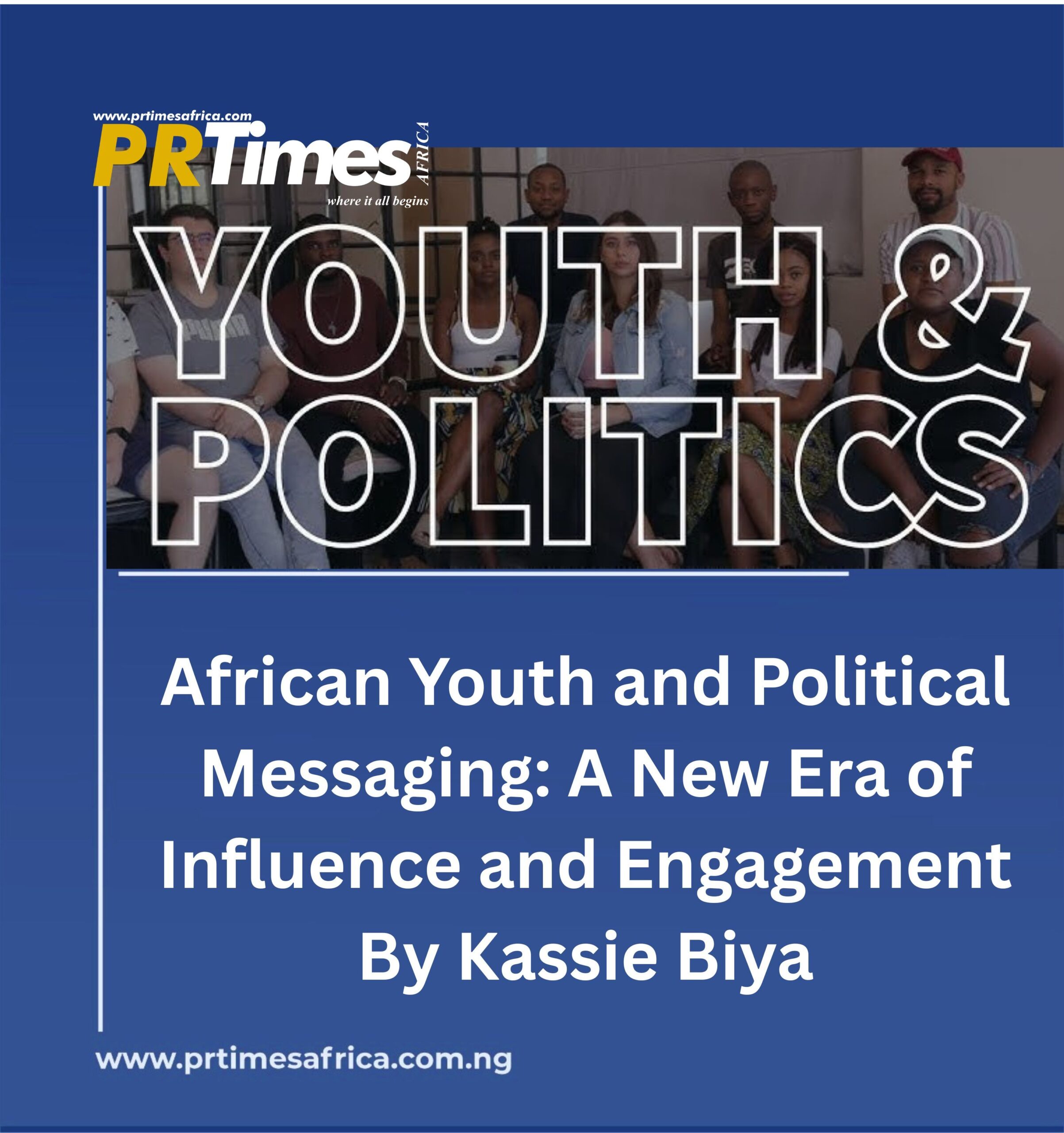
African Youth and Political Messaging: A New Era of Influence and Engagement
By Kassie Biya:
In the age of digital activism and hashtag revolutions, Africa’s youth are not just consuming political messaging, they’re reshaping it.
From #EndSARS in Nigeria to #FeesMustFall in South Africa, political engagement across Africa has taken on a new, dynamic form. Central to this evolution are young Africans, who now make up over 60% of the continent’s population. This demographic shift is rewriting the rules of political communication, forcing governments, political parties, and advocacy groups to rethink how, and where, they craft their messages.
A Generational Awakening
Historically sidelined in policy-making, African youth are no longer willing to be passive spectators. Increased access to education, mobile connectivity, and social media has elevated their awareness of civic rights and political accountability.
Political messaging that once relied heavily on traditional media, radio jingles, party rallies, and newspaper spreads, now competes with sharp, socially-driven content on TikTok, X (formerly Twitter), Instagram, and WhatsApp. Young people are not just the audience; they are creators, influencers, and amplifiers of political discourse.
Messaging That Misses the Mark
Many political campaigns still underestimate this shift. When youth-focused messages are crafted without their input or understanding of digital culture, they often come across as tone-deaf or manipulative. Attempts to use slang, memes, or influencers without authenticity can backfire, creating ridicule instead of resonance.
Worse still, messaging that ignores the real economic and social struggles of young people, unemployment, poor infrastructure, repression, alienates this powerful bloc. The continent’s youth want more than flashy slogans. They want substance, accountability, and platforms for participation.
The Rise of Issue-Based Advocacy
Rather than aligning with party politics, many young Africans are rallying around issues: police brutality, climate justice, education, gender rights, and unemployment. Political messaging that connects with these real-life concerns, and offers viable solutions, gains far more traction than party loyalty ever could.
This is creating a golden opportunity for NGOs, independent candidates, and grassroots movements. Messaging that is community-rooted, inclusive, and delivered in local languages is gaining trust. Influencers, musicians, and comedians are also playing a pivotal role in shaping narratives, often becoming accidental opinion leaders through viral content.
Lessons for PR and Communications Professionals
Communicators working in political or civic spaces across Africa must rethink how they approach young audiences. Here are a few takeaways:
- Co-create, don’t dictate
Collaborate with youth-led groups and digital creators. Involve them in the strategy, not just the rollout.
- Embrace digital-first storytelling
Use visuals, short-form video, and authentic voices. Long speeches and outdated slogans don’t stick.
- Center lived experiences
Frame messages around issues that young people care about, and present real, actionable pathways for change.
- Track sentiment, not just likes
Engagement is more than views. Monitor online conversations, listen actively, and adapt to changing sentiments.
- Be real
Authenticity wins. Young Africans can detect insincerity faster than ever. If it’s fake, they’ll call it out, publicly.
The Road Ahead
Africa’s youth are not just the future, they are the present. Political messaging that fails to reflect this reality risks irrelevance. But for those who listen, engage, and communicate with intention, the opportunity is immense.
In this era, the messenger matters as much as the message, and increasingly, that messenger is a 22-year-old with a smartphone, a cause, and a digital audience of millions.
-

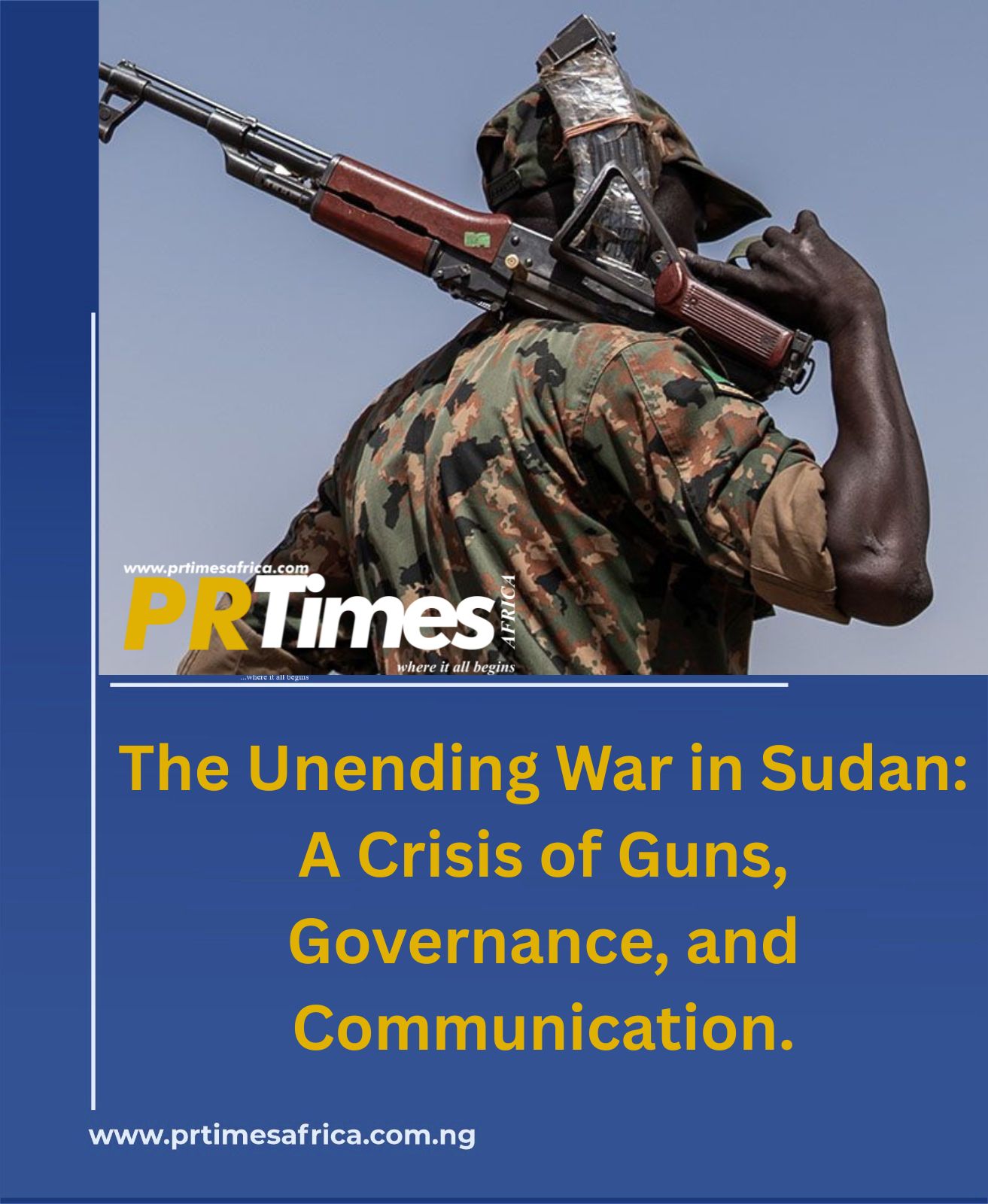
The Unending War in Sudan: A Crisis of Guns, Governance, and Communication
By Musa Sunusi Ahmad:
Sudan, once a beacon of hope for political transition in Africa, has been plunged into relentless conflict since April 2023. The violent power struggle between the Sudanese Armed Forces (SAF) and the paramilitary Rapid Support Forces (RSF) has not only decimated lives and infrastructure but also shattered the country’s fragile governance and its ability to communicate openly and freely.
More than 40,000 people have died, over 12 million are displaced internally or as refugees, and nearly half of Sudan’s population faces food insecurity. Yet behind these staggering numbers lies a less visible but equally devastating crisis: the destruction of Sudan’s information ecosystem, the silencing of journalists, and a dangerous fog of misinformation that deepens the wounds of war.
The Political and Military Fault Lines
The current war is rooted in Sudan’s fragile political transition after the 2019 overthrow of Omar al-Bashir, who ruled for 30 years with an iron fist. The power vacuum that followed created tensions between military factions vying for control over Sudan’s future.
The SAF, loyal to the former military establishment, and the RSF, a powerful paramilitary force with roots in the notorious Janjaweed militias responsible for atrocities in Darfur, were initially uneasy partners. But by April 2023, these tensions erupted into open warfare, with each side seeking to assert dominance.
The country has since fractured into zones controlled alternately by SAF and RSF forces. Governance structures have disintegrated, lawlessness prevails, and civilians are trapped in a deadly crossfire. Reports of ethnic cleansing, rape as a weapon of war, and indiscriminate attacks have surged, particularly in Darfur and Khartoum.
In a landmark ruling, the International Criminal Court (ICC) convicted Ali Kushayb, a former Janjaweed leader linked to the RSF, for war crimes in Darfur, underscoring the conflict’s ongoing humanitarian dimension. Yet despite international condemnation, impunity remains widespread.
Communication Breakdown: Media Infrastructure Under Siege
War’s destruction extends beyond the battlefield. The conflict has systematically targeted Sudan’s media infrastructure, a critical pillar of democracy and civil society. According to the Sudanese Journalists Syndicate, 90% of media outlets, printing presses, and broadcasting infrastructure have been damaged, destroyed, or rendered inoperable.
Thousands of journalists have been forced to flee or operate underground amid escalating threats, harassment, and direct violence. Since April 2023, at least nine journalists have been killed, several others abducted, and many more imprisoned without due process.
The destruction of media outlets and the forced exile of journalists have left millions without reliable sources of news. Propaganda and disinformation now fill the void, with both SAF and RSF controlling local narratives to justify their actions and delegitimize opponents.
The Human Cost: Information as a Lifeline
Communication is more than just information; it is a lifeline in crises. Humanitarian agencies rely on accurate, timely data to deliver aid, coordinate evacuations, and monitor human rights abuses. In Sudan, the collapse of independent media has severely hampered these efforts.
Communities isolated by conflict and disrupted communication networks face increased vulnerability. Rumors spread rapidly in the absence of trusted news sources, leading to fear, confusion, and at times, violence between ethnic groups and communities.
Moreover, communication plays a critical role in fostering dialogue and reconciliation, essential components in any peace building process. Without channels for dialogue and information exchange, mistrust deepens, and the prospects for peace diminish.
The Resilience of Sudanese Journalists
Amid the destruction and intimidation, Sudanese journalists have shown remarkable courage and resilience. Many operate covertly, using encrypted platforms, social media, and mobile technology to report stories from the frontlines.
Supported by international organizations like UNESCO and Reporters Without Borders, these journalists defy censorship and repression. Their reporting provides a crucial window into the realities on the ground, countering propaganda and bearing witness to atrocities.
As Khartoum-based reporter explains, “We risk everything because the world needs to know what is happening here. Without information, people lose hope.”
The Role of the International Community
The international community has a vital role in safeguarding freedom of the press and restoring communication networks in Sudan. Key measures include:
– Providing safe zones and secure corridors for journalists.
– Funding emergency media operations and mobile journalism units.
– Supporting digital tools that enable secure, uncensored reporting.
– Offering mental health services and trauma counseling for journalists.
– Pressuring all parties to respect media freedoms and cease attacks on the press.
These steps not only protect journalists but also ensure that humanitarian efforts can be coordinated and that peace initiatives are informed by accurate information.
Communication as a Foundation for Peace
Sudan’s future depends on more than ceasefires and political deals. It requires rebuilding trust between the government and citizens, between communities, and between Sudan and the world. Free, independent communication is foundational to this process.
Without a functioning media and open channels for dialogue, reconciliation efforts risk failure. Information empowers citizens, holds leaders accountable, and enables societies to heal.
Beyond Guns and Governance
Sudan’s unending war is a stark reminder of the intertwined nature of conflict, governance, and communication. As bullets fly, so do stories, some truthful, many distorted. Amid the devastation, the struggle for control over Sudan’s narrative is as crucial as control over its land.
The international community, humanitarian agencies, and media organizations must act decisively to protect Sudanese journalists, rebuild communication infrastructure, and ensure the flow of reliable information.
Because in Sudan’s fight for its future, communication is more than a tool, it is a lifeline for peace.
-
The Unending War in Sudan: A Crisis of Guns, Governance, and Communication.
By Musa Sunusi Ahmad:
Sudan, once a beacon of hope for political transition in Africa, has been plunged into relentless conflict since April 2023. The violent power struggle between the Sudanese Armed Forces (SAF) and the paramilitary Rapid Support Forces (RSF) has not only decimated lives and infrastructure but also shattered the country’s fragile governance and its ability to communicate openly and freely.
More than 40,000 people have died, over 12 million are displaced internally or as refugees, and nearly half of Sudan’s population faces food insecurity. Yet behind these staggering numbers lies a less visible but equally devastating crisis: the destruction of Sudan’s information ecosystem, the silencing of journalists, and a dangerous fog of misinformation that deepens the wounds of war.
The Political and Military Fault Lines
The current war is rooted in Sudan’s fragile political transition after the 2019 overthrow of Omar al-Bashir, who ruled for 30 years with an iron fist. The power vacuum that followed created tensions between military factions vying for control over Sudan’s future.
The SAF, loyal to the former military establishment, and the RSF, a powerful paramilitary force with roots in the notorious Janjaweed militias responsible for atrocities in Darfur, were initially uneasy partners. But by April 2023, these tensions erupted into open warfare, with each side seeking to assert dominance.
The country has since fractured into zones controlled alternately by SAF and RSF forces. Governance structures have disintegrated, lawlessness prevails, and civilians are trapped in a deadly crossfire. Reports of ethnic cleansing, rape as a weapon of war, and indiscriminate attacks have surged, particularly in Darfur and Khartoum.
In a landmark ruling, the International Criminal Court (ICC) convicted Ali Kushayb, a former Janjaweed leader linked to the RSF, for war crimes in Darfur, underscoring the conflict’s ongoing humanitarian dimension. Yet despite international condemnation, impunity remains widespread.
Communication Breakdown: Media Infrastructure Under Siege
War’s destruction extends beyond the battlefield. The conflict has systematically targeted Sudan’s media infrastructure, a critical pillar of democracy and civil society. According to the Sudanese Journalists Syndicate, 90% of media outlets, printing presses, and broadcasting infrastructure have been damaged, destroyed, or rendered inoperable.
Thousands of journalists have been forced to flee or operate underground amid escalating threats, harassment, and direct violence. Since April 2023, at least nine journalists have been killed, several others abducted, and many more imprisoned without due process.
The destruction of media outlets and the forced exile of journalists have left millions without reliable sources of news. Propaganda and disinformation now fill the void, with both SAF and RSF controlling local narratives to justify their actions and delegitimize opponents.
The Human Cost: Information as a Lifeline
Communication is more than just information; it is a lifeline in crises. Humanitarian agencies rely on accurate, timely data to deliver aid, coordinate evacuations, and monitor human rights abuses. In Sudan, the collapse of independent media has severely hampered these efforts.
Communities isolated by conflict and disrupted communication networks face increased vulnerability. Rumors spread rapidly in the absence of trusted news sources, leading to fear, confusion, and at times, violence between ethnic groups and communities.
Moreover, communication plays a critical role in fostering dialogue and reconciliation, essential components in any peace building process. Without channels for dialogue and information exchange, mistrust deepens, and the prospects for peace diminish.
The Resilience of Sudanese Journalists
Amid the destruction and intimidation, Sudanese journalists have shown remarkable courage and resilience. Many operate covertly, using encrypted platforms, social media, and mobile technology to report stories from the frontlines.
Supported by international organizations like UNESCO and Reporters Without Borders, these journalists defy censorship and repression. Their reporting provides a crucial window into the realities on the ground, countering propaganda and bearing witness to atrocities.
As Khartoum-based reporter explains, “We risk everything because the world needs to know what is happening here. Without information, people lose hope.”
The Role of the International Community
The international community has a vital role in safeguarding freedom of the press and restoring communication networks in Sudan. Key measures include:
– Providing safe zones and secure corridors for journalists.
– Funding emergency media operations and mobile journalism units.
– Supporting digital tools that enable secure, uncensored reporting.
– Offering mental health services and trauma counseling for journalists.
– Pressuring all parties to respect media freedoms and cease attacks on the press.
These steps not only protect journalists but also ensure that humanitarian efforts can be coordinated and that peace initiatives are informed by accurate information.
Communication as a Foundation for Peace
Sudan’s future depends on more than ceasefires and political deals. It requires rebuilding trust between the government and citizens, between communities, and between Sudan and the world. Free, independent communication is foundational to this process.
Without a functioning media and open channels for dialogue, reconciliation efforts risk failure. Information empowers citizens, holds leaders accountable, and enables societies to heal.
Beyond Guns and Governance
Sudan’s unending war is a stark reminder of the intertwined nature of conflict, governance, and communication. As bullets fly, so do stories, some truthful, many distorted. Amid the devastation, the struggle for control over Sudan’s narrative is as crucial as control over its land.
The international community, humanitarian agencies, and media organizations must act decisively to protect Sudanese journalists, rebuild communication infrastructure, and ensure the flow of reliable information.
Because in Sudan’s fight for its future, communication is more than a tool, it is a lifeline for peace.