Author: prtimesafrica

  • The Migration Crisis in Africa: PR-Driven Solutions to a Humanitarian Challenge

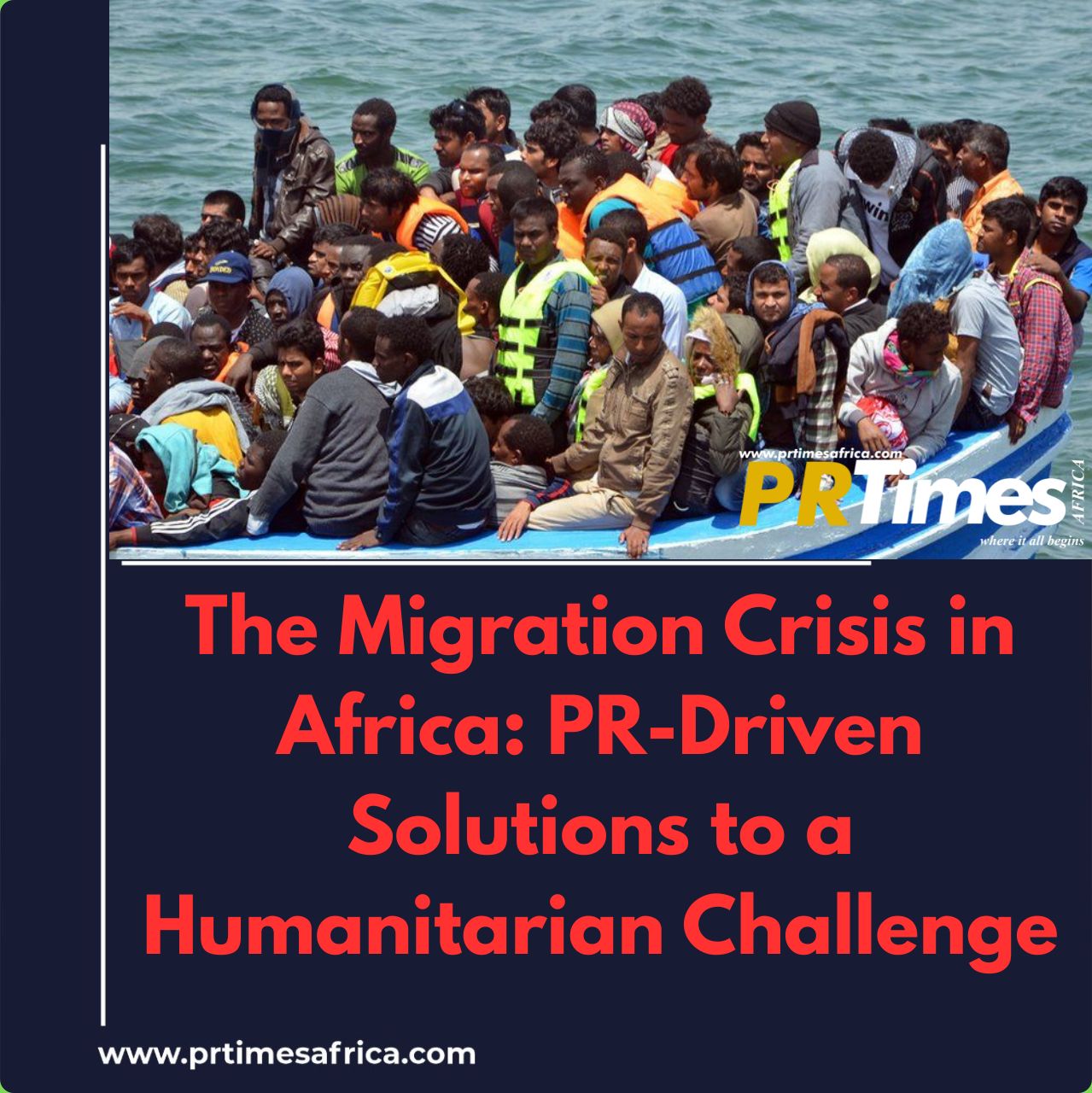
    The Migration Crisis in Africa: PR-Driven Solutions to a Humanitarian Challenge

    The Migration Crisis in Africa: PR-Driven Solutions to a Humanitarian Challenge

    By Musa Sunusi Ahmad:

    The migration crisis in Africa is one of the continent’s most pressing and complex challenges. Every year, millions of Africans, fleeing conflict, poverty, climate change, or political instability, migrate internally or across borders in search of safety and opportunity. While policymakers, NGOs, and international bodies scramble for practical and economic solutions, there’s an often-overlooked but critical tool in this fight: public relations.

    Strategic communications have the power to shift narratives, influence behaviors, and galvanize action. In the context of Africa’s migration crisis, PR can play a pivotal role in reshaping perceptions, creating awareness, fostering integration, and driving policy advocacy.

    The Scope of the Crisis

    According to the International Organization for Migration (IOM), over 40 million Africans are currently considered migrants, many displaced within their own countries due to conflict, drought, or development projects, and others taking perilous journeys across deserts and seas to reach Europe or more stable African nations.

    Beyond the harrowing statistics lie stories of resilience and desperation. The root causes—ranging from economic hardship to environmental degradation, are systemic. But the crisis is also worsened by misinformation, xenophobia, and inadequate public understanding.

    Why PR Matters in the Migration Crisis

    Public relations are more than just reputation management, it’s a strategic approach to building relationships, influencing public opinion, and driving social change. In the migration context, PR can be deployed to:

    • Educate local communities and host countries about the realities and contributions of migrants
    • Counter misinformation and reduce xenophobia
    • Humanize migrant stories through storytelling and media engagement
    • Influence policymakers through advocacy campaigns

    Coordinate communication among stakeholders, including NGOs, governments, and international agencies

    PR-Driven Solutions to the Crisis

    1. Narrative Shaping Through Strategic Storytelling

    One of the most effective tools in PR is storytelling. Most coverage of migration is crisis-focused, highlighting tragedy, violence, and instability. A PR-driven solution would reframe these narratives by amplifying stories of hope, success, and contribution.

    PR practitioners can work with journalists, social media influencers, and community leaders to showcase:

    • Migrants contributing to local economies
    • Youth-led initiatives by refugees in camps
    • Cross-cultural collaboration and peace building efforts

    Case in point: The “I Am A Migrant” campaign by IOM personalizes migration stories, fostering empathy and combating stereotypes. African PR agencies can replicate and localize such campaigns.

    1. Grassroots Communication and Community Engagement

    In many African countries, misinformation about migrants spreads through local gossip, unverified social media posts, and even religious or political leaders.

    PR professionals can design hyper-local campaigns using:

    • Community radio broadcasts
    • Theatre and storytelling in local languages
    • Town-hall forums facilitated by trained communicators

    These platforms foster dialogue over division, addressing fears with facts and enabling peaceful cohabitation between migrants and host communities.

    1. Social Media Advocacy and Digital Campaigning

    With smart phone penetration growing across Africa, digital PR is a frontier for influencing youth attitudes toward migration. Hashtag campaigns, video content, and digital storytelling can:

    • Raise awareness about the dangers of irregular migration
    • Promote legal pathways and alternatives
    • Showcase successful migrant entrepreneurs or students

    Partnering with influencers who resonate with young Africans can boost reach and credibility.

    1. Crisis Communication for Migration Events

    When a migration-related event occurs—such as a boat tragedy or refugee influx—response communication is often chaotic. PR professionals should be embedded within humanitarian agencies to:

    • Develop crisis communication protocols
    • Manage media relations responsibly
    • Coordinate messaging across stakeholders to avoid conflicting narratives

    This builds public trust and ensures accurate, timely, and empathetic information reaches all parties.

    1. Policy Advocacy and Stakeholder Engagement

    PR strategies can also influence change at the top. By creating advocacy campaigns targeting governments, regional blocs like the African Union, and global institutions, PR professionals can:

    • Push for better migrant protections
    • Influence budget allocations for refugee support
    • Drive the ratification and implementation of international migration treaties

    White papers, thought leadership articles, and strategic lobbying efforts are classic PR tools that can elevate migration to a political priority.

    The Role of PR Agencies and Practitioners

    The migration crisis needs a cross-sectoral PR response. African PR firms, communication strategists, and NGOs must step into a proactive role, not just as storytellers, but as strategists, coalition builders, and campaigners.

    Training local communicators in crisis messaging, cultural sensitivity, and conflict resolution will be key. Moreover, creating communication hubs within refugee camps and migrant communities can empower migrants to tell their own stories.

    Communications for Change

    Africa’s migration crisis is not solely an economic or political issue, it’s a human story that requires human-centered solutions. PR, with its unique ability to shape perceptions and influence hearts and minds, is a powerful lever for change.

    The time is now for PR professionals to recognize their role not just in branding and reputation management, but in social transformation. By bringing empathy, clarity, and connection to the forefront, public relations can help reimagine migration not as a threat, but as a potential force for development and unity.

  • Under the Radar: Internal Communications and Crisis Management in Nigerian Government

    Under the Radar: Internal Communications and Crisis Management in Nigerian Government

    Under the Radar: Internal Communications and Crisis Management in Nigerian Government

    By Alwalled Kabir Yusuf:

    When crisis strikes, governments are expected to act swiftly, decisively, and coherently. But behind every press briefing or public statement lies a deeper, often overlooked layer: internal communication, the lifeblood of any effective government response. In Nigeria, a nation grappling with multifaceted crises ranging from security challenges to economic volatility and natural disasters, the cracks in internal communication within government institutions often become fault lines in public trust.

    The Internal Communication Blind Spot

    In most Nigerian federal and state ministries, internal communication is reactive rather than proactive. Siloed departments, hierarchical bottlenecks, and outdated information-sharing practices impede quick decision-making. While platforms like WhatsApp groups and emails are widely used, they lack formal structure and strategic integration. There’s often no centralized communication protocol in times of emergency, resulting in conflicting narratives, delayed responses, and a loss of public confidence.

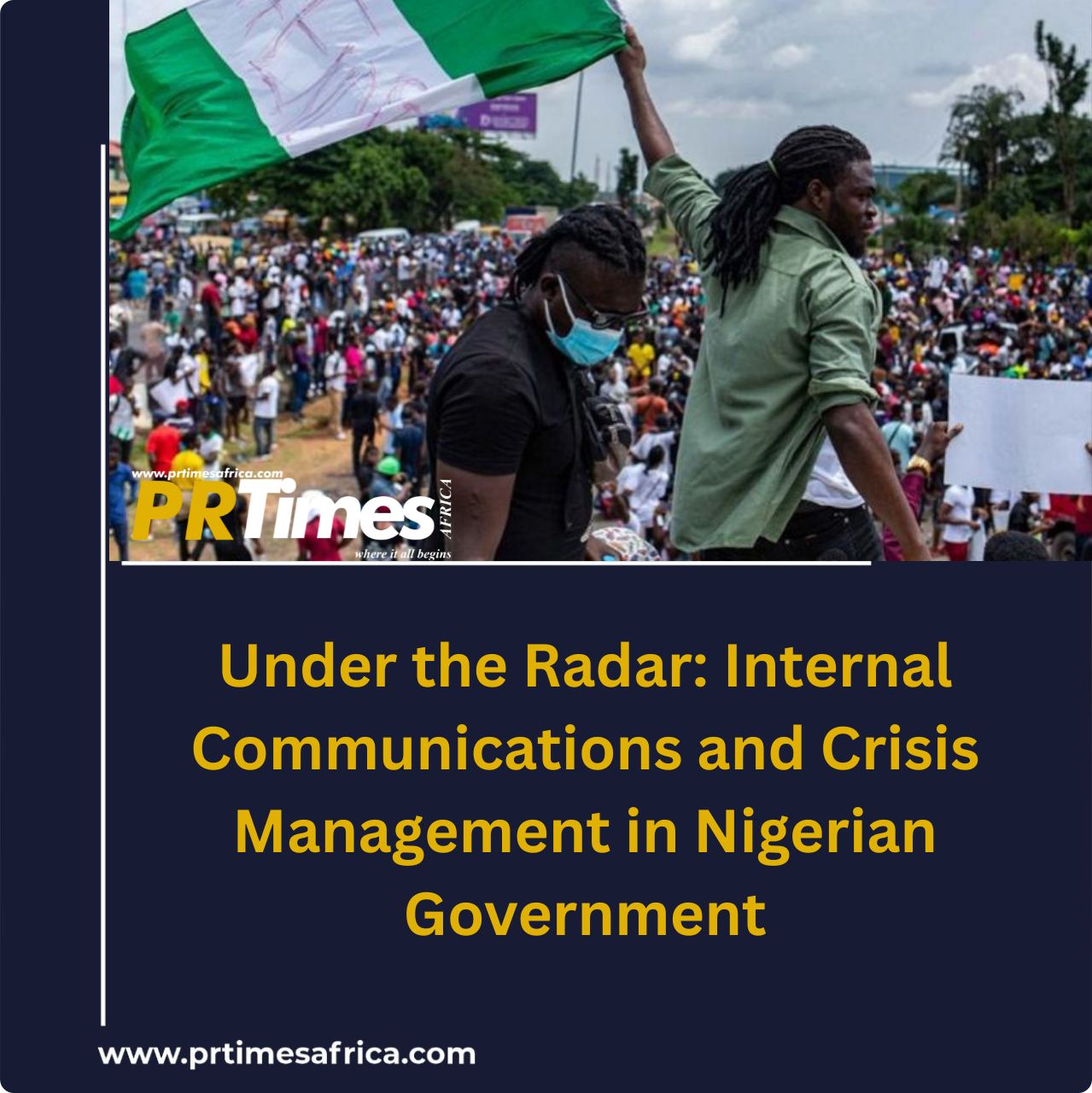
    In 2020, during the #EndSARS protests, a youth-led movement against police brutality, the Nigerian government’s internal communication was visibly strained. Misinformation circulated within agencies, different arms of government issued contradictory statements, and crisis response coordination was fragmented. The result was a communication vacuum that was quickly filled by social media influencers and citizen journalists, some accurate, many not.

    Crisis Communication Without Internal Alignment is a Recipe for Disaster

    Effective crisis communication begins before a crisis even occurs. In countries with robust internal comms systems, governments conduct scenario planning, simulations, and training exercises involving all key stakeholders. Unfortunately, Nigeria still treats crisis comms as an afterthought. Spokespersons are often not embedded in the policymaking loop, and communication teams rarely have access to real-time data or decision-makers during emergencies.

    Take the 2022 Kuje prison break as another example. Different agencies, Nigerian Correctional Service, Ministry of Interior, the military, and the police, released fragmented updates with little consistency. There was no unified voice, and the internal coordination between security agencies was publicly questioned. The lack of a coherent narrative allowed conspiracy theories to thrive and eroded citizen trust in security assurances.

    The Role of PR Professionals: From Messengers to Strategists

    For Nigeria to build a resilient internal communication framework, public relations professionals must move beyond the role of “messengers” to that of strategic advisors embedded within the highest levels of governance. This means:

    Institutionalizing Internal Comms Protocols: There must be clearly defined internal communication protocols across ministries and parastatals, with designated roles, escalation paths, and response templates for crisis scenarios.

    Training and Simulations: Crisis simulations involving communication officers and top officials can help prepare institutions to respond cohesively. Training should include risk communication, digital media management, and inter-agency collaboration.

    Technology-Enabled Communication Platforms: Secure, real-time platforms like internal dashboards, encrypted messaging systems, and shared crisis command centers should replace informal and inconsistent communication methods.

    Embedding Communications in Policy Development: Communications experts should be part of policy formulation so they understand the rationale behind decisions, allowing them to craft better narratives and anticipate public reaction.

    Transparency and Trust

    The future of government communication in Nigeria depends not just on what is said to the public, but how well government organs communicate within themselves. The difference between a managed crisis and a public relations disaster often lies in whether ministries, departments, and agencies are aligned in understanding, tone, and action.

    In a digitally connected age where citizens are not just consumers but producers of news, internal miscommunication becomes a public issue within minutes. Nigeria’s PR community has a unique opportunity to lead the charge in reforming government internal communications, promoting transparency, improving coordination, and, ultimately, restoring trust in public institutions.

  • Why You Need a PR Firm Not Just a Legal Team When You’re in Court

    Why You Need a PR Firm Not Just a Legal Team When You’re in Court

    Why You Need a PR Firm Not Just a Legal Team When You’re in Court

    In the court of public opinion, silence isn’t always golden. Strategic communications can make or break your reputation during litigation.

    By Musa Sunusi Ahmad:

    When companies or individuals face litigation, the first call they make is to a lawyer, and rightly so. Legal expertise is critical for navigating the complex and high-stakes arena of the justice system. But what too many overlook is the equally perilous and often less predictable arena: the court of public opinion.

    In high-profile cases or even localized legal battles, media coverage, social media commentary, and public perception can significantly impact reputations, sometimes irreversibly. This is where public relations professionals come in. A legal team may win your case in court, but a good PR firm ensures you don’t lose everything outside it.

    Litigation Is Not Just Legal, It’s Reputational

    Whether you’re a CEO defending against allegations, a startup in an IP battle, or a nonprofit caught in a contractual dispute, the reality is this: the public rarely waits for the verdict. News spreads quickly, headlines are often misleading, and silence is interpreted as guilt.

    A PR firm ensures your side of the story is heard, strategically, ethically, and without compromising your legal position. While lawyers are trained to say “no comment,” PR professionals know how to say the right comment, at the right time, to the right audience.

    Lawyers Manage Risk. PR Firms Manage Perception.

    Litigators are risk-averse by nature; their goal is to protect legal liability. PR practitioners, by contrast, are risk-conscious but outward-facing, they think in narratives, relationships, and long-term brand equity.

    Consider the following:

    Media Inquiries: Legal teams often decline to engage. A PR team, however, works with journalists to shape accurate, balanced coverage, or at the very least, ensure misinformation doesn’t dominate the narrative.

    Stakeholder Communications: Investors, employees, customers, and partners need reassurance. A PR firm helps craft tailored messages that build trust and reduce fallout.

    Digital Monitoring & Crisis Response: Online sentiment can turn on a dime. A PR firm uses tools to monitor real-time reactions and adjust communications accordingly.

    Case Study: The Reputation That Survived Because of PR

    Take the example of a tech company that was sued by a former employee alleging discrimination. The legal team focused on depositions and filings. But it was the PR team that:


    • Released a values-based statement reaffirming the company’s DEI commitment,
    • Facilitated an exclusive with a respected journalist for balanced coverage,
    • Supported internal leadership with talking points for employee town halls.

    The case was eventually dismissed, but thanks to the PR effort, the brand emerged with its reputation intact and its employee morale unshaken.

    Collaboration, Not Conflict

    PR and legal should not be at odds, they should work hand-in-hand. The best outcomes come when both teams collaborate early and often, aligning on strategy, reviewing each other’s materials, and balancing transparency with discretion.

    Some of the most effective litigation communication plans are those where legal strategy informs PR messaging, and vice versa. A unified front avoids contradictions and builds credibility.

    When to Bring PR Into the Room

    Don’t wait until the press calls or social media explodes. Bring in your PR team as soon as:

    • You anticipate a lawsuit or receive notice,
    • You believe the case could attract media or public interest,
    • You want to prepare messaging for internal or external stakeholders.

    Early involvement allows the PR team to conduct message testing, crisis simulations, and stakeholder mapping, before you’re in reactive mode.

    Silence is a Strategy, But Not Always the Right One

    In an era of viral content and 24/7 news cycles, no organization can afford to focus on legal strategy alone. A well-executed PR approach during litigation is not about spin, it’s about transparency, empathy, and protecting your most valuable asset: your reputation.

    So yes, you absolutely need a good legal team in your corner. But if you care about your future after the case is closed, you need a great PR firm standing beside them.

  • The Missing Link: Public Communication in Nigeria and the Crisis of Empathy, Audience Insights, and Political Servitude.

    The Missing Link: Public Communication in Nigeria and the Crisis of Empathy, Audience Insights, and Political Servitude.

    The Missing Link: Public Communication in Nigeria and the Crisis of Empathy, Audience Insights, and Political Servitude.

    By Musa Sunusi Ahmad:

    In any thriving democracy, public communication is not a monologue. It’s a dialogue, a social contract between leaders and citizens, shaped by empathy, cultural intelligence, and a genuine understanding of audience needs. In Nigeria, however, this contract is repeatedly broken. Government officials too often speak at the people, not with them. This failure isn’t simply a matter of tone, it reflects a deep structural flaw in how communication is understood and practiced by political elites.

    At the heart of this dysfunction is a communication culture driven less by public service and more by sycophancy. The result is a crisis of empathy, one that alienates citizens, erodes trust in institutions, and amplifies the distance between policy and public sentiment.

    Sycophantic Communication: The Illusion of Public Engagement

    In Nigeria’s political landscape, the loyalty of appointees is often measured not by performance or innovation, but by how loudly and unquestioningly they defend their principals. Ministers, aides, commissioners, and spokespersons rarely address the public with authenticity. Instead, they communicate with a single audience in mind, their political master.

    This leads to performative messaging: exaggerated praise of government efforts, hostile dismissals of criticism, and blind deflection of accountability. These are not strategies rooted in communication theory or audience psychology; they are rituals of survival in a system where job security is earned through praise-singing, not public impact.

    Take the case of disaster response communications. When citizens cry out over flooding, insecurity, or rising costs of living, the typical official response is either silence or gaslighting. Rather than acknowledge suffering, most statements aim to reshape the narrative in favor of the administration. Empathy is substituted with denial, and genuine concern with empty rhetoric.

    Understanding the Audience: A Forgotten Discipline

    One of the most egregious failures in Nigeria’s public communication is the complete disregard for audience segmentation. In PR and communication practice, we understand the need to tailor messages to different demographics, psychographics, and regional contexts. Yet political communication in Nigeria remains woefully generic and often tone-deaf.

    The Nigerian populace is not monolithic. A message that resonates in Lagos may be offensive or irrelevant in Kano. A communication strategy that works for young urban voters may not translate in rural communities. But political communicators rarely do the work of research, analysis, or message testing. Instead, they rely on one-size-fits-all messaging, often in elite language, completely disconnected from the realities of the average Nigerian.

    This results in public outrage, mistrust, and apathy. A population that feels misunderstood stops listening. And when people stop listening, governments lose their most powerful tool for shaping behavior and managing crises: credible, consistent, and empathetic communication.

    The Absence of Empathy: A Strategic Failure

    Empathy is not a weakness; it’s a strategic tool. The ability to understand and reflect the emotions, needs, and fears of the public is fundamental to effective communication. But in Nigeria’s political culture, empathy is perceived as weakness or defeat. Admitting fault is seen as a political liability, rather than a leadership virtue.

    Contrast this with global examples: when Jacinda Ardern addressed the Christchurch mosque shooting in New Zealand, her words and body language conveyed genuine grief, solidarity, and action. That moment solidified public trust. Nigeria has seen multiple national tragedies, from security crises to fuel price hikes, but rarely are they met with empathetic, human-centered communication.

    Too often, Nigerians are left with sterile press statements or combative spokespeople more interested in silencing critics than comforting victims. The absence of emotional intelligence in our public communication isn’t just a PR problem; it’s a leadership crisis.

    What Needs to Change?

    To rebuild public trust and enhance civic engagement, Nigeria’s public communicators, especially political appointees—must reorient their roles. Here’s where to begin:

    1. Serve the Public, Not Just the Principal

    The primary audience of any government communicator should be the people, not the person who appointed them. Effective PR is about creating value for stakeholders, not just protecting your boss’s ego.

    1. Institutionalize Audience Research

    Invest in audience analysis and feedback mechanisms. Understand what people care about, how they consume information, and what language or tone resonates.

    1. Empathy as Policy

    Make empathy a core pillar of all communication strategies. In times of crisis or change, acknowledge hardship and offer hope, not spin.

    1. Train and Empower Spokespersons

    Appointees and communication teams need continuous training in crisis comms, media relations, digital engagement, and inclusive messaging. Nigeria can’t afford amateurs in charge of national narratives.

    1. Reframe Accountability as Strength

    Transparency doesn’t weaken leaders; it strengthens their legitimacy. Public apologies, acknowledgments of shortcomings, and clear plans for redress build trust, not ridicule.

    A Call for a New Communication Ethos

    Nigeria’s democratic future depends not just on free elections or institutional reforms, but on how leaders speak to and with their people. Public communication must evolve from a tool of flattery and defense to a vehicle for empathy, connection, and change.

    As PR and communication professionals, we must advocate for a new communication ethos, one that prioritizes people over power, truth over propaganda, and empathy over ego. Anything less is not just a betrayal of our craft, it’s a betrayal of the public we are meant to serve.

  • Untitled post 3889

    DIVIDED BY A RIVER: THE TWO FACES OF TRADE IN THE CONGO BASIN

    CULTURAL TIES STRAINED BY DIFFERING TRADE REGIMES ACROSS BORDERS

    By Musa Sunusi Ahmad

    At the heart of Central Africa, the mighty Congo River snakes its way through a region rich in history, culture, and natural bounty. But today, this once-uniting waterway increasingly symbolizes division, not just geographical, but economic, political, and cultural. The Congo Basin, a region that has for centuries been home to vibrant cross-border trade and tightly knit communities, now finds itself grappling with two conflicting realities: shared heritage on one hand, and divergent trade regimes on the other.

    From Kinshasa to Brazzaville, from Goma to Gisenyi, cultural and familial ties often stretch across borders, yet so do bureaucratic red tape, tariffs, and conflicting regulatory systems. These friction points are turning a natural ecosystem of commerce and communication into a complex web of strained relations, fractured economies, and public frustration.

    Cross-Border Trade in a Cross-Purposed World

    The Congo River doesn’t just separate nations, it separates economic philosophies.

    On the western bank lies the Democratic Republic of Congo (DRC), a country whose trade regime has long been characterized by centralized control, high customs tariffs, and bureaucratic procedures that frequently slow commerce. On the eastern bank, across from Kinshasa, sits the Republic of Congo, which has moved toward a more open, investor-friendly system, particularly with regard to port operations and foreign trade.

    This divergence has created an unbalanced playing field. Traders in DRC often find themselves bogged down by inefficiencies, while their counterparts across the river benefit from lighter regulation and faster processing. In Goma and Gisenyi, cities that mirror each other across the DRC-Rwanda border, similar dynamics play out. Rwanda’s robust digital customs systems and streamlined border protocols contrast sharply with the DRC’s more paper-based, manual processes.

    For small-scale traders, many of whom are women, these differences aren’t just technical issues; they’re personal. “My sister is in Gisenyi, and we used to trade together every week,” says a market vendor in Goma. “Now, it’s too complicated. The paperwork, the taxes… it’s just not worth it.”

    The Cost of Miscommunication

    The challenges facing the Congo Basin are not merely logistical; they’re communicative. National governments, trade authorities, and regional blocs like ECCAS and COMESA often fail to harmonize messages or coordinate strategies. Border communities receive conflicting information about tariffs, trade bans, and health protocols, especially during crises like the COVID-19 pandemic or the Ebola outbreaks that have gripped the region.

    “This is where public relations and strategic communication become essential tools,” notes, a regional policy advisor based in Nairobi. “You can’t talk about economic integration without also addressing narrative integration. People need a consistent message about how trade works, what their rights are, and where the opportunities lie.”

    For communications professionals, the Congo Basin presents both a challenge and an opportunity. On one hand, the fragmentation of policy and practice makes unified messaging difficult. On the other, the region is a textbook case for the power of strategic communication to foster unity, across borders, sectors, and cultures.

    Cultural Ties, Frayed by Trade

    Historically, trade routes across the Congo Basin weren’t defined by customs booths or trade tariffs, but by kinship networks, shared languages, and traditional marketplaces. Communities on both sides of the river or the border often belong to the same ethnic groups, celebrate the same festivals, and speak the same languages.

    Today, these cultural ties are being strained by trade policies that fail to reflect the lived realities of local people. A grandmother in Bukavu finds it harder to send goods to her relatives in Cyangugu. Fishermen on Lake Tanganyika must navigate not just choppy waters, but competing regulations that vary from one shoreline to the next.

    The irony is clear: while governments preach Pan-African unity in political speeches, on the ground, hyper-local communities are being pulled apart by national trade policies. And the very river that once facilitated cultural convergence now acts as a policy divide.

    From Borders to Bridges

    Fixing the rift in the Congo Basin will require more than improved customs software or infrastructure investments, though those are certainly needed. What’s equally crucial is building a shared communications ecosystem: one where governments, NGOs, private sectors, and media work together to inform, educate, and engage border communities.

    Public relations professionals can play a key role in this transformation. By facilitating dialogue between stakeholders, crafting culturally sensitive campaigns, and promoting transparency around trade reforms, communicators can help restore trust and reconnect communities long divided by policy.

    As the African Continental Free Trade Area (AfCFTA) gradually takes shape, the Congo Basin will be a litmus test. Can nations with deep cultural ties but divergent economic strategies find common ground? Can communication help bridge what politics and paperwork have split?

    The answer, perhaps, lies not in rewriting the geography of the region, but in rewriting the story we tell about it, one that recognizes the river not as a border, but as a bridge.

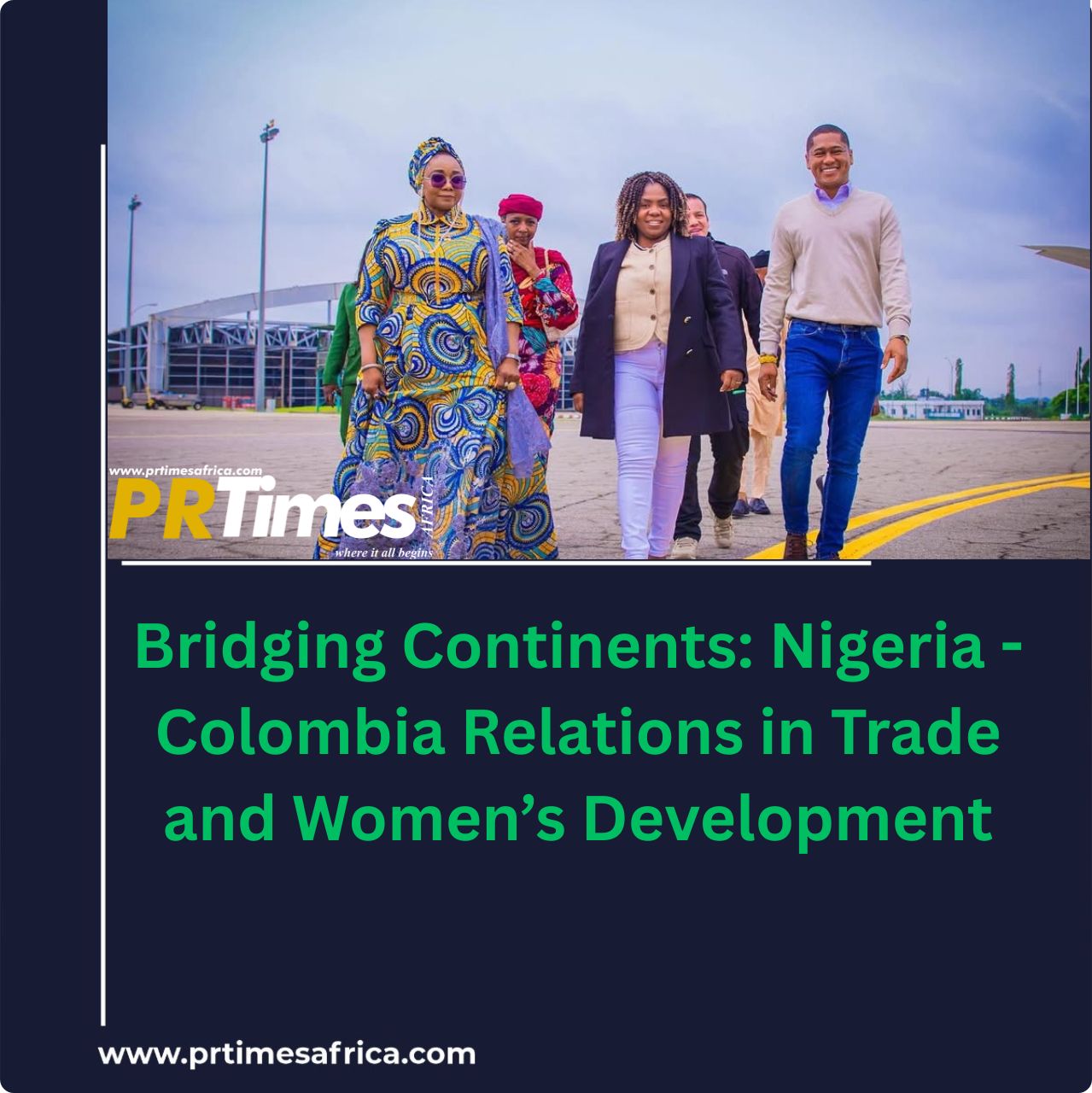
  • Bridging Continents: Nigeria – Colombia Relations in Trade and Women’s Development

    Bridging Continents: Nigeria – Colombia Relations in Trade and Women’s Development

    Bridging Continents: Nigeria – Colombia Relations in Trade and Women’s Development

    By Alwalled K.Y:

    Across the Atlantic Ocean, Nigeria and Colombia, two vibrant countries each with rich histories and diverse cultures, are forging a relationship that goes beyond traditional diplomacy. Anchored in shared priorities such as trade diversification and women’s empowerment, this bilateral engagement is an exciting example of how South, South cooperation can reshape global partnerships.

    In August 2025, this relationship took a remarkable leap forward with the historic visit of Colombia’s Vice President Francia  Márquez to Nigeria. As an Afro-descended woman and a trailblazer in her own right, Márquez’s visit symbolized not only diplomatic goodwill but also a renewed commitment to collaboration that touches on economic growth, social inclusion, and gender equity.

    Setting the Tone for Collaboration

    Vice President Francia Márquez arrived in Abuja on August 30, 2025, in a delegation that included top Colombian officials, business leaders, and her husband. Her arrival was marked by a ceremonious reception at Nnamdi Azikiwe International Airport. Nigeria’s Minister of Women Affairs, Imaan Sulaiman‑Ibrahim, led the welcoming party, joined by senior ministers from the Ministries of Innovation, Science & Technology, and the Federal Capital Territory, symbolizing the government’s holistic approach to this visit.

    The warm reception was more than protocol. It was a message, a public affirmation that Nigeria views Colombia not only as a partner in trade but as a key ally in the pursuit of inclusive development. The presence of the Minister of Women Affairs, in particular, underscored the emphasis placed on gender inclusion and women’s empowerment as foundational pillars of this bilateral relationship.

    Meetings with Nigeria’s Top Leadership

    President Bola Tinubu and Vice President Kashim Shettima

    During her visit, Márquez held substantive meetings with President Bola Tinubu and Vice President Kashim Shettima at the State House in Abuja. These conversations went beyond the usual diplomatic courtesies, focusing on how to accelerate collaboration in trade, technology, aviation, and social development.

    President Tinubu expressed a clear vision for Nigeria-Colombia relations. Drawing on Nigeria’s recent agreements with Brazil, he emphasized the intention to replicate successful bilateral models with Colombia, especially in sectors like aviation and consular relations. He welcomed Colombian investments into Nigeria’s strategic sectors, oil and gas, agriculture, and emerging technology startups, positioning Nigeria’s youthful population and expanding middle class as prime drivers for future market growth.

    Vice President Shettima framed the visit as a “historic reconnection,” highlighting the shared heritage and cultural links between Nigeria and Colombia rooted in the African diaspora. He noted that this relationship is a chance to heal historical divisions and build a partnership that uplifts both nations through economic and social cooperation.

    Formalizing the Partnership: Signing of Key Memorandum of Understanding

    A highlight of the visit was the signing of a Memorandum of Understanding on Political Consultations between the Nigerian and Colombian governments. Signed by Nigeria’s Foreign Affairs Minister Yusuf Tuggar and Colombia’s Deputy Minister for Multilateral Affairs Mauricio Jaramillo Jassir, the MoU lays the groundwork for regular diplomatic dialogue, collaboration on regional and international issues, and smoother visa facilitation for diplomats.

    This MoU is a strategic milestone, creating a formal mechanism to ensure consistent communication and joint problem-solving. It is expected to accelerate bilateral projects and provide a stable platform for expanding economic and cultural cooperation.

    Trade Relations: Unlocking New Economic Opportunities

    Historically, Nigeria and Colombia’s trade has been limited and underexplored, but both nations recognize significant untapped potential. Nigeria’s push to diversify its economy beyond oil aligns with Colombia’s strengths in agriculture, pharmaceuticals, textiles, and processed foods.

    At the Nigeria – Colombia Business Forum, Márquez and Nigerian business leaders explored avenues for mutual growth. Colombian products like coffee, cocoa, and tropical fruits find potential new markets in Nigeria, while Nigerian exports such as cassava, shea butter, and manufactured goods present fresh opportunities for Colombia.

    The Vice President proposed establishing direct air cargo routes to facilitate faster, more reliable movement of goods, a move that could reduce shipping costs and increase trade volumes. Both parties emphasized leveraging their memberships in regional trade blocs, Nigeria in ECOWAS and Colombia in the Pacific Alliance, to broaden the reach of their goods and services.

    Private sector leaders from both countries were encouraged to explore joint ventures in manufacturing, agro-processing, and technology innovation, supported by the governments’ diplomatic goodwill and emerging trade frameworks.

    Women’s Development: A Cornerstone of Bilateral Cooperation

    Perhaps the most inspiring and forward-thinking aspect of this relationship is the central role of women’s development.

    Vice President Márquez, an acclaimed environmental and social activist before assuming office, embodies the spirit of female empowerment. Her presence as Colombia’s first Afro-descended woman Vice President was a poignant reminder of the shared struggles and aspirations of women on both continents.

    Throughout her visit, Márquez met with Nigeria’s Minister of Women Affairs, Imaan Sulaiman‑Ibrahim, and engaged with women leaders and grassroots activists. The focus was clear: how can Nigeria and Colombia work together to promote gender equality, political participation, entrepreneurship, and digital inclusion?

    Discussions touched on shared experiences of conflict-affected women, with Colombia’s successful peacebuilding programs offering valuable lessons for Nigeria’s northeast region. Collaborative programs such as “Her Voice Across Borders”, launched in 2024, were highlighted as effective platforms for women’s entrepreneurship and leadership development.

    The Minister of Women Affairs reinforced the government’s commitment to this agenda, emphasizing that empowering women is not only a moral imperative but a catalyst for sustainable economic growth and societal stability.

    Strategic Communication: Crafting the Narrative of Partnership

    Public Relations and communications teams played a vital role in amplifying the significance of Márquez’s visit. From managing media engagement to coordinating cultural events, the diplomatic missions and government agencies ensured that this historic moment was shared widely across Nigerian and Colombian media.

    Campaigns like “Nigeria-Colombia: United by Progress” featured human-interest stories of women entrepreneurs, trade innovators, and youth leaders benefiting from this growing partnership. Social media was strategically used to highlight behind-the-scenes moments, quotes from dignitaries, and the emotional resonance of Márquez’s remarks about reconnecting with ancestral roots.

    This strategic communication not only enhances public awareness but also invites private sector participation, NGO engagement, and broader citizen interest in the evolving relationship.

    A Roadmap for Future Collaboration

    The visit of Vice President Francia Márquez is more than a diplomatic milestone, it is a launchpad for sustained cooperation.

    The bilateral partnership is poised to deepen across several fronts:

    • Trade Expansion: Implementation of the MoU and direct air connectivity promises to boost trade volumes significantly.
    • Women’s Empowerment: Joint initiatives in entrepreneurship, education, and political leadership will empower the next generation of women leaders.
    • Cultural Exchange: Increased people-to-people connections, including student and professional exchange programs.
    • Technology and Innovation: Shared expertise in agritech, fintech, and sustainable energy development.

    As both countries embrace this new chapter, they demonstrate the power of collaboration rooted in respect, shared history, and a commitment to inclusive progress.

    Nigeria and Colombia are setting a compelling example for South, South cooperation, one where history, culture, economy, and gender equity intertwine to create a dynamic partnership.

    For communications professionals, this evolving story offers rich material to craft narratives that resonate emotionally and strategically. It underscores the role of public diplomacy in building bridges that not only advance national interests but uplift communities, especially women, who stand at the forefront of change.

  • The Edge of Confidence: Communicating Africa’s Economic Reality Without Fueling Panic

    The Edge of Confidence: Communicating Africa’s Economic Reality Without Fueling Panic

    The Edge of Confidence: Communicating Africa’s Economic Reality Without Fueling Panic

    By Musa Sunusi Ahmad:

    Africa is at a critical economic crossroads. From Accra to Nairobi, Dakar to Lusaka, public sector debt is rising to unsustainable levels, joblessness, especially among youth, is soaring, and productivity across key sectors is slipping. Economic turbulence is no longer a far-off concern but a day-to-day reality for millions of African citizens.

    But as governments scramble to stabilize their finances, a quieter crisis is brewing in parallel: a crisis of trust.

    Amid rising inflation, currency depreciation, IMF interventions, and subsidy removals, people are asking: “Can we trust our leaders to fix this?” The answer doesn’t just lie in policy—but in communication. What African governments say, how they say it, and when they say it may determine whether countries weather the storm, or plunge deeper into crisis.

    For government communication advisors, the mandate is clear: manage perception, build public trust, and calm economic anxiety. This article explores how to do just that, while staying rooted in transparency, empathy, and strategy.

    The Economic Fault Lines

    Before diving into communication strategies, let’s understand the core economic pain points shaping African narratives today.

    1. Rising Public Debt

    By 2025, over 20 African countries are either in or approaching debt distress, according to the IMF.

    Many borrowed heavily in the past decade to fund infrastructure and post-COVID recovery.

    As interest rates rise and revenues fall short, debt servicing is consuming up to 60% of some national budgets.

    1. Mass Unemployment

    Africa’s youth unemployment rate is over 12%, with underemployment and informality affecting many more.

    As governments cut spending and companies downsize, job creation has stalled.

    The mismatch between education systems and labor market needs deepens the crisis.

    1. Declining Productivity

    In agriculture, industry, and services, productivity growth is slowing due to:

    • Poor infrastructure
    • Inadequate skills
    • Low technology adoption
    • Climate shocks (e.g. floods and droughts impacting agriculture)

    This trifecta, debt, joblessness, and declining productivity, fuels not just economic hardship but political volatility and social unrest.

    Why Communication Now Determines Recovery

    In volatile economies, confidence is capital. Citizens decide whether to invest, save, protest, or migrate based on what they believe, not just what is true.

    The Danger of Communication Gaps

    When governments delay, distort, or downplay economic realities:

    • Investors lose faith.
    • Citizens withdraw savings or stop paying taxes.
    • International partners hesitate to support.
    • Disinformation and populist narratives fill the void.

    The Opportunity in Strategic Messaging

    But when communications are clear, honest, and forward-looking:

    • People feel informed and empowered.
    • Investors appreciate predictability.
    • Media allies amplify accurate narratives.
    • Governments buy time to implement reforms.

    A Playbook for Government Communication Advisors

    Here’s a 360° strategy guide for communications professionals navigating economic crises in Africa.

    1. Own the Narrative Before It Owns You

    In a digital world, silence is not neutrality, it’s surrender.

    • Be first with the facts, even if incomplete.
    • Frame the context: Explain why tough decisions are being made.
    • Pre-empt opposition narratives with proactive, values-based messaging.

    Case Example: Ghana (2022)

    During its IMF negotiations, the Ghanaian Ministry of Finance launched a public FAQ portal, social media explainers, and regular updates. Though not perfect, it helped temper panic during currency devaluation.

    1. Communicate with Empathy, Not Just Optimism

    Don’t “talk numbers” to people who are talking about survival. Data must be paired with empathy.

    Acknowledge real pain (“We know many are struggling to afford transport…”)

    Use relatable analogies (“Think of the national budget like a household budget, when income drops, we must cut costs.”)

    Avoid robotic statements like “We are on course” or “Things are under control.”

    1. Strengthen the Bridge Between Policy and People

    Too often, policy announcements are technocratic and aloof. Instead:

    • Translate complex reforms into plain language
    • Use visuals (infographics, short videos, animations)
    • Customize content for platforms people actually use (e.g., radio, WhatsApp, local newspapers)

    Tip: Invest in a national economic literacy campaign, explain debt, inflation, and subsidy reforms like a teacher, not a bureaucrat.

    1. Create Feedback Loops
    • Economic communication must be two-way.
    • Hold town halls and citizen dialogues.
    • Use polling and sentiment tracking to understand what people fear or misunderstand.
    • Empower spokespeople at local levels to answer questions and humanize policy.
    1. Align Internal and External Messaging
    • Ensure that what the government says internally (to staff, departments) matches what it says to the public.
    • Leaks happen, so train all public-facing staff on key messages.
    • Rehearse responses to worst-case questions (“Are we going bankrupt?” “Will we lose our jobs?”)
    1. Show Progress, Not Just Promises

    People tire quickly of words. Back up rhetoric with visible proof points:

    • Highlight infrastructure projects that are still ongoing.
    • Show cost-cutting actions taken by government (e.g. trimming travel budgets, eliminating ghost workers).
    • Spotlight young entrepreneurs or job creators as symbols of hope.

    Avoiding these requires discipline, agility, and constant engagement.

    In a Crisis, Words Are Currency

    As Africa’s economic future hangs in the balance, communicators are not bystanders, they are co-architects of recovery. What they say (and what they fail to say) can either maintain the public’s fragile trust or tip countries toward instability.

    It’s time for a new era of public communication that is strategic, human-centered, and courageously transparent. Because in an age of economic volatility, confidence is just as important as capital.

  • The GMO Crossroads: Where Africa Stands – and Where Communicators Must Lead

    The GMO Crossroads: Where Africa Stands – and Where Communicators Must Lead

    The GMO Crossroads: Where Africa Stands – and Where Communicators Must Lead

    By Musa Sunusi Ahmad:

    In the fields of Ethiopia, Burkina Faso, Nigeria, and South Africa, something remarkable is unfolding. It’s not a new tractor or irrigation technique, it’s science, embedded in the seed. Genetically Modified Organisms (GMOs), once the subject of theoretical debate in African policy circles, are now finding roots, literally and figuratively, across the continent.

    But as this transformation gains ground, so too does a fierce storm of resistance. From courtroom battles in Kenya to social media misinformation in Nigeria, the GMO debate in Africa is about more than just food security. It’s about trust, sovereignty, markets, and identity.

    In this intricate landscape, communication strategists, working between farmers, scientists, policy experts, and the public, hold a uniquely powerful and complex role. And how they handle this challenge could determine the future of African agriculture.

    GMO Adoption in Africa: Where Are We Now?

    At the time of writing, 11 African countries have formally approved GM crops for cultivation, with South Africa leading the charge since 1997. Countries like Nigeria, Kenya, Ethiopia, and Malawi have joined the fold in recent years, approving GMO varieties of maize, cotton, and cowpea designed to resist pests, tolerate drought, and boost yields.

    But adoption has been anything but uniform. While Nigeria pushes forward with GMO cowpea and maize, public sentiment remains divided, inflamed by rhetoric around “food colonialism” and “Western control.” Kenya’s brief lifting of its 10-year GMO ban in 2022 was quickly met with lawsuits and civil society backlash, stalling progress once again.

    In contrast, Tanzania, Uganda, and Zambia continue to resist GMO adoption, citing concerns around bio safety, corporate control, and environmental impact.

    The New Battleground: Geopolitics, Markets, and Mistrust

    For communication professionals in this space, the GMO debate is no longer just about science; it’s a geopolitical issue.

    1. Export Economies at Risk

    African nations reliant on European markets—where anti-GMO sentiment runs strong—fear that embracing biotech crops could jeopardize trade. Ghana’s proposed commercialization of GM cowpea, for instance, sparked fear that the EU would retaliate with import restrictions.

    1. Foreign Influence or Genuine Support?Many anti-GMO activists point fingers at Western philanthropic organizations, particularly the Gates Foundation, for “pushing” biotech under the guise of food security. These narratives often conflate corporate interests with legitimate scientific innovation.

    Unfortunately, many governments have failed to clearly communicate the ownership and local development of many GMO crops, such as Nigeria’s publicly developed Bt cowpea.

    Science Speaks, But Is Anyone Listening?

    For many scientists working on biotech crops, the challenge is not in the lab but in the public square.

    Scientists often struggle to communicate their work beyond academic journals. They speak the language of genes, not of values, ethics, or livelihoods. Meanwhile, anti-GMO voices dominate radio, WhatsApp groups, and protest spaces, places where farmers actually listen.

    What’s Missing?

    Trustworthy messengers: Not all stakeholders trust scientists. In Uganda, for instance, farmers place greater trust in government extension workers than in university researchers.

    Accessible language: Terms like “Bt,” “transgenic,” or “cacogenic” mean little to the average farmer.

    Emotionally resonant storytelling: The opposition knows how to tell stories. Scientists need to learn how, too.

    The Strategic Communications Playbook

    So what role can communication strategists play? What must they do, today, to ensure that science and society align?

    1. Build Bridges Between Scientists and Society

    Facilitate training programs that help scientists simplify their message, engage media, and respond to misinformation. Forge partnerships with public broadcasters, agriculture influencers, and even TikTok creators to reach younger, tech-savvy farmers.

    1. Tailor Messaging to Cultural Contexts

    A message that works in South Africa may not work in Tanzania. In Ghana, farmers respond well to endorsements from traditional authorities. In Nigeria, faith leaders hold more sway. Understand the communication ecosystem before launching any campaign.

    1. Frame GMOs Around Local Benefits

    Talk less about global food systems and more about how these seeds solve specific, local problems:

    1. Navigate the Politics Transparently

    Don’t shy away from the geopolitical angle. Communicators should openly discuss:

    • Who is funding the research
    • What safeguards exist against foreign domination
    • How IP rights are managed
    • How smallholder farmers retain seed-saving rights
    1. Use Multiple Media – Especially Radio and Mobile

    Across Africa, radio remains king. Combine it with mobile-based SMS updates, WhatsApp voice notes, community theatre, and even drama series to embed messages into relatable content.

    The Narrative War – and the Need for Ethical Framing

    At the heart of the GMO debate is a larger story: Who controls Africa’s food future?

    To win this narrative war, communicators must shift from technocratic explanations to ethical, inclusive storytelling:

    How can GMOs contribute to food sovereignty?

    Can they coexist with agro ecology and indigenous practices?

    Are they a tool of emancipation, or of dependency?

    The answer isn’t to dismiss these fears—it’s to engage with them honestly, transparently, and empathetically.

    Looking Ahead – A Call to Communicators

    Africa’s agricultural potential is vast. Climate change is real. Pests are adapting. Yields are falling in many places.

    Biotechnology is not a silver bullet, but it is a tool—one that must be wielded carefully, collaboratively, and above all, credibly.

    This is where you, the communicator, step in.

    You are not just writing press releases or managing social media. You are shaping a public conversation that could feed, or fail, an entire continent.

    If you do your job well:

    Scientists will be heard.

    Policymakers will make informed decisions.

    Farmers will be empowered, not coerced.

    And Africa will find its own path, not imported, but rooted in its soil.


  • UN Chief Calls for Justice and ‘Real Change’ for People of African Descent

    UN Chief Calls for Justice and ‘Real Change’ for People of African Descent

    UN Chief Calls for Justice and ‘Real Change’ for People of African Descent

    UN Secretary-General Calls for Global Action to Advance Justice and Equity for People of African Descent On the occasion of the International Day for People of African Descent, United Nations Secretary-General António Guterres issued a powerful call to the international community to intensify efforts toward achieving justice, equality, and transformative change for people of African descent worldwide. The annual observance serves as a moment to reflect on both the remarkable contributions of African descendants and the persistent challenges they face due to historical and ongoing inequalities. In his statement, Mr. Guterres lauded the “extraordinary” contributions of people of African descent across diverse fields, including culture, science, politics, and the arts, which have profoundly enriched global societies. However, he underscored the enduring impact of historical injustices, noting that “the long shadows of slavery and colonialism” continue to manifest in systemic racism, economic disparities, and exclusion from equitable opportunities, including in the digital realm. The Secretary-General highlighted the alarming persistence of harmful ideologies in the modern era, particularly the amplification of white supremacy and dehumanizing narratives through social media platforms. He also pointed to the pervasive issue of racial bias embedded in algorithms, which exacerbates discrimination in digital spaces. In this context, Mr. Guterres welcomed the adoption of the Global Digital Compact in 2024, a key component of the Pact for the Future, which includes commitments to combat discrimination, hate speech, and bias in digital technologies, fostering more inclusive digital ecosystems. This year’s commemoration coincides with significant milestones: the 80th anniversary of the UN Charter, which enshrines equal rights and human dignity for all, and the 60th anniversary of the International Convention on the Elimination of All Forms of Racial Discrimination. Reflecting on these landmarks, Mr. Guterres declared, “It is long past time to right historic wrongs,” urging global leaders to take decisive action to dismantle systemic barriers and promote equity. The 2025 observance marks the launch of the Second International Decade for People of African Descent (2025–2034), themed “Recognition, Justice, and Development.” This decade builds on progress achieved during the First International Decade (2015–2024), which saw advancements such as the enactment of new anti-discrimination laws, the establishment of the Permanent Forum on People of African Descent, and the designation of international days to celebrate diaspora communities. The UN is now calling for accelerated efforts to drive systemic reforms that address structural inequalities and promote inclusive development. Central to Mr. Guterres’ message was a call for all nations to collaborate on a United Nations Declaration that unequivocally affirms the human rights of people of African descent. Such a declaration would serve as a global commitment to recognizing, respecting, and celebrating their aspirations, ensuring their full inclusion in social, economic, and political spheres. The Secretary-General’s remarks underscore the urgency of collective action to address the legacies of historical injustices and contemporary challenges. By prioritizing recognition, justice, and development, the international community has an opportunity to create a more equitable world where the rights and contributions of people of African descent are fully honored and upheld.
    Explore Global Digital Compact
    Human Rights Frameworks
    More concise summary
  • When Healthcare Funding Falters in Africa: Advocacy and Messaging After USAID Cuts

    When Healthcare Funding Falters in Africa: Advocacy and Messaging After USAID Cuts

    When Healthcare Funding Falters in Africa: Advocacy and Messaging After USAID Cuts

    By Musa Sunusi Ahmad:

    In early 2025, the U.S. Agency for International Development (USAID), the world’s largest donor for global health, announced a phased reduction in funding to HIV programs across sub-Saharan Africa. The decision sent shockwaves through ministries of health, international NGOs, and community-based organizations alike.

    USAID’s HIV investments in Africa have historically supported millions, by financing life-saving antiretroviral therapies, testing and prevention programs, maternal health interventions, and community health worker salaries. Now, with the tap slowly turning off, African countries are being forced to do something equally critical to health provision: tell their story.

    This is a new frontier in crisis response. One where PR and communications strategies become life-saving tools, crafting visibility, building pressure, and mobilizing solutions.

    The Fallout: When Silence Becomes Dangerous

    The funding shortfall began to bite almost immediately. In Kenya’s Nyanza region, health facilities reported shortages in HIV test kits within weeks. In Nigeria, mobile testing units were grounded. In Malawi, community support groups suspended services, citing lack of operational support. The unraveling wasn’t just technical, it was deeply human.

    “The clinic told me to come back in two weeks,” said a 27-year-old mother in rural Uganda living with HIV. “They had nothing to give me. That has never happened before.”

    The story is one among thousands. But for the world to take notice, for donors to act, for governments to adjust priorities, those stories had to be told. Loudly,  widely,  and strategically.

    Messaging as Emergency Response

    When healthcare systems buckle, the first instinct is often to focus on logistics, reallocating supplies, redirecting patients, managing crises. But without communications, the human impact remains hidden, and action delayed.

    What followed the USAID announcement was not just an outcry, it was an organized, multi-platform, transnational messaging campaign by PR professionals, health advocates, and government communicators determined to spotlight the damage, humanize the data, and compel new commitments.

    Here’s how that campaign unfolded, and what it teaches us about the evolving power of PR in Africa’s public health landscape.

    1. Humanizing the Numbers: Telling Stories That Stick

    One of the first strategies adopted by NGOs and public health coalitions was clear: don’t just show the numbers tell the stories behind them. In Ghana, the NGO Health Bridge Africa launched a digital storytelling series titled “Faces of the Cut.” Each week, a short film profiled someone affected by the USAID withdrawal: a nurse who lost her stipend; a mother unable to access HIV treatment for her child; a peer educator now out of work.

    These weren’t pity pieces, they were stories of resilience interrupted by a funding decision.

    “In public relations, emotional truth travels farther than spreadsheets,” says, a Johannesburg-based health communications consultant. “We didn’t just need to prove a crisis. We needed people to feel it.”

    By elevating these personal narratives across social media, radio, community forums, and Diaspora networks, the campaign turned a distant policy decision into an immediate human issue.

    1. Data With a Purpose: Visualizing the Invisible

    While storytelling drove emotional connection, data provided the proof, and credibility.

    Organizations like Pan Africa Health Watch built real-time dashboards that visualized the scale of service disruptions across the region. These maps and info graphics showed, in painful clarity, the cascading effects of the funding loss:

    • Declines in HIV testing rates
    • Clinic closures by region
    • Interruptions in ART supply chains
    • Projected long-term impacts on new infections

    These visuals were embedded into press kits, donor briefings, social media posts, and even parliamentary presentations. They were localized, accessible, and often translated into multiple languages.

    “We didn’t just show that people were suffering, we showed where, how, and why,” says communications director at Nigeria’s HIV prevention and protection NGO. “That gave donors something actionable, and gave journalists something shareable.”

    1. Coalition Messaging: Aligning Government, NGOs, and Grassroots Voices

    One of the most effective aspects of the response was the messaging alignment between diverse actors. Often, NGOs, governments, and activists communicate in silos, using different tones, goals, and platforms.

    But after the USAID cuts, the message was unified: “We need immediate intervention, and long-term reform.”

    Ministries of health in Zambia, Uganda, and Botswana jointly issued press releases acknowledging the cuts and committing to mitigate the impact.

    Local NGOs issued coordinated calls-to-action using unified hashtags like #KeepAfricaOnTreatment and #OurHealthOurVoice.

    Activist groups hosted public forums and press events to draw local and international media attention, often featuring government officials to amplify legitimacy.

    This one-message-many-voices strategy helped create clarity and cohesion across the advocacy landscape.

    1. Influencer and Diaspora Engagement: Expanding the Advocacy Circle

    In addition to traditional media, communicators tapped into non-traditional amplifiers, especially celebrities, influencers, and Diaspora networks.

    In South Africa, singer and HIV activist Lerato Mokoena partnered with NGOs to produce a mini-documentary on the impact of donor fatigue, which aired on national television and racked up millions of views online.

    African diaspora communities in the U.S., UK, and Canada were also mobilized through targeted digital campaigns, urging them to pressure lawmakers and support fundraising drives.

    “Diaspora advocacy adds political and financial weight,” notes a consultant, who consults on African health philanthropy. “They vote in donor countries. They donate. And they care.”

    1. Donor-ocused Messaging: Turning Advocacy Into Investment


    With U.S. funding waning, communicators turned their attention to alternative donors, including philanthropic foundations, European aid agencies, and African governments themselves.

    They used tailored messaging focused on impact metrics, cost-effectiveness, and value for money:

    “$35 proides a month of  HIV treatment and counseling for one person.”

    “Every $1 invested today saves $5 in future health costs.”

    “Local NGOs reach more patients, faster, with 30% less overhead.”

    These messages were embedded in donor reports, pitch decks, and social media campaigns, designed to appeal not just to emotion, but to strategy.

    1. Owning the Narrative: From Dependency to Resilience


    A core challenge was shifting the story away from one of helplessness and toward agency. Communications teams focused not on pleading for rescue, but on highlighting African innovation, efficiency, and leadership.

    In Rwanda, PR teams spotlighted how domestic health financing reforms had shielded the country from the worst of the cuts, making a case for resilient, locally funded systems. In Kenya, the message became: “We can lead our own health solutions, if partners walk with us, not ahead of us.”

    This narrative sovereignty is increasingly central to African public relations. It’s not just about funding. It’s about dignity.

    Lessons Learned: Building a Communications Infrastructure for Health Crises

    The USAID cuts revealed more than a funding crisis, they revealed a communications opportunity. African public health advocates have shown that they can pivot fast, coordinate effectively, and tell compelling stories that move policy and purse strings.

    Key takeaways for PR and communications professionals:

    • Pre-emptive communication planning is essential. Crises will come, preparedness matters.
    • Invest in data visualization and storytelling capabilities within public health organizations.
    • Coalition messaging works. Aligning multiple voices around a single narrative multiplies impact.
    • Local languages, platforms, and influencers make messages resonate more deeply.
    • Messaging must shift from aid to equity, from dependency to partnership.

    The Future: Communications as a Pillar of Public Health

    As foreign aid becomes less predictable, communications is no longer an accessory to public health, it is infrastructure. The ability to tell the right story, to the right people, at the right time can influence funding flows, shape public sentiment, and ultimately, save lives.

    Because when the money disappears, what remains is the message. And that message, if crafted boldly, compassionately, and strategically, can rebuild what was lost.

Hot daily news right into your inbox.

Headline

Never Miss A Story

Get our Weekly recap with the latest news, articles and resources.
Cookie policy
We use our own and third party cookies to allow us to understand how the site is used and to support our marketing campaigns.