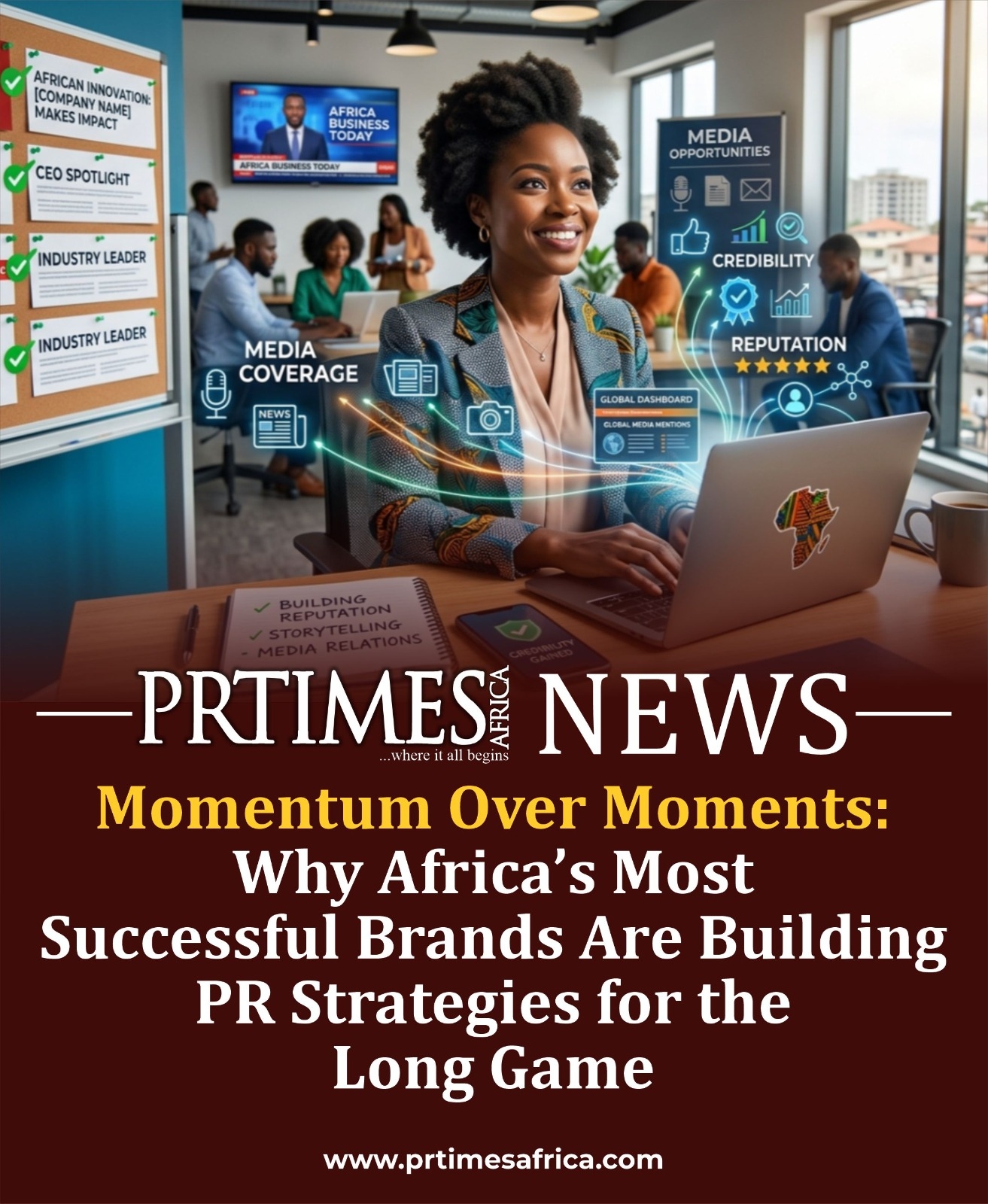
Momentum Over Moments: Why Africa’s Most Successful Brands Are Building PR Strategies for the Long Game
Across Africa, organizations invest millions of dollars annually in conferences, product launches, award ceremonies, executive summits, and stakeholder engagements. Yet many of these events generate a brief burst of publicity before disappearing from public consciousness within days.
The challenge is not the quality of the event itself. The challenge is that too many organizations mistake visibility for influence.
In today’s media landscape, influence is not created by a single moment. It is built through sustained momentum.
As Africa’s economies continue to expand and compete for global investment, businesses, governments, development institutions, and corporate leaders must rethink how they approach public relations events. The most effective PR campaigns are no longer measured by attendance figures, social media impressions, or the number of photographs published after an event. They are measured by their ability to shape conversations, build trust, and reinforce reputation long after the event has ended.
The Shift from Event-Centric PR to Reputation-Centric PR
Historically, organizations viewed events as standalone activities. A conference was organized, media invitations were sent, speeches were delivered, and the event concluded.
Today, leading global brands understand that an event is not the destination—it is merely one chapter in a larger reputation-building journey.
An executive forum in Lagos, Nairobi, Johannesburg, Kigali, Accra, or Cairo should not simply create headlines for one day. It should create thought leadership content, stakeholder engagement opportunities, policy conversations, investment interest, and long-term brand positioning.
The most successful organizations treat every event as a strategic communications asset rather than a ceremonial gathering.
Africa’s Emerging Influence Economy
Africa is home to the world’s youngest population, with over 1.4 billion people and rapidly expanding digital connectivity. The continent’s growing middle class, entrepreneurial ecosystem, and technology sector have transformed how narratives are created and consumed.
According to international development and economic projections, Africa is expected to account for a significant share of global population growth over the coming decades. This demographic advantage means that brands operating in Africa have a unique opportunity to build enduring relationships with future consumers, investors, and policymakers.
However, in a crowded information environment, audiences quickly forget isolated announcements.
What they remember are consistent narratives.
Organizations that repeatedly communicate a clear purpose, vision, and impact story are far more likely to maintain relevance than those that rely solely on occasional high-profile events.
The Power of Sustained Narrative Building
A successful PR event should begin months before attendees arrive and continue long after they leave.
Before the event, organizations should build anticipation through executive interviews, industry reports, stakeholder briefings, and strategic media engagement.
During the event, the focus should be on creating meaningful conversations rather than merely attracting attention.
After the event, organizations should release insights, thought leadership articles, video content, impact reports, and follow-up engagements that keep the conversation alive.
This approach transforms a single event into a year-long communications platform.
The goal is not simply to make news. The goal is to own a narrative.
Lessons from Global Brands and African Champions
Many of the world’s most respected organizations understand that reputation is built through consistency.
Companies such as Apple, Microsoft, and major multinational corporations do not rely on isolated announcements. Every launch, keynote, and stakeholder event forms part of a broader strategic story that reinforces their leadership position.
Across Africa, a similar pattern is emerging.
Leading financial institutions, technology companies, development agencies, and corporate groups are increasingly using events as platforms to discuss innovation, sustainability, financial inclusion, infrastructure development, gender equity, and economic transformation.
These organizations recognize that visibility without continuity rarely translates into influence.
Influence comes from sustained engagement.
Measuring What Truly Matters
One of the biggest mistakes organizations make is evaluating an event solely through immediate metrics.
Attendance numbers, social media impressions, and media mentions are important, but they tell only part of the story.
The more important questions are:
– Did the event strengthen stakeholder trust?
– Did it position the organization as an industry leader?
– Did it create new partnerships?
– Did it influence policy discussions?
– Did it generate investment opportunities?
– Did it reinforce the organization’s long-term reputation?
When these questions become the benchmark for success, event planning becomes more strategic and more impactful.
Building Events for the Future
Africa is entering an era in which reputation has become a critical economic asset.
Investors increasingly evaluate leadership credibility. Consumers are paying closer attention to corporate values. Governments are seeking partners with proven impact records. International stakeholders are looking for trusted voices capable of shaping Africa’s development narrative.
In this environment, organizations can no longer afford to view events as isolated moments of publicity.
The future belongs to those who create momentum rather than moments.
The most influential African brands of the next decade will not necessarily be those that host the biggest events. They will be those that use every event to build a larger story, deepen stakeholder relationships, and strengthen their reputation over time.
Because in modern public relations, the event ends.
But the narrative should never stop.