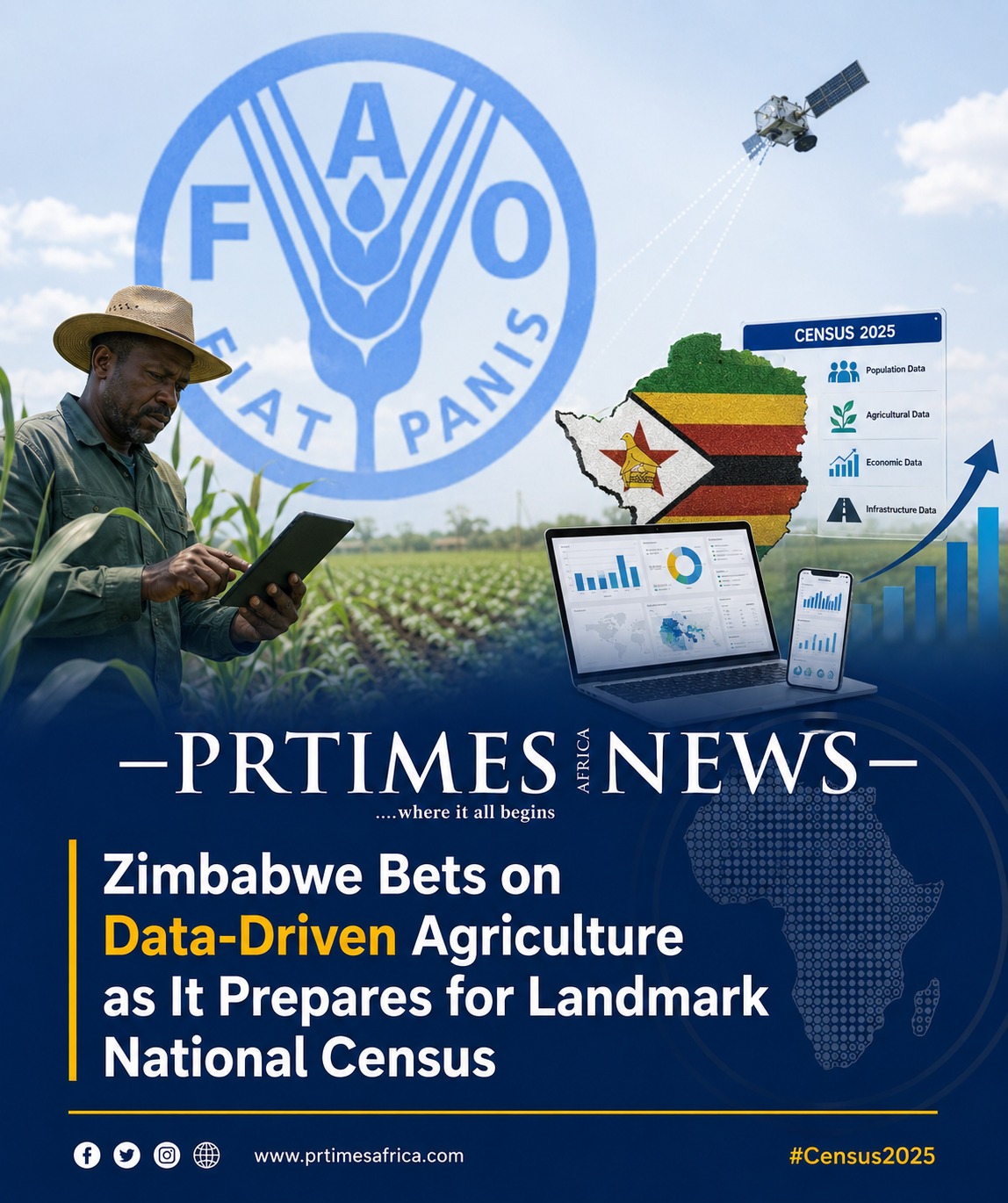
Zimbabwe Bets on Data-Driven Agriculture as It Prepares for Landmark National Census
FAO-backed initiative strengthens statistical expertise to improve food security, agricultural planning, and rural development.
HARARE : As Zimbabwe prepares for its first-ever National Agricultural Census, the country is investing heavily in a resource often overlooked in agricultural development: data.
In partnership with the Food and Agriculture Organization of the United Nations (FAO), the Zimbabwe National Statistics Agency (ZIMSTAT), and the Ministry of Agriculture, Zimbabwe has completed an intensive two-week training programme aimed at strengthening the country’s capacity to collect, manage, and analyze agricultural data using STATA, one of the world’s leading statistical software platforms.
The initiative reflects a broader shift toward evidence-based policymaking at a time when African governments are increasingly seeking reliable data to address food security challenges, improve agricultural productivity, and guide public investment.
“Reliable statistics are the foundation of effective agricultural policy,” FAO officials noted, emphasizing that stronger analytical capacity will enable Zimbabwe to better understand farming systems, monitor productivity, and design programes that respond to the realities faced by farmers.
The training brought together government analysts, statisticians, and monitoring specialists, equipping them with practical skills to transform raw agricultural data into actionable insights. Participants worked with real Zimbabwean datasets, learning techniques ranging from data cleaning and validation to advanced statistical analysis and reporting.
The programe arrives at a critical moment for Zimbabwe’s agricultural sector. Preparations are underway for the country’s first comprehensive National Agricultural Census, an ambitious undertaking designed to establish a detailed baseline of agricultural holdings, production systems, and rural development indicators nationwide.
Officials say the census will provide policymakers with the information needed to make smarter decisions on food security, rural development, resource allocation, and agricultural investment.
For a country where agriculture remains central to livelihoods and economic growth, strengthening statistical capacity is increasingly viewed as a strategic investment. By improving how data is analyzed and applied, Zimbabwe hopes to ensure that future agricultural policies are guided not by assumptions, but by evidence.
As African nations confront the twin challenges of food insecurity and climate change, Zimbabwe’s focus on building stronger agricultural data systems could serve as a model for evidence-driven development across the continent.
You Might Be Interested In
- Uganda: School Health Club helps students and communities stay safe from diseases
- Africa in the Algorithm: Why African Leaders Need a Collective PR Strategy in the Age of Generative AI
- Canlı Casino Oyunlarının Yükselişi
- Tanzania: Address Rights Ahead of Local Elections
- What Is Green PR? How to Promote Environmental Initiatives and Avoid Greenwashing
- Tanzania Set for Political Shift as Former Finance Minister Mwigulu Nchemba Nominated Prime Minister