Author: prtimesafrica

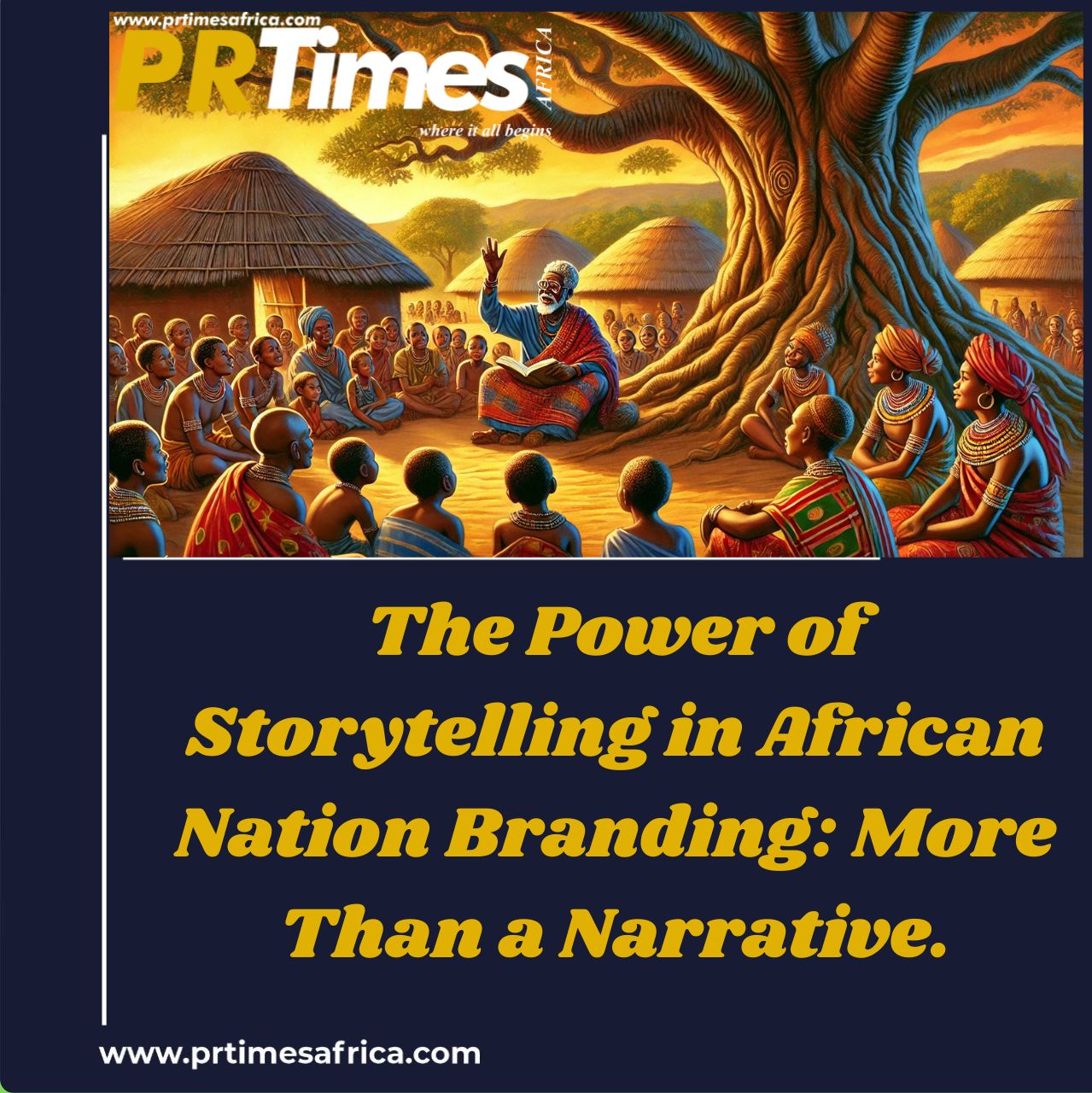
  • The Power of Storytelling in African Nation Branding: More Than a Narrative.

    The Power of Storytelling in African Nation Branding: More Than a Narrative.

    By Musa Sunusi Ahmad:In an age dominated by global perception, how Africa tells its stories is as important as the stories themselves. From economic policy and social reform to sports and cultural renaissance, the continent’s most strategic asset is no longer just its resources or youth population, it is its narrative.

    Today, storytelling has moved beyond fiction or folklore. It is now a core strategy in public relations, diplomacy, governance, and investment attraction. The question is no longer whether African nations need to brand themselves, but how well they are doing it.

    From Aid to Agency: Shifting Africa’s Global Image

    For decades, the dominant narrative around Africa in global media has often been reductive, famine, conflict, disease, and corruption. But a quiet revolution is underway. African PR professionals, communications strategists, and digital storytellers are rewriting the continent’s reputation from the inside out.

    Governments and institutions across the continent are beginning to understand that public perception is power. The rise of the African Continental Free Trade Area (AfCFTA), the emergence of African unicorn startups, and cultural phenomena like Afrobeats and Nollywood are offering new angles to promote a dynamic, youthful, and entrepreneurial Africa.

    In this context, storytelling becomes not just a tool of communication, but a tool of transformation.

    Strategic Storytelling in Practice: Case Studies from the Continent

    Ghana’s “Beyond the Return” Campaign

    Building on the success of the “Year of Return” in 2019, Ghana launched a multi-year initiative to position itself as the cultural and tourism capital of the Black diaspora. With powerful visuals, high-profile celebrity endorsements, and social media activations, Ghana told a story of reconnection, pride, and prosperity, and saw an increase in both tourism and Diaspora investments.

    Rwanda’s Soft Power Playbook

    Rwanda has invested heavily in nation branding, including the partnership with Arsenal FC (“Visit Rwanda” sleeve sponsorship), showcasing its commitment to tourism, innovation, and environmental sustainability. Through careful messaging, Rwanda has shifted its global image from post-genocide recovery to a model of African progress.

    Kenya’s Digital Diplomacy

    With over 75% of Kenyans using mobile internet, Kenya’s government and private sector use social platforms not only for citizen engagement but for international investment pitching. Brands like Safaricom and initiatives like Konza Technopolis are front and center in a narrative of “Silicon Savannah”, Kenya as Africa’s tech leader.

    The PR Professional’s Role in Nation Branding

    In this evolving landscape, the role of the PR professional is expanding:

    – From Spokesperson to Strategist: Communications professionals now sit at the table where policy, trade, and culture intersect.

    – From Press Releases to Transmedia Campaigns: Stories need to live across platforms, from TikTok and Instagram to international newsrooms.

    – From Reactive to Proactive Narratives: African countries must learn to set the narrative, not just defend it.

    There is a growing need for communications capacity-building at institutional levels, ministries, embassies, public-private partnerships, to train professionals in narrative design, crisis communication, and digital engagement.

    Challenges: The War on Disinformation

    While the potential is high, so are the risks. Fake news, digital misinformation, and foreign-controlled narratives still pose a threat to African image-making. Countries need to invest in media literacy, fact-checking alliances, and sovereign digital storytelling platforms.

    In this regard, collaboration between governments, independent media, civil society, and academia is essential.

    Africa’s Communication Goldmine

    As Africa’s middle class grows and its youth population continues to dominate, new opportunities in communications and PR are emerging:

    Diaspora PR Campaigns: To engage Africans abroad as brand ambassadors and investors.

    Development Communication: Telling success stories from health, education, and gender sectors to global partners.

    Sports and Cultural Diplomacy: Using international events to amplify visibility and reshape perceptions.

    Pan-African Content Collaboration: From media houses to influencers, building shared narratives of success across borders.

    Telling Africa’s Story: Authentically and Strategically

    The world is watching Africa. But the world will believe what Africa chooses to show, and say.

    Whether it’s Cape Verde’s near World Cup breakthrough, Ethiopia’s digital economy transformation, or South Africa’s push for green energy leadership, every country has a story. The task for PR professionals and communicators across the continent is to shape that story with intention, innovation, and authenticity.

  • SPEECHWRITERS FOR AFRICAN LEADERS AT THE 80TH UNGA: BUSINESS AS USUAL OR A SHIFT IN STRATEGY?

    SPEECHWRITERS FOR AFRICAN LEADERS AT THE 80TH UNGA: BUSINESS AS USUAL OR A SHIFT IN STRATEGY?

    SPEECHWRITERS FOR AFRICAN LEADERS AT THE 80TH UNGA: BUSINESS AS USUAL OR A SHIFT IN STRATEGY?

    By Musa Sunusi Ahmad:

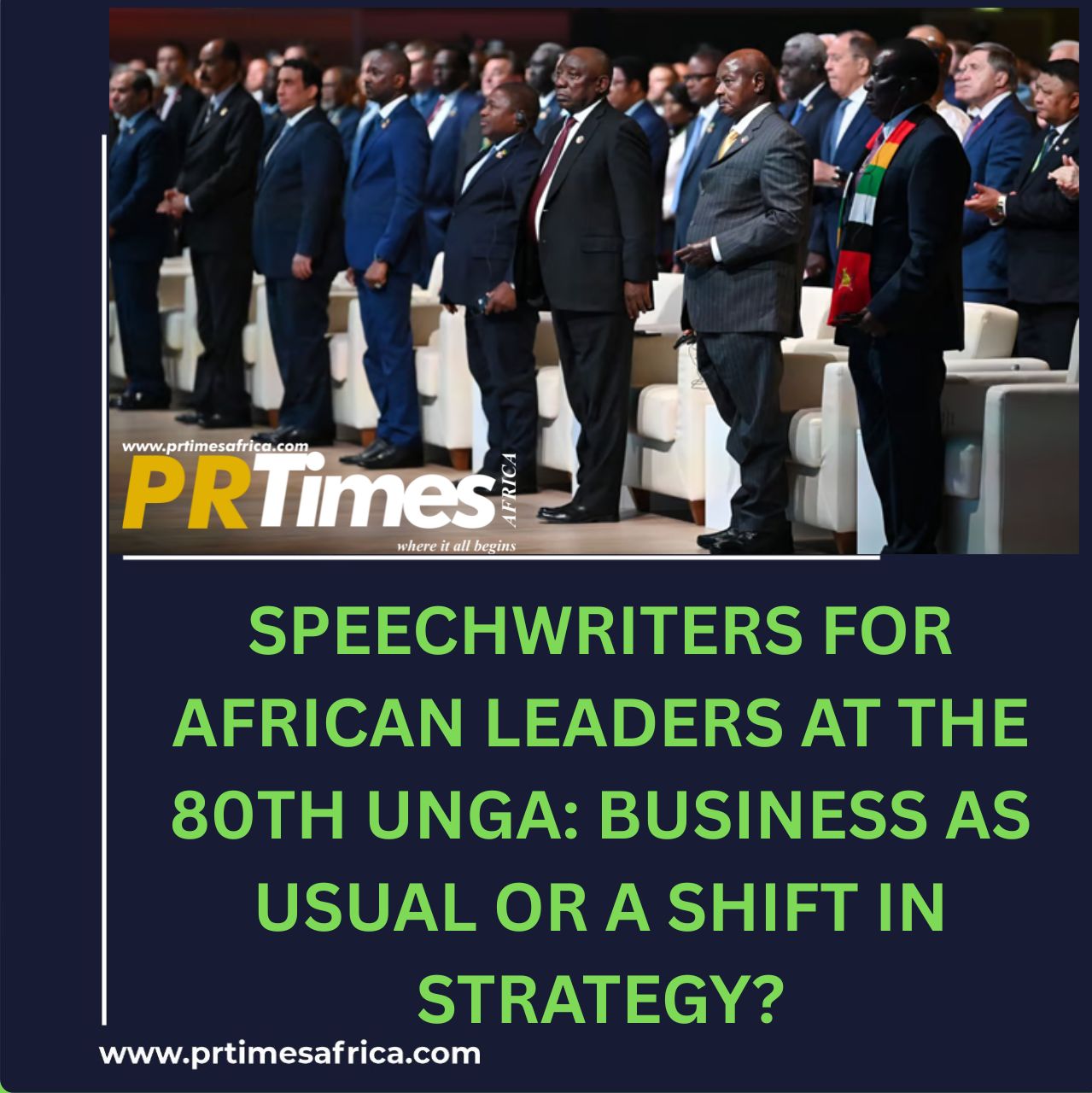
    When African presidents took the podium at the 80th United Nations General Assembly (UNGA) this September, their words made global headlines. They spoke of climate injustice, unsustainable debt, peace and security, and the perennial call for reform of global institutions. But as the cameras zoomed in on the leaders, those who helped shape these messages remained, as usual, behind the curtain.

    These quiet professionals, speechwriters, crafted not just speeches, but narratives that sought to project national interest, shape global perceptions, and elevate Africa’s collective voice.

    But the question remains: at this historic UNGA, where conflicts raged and multilateralism was visibly strained—was it business as usual for African speechwriters, or is something changing?

    Still the Power Behind the Podium

    Speechwriting for African heads of state has always been an art of balancing diplomacy with urgency, legacy with immediacy. But the UNGA, the most high-profile diplomatic stage, raises the stakes.

    Unlike domestic speeches or campaign rallies, UNGA speeches are designed for multiple audiences, the international community, domestic constituents, development partners, and increasingly, social media-savvy citizens across the continent.

    And yet, until recently, many African presidential communications teams were under-resourced, overly reliant on bureaucratic drafts, or overly deferential to political language that lacked global resonance.

    But this year felt different.

    “We’re seeing a new class of African speechwriters who understand that a UN speech isn’t just about policy, it’s about presence,” says a political communications lecturer at the University of Ghana. “They’re strategic, younger, globally literate, and unafraid to be bold.”

    Notable Shifts at UNGA 80

    Several African leaders arrived in New York with more polished, more pointed, and more purposeful speeches than in previous years. These weren’t just updates on national progress, they were calls to action, rebuttals, and in some cases, reframes of Africa’s role in global systems.

    Examples include:

    Kenya’s President firmly positioning the Global South as a partner, not a petitioner, in climate finance discussions.

    Namibia’s delegation invoking historical injustice in calls for intellectual property reform and equitable access to green tech.


    Nigeria’s presidency delivering an uncharacteristically concise and business-minded speech, clearly targeting foreign investors and Diaspora engagement.

    These speeches, observers noted, were tighter, less burdened by protocol, and more aligned with global media cycles. They sounded less like reports, and more like statements of intent.

    “We’re finally seeing African leaders speak to the world, not at it,” says a Somali speech consultant who has worked with AU delegates.

    Is It Still Business As Usual?

    In some places, yes.

    Some speeches still bore the signs of recycled rhetoric, broad clichés, or awkward phrasing, likely the result of rushed drafting, lack of coordination, or political micromanagement. In these cases, it was business as usual: bland delivery, missed media moments, and lost opportunities for narrative control.

    But increasingly, especially in countries with strong presidential communication offices, there’s a shift happening.

    Three indicators suggest we may be witnessing the beginning of a new era in African political speechwriting:

    1. Professionalization of the Craft

    More African countries are now recruiting communication strategists, not just bureaucrats, into leadership messaging teams. Many of these professionals have backgrounds in journalism, international affairs, or even storytelling and film.

    1. Strategic Messaging for Global Forums

    Instead of simply showcasing achievements, speechwriters are aligning speeches with global narratives: climate change, AI governance, debt restructuring. It’s a pivot from positioning to participation.

    1. Collaborative Drafting Processes

    Some presidential teams now hold internal “speech labs” ahead of global events, involving ministries, think tanks, and even diaspora advisers. This helps ensure technical accuracy and thematic coherence.

    Messaging as Soft Power

    In a multilateral environment increasingly shaped by perception, words matter more than ever. For Africa, the stakes are especially high: a youthful population, a changing climate, a contested economic future. The speech at the UN is no longer ceremonial, it’s strategic.

    The shift we saw at UNGA 80 suggests that African leaders and their speechwriters are beginning to recognize this. And while not every delegation has made the leap from “business as usual” to communications as diplomacy, the momentum is building.

    In the words of a senior speechwriter from East Africa:

    “We’re not just writing speeches anymore. We’re writing Africa’s voice into the future.”

    For PR and communications professionals across Africa, the lessons are clear: storytelling, positioning, and authenticity are no longer optional. They are central to diplomacy, policy, and global influence.

    As we look ahead to COP30, the African Union Summit, and future UNGAs, one thing is certain: behind every great speech will be someone, somewhere, choosing the right words, not just for the moment, but for the movement.

  • The Democratic Republic of Congo, the world’s top cobalt producer is lifting its export ban starting October 16th. Congo will now control global supply through strict annual export quotas, the country’s strategic minerals regulator announced Sunday.

    The Democratic Republic of Congo, the world’s top cobalt producer is lifting its export ban starting October 16th. Congo will now control global supply through strict annual export quotas, the country’s strategic minerals regulator announced Sunday.

    The Democratic Republic of Congo, the world’s top cobalt producer is lifting its export ban starting October 16th. Congo will now control global supply through strict annual export quotas, the country’s strategic minerals regulator announced Sunday.

    DR Congo Lifts Cobalt Export Ban, Introduces Strict Quotas to Control Global Supply Kinshasa, Democratic Republic of Congo (DRC) – The Democratic Republic of Congo, the world’s leading producer of cobalt, will lift its export ban on the critical mineral starting October 16, 2025, according to an announcement by the country’s strategic minerals regulator on Sunday. The decision marks a significant shift in global cobalt supply dynamics, as the DRC introduces stringent annual export quotas to stabilize prices and assert greater control over the market for this key component in electric vehicle (EV) batteries. Key Details of the New Policy For the remainder of 2025, the DRC has set an export cap of 18,125 tonnes of cobalt. This quota will increase significantly to 96,600 tonnes annually for both 2026 and 2027. The export ban, in place since February 2025 following a nine-year low in cobalt prices, had disrupted global supply chains, prompting major producers like Glencore to declare force majeure on their contracts. The new quota system aims to address oversupply issues, stabilize prices, and strengthen the DRC’s grip on the global cobalt market, which is critical for the EV industry and renewable energy technologies. The regulator also announced that 10% of cobalt exports will be reserved for strategic national projects, with the government retaining the right to purchase excess stockpiles from companies exceeding their quotas. Industry and Market Implications The quota system has garnered mixed reactions from major players in the cobalt sector. Glencore, a leading global mining company, supports the policy, viewing it as a mechanism to stabilize prices. However, China Molybdenum Co. (CMOC), another major producer, has expressed opposition, citing potential constraints on its operations. The DRC’s move comes amid growing global demand for cobalt, driven by the accelerating transition to electric vehicles and renewable energy storage systems. By controlling export volumes, the DRC aims to prevent price volatility and maintain its dominance in the cobalt market, which accounts for approximately 70% of global supply. Challenges in Eastern Congo The policy shift occurs against the backdrop of escalating conflict in eastern DRC, where illegal mining activities are exacerbating violence led by the M23 rebel group. The largely unregulated artisanal mining sector, which employs thousands of workers under hazardous conditions, poses significant challenges for global traceability and ethical sourcing standards. The DRC’s regulator has not yet detailed how the quota system will address these issues, but the policy underscores the government’s intent to assert greater oversight over the cobalt trade. Flexibility and Future Adjustments The DRC’s strategic minerals regulator emphasized that export quotas may be adjusted based on market trends or advancements in local refining capacity. This flexibility aims to balance global supply needs with the DRC’s domestic priorities, including the development of its own cobalt processing infrastructure. Global Significance The DRC’s decision to lift the export ban and implement quotas is a pivotal development for the global cobalt market, which is integral to the clean energy transition. As nations and industries worldwide ramp up EV production, the DRC’s policies will likely influence cobalt prices, supply chain strategies, and investment in alternative battery technologies. However, the ongoing conflict and ethical concerns surrounding artisanal mining will continue to challenge efforts to ensure a stable and responsible cobalt supply chain. For further details on the DRC’s cobalt policies or related developments, stakeholders are encouraged to monitor updates from the country’s strategic minerals regulator.
  • What Should We Expect from African Leaders at the 2025 UN General Assembly?

    What Should We Expect from African Leaders at the 2025 UN General Assembly?

    What Should We Expect from African Leaders at the 2025 UN General Assembly?

    By Musa Sunusi Ahmad:

    Africa’s story is changing. The question is, how well are our leaders telling it?”

    As African leaders line up to speak at the 2025 United Nations General Assembly (UNGA), the world is watching, closer than ever. Global tensions are peaking, trust in international systems is fracturing, and the fight for narrative dominance is now as critical as boots on the ground.

    The UNGA podium is no longer just a place for ceremonial rhetoric, it’s a global megaphone. For African heads of state, this year’s assembly is more than a diplomatic obligation. It is an urgent opportunity to reshape Africa’s image, assert its geopolitical agency, and push forward collective African interests in a world that too often speaks about Africa, rather than with it.

    The Global Conflicts: Africa Cannot Be Silent

    Gaza: Ripple Effects Without Borders

    The ongoing war in Gaza is not a distant issue for Africa, it is igniting political, religious, and humanitarian reverberations across the continent. From North Africa to the Horn, protests, economic disruptions, and diplomatic divisions are escalating.

    What we expect: African leaders must rise above polarization and call for an intentional, inclusive negotiation process, one that prioritizes peace and human dignity over partisanship. Africa must stand for mediation, not militarization.

    Sudan: The Forgotten War

    Amid global headlines, the devastating conflict in Sudan is slipping through the cracks. Tens of thousands dead. Millions displaced. And yet, silence.

    This year’s UNGA must be a moment of renewed appeal to end the war in Sudan. African leaders should reignite continental focus, using the UN stage to galvanize support for peace talks led by African institutions, not foreign interests.

    Congo: No to External Puppeteers

    The conflict in eastern DRC is often framed through humanitarian lenses, but it’s fundamentally about control of resources. Gold, coltan, cobalt, Africa bleeds while outsiders profit.

    Insight: African leaders must use UNGA to reject the cycle of dependency on third-party mediators whose goals may not align with Africa’s. Mediation must be African-led, African-owned, and driven by peace, not profit.

    Sahel Crisis, ECOWAS & Sahel Alliance

    With the rise of military juntas, the collapse of ECOWAS’ credibility, and the formation of a new Sahel Alliance, the region is in flux. The UNGA is the place to clarify Africa’s position: what kind of governance does Africa want, and how do we restore trust in regional institutions?

    Nigeria, Mali, Algeria: Terror Redux

    The return of Boko Haram attacks, increased kidnappings in northern Nigeria, and extremist activities in Mali and Algeria raise serious questions about Africa’s counterterrorism architecture.

    Expectation: African leaders must demand renewed global cooperation without conditionalities and use the moment to advocate for homegrown security strategies, not recycled templates from abroad.

    Africa’s Internal Fault Lines: Airing Our Own Truths

    Morocco & Western Sahara: A Colonial Hangover

    The Western Sahara dispute remains one of Africa’s longest unresolved issues. African leaders must break the diplomatic silence, advocating for a peaceful resolution in line with African Union principles, self-determination, territorial integrity, and non-interference.

    Zimbabwe: Freedom Under Siege

    In Zimbabwe, the political capture of institutions and increasing restrictions on freedom of speech and association pose risks to democracy. The UNGA stage must not sanitize these issues.

    Leaders must hold each other accountable, behind closed doors if necessary, but with clarity of purpose: democracy must not die in silence.

    South Africa: Foreign Fingers in Domestic Politics

    Rising foreign interference in South African domestic affairs, often under the guise of partnerships or philanthropy, is becoming a concern. Whether it’s funding civil unrest or influencing electoral narratives, the lines are blurring.

    The UNGA should serve as a warning bell, that Africa will not be a playground for geopolitical experiments.

    Ethiopia, Eritrea & the GERD

    The Nile remains a source of tension. The Grand Ethiopian Renaissance Dam (GERD) continues to cause friction between Ethiopia, Egypt, and Sudan. Meanwhile, unresolved tensions between Ethiopia and Eritrea risk reigniting old flames.

    What’s needed: A continental summit on water diplomacy, led by Africans, not external powers, must be initiated. UNGA is the time to announce it.

    The Economic Landscape: A Time Bomb or a Tipping Point?

    Youth Unemployment: Africa’s Quiet Emergency

    With over 70% of Africa’s population under 30, the youth unemployment crisis is the continent’s most pressing long-term threat. Speeches must go beyond acknowledging this; they must present concrete collective strategies for:

    – Job creation through industrialization

    – Digital skills development and tech entrepreneurship

    – Cross-border youth mobility and employment

    Aid Cuts & Tariff Shocks: The West’s Retraction

    The US aid reductions, increasing tariff regimes, and the weaponization of trade are sending economic shockwaves across Africa. The Ukraine war continues to disrupt African exports and imports, exposing fragile supply chains.

    Communication opportunity: Africa must reject being collateral damage in global power struggles. Leaders must speak with one voice in demanding fair trade, inclusive reforms, and shared accountability.

    Migration: A Symptom, Not a Sickness

    From the Mediterranean to the Atlantic, African migration continues to make headlines, often framed negatively. The real issue? Lack of opportunity at home.

    Africa’s message at UNGA must be clear: The world should invest in making Africa a viable home for its youth. Not walls. Not warships. Opportunity.

    Global Order Rewritten: Africa in the Crossfire

    Ukraine War: An African Economic Casualty

    Though distant in geography, the Russia-Ukraine war continues to impact African economies, rising food prices, fuel shortages, disrupted exports. Yet Africa is rarely invited to the decision-making table.

    This year, African leaders must say: “Nothing about us, without us.”

    BRICS, the U.S. & the Global Power Contest

    With BRICS+ expanding and the U.S. struggling to retain influence, the world is witnessing a geopolitical realignment. But Africa should not be forced to pick sides.

    Key message: Africa is a bloc of 1.4 billion people. We are not chess pieces. The U.S. must abandon the “global police” posture, and BRICS must prove its credibility. Africa will partner, but on its own terms.

    Diplomacy Is the New Power

    This UNGA is not about taking turns at the microphone. It’s about seizing the moment to:

    – Reframe Africa’s image on the global stage

    – Advocate for Africa’s peace and prosperity

    – Demand respect in a world that often sidelines our voice

    This is not about aid. It’s about agency.

    This is not about spotlight. It’s about strategy.

    And it’s time Africa speaks like the future it is.

  • Chad Lawmakers Approve Unlimited Presidential Terms, Extend Tenure to Seven Years

    Chad Lawmakers Approve Unlimited Presidential Terms, Extend Tenure to Seven Years

    Chad Lawmakers Approve Unlimited Presidential Terms, Extend Tenure to Seven Years

    N’Djamena, Chad — September 17, 2025
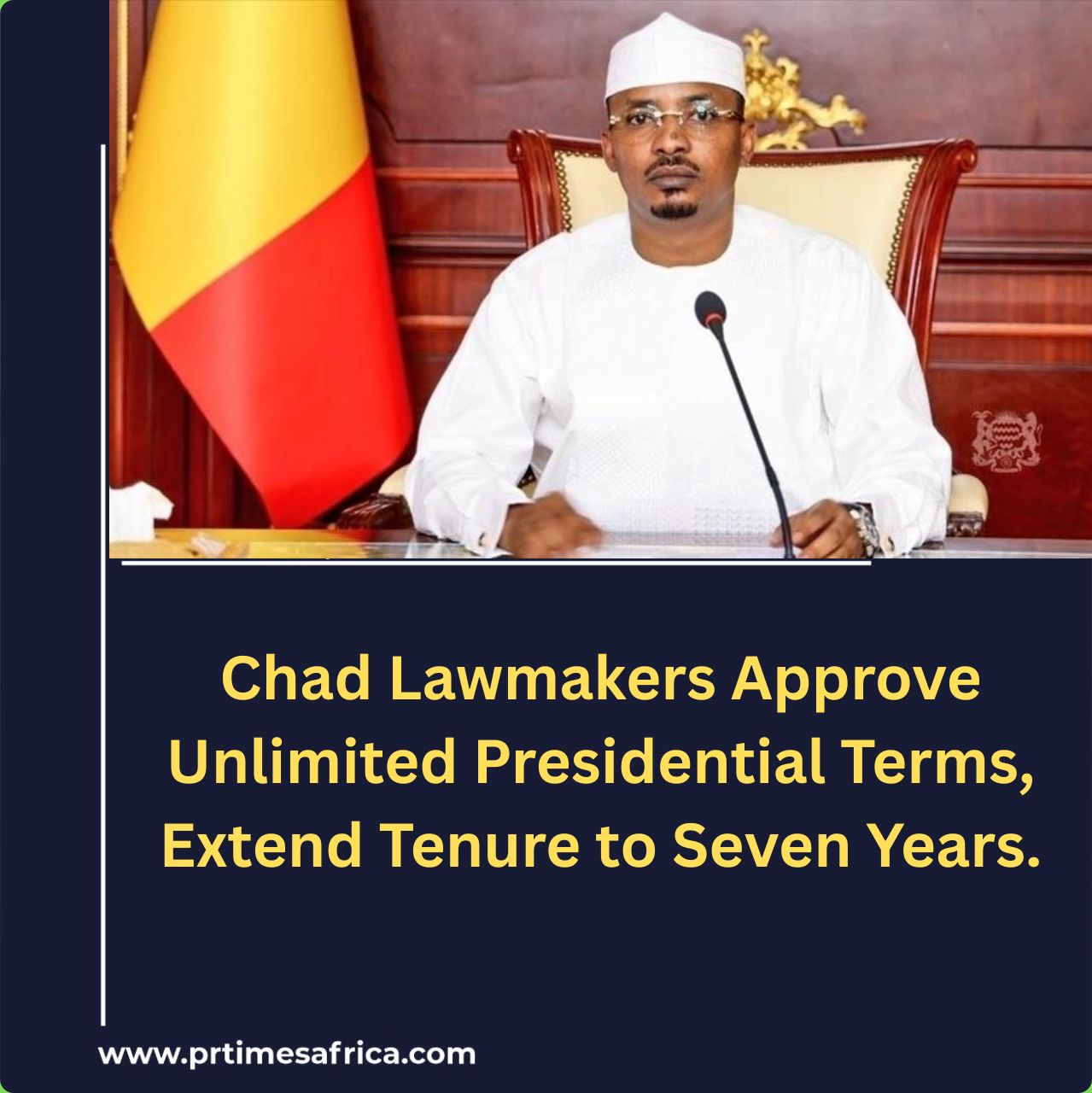
    Chad’s National Assembly has voted in favor of sweeping constitutional changes that extend presidential terms from five to seven years and remove term limits, paving the way for President Mahamat Idriss Déby to seek re-election indefinitely.
    The amendment, passed by an overwhelming majority with 171 votes in favor and just one abstention, marks a decisive shift in the country’s political landscape. The new provisions will take full effect once they secure approval from the Senate on October 13, 2025, followed by presidential assent.
    Supporters of the move argue that longer terms will enhance political stability and give the president more time to implement development programs. However, critics and pro-democracy activists warn that the abolition of term limits risks entrenching power and weakening democratic accountability.
    The reform comes as part of a broader constitutional overhaul following years of political transition and contested elections after the death of former president Idriss Déby in 2021.
    If signed into law, Chad will join a growing list of African nations where constitutional revisions have cleared the way for leaders to extend their hold on power.
    PR Times Africa Media Limited
  • Libya’s Rebuilding and Communication Strategy: A Nation Reconnecting with Itself

    Libya’s Rebuilding and Communication Strategy: A Nation Reconnecting with Itself


    Libya’s Rebuilding and Communication Strategy: A Nation Reconnecting with Itself

    By Musa Sunusi Ahmad:

    More than a decade after the fall of Muammar Gaddafi’s regime, Libya finds itself in a critical stage of transformation. From shattered infrastructure to fragmented political institutions, the road to national recovery is complex and fragile. Yet, amid the noise of political negotiations and international diplomacy, something significant is taking root: Libya is learning how to rebuild not just its cities, but its voice.

    Reconstruction in Libya is not only about bricks, roads, and electricity grids, it is also a communication project. Winning public trust, managing narratives, re-establishing national identity, and fostering inclusive dialogue are central to this effort. For PR professionals, policymakers, and communication strategists, Libya offers a compelling case study on how strategic communication can be harnessed in post-conflict state-building.

    Rebuilding on Two Fronts: Infrastructure and Trust

    Since 2011, Libya’s reconstruction has been marked by two parallel tracks: physical reconstruction and institutional renewal. On one hand, international organisations and domestic institutions are working to rebuild essential infrastructure, hospitals, telecommunications, water systems, and local government services. On the other, there’s an equally vital mission: to reconstruct public confidence, strengthen local governance, and restore civic engagement.


    The REBUILD programme, supported by the European Union under the Nicosia Initiative, is a leading example. With a focus on decentralisation, municipal governance, and citizen participation, it has made communication central to every rebuilding effort. As the programme’s strategy puts it, “Building infrastructure without building trust is building on sand.”


    Strategic Communication as a Rebuilding Tool

    Libya’s post-conflict communication strategy is not an optional add-on. It’s embedded in policy, programming, and local governance reforms. Here are some of the key principles and practices shaping Libya’s communication-led recovery:

    1. Institutionalising Communication at the Local Level

    One of the most significant innovations has been the development of communication manuals and policy guides for municipalities. These are not abstract documents, they include citizen engagement models, press office templates, crisis communication protocols, and outreach calendars. They aim to professionalise municipal communications and ensure local governments communicate consistently, transparently, and inclusively.

    1. Empowering Local Storytelling

    Rebuilding isn’t just about announcements and press releases, it’s about narrative. Municipalities are training local media officers and content creators to tell the stories of change in their communities. From documentaries to social media campaigns, storytelling is being used to highlight progress, foster hope, and humanise governance.

    This is a radical shift from top-down state broadcasting to bottom-up, community-focused content. In post-conflict societies where propaganda and misinformation have often dominated the media landscape, this transition is vital.

    1. Building Media Literacy and Ethical Journalism

    UNESCO and international media development organisations have launched initiatives to rebuild Libya’s media landscape, including support for professional standards, ethical journalism training, and press freedom protections. A more informed media ecosystem allows for more credible communication from government and civil society, which in turn enhances public trust.

    1. Leveraging Technology for Dialogue


    With expanding 4G services and improved telecommunications, digital platforms are becoming essential tools in public outreach. Municipalities and ministries are increasingly active on Facebook, Twitter (X), and WhatsApp, hosting Q&A sessions, publishing citizen budget reports, and conducting online polls. These platforms not only disseminate information but also create spaces for feedback and dialogue.

    Challenges on the Communication Frontline

    Despite progress, the communication environment in Libya remains fragile. Some key challenges include:

    • Fragmented political authority: Competing governments and power centres in the east, west, and south make national messaging difficult and often conflicting.
    • Distrust in institutions: Years of misinformation, unkept promises, and political instability have eroded public faith in official narratives.
    • Limited access to rural populations: Infrastructure gaps and digital divides prevent full national reach, particularly in underserved regions.
    • Media polarisation: Many media outlets are aligned with political factions, undermining neutrality and credibility.

    These challenges underline why strategic, transparent, and participatory communication is not just important, it is essential to national cohesion.

    Opportunities for PR and Communications Professionals

    As Libya stabilises, the need for skilled communication experts is growing. Whether advising government ministries, supporting NGOs, managing crisis communication, or producing content for community engagement, PR professionals have a central role to play in:

    • Narrative management: Shaping a unified national identity post-conflict.
    • Public education: Explaining reforms, services, and rights in accessible ways.
    • Reputation building: Reframing Libya’s image on the international stage to attract investment and partnerships.
    • Feedback loops: Building mechanisms for citizen input and public accountability.

    There is also an opportunity for Libya to lead, to develop a uniquely Libyan model of post-conflict communication that blends traditional practices (oral storytelling, community leadership) with modern tools (social media, digital campaigns).

    The Road Ahead

    Libya’s rebuilding is far from complete. But what is becoming clear is that recovery is not just a material effort, it is a communicative one. Strategic communication is helping Libyan institutions rebuild legitimacy, helping citizens rediscover civic agency, and helping international partners understand the story behind the headlines.

    For the communications world, Libya is a live case study, a reminder that in times of rebuilding, it is not just infrastructure that must be reconstructed. It is also the conversations between state and society, between history and future, and between citizen and nation.

  • Brazil’s Minister of Culture: Strengthening Cultural & PR Ties Between Brazil, Nigeria, and Africa

    Brazil’s Minister of Culture: Strengthening Cultural & PR Ties Between Brazil, Nigeria, and Africa

    Brazil’s Minister of Culture: Strengthening Cultural & PR Ties Between Brazil, Nigeria, and Africa

    A Shared Legacy, A Renewed Connection

    Brazil and Nigeria share centuries of cultural history, shaped by migration, resilience, and creativity. From music and dance to cuisine and religion, echoes of Africa are deeply rooted in Brazilian society. Today, those cultural ties are finding new expression — not only in heritage celebrations but also in dynamic platforms for collaboration, trade, and development.

    At the center of this revival is Margareth Menezes, Brazil’s Minister of Culture, whose leadership has given new momentum to Brazil’s cultural diplomacy and public relations with Africa.


    Margareth Menezes: An Artist Leading with Vision

    Before stepping into public office, Margareth Menezes was already a household name — a celebrated singer, songwriter, and actress from Bahia. Her voice carried the rhythms of samba-reggae, Axé, and Afro-Brazilian traditions across the world, earning her recognition as one of Brazil’s cultural icons.

    Now, as Minister of Culture, she brings the same passion into policymaking. With her unique artistic background, Menezes approaches culture not only as heritage but also as a tool for strategic international relations. She has become a cultural diplomat and a PR bridge-builder, promoting a positive image of Brazil while deepening partnerships with Africa.


    Cultural Diplomacy Meets Public Relations

    Menezes’ leadership has highlighted how culture and public relations intertwine in nation-building and international diplomacy. By positioning culture as Brazil’s soft power, she is reshaping perceptions and opening doors for collaboration with Africa.

    Key areas of her PR-driven cultural engagement include:

    • Image-Building – Showcasing Brazil’s Afro-Brazilian heritage as a symbol of unity with Africa.
    • Bilateral Collaboration – Promoting Nigeria–Brazil partnerships in creative industries, tourism, and cultural exchange.
    • Women’s Empowerment – Through initiatives like the Happy Women’s App, she positions Brazil as a champion of gender inclusion and innovation.
    • Youth Engagement – Leveraging music, film, and digital culture to connect younger generations across both regions.

    These initiatives extend beyond events — they strengthen mutual trust, improve international visibility, and create lasting platforms where Brazil and Africa can tell their stories to the world.


    Brazil–Nigeria–Africa: A PR & Cultural Triangle

    Nigeria, often described as Africa’s cultural and media hub, is a natural partner in this effort. Its influence in Nollywood, Afrobeat, and fashion mirrors Brazil’s creative industries. Together, the two nations are positioned to lead a South–South cultural alliance, powered by public relations and shared heritage.

    By promoting cultural diplomacy as a form of PR, Minister Menezes is ensuring that collaborations are not just symbolic but also strategic. These connections promote economic growth, enhance international reputation, and open doors for joint branding of Afro-Brazilian and African culture on the global stage.


    A Platform for Unity and Visibility

    For PR Times Africa, this evolving relationship underlines how culture and PR are powerful tools of diplomacy. Beyond politics and trade, it is storytelling, image-building, and cultural pride that strengthen international relations.

    Through the efforts of Minister Margareth Menezes, Brazil, Nigeria, and Africa are writing a new chapter — one that celebrates history, embraces innovation, and showcases the power of public relations in bringing nations closer together.


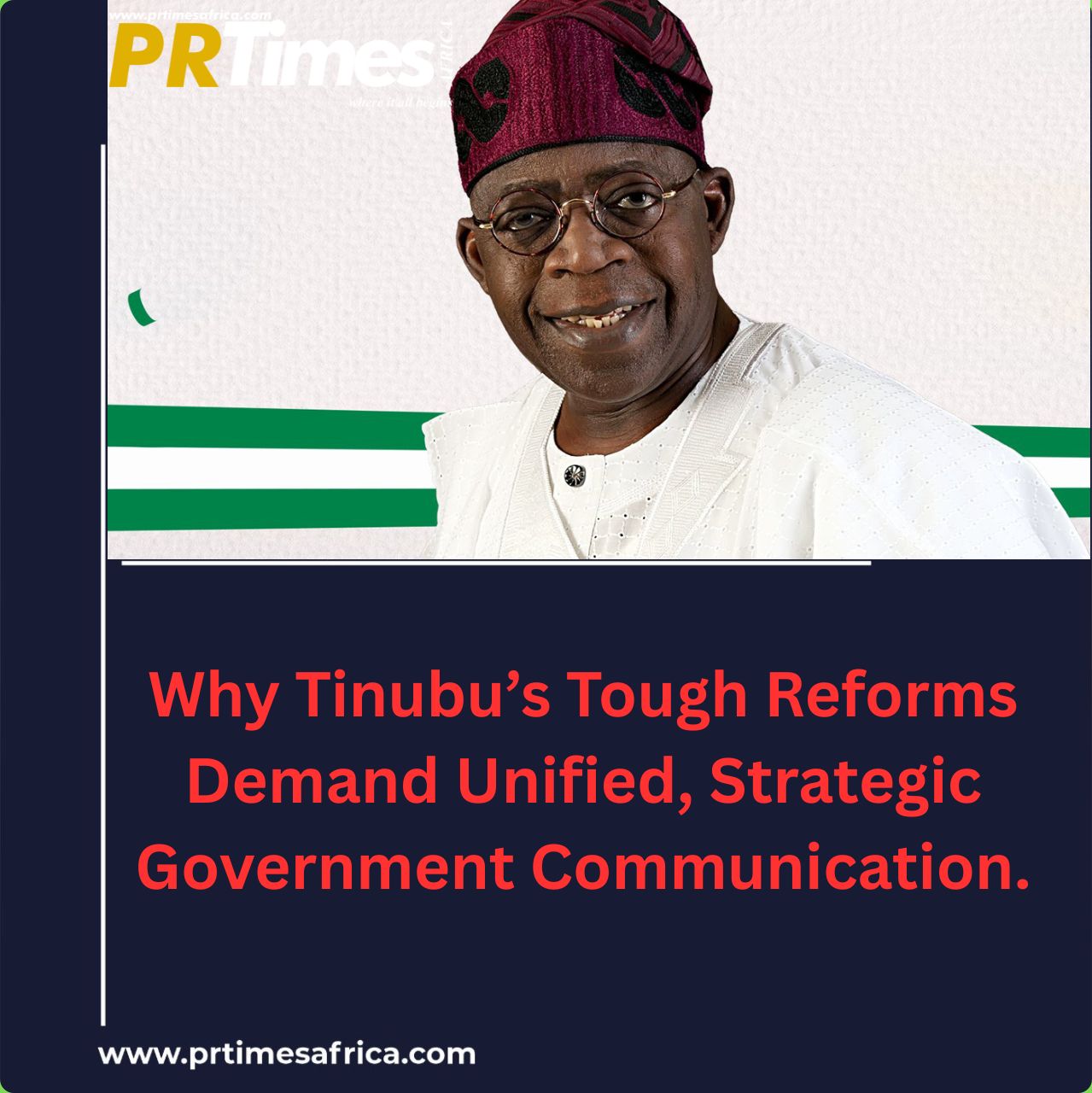
  • Why Tinubu’s Tough Reforms Demand Unified, Strategic Government Communication

    Why Tinubu’s Tough Reforms Demand Unified, Strategic Government Communication

    Why Tinubu’s Tough Reforms Demand Unified, Strategic Government Communication

    By Musa Sunusi Ahmad:

    “When leadership takes bold steps, communication must step up too.”

    In the first two years of President Bola Ahmed Tinubu’s administration, a new governing philosophy has emerged, decisive, market-oriented, reform-driven. Dubbed informally by analysts as the Tinubu Doctrine, it prioritizes long-term structural change over short-term political comfort. From eliminating fuel subsidies to floating the naira and reforming the tax system, the administration has leaned into bold, often painful decisions in pursuit of economic stabilization and national renewal.

    But there’s a problem. While the doctrine may be economically sound and strategically bold, its public communication has often lagged behind. The result? Confusion, anxiety, and resistance from a population that’s not always sure what’s happening, or why.

    The solution? Synchronized messaging at the highest levels of government.

    The Burden of Boldness

    Tinubu did not inherit an easy political landscape. Upon taking office, he was immediately faced with a fiscal crisis, inflationary pressures, and declining public trust in institutions. His response was not to delay, but to act, and act hard. “Subsidy is gone,” he declared on day one, instantly changing the economic temperature of the nation.

    This approach, direct, unapologetic, urgent, has defined his presidency. But a doctrine built on hard choices requires a carefully calibrated communication ecosystem to support it. In Nigeria, where over 200 million people absorb news in different languages, cultures, and levels of media literacy, clarity isn’t just important, it’s essential.

    “When the message is fragmented, the policy is weakened, even if it’s the right policy.”

    -Communications strategist, Abuja

    What Is the Tinubu Doctrine?

    Though not formally codified, the Tinubu Doctrine can be understood through three main tenets:

    1. Reform over populism: Embracing unpopular but necessary economic decisions.
    2. Market-driven governance: Prioritizing private-sector-led growth and deregulation.
    3. Decisive leadership: Swift action over prolonged deliberation.

    These pillars demand not just effective execution, but strategic storytelling, both to inform and to sustain public buy-in during periods of discomfort. This is where communication becomes a core part of governance.


    The Messaging Gap

    Despite having a talented team across ministries, Nigeria’s communication landscape has often appeared uncoordinated. Key announcements are sometimes made without pre-briefing the public or aligning talking points across government entities. This leads to:

    • Conflicting explanations from ministers
    • Reactive media engagement instead of proactive storytelling
    • Missed opportunities to build empathy and consensus
    • Amplification of misinformation via social media and informal networks

    One notable example was the rollout of subsidy removal. The economic rationale was strong, but the messaging was fragmented, some ministers soft-pedaled the impact, while others were overly technical. Meanwhile, citizens struggled to understand how the change would affect their daily lives.

    Why Synchronization Matters

    Synchronized messaging is more than having everyone say the same thing, it’s about ensuring that the narrative is aligned, empathetic, and strategic.

    Here’s what synchronized messaging under the Tinubu Doctrine should look like:

    • Unified Voice: Ministers, agency heads, and spokespersons speaking from the same script, with room for contextual nuance.
    • Coordinated Timing: Avoiding policy surprises; preparing the public through phased messaging before implementation.
    • Crisis Preparedness: Real-time coordination during economic shocks, protests, or misinformation campaigns.
    • Audience-Specific Messaging: Adapting communications for different demographic, linguistic, and cultural segments.

    The Case for Institutionalizing Communication Strategy

    To operationalize synchronization, the administration could adopt a number of institutional tools:

    1. Messaging Councils Within FEC

    A sub-committee of the Federal Executive Council (FEC) focused solely on narrative alignment, media strategy, and crisis messaging for all major policy actions.

    1. Central Messaging Playbooks

    Before any major reform or policy rollout, a communications playbook should be developed, including objectives, key messages, talking points, FAQs, and designated spokespersons.

    1. Training for Ministers and Media Aides

    Not all government officials are natural communicators, but they can be trained. Two sessions per year for media handling, crisis comms, and digital strategy would dramatically improve public messaging.

    “This is not spin; it’s strategic clarity. Nigerians deserve to know the what, the why, and the how.”

    -Analyst

    Governance in the Age of Perception

    In today’s world, perception can be as powerful as policy. If the public doesn’t understand a policy, or perceives it as hostile, the government loses moral authority, no matter how technically sound the decision may be.

    President Tinubu has shown he can lead with firmness. But in a democracy, firmness must walk hand in hand with transparency, empathy, and clarity. These are not just PR values, they are governance tools.

    Speak as One, Govern as One

    The Tinubu Doctrine is ambitious, and it may well deliver long-term transformation. But without synchronized messaging, it risks being undermined by misunderstanding, fear, and politicized misinformation.

    By embedding strategic communication at the core of governance, through synchronized messaging, media training, and narrative discipline, the administration can ensure that its doctrine is not just heard, but understood, respected, and ultimately embraced.

    In a complex country like Nigeria, leadership must not only act boldly, it must speak wisely, clearly, and with one voice.

  • Togo’s Assertion of Sovereignty in the Face of EU Interference: A Strategic Communications Test Case

    Togo’s Assertion of Sovereignty in the Face of EU Interference: A Strategic Communications Test Case

    Togo’s Assertion of Sovereignty in the Face of EU Interference: A Strategic Communications Test Case

    By Musa Sunusi Ahmad:

    In the ever-complex arena of international diplomacy, sovereignty is not merely a legal term, it is a deeply communicative act. The West African nation of Togo is currently navigating one of its most scrutinized chapters in recent history, where state sovereignty, foreign relations, and strategic communication converge. A recent wave of tension between Togo and the European Union (EU) has reignited debates about neo-colonial influence, international aid diplomacy, and how small states can wield soft power in defense of their autonomy.

    For public relations professionals, especially in government and international advocacy, Togo offers a valuable case study in how national image, external perception, and domestic legitimacy are carefully balanced on the global stage.

    What Sparked the Diplomatic Rift

    The origins of the rift between Togo and the EU lie in Brussels’ critique of Togo’s recent political and constitutional reforms, notably, changes that could extend President Faure Gnassingbé’s rule and shift the country from a presidential to a parliamentary system. The EU, echoing sentiments from various international watchdogs, raised concerns over democratic backsliding and lack of transparency in the reform process.

    In response, Togo accused the EU of overstepping its bounds, labeling the criticisms as undue interference in domestic affairs. Lomé’s government characterized the EU’s position as a continuation of Western paternalism masked as “democracy promotion.”

    This diplomatic tit-for-tat culminated in the suspension of certain EU-funded governance programs, a move seen by many Togolese citizens as conditional aid wrapped in coercive diplomacy.

    A Communications Battle for Sovereignty

    From a public relations standpoint, Togo’s reaction is more than diplomatic pushback, it is a strategic assertion of narrative sovereignty.

    President Gnassingbé’s administration, often criticized for its longevity and control, repositioned the controversy as a nationalist rallying cry. Government communications highlighted the EU’s stance as an affront to African dignity and self-determination. The Ministry of Communication and Media took to traditional and social media platforms with messages that emphasized:

    • “Respect for the choices of the Togolese people,”
    • “The rejection of foreign-imposed values,”
    • And calls for Pan-African solidarity.


    This reframing turned an international rebuke into a domestic legitimacy win, particularly among rural populations and nationalists who view foreign involvement in African politics with deep suspicion.

    The EU’s Messaging Misfire

    For the EU, the challenge lies in a communications disconnect. While its position was framed around human rights and governance standards, the delivery lacked cultural sensitivity and failed to account for the region’s long history with colonialism and structural dependency.

    The tone and timing of EU statements were interpreted not as collaborative concern but as top-down condescension. Worse still, they were issued without clear reference to on-the-ground engagement with local civil society groups, making them appear both distant and imposed.

    From a PR perspective, this is a classic case of “message without audience calibration”, a costly misstep in global diplomacy.

    Implications for Global Public Relations

    1. Sovereignty is Narrative: Sovereignty is not only exercised through policy but also through control of narrative. Togo’s ability to flip the script illustrates how smaller states can shape international discourse to their advantage, especially when external actors falter in their messaging.
    2. International Communication Must Be Two-Way: The EU’s mistake was speaking about Togo rather than with Togo. Effective public diplomacy, particularly in the post-colonial context, requires mutual listening and participatory engagement.
    3. Crisis = Opportunity: For Togo, the crisis became a platform to demonstrate resilience and showcase national unity. Whether one agrees with the political motives or not, the country effectively reframed critique into resistance, boosting its image among certain African and Global South observers.
    4. Soft Power is Shifting: The era where Western institutions held a monopoly on democratic legitimacy is waning. With rising geopolitical multipolarity, alternative alliances (e.g., China, Russia, Turkey) offer African states new leverage, changing how they respond to traditional Western donors.

    The PR Strategy of Self-Determination

    Togo’s diplomatic dispute with the EU reveals a deeper truth: in the realm of global communications, perception is power. By asserting its voice and challenging traditional power hierarchies, Togo is not just defending political autonomy, it is engaging in public relations warfare for its sovereign identity.

    For PR and communications professionals, especially in international contexts, the lesson is clear: Sovereignty today is exercised as much in press briefings and social media campaigns as it is in policy decisions.


    As the world watches how this plays out, Togo’s communicative defiance might inspire other nations to reframe how they negotiate power, influence, and respect on the world stage.

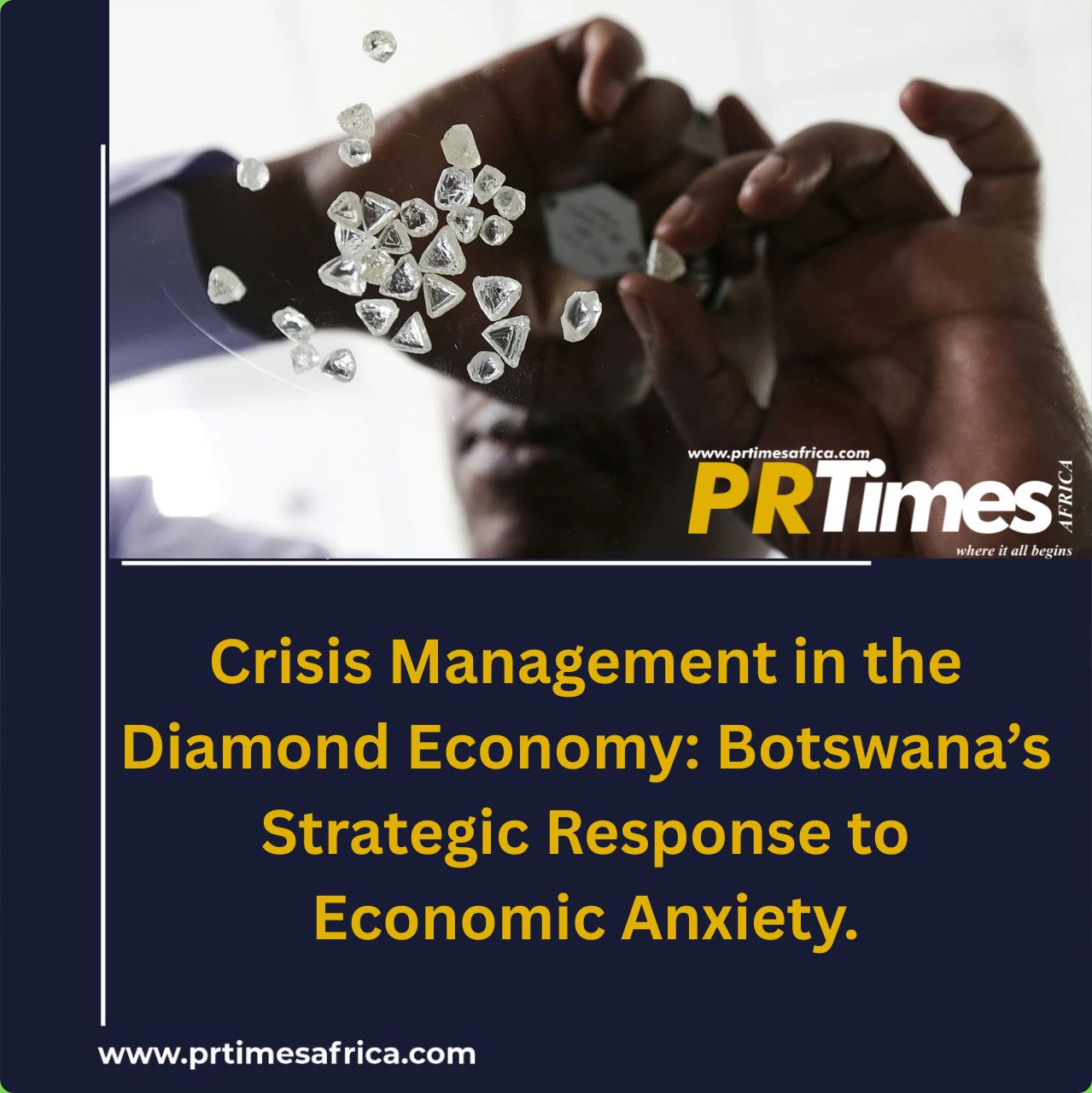
  • Crisis Management in the Diamond Economy: Botswana’s Strategic Response to Economic Anxiety

    Crisis Management in the Diamond Economy: Botswana’s Strategic Response to Economic Anxiety

    Crisis Management in the Diamond Economy: Botswana’s Strategic Response to Economic Anxiety

    By Musa Sunusi Ahmad:

    In the realm of economic storytelling, Botswana has long stood apart.

    The Southern African nation, hailed for decades as a model of stability and prudent resource management, owes much of its success to one sparkling asset: diamonds. Since independence in 1966, the country transformed itself from a near-impoverished state into a middle-income economy, thanks in large part to the carefully managed exploitation of its mineral wealth.

    But now, the sheen is fading.

    A significant decline in diamond output, global market pressures, and shifting demand have revealed a structural vulnerability. For a country where diamonds contribute more than 70% of export revenue and roughly one-third of GDP, the consequences are more than economic, they’re deeply psychological. Public confidence is shaken. Revenue gaps are growing. And the question reverberates across policy tables and kitchen tables alike: What happens after diamonds?

    More importantly for our field: how does a government communicate through economic unease?

    The Cracks in the Crown Jewel

    Botswana’s troubles began surfacing in late 2024. Debswana, the joint venture between the government and diamond giant De Beers, reported a staggering 31% drop in production in Q4 compared to the previous year. By mid-2025, rough diamond sales had plummeted nearly 50%. The reasons are multifaceted: weakening global demand, the rise of lab-grown alternatives, and market saturation, particularly in Asia.

    These figures translated swiftly into fiscal strain. Government revenue projections were slashed, non-essential projects paused, and discussions around wage payment delays began surfacing in both public sector unions and press columns. While Botswana’s economic managers have long been lauded for their discipline, even the most robust fiscal frameworks struggle under prolonged pressure.

    But in Botswana’s case, it isn’t just about numbers. It’s about trust, and the messaging around it.

    When the Economy Shakes, So Does the Public Mood

    For a nation built on economic confidence, public perception is a vital currency. And in times of turbulence, communication becomes a core policy tool, not just an accessory.

    The economic challenges facing Botswana have elicited a growing sense of unease among its citizens. Youth unemployment remains high, access to formal employment is tightening, and fears of recession loom. In communities where diamond-linked employment, direct or indirect, is a lifeline, the emotional stakes are rising.

    That’s where strategic communication steps in.

    The Government’s Communication Response: A Balancing Act

    In 2025, Botswana’s government embarked on a multi-layered approach not just to economic management, but to message management. From a public relations and communications perspective, it provides a revealing case study in crisis messaging, expectation shaping, and long-term narrative control.

    1. Reframing the National Conversation: From Diamonds to Diversification

    At the core of Botswana’s messaging is a pivot from reliance to resilience. The state has accelerated its Economic Diversification Drive (EDD), positioning the initiative as a national imperative rather than a technocratic policy. Strategic communications teams have been tasked with rebranding sectors like tourism, agriculture, and technology as the “new diamonds”, symbols of a future not anchored in the past.

    Crucially, this isn’t just about content, it’s about consistency. Government spokespeople, ministry press offices, and trade envoys have maintained tight message discipline, underscoring a single narrative: Botswana is evolving.

    1. Transparency Without Alarmism

    Botswana’s leadership has also walked a delicate tightrope: acknowledging the crisis without inciting panic. Public addresses from the Office of the President and the Ministry of Finance have been notably candid, openly discussing fiscal shortfalls, production declines, and the impact on state services.

    But alongside realism comes reassurance. Communiqués emphasize the country’s sovereign wealth fund (the Pula Fund), strong reserves, and enduring investor confidence as buffers against a worst-case scenario. This careful blend of candor and calm reflects a textbook example of reputational risk management in government communications.

    1. Protecting the Social Contract

    Public trust is not only maintained through information, but through action. Recognizing the social risk of discontent, the government has prioritized job protection within the diamond sector where possible, and launched high-visibility up-skilling programs for youth and displaced workers.

    Communications around these efforts have emphasized inclusion and access. National TV, radio, and social media have carried a unified message: You are not being left behind. For Botswana’s communications professionals, this has been a case of not just announcing programs, but making citizens feel seen within them.

    1. Strategic Media Engagement

    In a country with high media literacy and strong independent journalism, Botswana’s public information strategy has leaned into proactive engagement. Press briefings, editorial outreach, and collaborative storytelling with local journalists have allowed government messages to reach audiences via trusted intermediaries. In times of uncertainty, credibility is often best borrowed from respected voices.

    Lessons for Communications Professionals

    From a PR and communications perspective, Botswana’s handling of its diamond decline offers several insights:

    Messaging must evolve with the economic narrative. When the engine of growth shifts, so must the symbols and language used to describe the future. Botswana’s shift from “diamond capital” to “regional innovation hub” is still embryonic, but communicatively essential.

    Public reassurance depends on more than optimism. Botswanese citizens haven’t been pacified with platitudes. The government’s approach, grounded in data, tempered by realism, has retained public trust even in a downturn.

    Trust is built through visibility and voice. In moments of economic panic, governments must speak with their people, not at them. Botswana’s use of vernacular media, community radio, and inclusive language has made a technical crisis feel humanely addressed.

    Beyond the Diamonds: Crafting the Next National Identity

    Botswana’s economic crossroads is more than a fiscal dilemma, it’s a branding challenge. The country’s global reputation has long rested on a glittering stone. Now, it must be reimagined.

    For PR professionals, communications strategists, and policymakers across Africa, Botswana’s transition underscores an important truth: managing public sentiment during economic transition is as much a communications task as a financial one.

    If diamonds once shaped Botswana’s story, storytelling may shape its next chapter.

Hot daily news right into your inbox.

Headline

Never Miss A Story

Get our Weekly recap with the latest news, articles and resources.
Cookie policy
We use our own and third party cookies to allow us to understand how the site is used and to support our marketing campaigns.