 Mozambique Joins Africa’s Regulatory Vanguard as WHO Recognizes Its Medicines and Vaccine.
Oversight System
The country becomes the 10th in Africa to attain WHO Maturity Level 3, strengthening confidence in the safety, quality and oversight of medicines and imported vaccines.
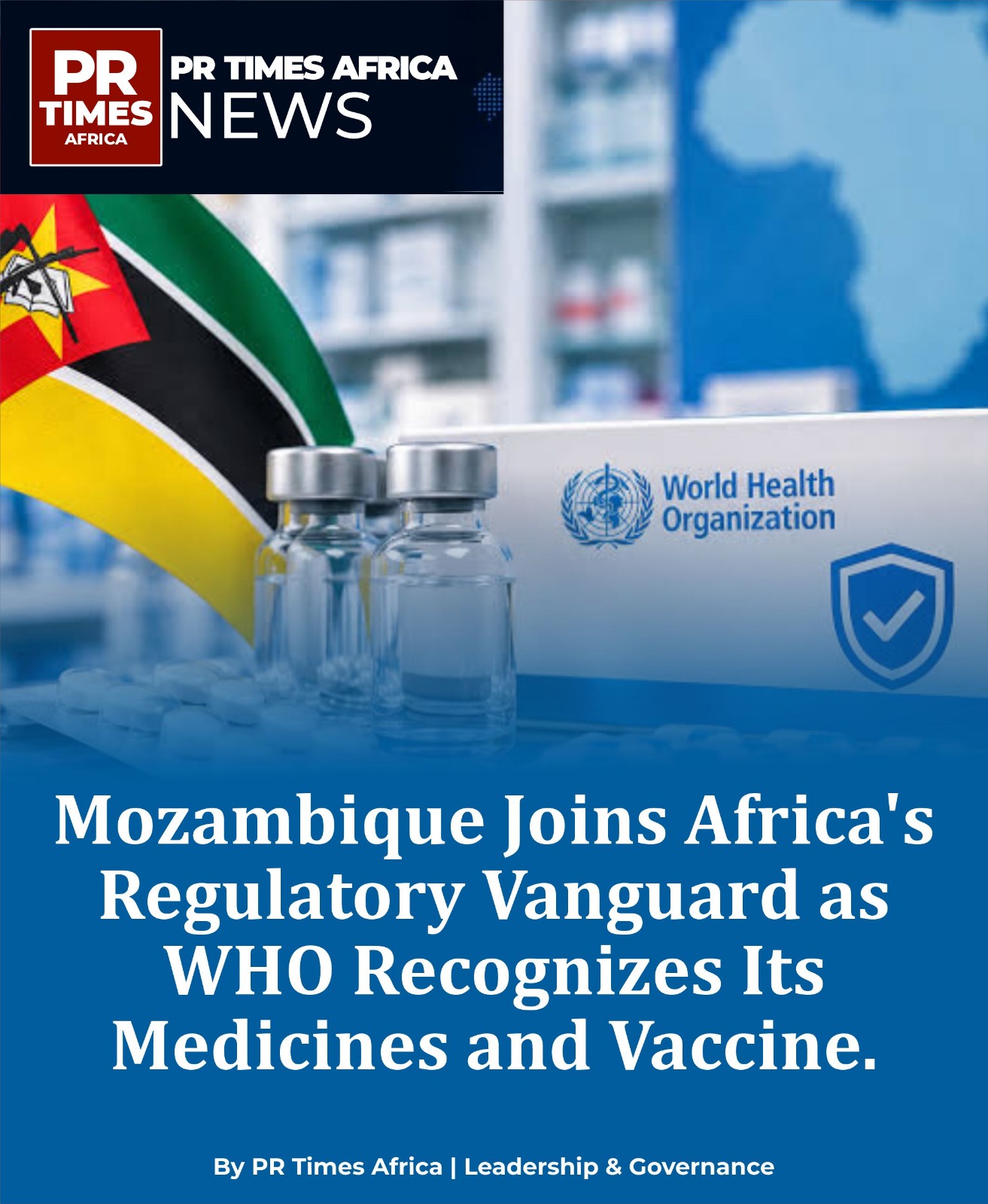
Mozambique has reached a significant milestone in its public health infrastructure, earning recognition from the World Health Organization (WHO) for establishing a stable and integrated regulatory system for medicines and imported vaccines.
The country’s national medicines regulator, the Autoridade Nacional Reguladora de Medicamentos de Moçambique (ANARME), has achieved Maturity Level 3 (ML3) under WHO’s global framework for evaluating national regulatory authorities.
The recognition places Mozambique among a growing group of African countriesincluding Egypt, Ethiopia, Ghana, Nigeria, Rwanda, Senegal, South Africa, Tanzania and Zimbabwethat have attained the ML3 benchmark, signaling accelerating progress in the continent’s efforts to build stronger and more trusted health-product regulatory systems.
For Mozambique, the achievement goes beyond institutional recognition. A stronger regulatory system is expected to provide greater assurance that medicines and vaccines entering the market are properly assessed for quality, safety and effectivenessand remain under surveillance throughout their lifecycle.
It also strengthens the country’s capacity to detect safety concerns, combat substandard and falsified medical products and support faster access to quality-assured health technologies.
“Strong regulatory systems protect people, build confidence in health products and help countries respond more effectively to evolving public health needs,” said Dr. Sylvie Briand, WHO Chief Scientist and Assistant Director-General a.i. for Health Systems, Access and Data.
A Strategic Investment in Health Security
Mozambique’s ML3 recognition follows years of institutional investment and regulatory reform aimed at strengthening the country’s ability to oversee medical products.
WHO evaluates national regulatory systems through its Global Benchmarking Tool, which examines critical functions ranging from product registration and licensing to market surveillance, pharmacovigilance, regulatory inspections, laboratory testing and clinical trial oversight.
The WHO maturity framework ranges from Level 1 to Level 4. Achieving ML3 confirms that a regulatory authority operates a stable, well-functioning and integrated system, while ML4 represents the highest level of regulatory maturity, with an emphasis on continuous improvement and advanced performance.
For Mozambique, reaching ML3 could also unlock broader opportunities for regulatory cooperation. Stronger systems enable countries to rely more effectively on trusted regulatory decisions, reduce duplication and deploy limited technical resources more efficiently without compromising standards.
A New Voice for Lusophone Africa
Mozambique’s achievement carries significance beyond its borders.
As the first Portuguese-speaking African country to attain ML3, the country is positioned to become an important reference point for regulatory cooperation and knowledge-sharing across Lusophone Africa.
The recognition also strengthens the foundations of a more interconnected African regulatory ecosystem, particularly as the continent advances the work of the newly established African Medicines Agency.
The broader objective is increasingly clear: a continent where regulatory authorities can cooperate more closely, share expertise and accelerate access to safe, effective and quality-assured medicines.
The Bigger Picture
Mozambique’s recognition comes as WHO introduces additional measures designed to reinforce confidence in how national regulatory systems are assessed and recognized.
A newly established Technical Advisory Group on Regulatory Systems Strengthening now provides independent expert advice on recommendations involving regulatory authorities seeking or maintaining ML3 and ML4 recognition.
Mozambique is among the first countries to achieve ML3 following consideration through this enhanced process.
At the same time, South Africa was recommended to retain its ML3 status for vaccine regulation following an additional WHO assessmentunderscoring that regulatory maturity is not simply achieved once, but must be sustained through continued performance and improvement.
For Africa, the momentum is increasingly significant. Mozambique’s achievement represents another step toward a future in which stronger regulatory institutions become a cornerstone of health security, pharmaceutical confidence and equitable access to life-saving medicines.
In the evolving global health economy, effective regulation is no longer merely a technical functionit is becoming a strategic national asset. And Mozambique has now positioned itself firmly within Africa’s emerging regulatory leadership.
By PR TIMES AFRICA Editorial Desk