Author: prtimesafrica

  • The United States Announces $424 Million in Additional Assistance for the Democratic Republic of the Congo

    The United States Announces $424 Million in Additional Assistance for the Democratic Republic of the Congo

    U.S. Embassy in the Democratic Republic of the Congo
    The United States Announces $424 Million in Additional Assistance for the Democratic Republic of the Congo
    This includes $414 million in humanitarian assistance to support people experiencing persistent humanitarian needs resulting from conflict and displacement
    KINSHASA, Democratic Republic of the Congo, August 7, 2024/ — Today, the United States, through USAID, announced nearly $424 million in humanitarian and health assistance to address the ongoing catastrophe in the Democratic Republic of the Congo (DRC). This includes $414 million in humanitarian assistance to support people experiencing persistent humanitarian needs resulting from conflict and displacement.  This announcement, made in Kinshasa by the U.S. Ambassador to the DRC Lucy Tamlyn and U.S. Representative to the United Nations Agencies for Food and Agriculture Jeffrey Prescott, also includes an additional $10 million in health assistance to respond to the current mpox outbreak in the DRC and in other affected countries in the region. USAID is also donating 50,000 mpox vaccines to the DRC, which is the country most impacted by this outbreak.

    With the additional humanitarian assistance announced today, including funding from the bipartisan National Security Supplemental, USAID’s UN and NGO partners will continue to provide urgent food assistance, health care, nutrition support, shelter materials, and water, sanitation, and hygiene services to crisis-affected communities. Partners will also continue providing critical child protection services and gender-based violence prevention and response activities for the most vulnerable who bear the brunt of the ongoing crisis.

    Today’s announcement includes more than $170 million in Commodity Credit Corporation funding from the U.S. Department of Agriculture that USAID is using to purchase, ship, and distribute surplus agricultural commodities from American farmers to provide life-saving food assistance in the DRC. The additional health assistance will be invested across a range of critical public health interventions in response to the mpox outbreak in the region.

    The United States is the largest provider of humanitarian assistance to the DRC and the largest bilateral donor to DRC’s health sector. This fiscal year, the U.S. provided more than $256 million in health assistance through bilateral programs including the President’s Emergency Plan for AIDS Relief (PEPFAR), the President’s Malaria Initiative (PMI), and the Global Health Security program, which enabled more than seven million people to receive lifesaving treatment for diseases including TB, HIV, and malaria.

    The U.S. government continues to support humanitarian partners to deliver lifesaving assistance to communities in dire need. Today’s announcement brings the total U.S. humanitarian assistance in the DRC to more than $838 million in Fiscal Year 2024. We continue to stand by refugees and the Congolese people and we encourage other donors to join us in our critical efforts to save lives and alleviate suffering caused by this ongoing crisis.


    SOURCE
    U.S. Embassy in the Democratic Republic of the Congo


  • UK Unrest: Unpacking the Complexities of a Nation in Turmoil”

    UK Unrest: Unpacking the Complexities of a Nation in Turmoil”

    Unrest in the UK: Understanding the Root Causes and Key Players

    Lagos, Nigeria – As the United Kingdom grapples with ongoing riots and protests, Pr Times Africa delves into the complexities of the situation, shedding light on the tensions fueling the unrest. The recent riots have left many wondering what’s behind the chaos. This release aims to provide a comprehensive understanding of the issues at play.

    Root Causes of the Unrest:

    – Escalating tensions over immigration and asylum seekers: The UK’s stance on immigration has long been contentious, with debates around border control, economic burden, and social integration intensifying.

    – Economic inequality and the cost of living crisis: Rising costs, stagnant wages, and growing disparities have created a perfect storm of frustration, driving citizens to demand change.

    – Policing and racial justice concerns: Tensions between law enforcement and marginalized communities have reached a boiling point, with calls for reform and accountability growing louder.

    – Far-right and extremist groups fueling unrest: The rise of far-right and nationalist groups has significantly contributed to the chaos, exploiting existing tensions and sowing discord and violence.

    Key Players Involved:

    – Far-right and nationalist groups (e.g., Britain First and the English Defence League): These organizations have spearheaded anti-immigrant and anti-asylum seeker protests, often using violent tactics.

    – Anti-immigrant and anti-asylum seeker protesters: While not all protesters are affiliated with far-right groups, many share similar concerns and frustrations.

    – Local community members frustrated with government policies: Everyday citizens, feeling neglected and disenfranchised, are taking to the streets to demand change.

    Conclusion:

    The situation in the UK is complex, with multiple factors contributing to the unrest. Pr Times Africa urges a nuanced understanding of the issues, recognizing the need for addressing social and economic concerns to prevent further unrest. By examining the root causes and key players involved, we can work towards a more informed and empathetic dialogue.

    Contact:
    Pr Times Africa Media.

  • Niger: Rights in Free Fall a Year After Coup

    Niger: Rights in Free Fall a Year After Coup

    Human Rights Watch (HRW)
    Niger: Rights in Free Fall a Year After Coup
    Crackdown on Opposition, Media; No Oversight of Military Spending
    NEW YORK, United States of America, July 25, 2024/ — The military authorities in Niger have cracked down on the opposition, media, and peaceful dissent since taking power in a coup one year ago, Amnesty International, Human Rights Watch and the International Federation for Human Rights (FIDH) said today.

    They have arbitrarily detained former President Mohamed Bazoum, and at least 30 officials from the ousted government and people close to the deposed president, as well as several journalists. They have rejected oversight of military spending, contrary to claims to combat corruption. The Nigerien authorities should immediately release all those held on politically motivated charges; guarantee respect for fundamental freedoms, particularly the rights to freedom of expression, opinion, and association; and publicly commit to transparency and accountability in military spending.

    “One year since the military coup, instead of a path toward respecting human rights and the rule of law, the military authorities are tightening their grip on opposition, civil society, and independent media,” said Samira Daoud, Amnesty International’s regional director for West and Central Africa. “Niger’s military authorities should release Bazoum as well as all those detained on politically motivated charges and ensure their due process rights.”

    On July 26, 2023, Gen. Abdourahamane Tiani and other Nigerien army officers of the National Council for the Safeguard of the Homeland (Conseil national pour la sauvegarde de la patrie, CNSP) overthrew Mohamed Bazoum, elected as president in 2021, and arbitrarily detained him, his family, and several members of his cabinet. In response to the coup, the Economic Community of West African States (ECOWAS) on July 30, 2023, imposed sanctions, including economic sanctions, travel bans, and asset freezes, on the coup leaders and on the country more generally. On August 22, 2023, the African Union suspended Niger from its organs, institutions, and actions. On January 28, 2024, Niger, Burkina Faso, and Mali announced they would leave ECOWAS, and on February 24, ECOWAS lifted the sanctions on Niger.

    Since the coup, Bazoum and his wife have been detained at the presidential palace in Niamey, the capital. The three organizations have repeatedly expressed concern about their well-being. In August 2023, the authorities announced plans to prosecute Bazoum for “high treason” and undermining national security, but he has yet to be brought before a judge. In September 2023, Bazoum filed a lawsuit with the ECOWAS Court of Justice in Abuja, citing violations of human rights against him and his family during his detention. In December 2023, the ECOWAS Court ruled that Bazoum was arbitrarily detained and called for his release. In April, the authorities initiated legal proceedings against Bazoum to lift his presidential immunity so he could be prosecuted for alleged crimes committed after he was elected president in 2021. On June 14 2024, Niger’s state court lifted the immunity following a proceeding that failed to meet basic due process and international fair trial standards, including the right to a defense.

    Military authorities have also arbitrarily arrested at least 30 officials from the ousted government, including former ministers, members of the presidential cabinet, and people close to the deposed president, failing to grant them due process and fair trial rights. Lawyers representing those arrested said that their clients were detained in secret by the intelligence services, before being transferred to high-security prisons on trumped-up charges. At least four of them were granted bail in April, while all others were charged with “threatening state security,” among other offenses, before a military court, despite being civilians.

    Since the 2023 coup, media freedom has been severely restricted in the country. The authorities have threatened, harassed, and arbitrarily arrested journalists, many of whom say they are self-censoring amid fear of reprisals.

    On September 30, men who identified themselves as security force members arrested Samira Sabou, a blogger and journalist, at her mother’s home in Niamey. Sabou’s whereabouts remained unknown for seven days. The Niamey judicial police initially denied arresting her, but on October 7 she was transferred to the criminal investigations unit of the Niamey police, where her lawyer and her husband visited her. On October 11, she was charged with “production and dissemination of data likely to disturb public order” and released pending trial. No date has been set for the trial.

    On January 29, the interior minister issued a decree suspending the activities of Maison de la Presse, an independent media organization, and announcing the creation of a new management committee for the media organization headed by the Interior Ministry’s Secretary General.

    On April 13, security forces arrested Ousmane Toudou, a journalist and former communications adviser to the ousted president. In the days following the July 2023 coup, Toudou denounced the military takeover through a widely shared social media post. In May 2024, he was charged with “plotting against state security” and sent to pretrial detention.

    On April 24, security forces arrested Soumana Maiga, the editor of the L’Enquêteur, after the newspaper reported a story published by a French newspaper about the alleged installation of listening equipment by Russian agents on official state buildings. He was taken before a judge in May, detained on a charge of infringement of national defense, and released pending trial on July 9.

    Tchima Illa Issoufou, the Hausa language BBC radio correspondent in Niger, said that she received threats from members of the security forces accusing her of attempting to “destabilize Niger” because of her reporting on the security situation in the Tillabéri region, western Niger, where armed Islamist groups carry out attacks against both civilians and security forces. “I was attacked by junta supporters on social media,” she told Amnesty International in May after she fled Niger for another country. “They accused me of working under foreign influence.” On April 26, security forces arrested Ali Tera, a civil society activist whom Issoufou had interviewed.

    On May 29, the justice and human rights minister issued a circular suspending all visits by human rights organizations to Nigerien prisons “until further notice,” in violation of national and international human rights law, including the Convention against Torture and Other Cruel, Inhuman or Degrading Treatment or Punishment, which Niger ratified in 1988.

    On June 12, the justice and human rights minister issued a news release announcing that a 2019 law on cyber-crime had been amended. The law, which criminalized the “dissemination, production and making available to others of data that may disturb public order or threaten human dignity through an information system,” was the basis of a crackdown on human rights, including the right to freedom of expression online in 2020. In 2022, the Bazoum government, following a sustained civil society campaign, amended the law, replacing prison sentences with fines for defamation-related crimes. The June 12 amendments, however, reinstate prison sentences.

    “The long list of attacks on journalists over the past year demonstrates the authorities’ determination to restrict press freedom and the right of access to information,” said Drissa Traoré, secretary general of the FIDH. “The amendment of the 2019 cyber-crime law is a dangerous step back that could be used to silence any voice deemed to be dissenting, and certainly to further target human rights defenders, activists and journalists. The Niger authorities must reverse this decision and guarantee freedom of expression.”

    The African Charter on Human and Peoples’ Rights and the International Covenant on Civil and Political Rights, both of which Niger ratified in 1986, guarantee the rights to freedom of opinion and expression.

    On February 23, Tiani, who vowed to fight corruption after taking power, signed an order repealing any control on military spending. The order states that “expenditure for the acquisition of equipment or materials or any other supplies, the performance of works or services for the defense and security forces […] shall be excluded from the scope of the legislation on public procurement and public accounting,” and shall also be exempt from taxation. Transparency in military budgeting and expenditure is crucial to addressing corruption and mismanagement and contributes to respect for human rights and the rule of law, adequate management of military expenditure, and government accountability, the organizations said.

    “Public oversight of the military’s economic activities is not only critical for restoring civilian democratic rule and holding military officials accountable for abuses, but also for preventing the loss of public resources to corruption and mismanagement,” said Ilaria Allegrozzi, senior Sahel researcher at Human Rights Watch. “The Niger authorities should commit to transparency and accountability by immediately disclosing verifiable financial information about military spending.”

    SOURCE
    Human Rights Watch (HRW)


  • National Job Fair: Enabling Nigeria’s Future Through Employment and  Innovation

    National Job Fair: Enabling Nigeria’s Future Through Employment and Innovation

    S
    Announcement of the National Job Fair: Enabling Nigeria’s Future Through Employment and
    Innovation
    Fellow Nigerians, Distinguished Guests, and Partners,
    Today, I stand before you to announce a significant initiative aimed at addressing one of the most
    pressing challenges our nation faces: unemployment, particularly among our young people. It is with
    great pride and a deep sense of responsibility that I introduce the National Job Fair, an event designed
    to create opportunities and forge a path towards a more prosperous future for Nigeria.
    The National Job Fair is not just another event; it is a timely and strategic response to the current
    economic hardships and the imminent threat of protests fueled by the rising unemployment among
    our youth. We have heard the cries of our young people, their frustrations, and their desire for
    meaningful employment. This fair is a platform where their voices can be heard, and their talents
    recognized.
    Scheduled to take place [insert date and venue], the National Job Fair will bring together job seekers,
    employers, industry experts, and policymakers from various sectors. It is an inclusive event where
    young people, women, the disabled, and all those seeking employment can connect with potential
    employers. Our goal is to create a space where talents are recognized, and opportunities are
    abundant.
    For this initiative to succeed, we need the support and partnership of both the private and public
    sectors. We call upon private companies, public institutions, multinational corporations, and industry
    experts to join us in this effort. Your participation is crucial in creating a robust job market that can
    absorb the talents and skills of our young people. We urge you to take this opportunity to invest in the
    future of our nation by providing job openings, mentorship, and training programs. Together, we can
    build a workforce that is not only competent but also innovative and dynamic.
    I am pleased to announce that the Ministry of Youth is already a key partner in this initiative. Their
    support underscores the importance and urgency of this endeavor. We are grateful for their
    commitment and collaboration, which will significantly enhance the impact of the National Job Fair.
    We are acutely aware of the current socio-economic tensions and the imminent threat of protests
    across the nation. The frustration and anger among our youth are understandableAnnouncement of the National Job Fair: Enabling Nigeria’s Future Through Employment and
    Innovation.


  • Elections and appointments of officials to African Union Organs and institutions

    Elections and appointments of officials to African Union Organs and institutions

    1. Go back

      Your message has been sent

      Warning
      Warning
      Warning
      Warning

      Warning.


    Elections and appointments of officials to African Union Organs and institutions
    Three (3) Judges of the African Court on Human and Peoples’ Rights were appointed for a term of six (6) years

    ADDIS ABABA, Ethiopia, July 21, 2024/ — The African Union Executive Council session concluded its 45th Ordinary Session on the 19th July 2024, after deliberations that delved into various key issues that would advance the political and socio-economic development and integration of the continent. Part of the agenda of the two-day ministerial meeting was elections and appointments of officials to African Union Organs and institutions. The ministers held successful elections that concluded with the appointment of the following:

    Three (3) Judges of the African Court on Human and Peoples’ Rights were appointed for a term of six (6) years.
    Justice Blaise Tchikaya (Congo) was reelected for a second term.
    Justice Duncan Gaswaga, (Uganda).
    Justice Stella Isibhakhomen Anukam (Nigeria), was reelected for a second term.

    African Court on Human and Peoples’ Rights is composed of eleven judges who are nationals of Member States of the African Union. Upon nomination by their respective States, the Judges of the Court are elected, in their individual capacities, from among African jurists of proven integrity and of recognized practical, judicial or academic competence and experience in the field of human rights. The Judges are elected for a six-year term, renewable once. The Judges of the Court elect from among themselves, a President and Vice-President of the Court who serve a two-year term. They can be re-elected only once. The President of the Court resides and works full time at the seat of the Court, while the other ten (10) Judges work on part-time basis. In the discharge of his/her duties, the President is assisted by a Registrar who performs registry, managerial and administrative functions of the Court.

    Kenneth Kamwi Matengu (Namibia) was re-elected and appointed as the President of the Pan African University (PAU) Council for a three (3)- year term, effective October 2024.
    The PAU Council is the highest governing body of the university and has oversight of the policy, finances and property of the PAU. The PAU council has authority to adopt regulations and to issue directives, policies and guidelines to govern all activities and operations of the PAU. PAU is a flagship continental initiative whose establishment in 2011 was inspired and driven by a culmination of continental initiatives of the African Union Commission to revitalize higher education and research in Africa. It is a project designed to exemplify excellence, enhance the attractiveness, local relevance and global competitiveness of African higher education and research, and establishes the Pan African University at the core of Africa’s development.

    Fernand Guy Isseri(Cameroon) was appointed a member of the African Space Council for a term of four (4) years. The election of one female member of the Space Council from the Central Region was postponed. The ministers urged Member States of the Central Region to submit female candidatures whose election will be held during the to the Executive Council session in February 2025.
    The African Space Council comprises ten members. In February 2024, the Executive Council elected and appointed the first African Space Council to advance the operationalisation of the African Space Agency, which was inaugurated in January 2023. The African Space Council is charged with coordinating the activities of the African Space Agency, guiding continental space policymaking, resource allocation, and regulatory oversights, and managing African space industry stakeholders, including governments and international partners, to facilitate favourable partnerships in space science and technology.

    The Council will ensure that investments align strategically with continental objectives, including those outlined in Africa 2063, prioritising advancements in space exploration, research, technology, and indigenous capacity development. The ouncil will facilitate collaboration in space exploration and research through local, regional, continental, and international cooperation, promoting mutual benefits and peaceful endeavours for all Africans.

    Nadia Annouz (Morocco) was appointed a member of the African Union Advisory Board against Corruption (AUABC) for a six (6)- year term.
    The Advisory Board on Corruption is composed of eleven (11) members elected by the Executive Council from among a list of experts of the highest integrity, impartiality, and recognized competence in matters relating to preventing and combating corruption and related offences, proposed by the State Parties. Board Members serve for a term of six (6) years renewable only once. The mandate of the Board is to promote and encourage the adoption of measures and actions by State Parties to prevent, detect, punish and eradicate corruption and related offences in Africa as well as to follow-up on the application of those measures and report on a regular basis, to AU Policy Organs, the progress made by each State Party in complying with the provisions of the Convention.

    The following members of the African Union Board of External Auditors (BoEA) were appointed as Head of Supreme Audit Institutions as to carry out audit assignments for financial years 2024 and 2025 as per Rule 99 of the African Union Financial Rules. Mauritius (Eastern Region), Eswatini (Southern Region), and Ivory Coast (Western Region) Equatorial Guinea (Central Region). The members will join the existing first-tier members Board of External Auditors.
    The Board of External Auditors comprises Eleven (11) Heads of Supreme Audit Institutions, one member from each five region of Africa, to serve for a tenure of two-year term. The Board also comprises an additional six Member States from the first-tier of the scale of assessment of the African Union budget. The Board is mandated to make observations on the efficiency of the financial management, including the accounting system, the internal controls and, in general, the administration and management of the African Union, including internal liaisons between the various authorities responsible for the framing, preparation and administration of the annual budget.

    For details and updates of the 6th Mid-Year Coordination Meeting in Accra, Ghana, visit- https://au.int/en/summit/coordination/6

    SOURCE
    African Union (AU)


  • New Africa Sustainable Development Report Shows Critical Importance of Scaled-Up Development Financing

    New Africa Sustainable Development Report Shows Critical Importance of Scaled-Up Development Financing

    African Development Bank Group (AfDB)
    New Africa Sustainable Development Report Shows Critical Importance of Scaled-Up Development Financing
    The report provides an in-depth review of African countries progress towards five sustainable development goals and their 32 targets to meet the 2030 Agenda and the African Union 2063 Agenda
    NEW YORK, United States of America, July 18, 2024/ — The United Nations Development Programme (UNDP), the United Nations Economic Commission for Africa (ECA), and the African Development Bank (AfDB) (www.AfDB.org), presented today the 2024 Africa Sustainable Development Report (ASDR), at an event held on the margins of the UN High-Level Political Forum for Sustainable Development in New York.

    Scaled-up access to concessionary development financing, strengthened climate information and early warning systems, and economic reforms are amongst the key recommendations raised in the new ASDR, titled “Reinforcing the 2030 Agenda and Agenda 2063 and Eradicating Poverty in Times of Multiple Crises: The Effective Delivery of Sustainable, Resilient and Innovative Solutions.”

    The report provides an in-depth review of African countries progress towards five sustainable development goals and their 32 targets to meet the 2030 Agenda and the African Union 2063 Agenda. The five SDGs under review are: ending poverty (Goal 1); eliminating hunger (Goal 2); combating climate change (Goal 13); promoting peaceful societies (Goal 16) and strengthening global partnerships (Goal 17).

    The research shows that Africa is on track to reach only less than three of the 32 targets assessed in this report (ASDR-2024) and that setbacks have been recorded for 8 of them, with slow progress or status quo registered for the remaining targets.

    “Advanced economies have rebounded from COVID-19, but many countries in Africa struggle with high debt, double-digit inflation, and limited access to crucial development and climate funding. Disparities in the Human Development Index are widening between top-ranking nations and those at the bottom, highlighting significant challenges across Africa despite some progress in recent decades.]” said Claver Gatete, ECA Executive Secretary.

    Indeed, Official Development Assistance (ODA) to Africa increased by two percent in 2023, but the total ODA remains at 0.37 percent of donors’ combined Gross National Income, well below the 0.7 percent target agreed on by UN Member States. Given the short period remaining before the 2030 SDG deadline, most countries may fail to mobilize adequate resources to close their financing gap.

    “African countries have made some significant progress in important areas, but we are running out of time,” stressed Matthias Naab, UNDP Africa Deputy Regional Director a.i. “It is imperative we reinforce partnerships and look at innovative solutions to stop the current deceleration – and even reversal in some areas – and work more closely with African countries and people to get back on track towards our Global Goals and the Africa We Want. And this report is key, as it provides a path to this critical acceleration.”

    Africa has made strides in poverty reduction (goal 1), despite setbacks from crises like COVID-19, which increased poverty rates significantly, as in 2022, Africa accounted for more than half (54.8 percent) of people living in poverty worldwide. Efforts are underway to enhance social protection systems, which currently cover only 17.4 percent of the population, though still well below the global average. Access to drinking water has increased, on average, from 68.7 percent in 2015 to 72.9 percent, and basic sanitation services now reach 52% of the population, with ongoing efforts to meet global standards.

    Efforts to combat hunger, undernourishment, and stunting (goal 2) in Africa are crucial. Despite challenges such as increased hunger affecting 281.6 million people in 2022, up by 11 million compared to 2021, initiatives are underway to address these issues and need urgent support. Measures include improving agricultural investment and aid to enhance food security.

    Africa has demonstrated remarkable resilience and commitment to addressing climate change (goal 13), and efforts to enhance disaster risk reduction continue, though the number of countries having established national and local disaster risk reduction strategies remains at 29 out of 54 since 2015. Financing climate action in Africa is paramount but only $29.5 billion have been mobilized of the $2.8 trillion needed between 2020 and 2030 for African countries to implement their NDCs under the Paris Agreement.

    “Financing remains a challenge for Africa. It needs between $118.2 billion and $145.5 billion per year to implement the continent’s climate action commitments and Nationally Determined Contributions. This requires the  development partners  to scale up their support, including by strengthening the system of public development banks focusing on enhancing productive capacities, infrastructure, and human capital development,  and for African countries  to  prioritize domestic resource mobilization  through reforms such as digitizing tax administration systems, implementing progressive taxation, and leveraging digital payment platforms,” explained Al Hamndou Dorsouma, Manager of the AfDB Climate Change and Green Growth Division.

    In terms of governance (goal 16), some nations, such as Malawi, have taken significant measures to combat corruption, though it remains a significant challenge in many African countries, with stagnant progress and rising instances of bribery. Additionally, high illicit financial flows, totaling around $1.3 trillion in outflows and $1.1 trillion in inflows in 2020, continue to hinder the financing of key agendas, with Africa losing about $88.6 billion annually.

    The ASDR also highlighted that key data gaps remain in many countries on the continent and recommends to policymakers and academics to include skills and capacity building in their priorities to be able to have a more accurate picture of the state of countries achievements and needs in terms of inclusive and sustainable development.

    “This new report underscores African countries’ commitment and progress, but it also highlights the challenges that remain for us to shape up ‘The Africa We Want’. It stresses on the urgent need to accelerate sustainable development actions and the imperative for African countries to step up their efforts and empower communities for a more inclusive growth. But it also shows clearly how innovative financing and strengthened partnerships are key for countries to be able to redouble their efforts,” said Monique Nsanzabaganwa, Deputy Chairperson of the African Union.

    To access all findings and read the full set of recommendations, please consult the 2024 Africa Sustainable Development Report: https://apo-opa.

    For further information or potential interviews, please contact:
    Eve Sabbagh

    UNDP Africa Strategic Communications Specialist, New York
    eve.sabbagh@undp.org

    Sophia Denekew
    ECA Media Relations
    denekews.uneca@un.org

    Amba Mpoke-Bigg
    AfDB Communications and External Relations Department
    media@afdb.org

    About UNDP: 
    UNDP is the leading United Nations agency fighting to end the injustice of poverty, inequality, and climate change. Working with our broad network of experts and partners in 170 countries, we help nations to build integrated, lasting solutions for people and planet. Learn more at www.UNDP.org or follow @UNDP and @UNDPAfrica

    SOURCE
    African Development Bank

  • Cote d’Ivoire is 10th African nation to join United Nations (UN) Water Convention in milestone for water cooperation worldwide

    Cote d’Ivoire is 10th African nation to join United Nations (UN) Water Convention in milestone for water cooperation worldwide

    If you cannot read that message click here.
    APO Group content is copyright free and can be republished at will.
    United Nations Economic Commission for Europe (UNECE)
    PRESS RELEASE
    Cote d’Ivoire is 10th African nation to join United Nations (UN) Water Convention in milestone for water cooperation worldwide
    This further consolidates the strong momentum for water cooperation in Africa, where over 90% of water resources are in 63 basins shared by two or more countries

    GENEVA, Switzerland, July 16, 2024/ — Faced with increasing water stress and climate change impacts on the water resources it shares with its neighbours, Cote d’Ivoire has joined the United Nations Water Convention – a UN treaty to improve joint water management across borders.

    It is the 53rd Party to the Convention and 10th African country to join the 1992 Convention on the Protection and Use of Transboundary Watercourses and International Lakes, known as the 1992 UN Water Convention. This further consolidates the strong momentum for water cooperation in Africa, where over 90% of water resources are in 63 basins shared by two or more countries.

    “Cote d’Ivoire’s accession is a milestone for multilateralism and reaffirms the role of the UN Water Convention as a tool to support water cooperation for peace, sustainable development and climate change adaptation across borders. I encourage all countries worldwide to join this proven instrument for water diplomacy and I reconfirm our commitment to support them in this process”, said Tatiana Molcean, Executive Secretary of UNECE, which services the UN Water Convention.

    “The accession of Côte d’Ivoire to the UN Water Convention will support relations with countries with which we share water resources. In our capacity as defenders of water in the context of the United Nations, we must use transboundary cooperation to reinforce peace, and for harmonious and sustainable development in our countries”, said Minister of Water and Forest of Côte d’Ivoire, Laurent Tchagba.

    Cote d’Ivoire, the 9th largest economy in Africa and 5th fastest growing economy on the continent, shares eight transboundary river basins (Black Volta, Bia, Tanoé, Comoé, Niger, Sassandra, Cavally et Nuon) with its neighbours, which include Ghana, Burkina Faso, Mali, Guinea, Liberia and Sierra Leone.  Meeting the water needs of the country’s population of some 30 million people, which is growing by 2.5% annually, brings significant challenges. Its water resources are threatened by urbanisation, climate change impacts including drought and flooding, while water quality is deteriorating due to pollution from agricultural, industrial waste, illegal gold panning and untreated wastewater. Water resources are also unevenly distributed across the country, with areas of water stress in the north and north-east.

    According to the last Sustainable Development Goals indicator 6.5.2 report, in Cote d’Ivoire only 25% of the transboundary basin area is covered by operational arrangements. No transboundary aquifers shared by the country are covered by operational arrangements.

    Cooperation is indispensable to address Africa’s water challenges

    Since the global opening of this treaty to all UN Member States in 2016, Chad, Senegal, Ghana, Guinea Bissau, Togo and Cameroon became the first African nations to accede, before being joined by five countries in 2023 – Nigeria, Namibia and the Gambia, in addition to Iraq and Panama who became the first Parties in their respective regions. Over 20 more are in the process of joining, the majority of which are in Africa, including Zimbabwe and Sierra Leone, which are in the final stages of accession.

    The four largest economies of West Africa – Nigeria, Ghana, Senegal and Cote d’Ivoire — are now Water Convention Parties.

    The 10th session of the Meeting of the Parties to the Water Convention, to be held in Ljubljana, Slovenia (23-25 October), is expected to further catalyze this momentum.

    Executive Secretary of the United Nations Economic Commission for Africa, Claver Gatete, said “In the context of increasing water scarcity and high demand for water in Africa, Côte d’Ivoire’s accession as the 10th African Party to the 1992 Water Convention is a significant step for the continent. The UN Economic Commission for Africa – ECA – will continue to work in partnership with the UN Economic Commission for Europe – UNECE – to promote transboundary water cooperation to address climate change impacts and reduce conflict risks, fostering an enabling environment for the realization of the Sustainable Development Goals and Africa’s Agenda 2063.”

    Reinforcing transboundary cooperation helps countries to jointly develop and implement climate change adaptation strategies, which are key to reduce risks linked to flooding, drought and other climate related events, which cost African countries between 2% and 9% of their GDP.

    According to the African Development Bank, one in every three people in Africa currently faces water insecurity, only 58% of Africans have access to safely managed drinking water services, and 72% of people lack basic sanitation services. Water, however, also has huge transformational potential, considering less than 5% of cultivated land is irrigated today and only 10% of hydroelectricity potential in Africa is utilized.

    With Sub-Saharan Africa’s population forecast to double by 2050 and climate change impacts set to intensify, strengthening cooperation across borders is crucial to addressing water challenges and seizing opportunities on the continent. Fortunately, Africa, along with Europe, is among the regions with the highest levels of water cooperation, illustrated by a number of established joint bodies to manage many of its transboundary rivers and lakes, such as the Lake Chad Basin Commission, the Niger Basin Authority, Senegal River Basin Development Organisation, Volta Basin Authority, and the Cubango Ovakango River Basin Commission. Joining the UN Water Convention further reinforces this cooperation.

    However, the latest data for Sustainable Development Goals indicator 6.5.2 revealed that in sub-Saharan Africa, one-third of the countries in the region sharing transboundary rivers, lakes, and aquifers have 90% or more of their transboundary basin area covered by operational arrangements.

    The Convention requires Parties to prevent, control and reduce negative impacts on water quality and quantity across borders, to use shared waters in a reasonable and equitable way, and to ensure their sustainable management through cooperation. Parties bordering the same transboundary waters are obliged to cooperate by concluding specific agreements and establishing joint bodies.

    In addition to facilitating cooperation on surface water, the Water Convention helps countries work together on groundwater reserves, which are less susceptible to climate change impacts and hence crucial for climate change adaptation. 40% of the continent is situated on transboundary aquifers, where 33% (381 million people) of Africa’s population resides. The UN Water Convention has supported pioneering cooperation on the Senegal-Mauritania Aquifer Basin, leading to the establishment by the Gambia, Guinea-Bissau, Mauritania and Senegal of a joint body to support its cooperative management.

    Recognizing that sound transboundary water management needs to be rooted in solid national governance, the Water Convention supports new Parties to develop national implementation plans. Following multistakeholder processes, Togo, Senegal and Ghana, for instance, have started using their plans to mobilise resources for implementation, while Chad is set to do the same following the recent validation of its plan; the development of Guinea Bissau’s plan is underway, while Nigeria and Cameroon are expected to follow in the development of their plans.

    Distributed by APO Group on behalf of United Nations Economic Commission for Europe (UNECE).


    SOURCE
    United Nations Economic Commission for Europe (UNECE)


    Distributed by :

    APO Group
    Voie du Chariot

  • Untitled post 2721
    United Nations Economic Commission for Europe (UNECE)
    Cote d’Ivoire is 10th African nation to join United Nations (UN) Water Convention in milestone for water cooperation worldwide
    This further consolidates the strong momentum for water cooperation in Africa, where over 90% of water resources are in 63 basins shared by two or more countries
    GENEVA, Switzerland, July 16, 2024/ — Faced with increasing water stress and climate change impacts on the water resources it shares with its neighbours, Cote d’Ivoire has joined the United Nations Water Convention – a UN treaty to improve joint water management across borders.

    It is the 53rd Party to the Convention and 10th African country to join the 1992 Convention on the Protection and Use of Transboundary Watercourses and International Lakes, known as the 1992 UN Water Convention. This further consolidates the strong momentum for water cooperation in Africa, where over 90% of water resources are in 63 basins shared by two or more countries.

    “Cote d’Ivoire’s accession is a milestone for multilateralism and reaffirms the role of the UN Water Convention as a tool to support water cooperation for peace, sustainable development and climate change adaptation across borders. I encourage all countries worldwide to join this proven instrument for water diplomacy and I reconfirm our commitment to support them in this process”, said Tatiana Molcean, Executive Secretary of UNECE, which services the UN Water Convention.

    “The accession of Côte d’Ivoire to the UN Water Convention will support relations with countries with which we share water resources. In our capacity as defenders of water in the context of the United Nations, we must use transboundary cooperation to reinforce peace, and for harmonious and sustainable development in our countries”, said Minister of Water and Forest of Côte d’Ivoire, Laurent Tchagba.

    Cote d’Ivoire, the 9th largest economy in Africa and 5th fastest growing economy on the continent, shares eight transboundary river basins (Black Volta, Bia, Tanoé, Comoé, Niger, Sassandra, Cavally et Nuon) with its neighbours, which include Ghana, Burkina Faso, Mali, Guinea, Liberia and Sierra Leone.  Meeting the water needs of the country’s population of some 30 million people, which is growing by 2.5% annually, brings significant challenges. Its water resources are threatened by urbanisation, climate change impacts including drought and flooding, while water quality is deteriorating due to pollution from agricultural, industrial waste, illegal gold panning and untreated wastewater. Water resources are also unevenly distributed across the country, with areas of water stress in the north and north-east.

    According to the last Sustainable Development Goals indicator 6.5.2 report, in Cote d’Ivoire only 25% of the transboundary basin area is covered by operational arrangements. No transboundary aquifers shared by the country are covered by operational arrangements.

    Cooperation is indispensable to address Africa’s water challenges

    Since the global opening of this treaty to all UN Member States in 2016, Chad, Senegal, Ghana, Guinea Bissau, Togo and Cameroon became the first African nations to accede, before being joined by five countries in 2023 – Nigeria, Namibia and the Gambia, in addition to Iraq and Panama who became the first Parties in their respective regions. Over 20 more are in the process of joining, the majority of which are in Africa, including Zimbabwe and Sierra Leone, which are in the final stages of accession.

    The four largest economies of West Africa – Nigeria, Ghana, Senegal and Cote d’Ivoire — are now Water Convention Parties.

    The 10th session of the Meeting of the Parties to the Water Convention, to be held in Ljubljana, Slovenia (23-25 October), is expected to further catalyze this momentum.

    Executive Secretary of the United Nations Economic Commission for Africa, Claver Gatete, said “In the context of increasing water scarcity and high demand for water in Africa, Côte d’Ivoire’s accession as the 10th African Party to the 1992 Water Convention is a significant step for the continent. The UN Economic Commission for Africa – ECA – will continue to work in partnership with the UN Economic Commission for Europe – UNECE – to promote transboundary water cooperation to address climate change impacts and reduce conflict risks, fostering an enabling environment for the realization of the Sustainable Development Goals and Africa’s Agenda 2063.”

    Reinforcing transboundary cooperation helps countries to jointly develop and implement climate change adaptation strategies, which are key to reduce risks linked to flooding, drought and other climate related events, which cost African countries between 2% and 9% of their GDP.

    According to the African Development Bank, one in every three people in Africa currently faces water insecurity, only 58% of Africans have access to safely managed drinking water services, and 72% of people lack basic sanitation services. Water, however, also has huge transformational potential, considering less than 5% of cultivated land is irrigated today and only 10% of hydroelectricity potential in Africa is utilized.

    With Sub-Saharan Africa’s population forecast to double by 2050 and climate change impacts set to intensify, strengthening cooperation across borders is crucial to addressing water challenges and seizing opportunities on the continent. Fortunately, Africa, along with Europe, is among the regions with the highest levels of water cooperation, illustrated by a number of established joint bodies to manage many of its transboundary rivers and lakes, such as the Lake Chad Basin Commission, the Niger Basin Authority, Senegal River Basin Development Organisation, Volta Basin Authority, and the Cubango Ovakango River Basin Commission. Joining the UN Water Convention further reinforces this cooperation.

    However, the latest data for Sustainable Development Goals indicator 6.5.2 revealed that in sub-Saharan Africa, one-third of the countries in the region sharing transboundary rivers, lakes, and aquifers have 90% or more of their transboundary basin area covered by operational arrangements.

    The Convention requires Parties to prevent, control and reduce negative impacts on water quality and quantity across borders, to use shared waters in a reasonable and equitable way, and to ensure their sustainable management through cooperation. Parties bordering the same transboundary waters are obliged to cooperate by concluding specific agreements and establishing joint bodies.

    In addition to facilitating cooperation on surface water, the Water Convention helps countries work together on groundwater reserves, which are less susceptible to climate change impacts and hence crucial for climate change adaptation. 40% of the continent is situated on transboundary aquifers, where 33% (381 million people) of Africa’s population resides. The UN Water Convention has supported pioneering cooperation on the Senegal-Mauritania Aquifer Basin, leading to the establishment by the Gambia, Guinea-Bissau, Mauritania and Senegal of a joint body to support its cooperative management.

    Recognizing that sound transboundary water management needs to be rooted in solid national governance, the Water Convention supports new Parties to develop national implementation plans. Following multistakeholder processes, Togo, Senegal and Ghana, for instance, have started using their plans to mobilise resources for implementation, while Chad is set to do the same following the recent validation of its plan; the development of Guinea Bissau’s plan is underway, while Nigeria and Cameroon are expected to follow in the development of their plans. 

    SOURCE
    United Nations Economic Commission for Europe (UNECE)


  • Kenya/International Monetary Fund (IMF): Align Economic Reform with Rights

    Kenya/International Monetary Fund (IMF): Align Economic Reform with Rights

    Human Rights Watch (HRW)

    Kenya/International Monetary Fund (IMF): Align Economic Reform with Rights
    Strengthen Social Contract to Address Root Causes of Protester Anger
    NAIROBI, Kenya, July 16, 2024/ — The Kenyan government and International Monetary Fund should work together to ensure that the IMF program and its implementation align with human rights, Human Rights Watch said today. The focus should be on progressive revenue generation and accountability over public funds.

    Following the recent nationwide protests, President William Ruto declined to sign Finance Bill 2024, which included regressive tax measures that risked undermining rights. Any alternative measures should relieve economic pressures by addressing the root causes of protesters’ anger.

    “The widespread outrage sparked by proposed taxes on goods like sanitary pads and cooking oil in a country where corporate tax evasion is endemic should be a wake-up call to the Kenyan government and the IMF that they cannot sacrifice rights in the name of economic recovery,” said Sarah Saadoun, senior researcher on poverty and inequality at Human Rights Watch. “Economic sustainability can only be achieved with a new social contract that raises revenues fairly, manages them responsibly, and funds services and programs that allow everyone to realize their rights.”

    Finance Bill 2024, in the context of an IMF program with Kenya, was expected to raise US$2.7 billion in additional revenues in the upcoming fiscal year, in part to meet IMF targets. The bill included several new tax provisions, such as removing exemptions from certain food items and a mobile money transfer tax, that would increase the cost of essential goods and services and fall heaviest on Kenyans with lower and middle incomes, as well as already marginalized groups such as women.

    The IMF program was approved in 2021 to support Kenya’s response to the Covid-19 pandemic and global inflation, as well as devastating cycles of droughts and floods made worse by climate change. An increase in interest rates has also forced the government to spend upward of half its tax revenues to service debt.

    The Kenyan government has other options to raise revenue progressively and enhance trust in the government, Human Rights Watch said. Kenya’s tax-to-GDP ratio is around 15 percent, which is the minimum threshold according to the World Bank for a viable state and economic stability.

    The government could introduce tax reforms to better enforce existing tax rules, tackle mismanagement and corruption, and increase taxation on the wealthiest. Taxes on industries or products that harm the environment should also be designed so that they do not undermine rights, such as by using the revenues raised to compensate for their effects on low and middle-income people.

    Under human rights law, governments, and the international financial institutions that support them, are required to respond to economic crises in ways that do everything possible to protect and advance rights. They are expected to conduct and publish human rights impact assessments to ensure that proposed reforms, including to fiscal policy and public spending, best fulfill people’s economic, social, and cultural rights, paying special attention to risks to women and economically marginalized groups. These assessments should be transparent, include public participation, and shape the measures that are ultimately enacted.

    The IMF has committed $4.4 billion to Kenya, and the World Bank anticipates $12 billion in support from 2024 to 2026. Yet, the program negotiated with the IMF requires steep spending cuts and increased revenues. A June IMF statement praised the Finance Bill and the upcoming fiscal year’s proposed budget as in line with the required “sizable and upfront fiscal consolidation,” referring to reducing public expenditure or increasing revenues.

    Human Rights Watch analysis of such measures shows that they frequently harm human rights. Research has also shown that these measures tend to worsen inequality, and “a large upfront fiscal consolidation can be particularly damaging,” according to the Independent Evaluation Office, an independent IMF entity.

    The IMF program in Kenya has already introduced sweeping reforms, some of which exacerbated the cost-of-living crisis. These include doubling the value added tax on fuel without any compensatory measures and other efforts to raise revenues that contributed to financial hardship. Yet, the public has seen little benefit from additional revenues and the government has continued to fall short of IMF targets.

    The IMF statement advised strengthening the so-called “social safety net,” referring to social security programs that provide income support, while also expressing support for the approved budget. According to an analysis submitted to the Budget and Appropriations Committee of the National Assembly by Bajeti Hub, a nongovernmental group formerly called International Budget Partnership Kenya that advocates for budget transparency, the budget presented to parliament in April included significant cuts in health, education, social protection, and water and sanitation. In 2022/23, the combined spending on these categories came to only around 6 percent of Kenya’s GDP, or 23 percent of government expenditures. This amount is far below international benchmarks and reflects a continued decrease in social spending in Kenya since 2019.

    For health care, the World Health Organization recommends spending a minimum of 5 percent of GDP, and Kenya has agreed to at least 15 precent of government expenditures. Global benchmarks on education recommend spending at least 4 to 6 percent of GDP or 15 to 20 percent of national budgets to meet human rights obligations.

    Anger at the bill provoked unprecedented protests across the country and online, which quickly evolved to express broader outrage at the high cost of living, corruption, poor governance, wasteful government spending, and the abysmal state of public services. Protesters said they were particularly incensed that the government would tax sanitary pads, cooking oil, and other basic goods rather than address rampant tax evasion and corruption.

    The government responded by brutally cracking down on protesters, killing at least 39 people, according to the Police Reforms Working Group – Kenya. Authorities have continued to target protesters and perceived protest organizers with arbitrary arrests and detentions and, in at least 32 cases, abductions and enforced disappearances. Victims of abductionsreport being tortured by police or suspected state agents, and others have been found dead.

    President Ruto sent the bill back to parliament, saying he would instead seek $1.4 billion in expenditure cuts and $1.3 billion in new borrowing. This could be a positive step against regressive tax measures, but protesters have described this as largely inadequate to address the root causes of the country’s problems or to heed public demands for reforms.

    In addition, it may create fresh risks to rights, Human Rights Watch said. The president has said he would achieve the cuts by, for example, decreasing travel expenses and eliminating budget lines for the president and deputy president’s spouses, but this is unlikely to be sufficient. To reach $1.4 billion in cuts, the government could further decrease—or, at a minimum, decline to increase—chronically low social spending. A revised budget was published on July 15, but it has yet to be analyzed. At the same time, without the Finance Bill, the IMF’s Executive Board may not approve the release of additional funds.

    The IMF should revisit its targets to ensure that it is not impeding the Kenyan government from meeting its human rights obligations and ensure that any policies enacted to achieve program targets do not exacerbate poverty and inequality or undermine rights. To build trust, the IMF and Kenyan government should work together to conduct and publish human rights impact assessments of both the budget and finance bills and amend them to best fulfill their rights obligations, Human Rights Watch said.

    The United Nations Committee on Economic, Social and Cultural Rights noted in its 2016 periodic review of Kenya that “there is a large amount of illicit financial flows and tax avoidance” and “cases of corruption, particularly those involving high-level officials, are not thoroughly investigated.”

    Further, Tax Justice Network, a nongovernmental group, ranks Kenya as highly complicit in helping multinational corporations underpay corporate income tax and says that Kenya loses $190 million annually in global tax abuse, largely committed by multinational corporations. This figure is equivalent to 9.5 percent of Kenya’s budget for health and 4 percent of education. Corporations had a tax compliance rate of 70 percent in 2023, according to data from the Kenya Revenue Authority.

    Human rights law also obligates other states and public institutions to set a global environment and provide support to Kenya to best fulfill everyone’s economic, social, and cultural rights in the country. This applies, for instance, to global tax rules and the treatment of debt.

    The UN High Commissioner for Human Rights has called for a “human rights economy.” This concept is rooted in the shared vision of reforming domestic economies and the international financial architecture to enable everyone to realize their economic, social, and cultural rights, as well as the rights to development and to a healthy and sustainable environment.

    “Kenyans are expressing the anger of billions of people across the world who are being squeezed dry by an economic system that leaves even well-intentioned governments with little margin to meet their human rights obligations,” Saadoun said. “Only by aligning economic policies with human rights on every level, domestic and international, can we address the root of the problem.”

    SOURCE
    Human Rights Watch (HRW)


  • AFRICA::Nigeria Strengthens Drugs Enforcement:NDLEA Promotes 5,042 Officers, Create 5 Strategic Commands, and Deploys Body Cameras

    AFRICA::Nigeria Strengthens Drugs Enforcement:NDLEA Promotes 5,042 Officers, Create 5 Strategic Commands, and Deploys Body Cameras

    Marwa elevates 5,042 NDLEA officers, gives 15 commands, 70 personnel special awards
    . Creates 5 new strategic commands, deploys body cameras for operational efficiency

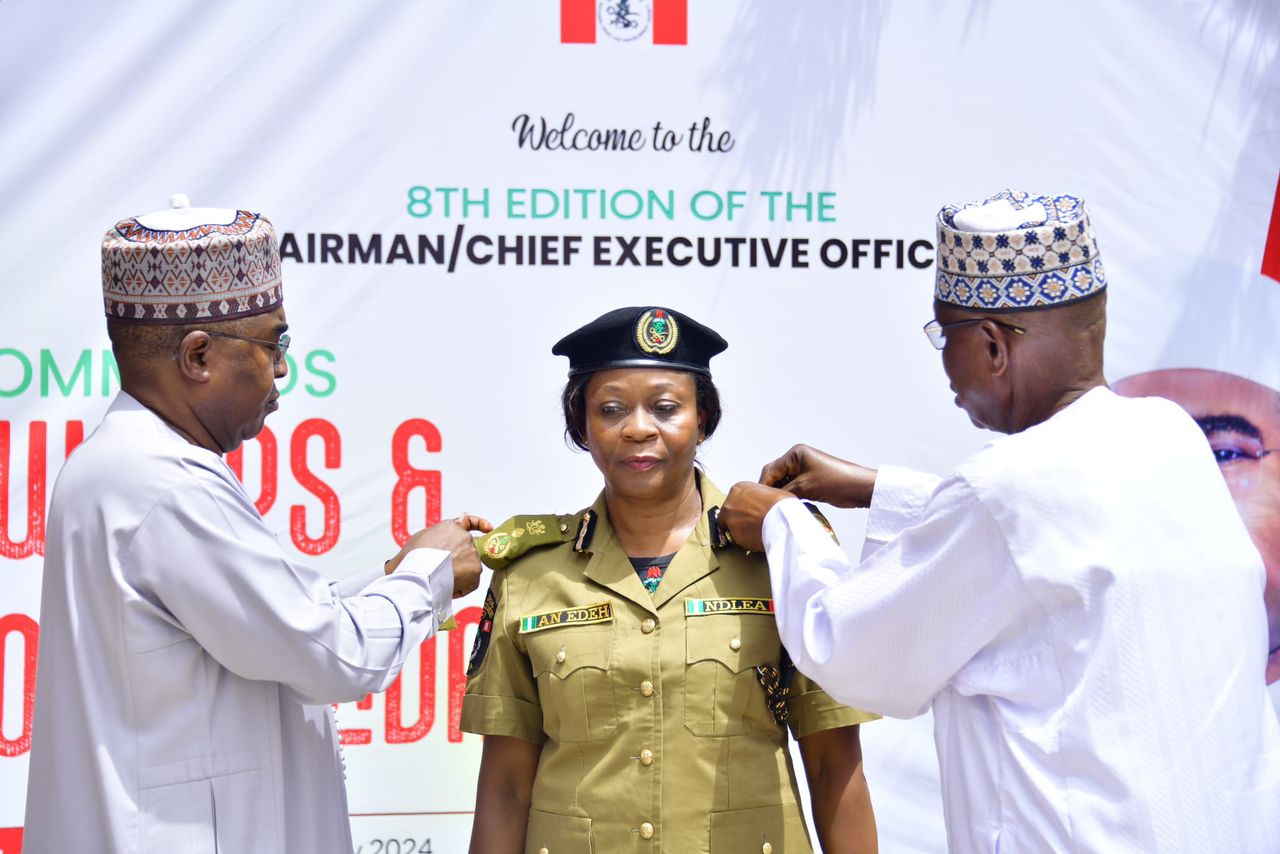
    Chairman/Chief Executive Officer of the National Drug Law Enforcement Agency, NDLEA, Brig. Gen. Mohamed Buba Marwa (Rtd) has approved the promotion of a total of Five Thousand and Forty-Two (5,042) personnel in an exercise that saw two senior officers elevated to the rank of Deputy Commander General of Narcotics, DCGN; 22 as Assistant Commander General of Narcotics, ACGN and 66 as Commander of Narcotics, CN.
    The promotion, which followed weeks of examination and interviews conducted for qualified candidates, is part of an ongoing exercise to enhance human resource management, particularly on staff motivation and welfare, for efficiency and effectiveness in the achievement of organizational goals.
    Speaking in Abuja on Wednesday 10th July 2024 at an event to decorate some of the promoted officers with their new ranks and reward 15 commands and 70 personnel for outstanding performances in the first half of 2024, Chairman/Chief Executive Officer of NDLEA, Brig Gen Mohamed Buba Marwa (Rtd) said prompt and timely promotion of all deserving and qualified officers remains top on the agenda of his leadership.
    According to him, “I am pleased to say that we continue to wax stronger on this journey we embarked on three and a half years ago when we decided to turn around the fortunes of this agency, by improving our performance as a precursor to reversing the perilous drug use situation in our dear country, Nigeria.
    “On this occasion of the 8th edition of the commands’ awards and commendations ceremony, we have every reason to be thankful because our performance continuously justifies our conviction in Offensive Action, WADA and other reforms that we undertook. For our modest efforts, we have received plaudits at home and abroad. What that means is that we have to do more. The reward for work well done is more work, and in our case, we cannot rest on our oars until all the objectives of our mandate are fully achieved. May I remind us that the bottom-line is a drug-free Nigeria.
    “On our part as management, we are trying to keep the motivation going, by ensuring that we provide everything necessary to make this work safe, secure and conducive for everyone working in this Agency. Our new barracks in Adamawa, Abuja and Lagos are almost complete and will be commissioned soon. The recent promotion of 5, 053 officers speaks volumes about our dedication to prompt and timely promotion of officers. It is symbolic of our effort to break the jinx of stagnation, which was once an albatross for our personnel.
    “To further enhance the efficiency and effectiveness of our operations, we are creating five strategic commands in Lagos, FCT, MMIA, Apapa and Tincan. Also in this regard, we’ll be deploying body cameras for the use of our officers on strategic operations for the purpose of ensuring their safety and the integrity of such operations.”
    For the officers, men and women of the Agency, Marwa charged them to remain upright in the discharge of their duties. His words, “Let me also seize this occasion to pass some messages to the NDLEA personnel. We have come a long way. In three and a half years, we have taken down as many as 50 identifiable drug cartels, some of them important spokes in the wheel of cocaine, heroin and methamphetamine distribution in the country and the global trafficking network. We have seized a huge quantity of illicit drugs and we have convicted record numbers of drug offenders.
    “We have achieved many milestones without soiling our integrity and I expect us to continue on that course. Our core values of integrity, hardwork and transparency, among others, must be respected at all times. We need to continue to justify the trust reposed in us by society, and our government, as well as our international partners and governments supporting us across the globe. We have raised the standard and it must not be lowered at any cost or by any means.
    “That is to say, we will not take kindly to any news of infractions, indiscipline or corruption from the field or any command. The least we demand of any officer of this proud agency is to be upright and committed to our goals, while management continues to work on our welfare. The strides of the past three years have put behind us the tribulations of the previous 30 years. We owe the agency allegiance to maintain its integrity. We owe the public a duty to not betray the trust reposed in us. We owe our government, and our partners and stakeholders supporting us a duty to get the job done.
    “Therefore, we must not fail in giving the required sacrifice, patriotism, commitment, honesty, hard work, and all the virtues that go along with this important job and service to the nation and mankind. You have my assurances and those of the management of NDLEA that we shall not relent in the pursuit to create the best paradigm of work, welfare and reward for you.”
    At the end of the ceremony, the NDLEA boss proceeded to have a closed-door meeting with all commanders and directors where he outlined the tasks ahead for their implementation in their different areas of responsibility.

    Femi Babafemi
    Director, Media & Advocacy
    NDLEA Headquarters, Abuja
    Wednesday 10th July 2024


Hot daily news right into your inbox.

Headline

Never Miss A Story

Get our Weekly recap with the latest news, articles and resources.
Cookie policy
We use our own and third party cookies to allow us to understand how the site is used and to support our marketing campaigns.