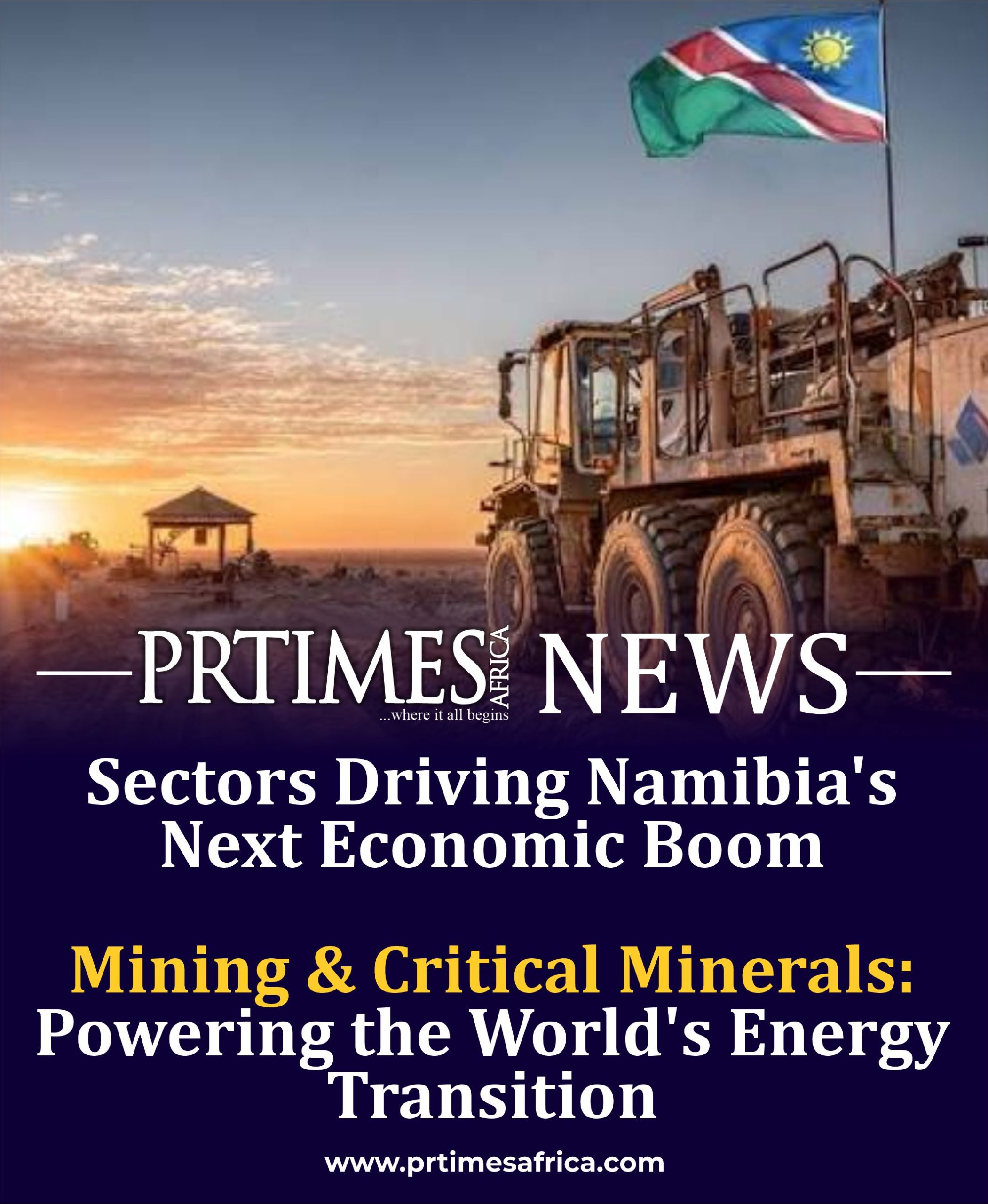

Namibia has long been recognised as one of the world’s leading producers of uranium and gem-quality diamonds. Today, the country’s mining sector is entering a new era, driven by global demand for critical minerals such as lithium, graphite, copper, zinc, manganese, cobalt, and rare earth elements essential components in electric vehicles, battery storage, renewable energy technologies, and advanced manufacturing.
With extensive unexplored mineral belts, transparent mining legislation, and strong investor protection, Namibia continues to attract some of the world’s largest mining companies. For investors seeking exposure to the global energy transition, Namibia offers one of Africa’s most promising mineral frontiers.
Oil & Gas: Africa’s New Energy Frontier
Few sectors have generated as much international attention as Namibia’s emerging oil and gas industry.
Recent offshore discoveries by global energy companies have positioned Namibia among the world’s most exciting new petroleum frontiers. Industry experts estimate that the country’s offshore basins could contain billions of barrels of recoverable oil, creating opportunities across exploration, drilling services, engineering, refining, logistics, marine support, and downstream petrochemicals.
As commercial production advances, Namibia is expected to become one of Africa’s fastest-growing energy markets, opening significant opportunities for investors across the energy value chain.
Green Hydrogen & Renewable Energy: Building the Energy Economy of Tomorrow
Namibia is rapidly becoming one of the world’s most promising destinations for green hydrogen production.
Blessed with abundant sunshine, favourable wind conditions, and vast tracts of available land, the country possesses some of the best renewable energy resources globally. Supported by government policy and international partnerships, Namibia is developing large-scale green hydrogen projects aimed at supplying future global demand for clean fuels.
Beyond hydrogen, investment opportunities exist in solar farms, wind energy, battery storage, power transmission, clean technology, and renewable infrastructure placing Namibia at the centre of Africa’s green industrial revolution.
Agriculture & Agro-processing: Unlocking Value Beyond the Farm
Agriculture remains a cornerstone of Namibia’s economy, offering significant opportunities in livestock, crop production, horticulture, organic farming, and value-added food processing.
Rather than exporting raw agricultural products, Namibia is increasingly encouraging investment in agro-processing industries that create jobs, improve food security, and expand export earnings.
From meat processing and dairy production to grain milling, fruit packaging, leather manufacturing, and food exports, the sector presents attractive opportunities for investors looking to serve both regional and international markets.
Logistics & Transport: Connecting Africa to Global Markets
Namibia’s strategic location gives it a natural advantage as one of Southern Africa’s leading logistics hubs.
The Port of Walvis Bay, supported by modern transport corridors and expanding road and rail infrastructure, provides efficient access to landlocked economies including Botswana, Zambia, Zimbabwe, Angola, and the Democratic Republic of Congo.
As intra-African trade expands under the African Continental Free Trade Area (AfCFTA), demand for logistics services, warehousing, freight forwarding, cold-chain facilities, aviation, and transport infrastructure is expected to increase significantly.
Fisheries & the Blue Economy: Sustainable Wealth from the Atlantic
Namibia possesses one of the world’s richest fishing grounds, thanks to the nutrient-rich Benguela Current.
Its fishing industry is internationally recognised for sustainable resource management and produces high-quality seafood exported to markets across Europe, Asia, and Africa.
Investment opportunities extend beyond fishing into seafood processing, cold storage facilities, marine biotechnology, aquaculture, seafood exports, and maritime services making the blue economy an increasingly attractive sector for international investors.
Tourism & Hospitality: Africa’s Untapped Luxury Destination
Namibia is one of Africa’s most spectacular tourism destinations, renowned for its dramatic desert landscapes, exceptional wildlife, luxury safari experiences, and adventure tourism.
Home to the iconic Namib Desert, Etosha National Park, Skeleton Coast, and some of the continent’s most breathtaking conservation areas, Namibia attracts high-value international visitors seeking authentic African experiences.
Growing demand for eco-tourism, luxury lodges, wellness retreats, conference facilities, and cultural tourism creates substantial opportunities for investment in hospitality infrastructure and tourism services.
Manufacturing & Industrial Development: Adding Value at Home
As Namibia diversifies its economy, manufacturing is becoming increasingly important to national industrialisation.
The government is encouraging investments that add value to locally produced minerals, agricultural products, fisheries, and other natural resources before export.
Opportunities exist in mineral processing, food manufacturing, pharmaceuticals, construction materials, chemicals, packaging, textiles, and industrial assembly, supported by access to regional markets through the Southern African Development Community (SADC) and the AfCFTA.
Digital Innovation & Technology: Building Africa’s Digital Future
Namibia is investing in digital transformation to improve public services, enhance business competitiveness, and foster innovation.
Growing internet connectivity, expanding digital infrastructure, fintech adoption, cybersecurity, artificial intelligence, e-commerce, digital financial services, and technology entrepreneurship are creating a vibrant ecosystem for investors and innovators.
As Africa’s digital economy accelerates, Namibia offers a stable platform for technology companies seeking to expand across Southern Africa.
Infrastructure & Smart Cities: Building Tomorrow’s Economy
Rapid economic growth requires modern infrastructure, and Namibia continues to invest heavily in transport networks, housing, industrial parks, renewable energy infrastructure, water security, telecommunications, healthcare facilities, and smart urban development.
The government actively welcomes private sector participation through public-private partnerships (PPPs), creating opportunities for global infrastructure developers, engineering firms, financiers, and institutional investors.
Infrastructure investment is expected to play a central role in Namibia’s long-term vision of becoming one of Africa’s most competitive and sustainable economies.
A Nation Positioned for the Future
Each of these sectors reflects Namibia’s broader economic strategy: to move beyond resource extraction toward innovation, value addition, industrialisation, sustainability, and regional integration. For global investors seeking stable returns in high-growth industries, Namibia offers a rare combination of political certainty, strategic location, abundant resources, and forward-looking policies.
At PR Times Africa, we believe Namibia is not merely an emerging investment destination it is one of Africa’s most compelling economic success stories in the making.