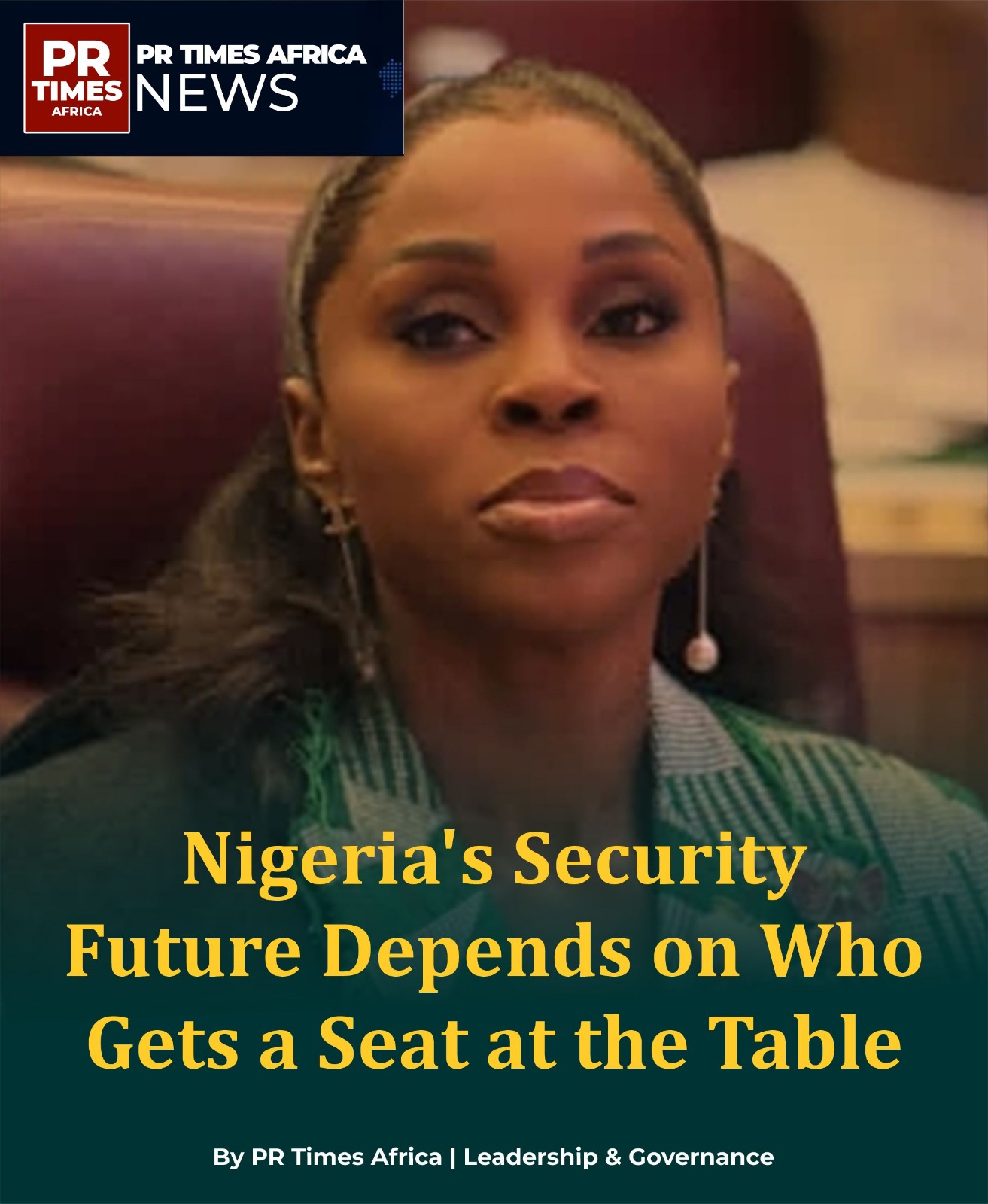

At the Inclusion and National Security Summit in Abuja, policymakers, security leaders and development advocates made the case that women’s participation in governance and peacebuilding is not simply an inclusion agendabut a strategic imperative for national security.
By PR Times Africa
ABUJA, Nigeria.
Nigeria’s increasingly complex security challenges cannot be solved by military strength alone. That was the defining message at the 2026 Inclusion and National Security Summit in Abuja, where policymakers, security leaders, development experts and advocates converged around a growing consensus: inclusive governance is becoming a critical pillar of national security.
Held under the theme, “Advancing Women’s Leadership for Inclusive Governance and Security,” the summit, organised by the iTeach Africa Initiative and the Empower Her for Governance Initiative, explored the intersection of leadership, inclusion, peacebuilding and security at a pivotal moment for Africa’s most populous nation.
Against the backdrop of terrorism, kidnapping, banditry, communal violence and organised crime, speakers argued that Nigeria must broaden its understanding of security beyond conventional military responses.
The proposition emerging from Abuja was clear: sustainable peace is difficult to build when significant sections of society remain underrepresented in the institutions and decisions that shape their future.
From Inclusion to National Security Strategy
Host of the summit, EbimobiereElezieanya, said women’s participation must move beyond symbolic representation towards meaningful involvement in decision-making, particularly in governance, peacebuilding and national development.
Central to the conversation was the implementation of United Nations Security Council Resolution 1325, which recognises the critical role of women in conflict prevention, peacebuilding and security decision-making.
For many participants, however, the debate extended beyond representation.
Dr. OtiveIgbuzor described inclusive governance as both a democratic necessity and a national security strategy, arguing that Nigeria cannot confront insecurity solely through military action.
While security operations may address immediate threats, he argued, lasting stability also requires tackling the underlying forces that fuel conflictincluding poverty, inequality, exclusion and institutional weakness.
That distinction shaped much of the summit’s conversation: security is not only about defending borders or confronting armed groups. It is also about building societies in which citizens have opportunity, justice and a genuine sense of belonging.
The Economics of Belonging
Former Chairman of the Presidential Amnesty Programme, Chief NdutimiAlaibe, reinforced that argument, linking sustainable security to economic opportunity and social inclusion.
His call for greater political and economic participation by women—including improved access to capital, procurement opportunities and leadership positions within security institutions—brought another dimension to the conversation: economic exclusion can become a national security concern when large segments of society remain disconnected from opportunity.
The summit also examined the structural barriers that continue to limit women’s advancement.
Representing the Head of the Civil Service of the Federation, Mrs. Nkiruka Jones-Nebo, a Permanent Secretary, stressed the importance of dismantling institutional obstacles and creating stronger pathways for mentoring, leadership development and career advancement.
The message was unmistakable: expanding women’s leadership requires more than policy commitments. It demands institutions willing to rethink how opportunity, influence and leadership are accessed.
Redefining National Security
The summit also challenged traditional definitions of national security.
The Minister of Defence, General Christopher Musa (rtd.), represented by his Special Adviser on Gender, Col. Nneka Adinweruka, argued that security must extend beyond military operations.
The modern security landscape, participants heard, encompasses communities, public institutions, economic resilience, digital spaces and the safety of homes and families.
That broader understanding places greater emphasis on prevention, early-warning systems and deeper collaboration between security institutions and the communities they are designed to protect.
For Nigeria, where many security challenges have deep social, economic and local dimensions, a shift from a predominantly reactive model towards more community-centred approaches could become increasingly important.
Building a New Leadership Pipeline
One of the summit’s key outcomes was the unveiling of the Empower Her for Governance Fellowship, an initiative designed to strengthen women’s leadership capacity and expand their participation in governance.
The fellowship represents an effort to move the conversation beyond advocacy and towards leadership development—building a stronger pipeline of women equipped to participate in public institutions, policymaking and decision-making at every level.
The Bigger Picture
The Abuja summit came at a time when Nigeria is confronting fundamental questions about the future of its security architecture and governance model.
Its central argument was not that women’s inclusion is simply a matter of fairness—although it remains one. The more consequential argument was that inclusion itself is a strategic national asset.
Countries facing increasingly complex security challenges need broader perspectives, stronger community engagement and institutions that reflect the diversity of the populations they serve.
For Nigeria, that could mean rethinking who participates in shaping policy, resolving conflict and defining national priorities.
The conversation in Abuja delivered a powerful reminder: the future of national security may depend not only on the strength of Nigeria’s institutions, but on who those institutions empower to lead.
PR TIMES AFRICA
Reporting Africa. Shaping Perspectives.