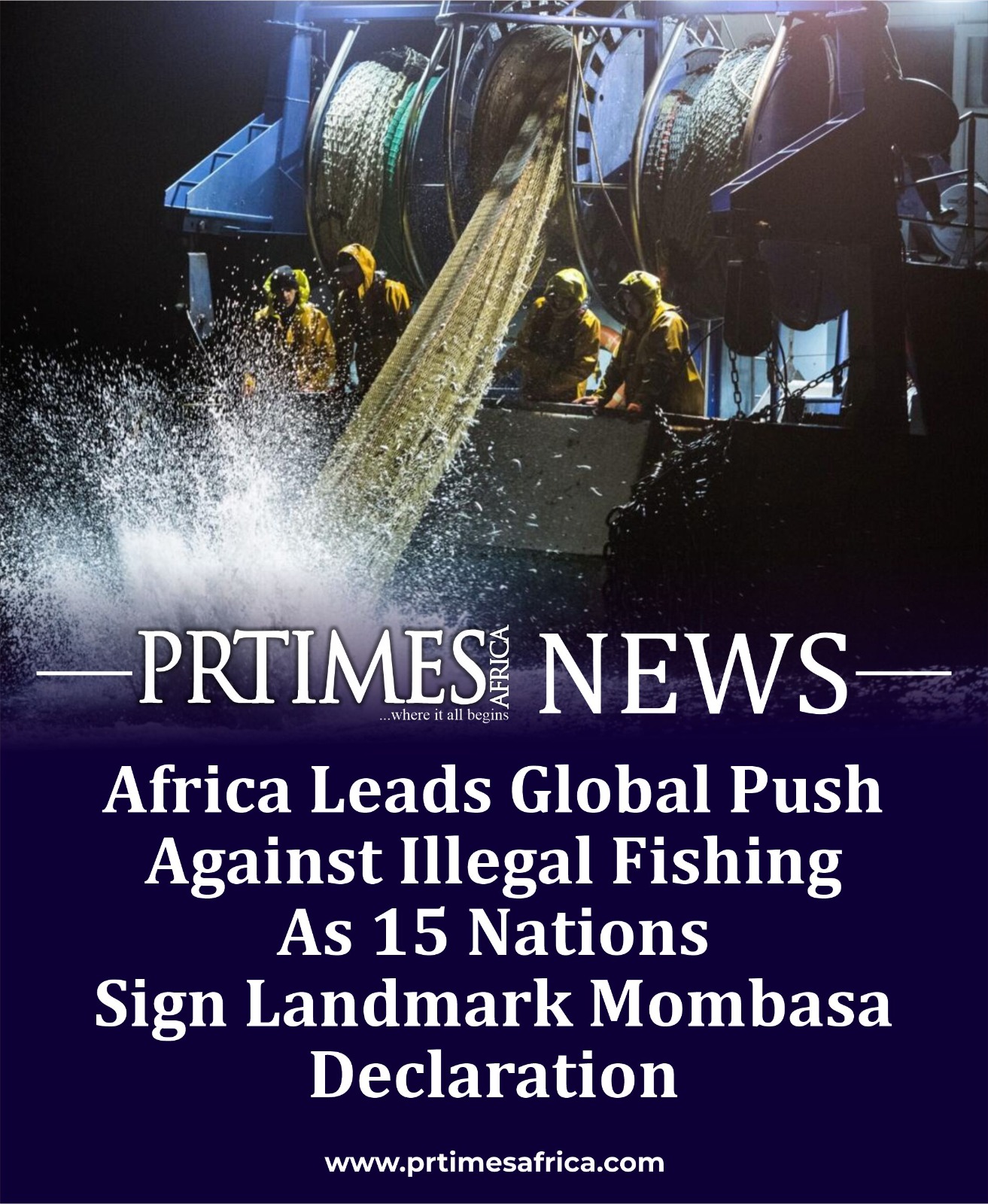
Africa Leads Global Push Against Illegal Fishing As 15 Nations Sign Landmark Mombasa Declaration
MOMBASA, Kenya — In a significant step toward protecting marine resources and strengthening the blue economy, fifteen countries from Africa, Europe, Asia, the Caribbean, and the Pacific have adopted the Mombasa Declaration, a landmark agreement designed to combat Illegal, Unreported, and Unregulated (IUU) fishing.
The declaration was endorsed during the 11th edition of the Our Ocean Conference in Mombasa, Kenya, marking the first time the global gathering has been hosted on African soil. The agreement is being hailed as a major victory for international cooperation in the fight against a practice that continues to undermine food security, economic growth, and environmental sustainability across the world’s oceans.
Illegal fishing is estimated to cost the global economy tens of billions of dollars annually, with African coastal nations among the hardest hit. The practice deprives governments of vital revenue, threatens fish stocks, weakens legitimate businesses, and places millions of livelihoods at risk, particularly in communities where fishing remains a primary source of income.
Under the Mombasa Declaration, participating countries have committed to improving transparency in fishing operations through enhanced vessel monitoring, greater disclosure of vessel ownership information, stronger licensing systems, and increased cooperation in sharing intelligence and enforcement data across borders.
The signatories include several African nations alongside international partners, reflecting a growing consensus that combating illegal fishing requires coordinated action that extends beyond national jurisdictions.
For Africa, the agreement carries particular significance. The continent possesses some of the world’s richest marine ecosystems and fisheries resources, yet many countries continue to lose substantial economic value due to weak enforcement capabilities and transnational fishing activities that operate outside legal frameworks.
Experts argue that strengthening ocean governance is essential not only for environmental conservation but also for unlocking the full potential of Africa’s blue economy. Sectors such as fisheries, maritime transport, coastal tourism, and marine renewable energy are increasingly viewed as strategic drivers of future economic growth.
The declaration also aligns with broader continental efforts to promote sustainable development, food security, and climate resilience. As populations continue to grow and demand for marine resources increases, effective management of ocean assets is becoming an increasingly important policy priority.
PR Times Africa Analysis
The Mombasa Declaration signals Africa’s emergence as a leading voice in global ocean governance. While illegal fishing has long been treated as an environmental challenge, policymakers are increasingly recognizing it as an economic and security issue with far-reaching to consequences.
For investors, governments, and development institutions, the success of the declaration will ultimately be measured by implementation. Enhanced transparency, stronger enforcement mechanisms, and cross-border cooperation could significantly reduce revenue losses while helping to create a more sustainable and profitable fisheries sector.
As Africa seeks to diversify its economies and expand opportunities within the blue economy, the protection of marine resources is no longer merely an environmental objective—it is a strategic economic imperative.
By PR Times Africa International Desk
You Might Be Interested In
- AFRICA’S STORY SHOULD NOT NEED CNN’S PERMISSION TO BE GLOBAL
- Az élő kereskedő játékok jövője a kaszinókban
- Why One Size Doesn’t Fit All in Public Relations
- Fifteen Voices, One Legacy: How Lagos Fashion Week Shaped Africa’s Creative Vanguard
- Ugandan Troops and Somali National Army Recapture Strategic Villages from Al-Shabaab.