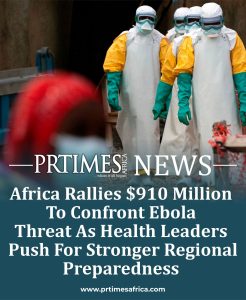
Africa Mobilizes $910 Million To Strengthen Ebola Defenses As Regional Health Security Takes Center Stage
LAGOS, Nigeria — Africa has secured a major boost in its fight against Ebola after governments, development partners, and global health institutions pledged approximately $910 million to support containment and response efforts in the Democratic Republic of the Congo and Uganda. The commitment marks one of the continent’s most significant coordinated public health financing initiatives in recent years and underscores the growing recognition that health security is fundamental to economic resilience and sustainable development.
The funding comes as health authorities intensify efforts to contain outbreaks linked to the Bundibugyo strain of the Ebola virus, a variant that presents unique challenges due to the limited availability of approved vaccines and treatments specifically designed for the strain. The resources are expected to strengthen disease surveillance, emergency response systems, laboratory capacity, healthcare infrastructure, border screening operations, and community engagement programs across affected regions.
Public health experts say the latest commitment reflects lessons learned from previous Ebola outbreaks and the COVID-19 pandemic, both of which exposed vulnerabilities in healthcare systems while demonstrating the importance of rapid intervention and regional cooperation.
The response is being coordinated by the Africa Centres for Disease Control and Prevention in partnership with the World Health Organization and national governments. Officials say the funding will support both immediate containment measures and long-term investments aimed at strengthening Africa’s capacity to detect and respond to future health emergencies.
Beyond the public health dimension, the outbreak carries significant economic implications. Infectious disease outbreaks can disrupt trade, tourism, agriculture, supply chains, and cross-border commerce, particularly in regions where economic activity depends heavily on the movement of people and goods. For investors and policymakers, effective outbreak management is increasingly viewed as a critical component of economic stability.
The funding pledge also highlights Africa’s growing determination to lead its own health security agenda. Rather than relying solely on external interventions, African institutions are playing a more prominent role in coordinating responses, mobilizing resources, and building resilient healthcare systems capable of addressing emerging threats.
As implementation begins, attention will focus on how quickly resources are deployed, the effectiveness of response strategies, and the ability of governments to maintain public confidence through transparent communication and community engagement.
PR Times Africa Analysis
The Ebola response represents more than a health intervention ,it is a strategic investment in Africa’s future. In an increasingly interconnected world, disease outbreaks can rapidly evolve into economic crises. By prioritizing preparedness, surveillance, and regional cooperation, African leaders are signaling that health security is no longer a peripheral concern but a core pillar of economic growth, investment confidence, and national development.
The success of this initiative could become a defining example of how Africa addresses complex cross-border challenges through collective leadership, institutional coordination, and long-term strategic planning.
By PR Times Africa International Desk