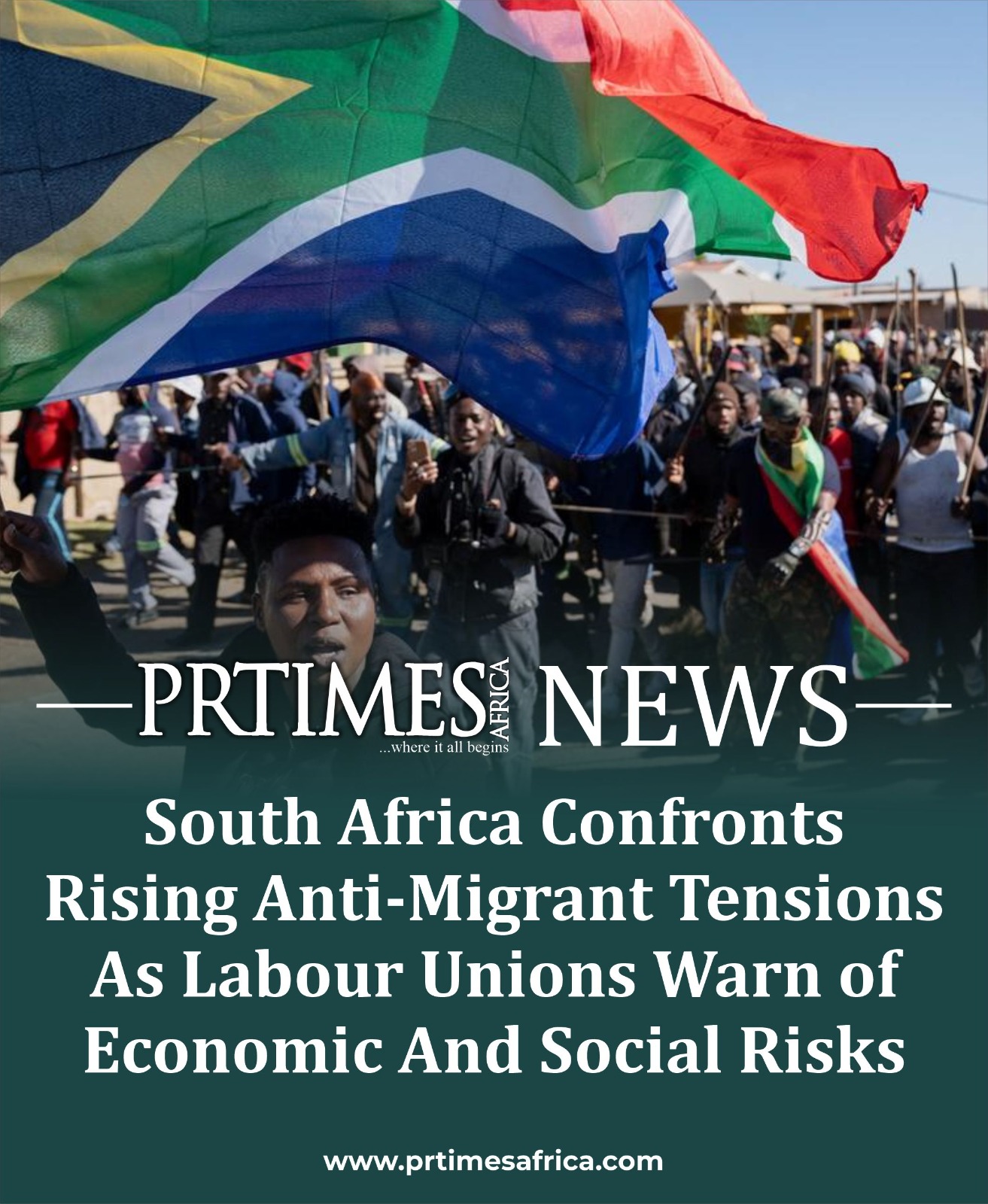
South Africa Confronts Rising Anti-Migrant Tensions As Labor Unions Warn Of Economic And Social Risks
JOHANNESBURG, South Africa — South Africa is facing renewed scrutiny over immigration and social cohesion as labor unions, civil society groups, and political leaders caution against a wave of planned anti-migrant protests that threaten to deepen divisions in Africa’s most industrialized economy.
The growing tensions come amid persistent economic challenges, including high unemployment, rising living costs, and mounting pressure on public services. While some activist groups have blamed undocumented migration for worsening socio-economic conditions, labour organizations argue that targeting migrants risks distracting attention from deeper structural issues affecting the country’s economy.
South African labour unions have publicly urged workers to distance themselves from demonstrations perceived as anti-foreigner campaigns, warning that such actions could fuel xenophobia, damage community relations, and undermine national stability. The call reflects increasing concerns over the potential for violence and social unrest in a country that has previously witnessed deadly outbreaks of xenophobic attacks.
President Cyril Ramaphosa has also condemned the scapegoating of migrants, emphasizing that criminality and economic hardship should not be attributed to entire communities based on nationality. Government officials have reiterated their commitment to enforcing immigration laws while promoting social harmony and respect for human rights.
The debate highlights a broader challenge confronting many nations across the continent and beyond: balancing border management, economic opportunity, and social integration in an era of increased migration. South Africa remains a major destination for migrants from neighboring countries, many of whom contribute significantly to sectors such as agriculture, mining, construction, retail, and informal trade.
Economic analysts note that migration often plays a complex role in national development. While concerns over employment competition persist, numerous studies have shown that migrant workers frequently fill critical labour gaps, support entrepreneurship, and contribute to economic activity. The challenge for policymakers lies in developing effective migration frameworks that protect citizens’ interests without encouraging discrimination or exclusion.
The developments are being closely monitored by regional leaders and international observers, particularly as the continent advances efforts toward greater economic integration through initiatives such as the African Continental Free Trade Area. Sustained social stability is widely regarded as essential to unlocking the full benefits of regional trade and investment.
PR Times Africa Analysis
South Africa’s immigration debate extends beyond national politics. It reflects a larger conversation taking place across Africa about economic inclusion, job creation, urbanization, and the movement of people within an increasingly interconnected continent. How South Africa navigates these tensions may offer important lessons for other African nations grappling with similar challenges.
As policymakers seek solutions, experts argue that sustainable economic growth, skills development, and effective governance—not social division—will ultimately determine the continent’s ability to create prosperity for its growing population.
By PR Times Africa International Desk
You Might Be Interested In
- Brics to more than double with admission of six new countries
- Conference of Parties (COP28): Global and African partners pledge $175m to the Alliance for Green Infrastructure in Africa (AGIA).
- Caution, Not Celebration: Why Nigerians Should Rethink the Applause Over Kemi Badenoch’s Political Challenges
- Basketball Africa League and Hennessy to Host Second “BAL IN” Accra, Ghana ahead of 2025 Season Tipping off April 5
- Africa Leads Global Push Against Illegal Fishing As 15 Nations Sign Landmark Mombasa Declaration
- Uganda: EU Reinforces Support for Uganda’s Creative Sector Through Yo Voice Be Hard at Nyege Nyege Festival