Author: prtimesafrica

  • Building local value through skills development at the Learning and Knowledge Development Facility (LKDF) Forum 2025.

    Building local value through skills development at the Learning and Knowledge Development Facility (LKDF) Forum 2025.

    Building local value through skills development at the Learning and Knowledge Development Facility (LKDF) Forum 2025.

    LKDF Forum 2025: Boosting Local Skills for Sustainable Global Supply ChainsGOTHENBURG, Sweden, July 2, 2025 — The United Nations Industrial Development Organization (UNIDO), backed by the Swedish International Development Cooperation Agency (Sida), hosted the Learning and Knowledge Development Facility (LKDF) Forum 2025 at the World of Volvo in Gothenburg and online. Themed “Skills Development and Local Value Addition: Ensuring Sustainable Growth in Global Supply Chains,” the event emphasized the critical role of localized skills in sectors like manufacturing, energy, healthcare, and industrial processing for fostering resilient economies and enabling multinational corporations and developing nations to prosper.UNIDO’s Director General Gerd Müller opened the Forum, urging increased investment in skills to build competitive, resilient supply chains with greater local value, market access, and prosperity. Sida’s Maria Tegborg reinforced the importance of technical and vocational education (TVET) in closing skills gaps and enhancing economic outcomes responsibly.The Forum highlighted systemic workforce development, supported by strong policies and transparent supply chains, as vital for sustainable growth. Local priorities were a key focus, with Enabel’s Charlotte Vanstallen stressing that initiatives must align with community ambitions to ensure scalability and impact. Discussions also emphasized soft skills, sustainability literacy, ESG compliance, and professionalizing the informal economy through social procurement to promote fair wages and ethical sourcing.Cross-sectoral partnerships, such as UNIDO’s Public-Private Development Partnerships (PPDP), were showcased as effective models for aligning vocational training with industry needs, integrating technical and sustainability skills. The event drew 37 in-person and 231 online participants from diverse sectors, including Sida, the European Commission, the African Union, Volvo Group, Siemens Healthineers, and others.Day one concluded with a call to align industrial policies with education reforms, strengthen global cooperation, and prioritize local communities. On day two, a co-creation workshop with UNIDO and Volvo Group sparked 13 new PPDP project ideas, followed by a visit to the Volvo Trucks Experience Facility, where participants explored innovations and tested vehicles.The Forum underscored that sustainable industrialization hinges on inclusive, partnership-driven approaches to skills development and local value creation.

  • PR TIMES AFRICA SPOTLIGHT: Meet Winnifred Kyei Selby

    PR TIMES AFRICA SPOTLIGHT: Meet Winnifred Kyei Selby

    PR TIMES AFRICA SPOTLIGHT: Meet Winnifred Kyei Selby
    Young Ghanaian social entrepreneur Winnifred Kyei Selby is making waves with her innovative ventures. Highlights include:
    – Co-founding Ghana Bamboo Bike Initiative at 15
    – Launching Afrocentric Bamboo Initiative at 17
    – First Ghanaian inducted into the Royal Institute of Singapore in 2018
    She leads the EPF Educational Empowerment Initiative, promoting education in Ghana.
  • United Nations High Commissioner for Refugees (UNHCR) applauds Mali’s adoption of landmark law to protect stateless people.

    United Nations High Commissioner for Refugees (UNHCR) applauds Mali’s adoption of landmark law to protect stateless people.

    United Nations High Commissioner for Refugees (UNHCR) applauds Mali’s adoption of landmark law to protect stateless people.

    The law builds on Mali’s accession to the 1954 and 1961 Statelessness Conventions in 2016

    GENEVA, Switzerland, June 30, 2025UNHCR, the UN Refugee Agency, welcomes the recent adoption of Mali’s groundbreaking legislation to protect the rights of stateless people and resolve their plight.

    The law builds on Mali’s accession to the 1954 and 1961 Statelessness Conventions in 2016. Comprising 28 articles, it provides a definition of a stateless person, outlines their rights and duties, and provides long-term solutions. It applies to stateless migrants and those born in Mali, guaranteeing rights to health care, education, employment, housing and justice on an equal basis with Malians. The law also protects stateless people from penalties for not having legal documents, prohibits their expulsion (with certain exceptions), and offers a path to Malian nationality or having Malian nationality confirmed.

    In Mali, a considerable number of undocumented residents, individuals belonging to nomadic groups, long-term refugees and those in remote border villages are at risk of statelessness or are of undetermined nationality. These communities often struggle to access civil registration and prove their nationality. Since 2017, supported by UNHCR, Mali has taken action to address these issues. Nearly 2,400 individuals at risk of statelessness have been naturalized, and over 30,000 have received birth certificates and other civil documents. Awareness campaigns and partnerships have also helped improve understanding and access to legal identity, even in hard-to-reach areas.

    “The adoption of this law is a major step forward in the protection of human rights in Mali and a clear demonstration of the Government’s commitment to end statelessness. It is a beacon of hope for thousands of vulnerable individuals,” said Georges Patrick Menze, acting UNHCR Representative in Mali. “We are proud of our partnership with the Government of Mali and will continue supporting its efforts to ensure that everyone has the right to a nationality”.

    UNHCR remains committed to actively supporting the Government with the effective implementation of the new law and sustaining progress in addressing statelessness, and emphasizes the importance of continued support from international partners and donors.

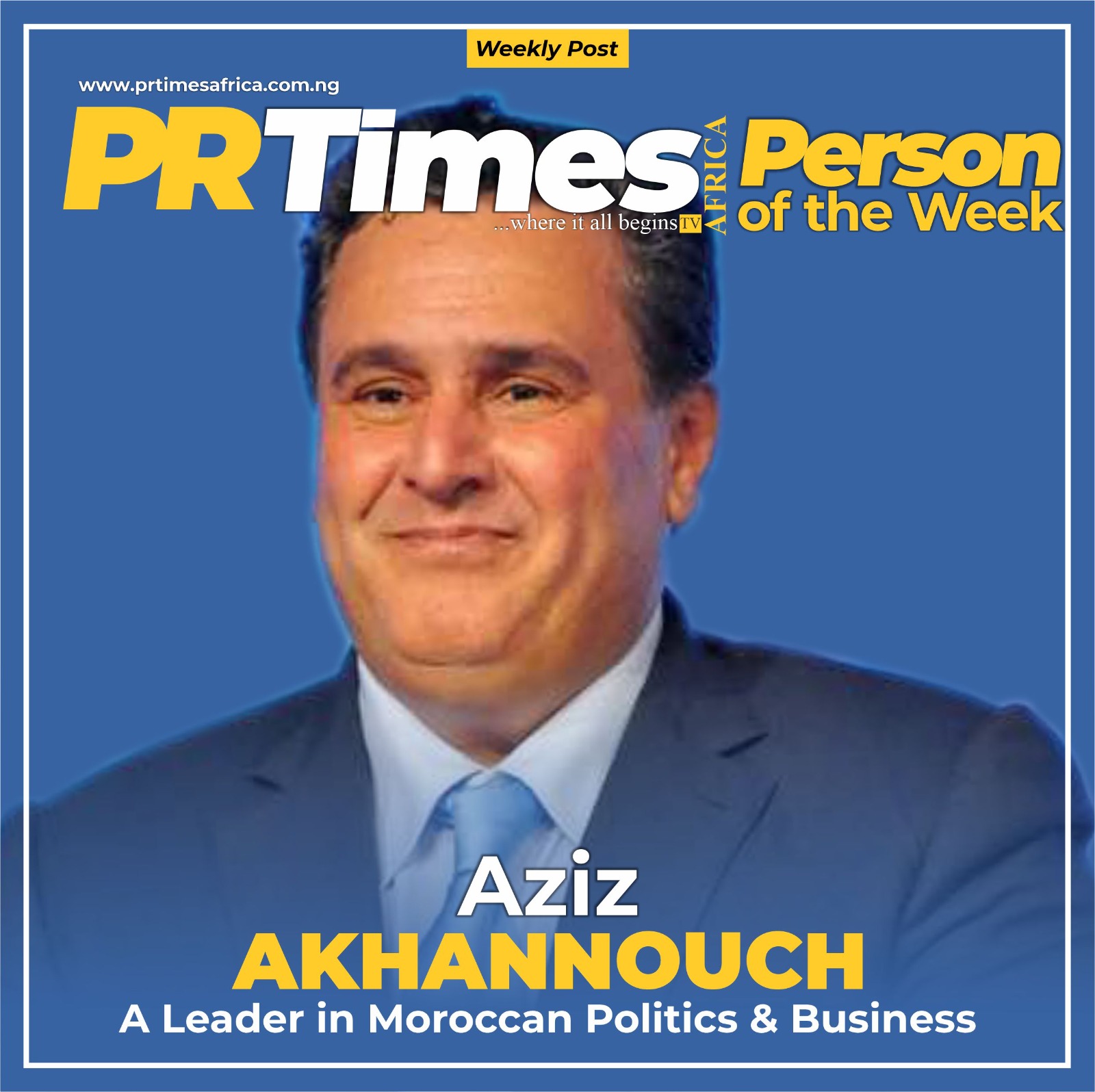
  • Pr Times Africa person of the week. Aziz Akhannouch: A Leader in Moroccan Politics and Business:

    Pr Times Africa person of the week. Aziz Akhannouch: A Leader in Moroccan Politics and Business:

    Aziz Akhannouch is a prominent figure in Moroccan politics and business. As the 17th Prime Minister of Morocco, he has been instrumental in shaping the country’s policies and direction since October 2021. Here are some key aspects of his background and career:
    Early Life and Education:
    Born on August 16, 1961, Akhannouch is a Berber, an indigenous ethnic group in Morocco. He comes from a wealthy family and has a strong educational background, which has served him well in his business and political pursuits.
    Business Career:
    Akhannouch is the CEO of Akwa Group, a leading energy and chemicals conglomerate in Morocco. Under his leadership, the company has expanded its operations and strengthened its position in the market. Akhannouch’s business acumen and strategic vision have contributed significantly to the company’s success.
    Political Career:
    Akhannouch’s political career began to take shape in the 2000s. He served as Minister of Agriculture from 2007 to 2021, playing a crucial role in shaping Morocco’s agricultural policies and promoting the sector’s growth. His experience in government and his understanding of the complexities of Moroccan politics have prepared him well for his current role as Prime Minister.
    Prime Minister of Morocco:
    As Prime Minister, Akhannouch has been working to address various challenges facing Morocco, including economic development, social welfare, and regional stability. He has been focused on implementing policies that promote economic growth, improve living standards, and enhance Morocco’s global competitiveness.
    Leadership Style:
    Akhannouch’s leadership style is characterized by his business background and his ability to bring a pragmatic approach to governance. He is known for his emphasis on efficiency, productivity, and results-driven policies.
    Overall, Aziz Akhannouch is a significant figure in Moroccan politics and business, with a proven track record of leadership and achievement. His experience and expertise have positioned him well to lead Morocco forward and address the country’s challenges
  • Economic Community of West African States (ECOWAS) Commission holds technical meeting for the establishment of economic and social council in west Africa.

    Economic Community of West African States (ECOWAS) Commission holds technical meeting for the establishment of economic and social council in west Africa.

    Economic Community of West African States (ECOWAS) Commission holds technical meeting for the establishment of economic and social council in west Africa

    The two-day meeting brings together officials from the relevant ECOWAS Departments, Directorates and Divisions, including consultants and partners

    The ECOWAS Commission, through the Department of Political Affairs, Peace and Security (PAPS), is holding a technical session to advance the course of the establishment of an Economic and Social Council of West Africa (ECOWAS-ECOSOC), beginning from the 26th of June 2025 in Niger state, Nigeria.


    The two-day meeting brings together officials from the relevant ECOWAS Departments, Directorates and Divisions, including consultants and partners charged with building on the earlier phases of consultations within the context of the wider efforts aimed at consolidating democracy, peace and security while strengthening political stability, security, participatory governance and citizen’s inclusion in the region.

    In his opening remarks, the ECOWAS Commission’s Commissioner for Political Affairs, Peace and Security Amb Abdel-Fatau Musah charged participants to be mindful of the goal of an ECOWAS-ECOSOC which is to constitute that bridge of a powerful voice to interface with decision makers and at the same time being a reverse influential organ of citizenry engagement.

    He noted that the idea of an ECOSOC for ECOWAS is to mutually reinforce everyone through an institutionalized people’s organ with a facilitating platform that is a voice of the regional community’s farmers, young people’s organizations, non-governmental organizations, women, youth and professional groups, etc.

    The Commissioner added that through ECOWAS-ECOSOC as an authentic voice of the people, “we are our own architects, the People’s social wellbeing in order to truly attain a people-centered development. The benefits will be for all as the proposed organ should be insulated from the control of national governments being an authentic voice of the people” He added.

    Following the welcome address by the Ag Head, Mediation and Coordination of Regional Political Affairs Mr. Constant Gnacadja, the facilitator and former Vice President of the ECOWAS Commission H.E Toga Gayewea McIntosh gave an overview of the previous consultative meetings.

    There were also goodwill messages from the representatives of ECOWAS Commission’s partners- the African Union, the United Nations Office for West Africa and the Sahel (UNOWAS) as well as the ECOWAS Community Court of Justice.

    At the meeting, participants will examine, among others, the justification of ECOSOC, membership and eligibility criteria, structure and sustainability.

    A firmly established ECOWAS-ECOSOC is seen as movement that can play a crucial role in identifying emerging social and economic trends and issues by strengthening the use of dialogue, advocacy, as well as policy recommendations in the resolution of common challenges of poverty, inequality, political instability, environmental difficulties and conflict.

    The technical meeting builds on the foundations laid by the earlier held Internal consultative Meeting of ECOWAS Staff, which took place on the 12th to 13th of December 2023 in Lagos, the regional consultative meeting of civil society organizations that happened on the 22nd and 23rd of February 2024 in Abuja and the experts’ group meeting which held on the 12th and 13th of June 2024, in Cotonou, Republic of Benin.

  • Cassava Technologies partners with the South African Artificial Intelligence Association to boost local access to Artificial Intelligence (AI) compute services

    Cassava Technologies partners with the South African Artificial Intelligence Association to boost local access to Artificial Intelligence (AI) compute services

    Cassava Technologies partners with the South African Artificial Intelligence Association to boost local access to Artificial Intelligence (AI) compute services
    Cassava Technologies partners with the South African Artificial Intelligence Association to boost local access to Artificial Intelligence (AI) compute services The two organizations will also collaborate on initiatives aimed at supporting the regional and broader African AI ecosystem JOHANNESBURG, South Africa, June 30, 2025, Cassava Technologies (https://www.CassavaTechnologies.com), a global technology leader of African heritage, is pleased to announce that it has signed a Memorandum of Understanding (MOU) with the South African AI Association (SAAIA), an industry body focused on growing responsible AI adoption, to deliver artificial intelligence (AI) solutions and GPU-as-a-Service (GPUaas) across the African continent. In terms of the agreement, SAAIA’s more than 3,000 AI practitioners, comprising entrepreneurs, researchers, and members of the wider business community in South Africa, will have access to Cassava’s data centre GPUs to develop and deploy local AI solutions and initiatives. The two organisations will also collaborate on initiatives aimed at supporting the regional and broader African AI ecosystem.Supporting local AI entrepreneurs is a key pillar of SAAIA, and access to GPU-as-a-Service is a key enabler to growing the emerging AI startup ecosystem “We are proud to partner with SAAIA to support the growth of Africa’s AI ecosystem. By extending our advanced AI infrastructure and capabilities to SAAIA’s growing community of AI professionals, we’re enabling greater access to the compute power required to build, test, and scale innovative local solutions. We believe this partnership will deliver meaningful value to both organisations and, more importantly, to the business and research communities driving AI development on the continent,” said Ziaad Suleman, CEO of Cassava Technologies South Africa and Botswana.As South Africa’s leading AI ecosystem builder, the South African Artificial Intelligence Association is focused on promoting the advancement of responsible AI in the country by uniting thousands of AI practitioners across the commercial, government, academic, startup, and NGO sectors. SAAIA also hosts the largest AI event in Africa, AI Expo Africa, and serves as a driving force behind trade and investment in the continent’s rapidly expanding smart technology segment.“SAAIA is pleased to be partnering with Cassava Technologies in strengthening AI in South Africa. Supporting local AI entrepreneurs is a key pillar of SAAIA, and access to GPU-as-a-Service is a key enabler to growing the emerging AI startup ecosystem,” said SAAIA Founder and Chairman, Dr Nick Bradshaw. Cassava’s collaboration with SAAIA reinforces its commitment to providing world-class digital solutions and advancing responsible AI adoption, innovation, and growth in Africa. It follows Cassava’s recent announcement of plans to build Africa’s first AI factory, providing local businesses, governments, and researchers with access to cutting-edge AI computing capacity. This aligns with Cassava’s vision of being the leading digital solutions provider in its chosen markets, empowering Africans to thrive in the digital economy.
  • CORRECTION: New Study Shows the Coca-Cola System has an Economic Impact of $10.4 Billion Across its Value Chain in Africa, Supporting More Than 1 Million Jobs

    CORRECTION: New Study Shows the Coca-Cola System has an Economic Impact of $10.4 Billion Across its Value Chain in Africa, Supporting More Than 1 Million Jobs

    CORRECTION: New Study Shows the Coca-Cola System has an Economic Impact of $10.4 Billion Across its Value Chain in Africa, Supporting More Than 1 Million Jobs

    CORRECTION: New Study Shows the Coca-Cola System has an Economic Impact of $10.4 Billion Across its Value Chain in Africa, Supporting More Than 1 Million Jobs The Coca-Cola system supported more than 1 million jobs across its value chain on the continent in sectors like retail, agriculture, manufacturing, transport and servicesJOHANNESBURG, South Africa, June 27, 2025 Across 54 African markets, The Coca-Cola Company and its authorized bottlers, collectively known as the Coca-Cola system, contributed $10.4 billion in economic activity across its value chain in 2024. The Coca-Cola system and its value chain supported more than 1 million jobs in retail, agriculture, manufacturing, transport and services in Africa. The Coca-Cola system purchased $4.3 billion from suppliers in Africa in 2024, representing 83% of the system’s total procurement on the continent. The Coca-Cola Company (www.Coca-ColaCompany.com) announced the results of a comprehensive, Africa-wide socio-economic impact study during the 2025 U.S.-Africa Business Summit in Luanda, Angola.The study shows that the Coca-Cola system, made up of The Coca-Cola Company and its authorized bottlers, working with a wide network of suppliers, manufacturers, service providers and customers, contributed $10.4 billion in value-added economic activity across its value chain in Africa in 2024.Our long-standing presence in Africa, working with locally owned bottlers and suppliers, allows us to drive more sustainable growth and contribute to the continent’s development The Coca-Cola system supported more than 1 million jobs across its value chain on the continent in sectors like retail, agriculture, manufacturing, transport and services. This included 36,800 direct Coca-Cola system jobs, plus 987,000 indirect jobs that are supported across the value chain, meaning the system collectively supported 27 additional jobs for every job it directly creates.The study, conducted by global consultancy Steward Redqueen, shows that the system invested $4.3 billion in the African economy in 2024 through the purchase of goods and services from local suppliers, representing 83% of its total procurement.“Our long-standing presence in Africa, working with locally owned bottlers and suppliers, allows us to drive more sustainable growth and contribute to the continent’s development,” said Luisa Ortega, president of the Africa operating unit of The Coca-Cola Company. “Our unique operating model allows us to make a lasting impact in local communities.”The company’s portfolio in Africa includes a wide range of brands in several beverage categories. Ingredients and packaging used by the Coca-Cola system in Africa are mostly locally sourced, supplied, produced, manufactured and distributed.“The Coca-Cola Company’s commitment to Africa remains steadfast,” Ortega said. “The Coca-Cola system has announced investments of nearly $1.2 billion on the continent over the next five years, and we are hopeful that stable and predictable policy environments will enable more investments in the months and years ahead. Additionally, the Coca-Cola system will invest nearly $25 million by 2030 to help address critical water-related challenges in local communities in 20 African markets.”This study highlights the Coca-Cola system’s role in Africa’s long-term growth and driving more sustainable development across the continent. The approach adopted by Steward Redqueen integrates client-provided operational data with trusted third-party economic sources and industry benchmarks. More than just measuring direct contributions, the analysis uncovers economic interlinkages, showing how the Coca-Cola system drives production, generates income, and supports employment across a spectrum of industries and geographies. Teodora Nenova Managing Partner at Steward Redqueen added: “Our impact assessment reveals the wide-reaching economic footprint of the Coca-Cola system across Africa. The findings highlight the scale of the Coca-Cola system’s local presence and its ongoing contribution to economic opportunity and livelihoods across the continent.
  • PR TIMES AFRICA MEDIA PERSONALITY OF THE WEEK: Sophie Mokoena: Shining a Light on African Stories:

    PR TIMES AFRICA MEDIA PERSONALITY OF THE WEEK: Sophie Mokoena: Shining a Light on African Stories:


    As the International News Editor for the South African Broadcasting Corporation (SABC), Sophie Mokoena has established herself as a leading voice in African journalism. With a career spanning over a decade, Mokoena has been instrumental in shaping the narrative on African affairs, bringing critical stories to the forefront, and providing insightful analysis on complex issues.
    A Passion for Storytelling:
    Mokoena’s dedication to journalism is evident in her work, which showcases her commitment to delivering accurate, timely, and in-depth coverage of African issues. Her leadership at SABC Africa has transformed the platform into a reliable and authoritative source on African affairs, earning the trust and respect of viewers across the continent.
    Key Highlights:
    Expertise in African Affairs: Mokoena’s expertise spans politics, social justice, and human rights, making her a go-to commentator on African issues.
    In-Depth Coverage: She has led coverage on critical stories, including the DRC-Rwanda peace agreement and human rights issues in Kenya.
    Leadership: Mokoena has nurtured a team of dedicated journalists who push the boundaries of excellence in reporting.
    Advocacy: Through her work, she advocates for good governance, respect for human rights, and accountability from leaders.
    A Voice for the Voiceless:
    Mokoena’s impact extends beyond her role as a journalist. She has become a voice for the voiceless, using her platform to amplify critical narratives and promote African stories. Her presence on Twitter, where she has over 276,000 followers, allows her to engage with a wider audience, share her insights, and spark meaningful conversations.
    Awards and Recognition:
    While specific awards and recognition are not publicly listed, Mokoena’s work has garnered significant respect within the journalistic community. A petition to encourage her to continue leading SABC Africa highlights her value to the network and its global audience.
    Conclusion:
    Sophie Mokoena’s dedication to African journalism and storytelling has made her a respected figure in the industry. As Pr Times Africa’s Media Personality of the Week, she serves as an inspiration to aspiring journalists and a testament to the power of quality journalism in shaping our understanding of the world.
  • Cameroon Red Cross Volunteers Stop Measles Outbreak in Its Tracks. 

    Cameroon Red Cross Volunteers Stop Measles Outbreak in Its Tracks. 

    Cameroon Red Cross Volunteers Stop Measles Outbreak in Its Tracks. 
    In the North region of Cameroon, a swift response by trained Cameroon Red Cross Society volunteers has successfully contained a measles outbreak. Thanks to their efforts, a mass vaccination campaign was launched, protecting children’s health in the long term.
    The Story of Djoubeda. 
    7-year-old Djoubeda from Mayo-Oulo village showed symptoms of measles, prompting local volunteer Ramatou to spring into action. Ramatou, trained through the Community Epidemic and Pandemic Preparedness Programme (CP3), recognized the symptoms and reported the case to authorities using a digital surveillance tool.
    Rapid Response
    Within three days, the measles case was confirmed, and local health authorities launched a mass vaccination campaign. Cameroon Red Cross volunteers supported the effort by sharing trusted health information and encouraging families to vaccinate their children.
    Success Story. 
    Thanks to the joint effort, nearly 500 children were vaccinated, and no further measles cases have been recorded since the outbreak. Dr. Laboulaye, Head of the Mayo-Oulo Health Centre, praised the Red Cross’s support, saying, “We could have recorded a lot of deaths… Thank you for your support, for all your disease prevention activities and help with the response.”
    Volunteer Ramatou’s Motivation.
    Ramatou’s motivation for volunteering is to save lives, ease pain, and prevent diseases from spreading. She says, “What pleases me is that people listen, volunteers work well, and the community values and appreciates our efforts.”
  • International Trade Centre Showcases Sustainable Coffee Development at World of Coffee Geneva 2025

    International Trade Centre Showcases Sustainable Coffee Development at World of Coffee Geneva 2025

    International Trade Centre Showcases Sustainable Coffee Development at World of Coffee Geneva 2025
    The International Trade Centre (ITC) is highlighting its expertise in sustainable coffee development at the World of Coffee Geneva 2025, Europe’s largest coffee trade show. ITC has been working closely with the International Coffee Organization and regional institutions to support coffee value chains and small and medium-sized enterprises (SMEs) in Latin America, Africa, and Asia.
    Key Highlights:
    – Sustainable coffee growth*: ITC supports building resilience, competitiveness, and sustainable value chains for SME development.
    – Value addition and technical capacity building: ITC invests in value addition, technical capacity building, regional trade, and youth and women-led entrepreneurship.
    – Partnerships and collaborations: ITC collaborates with coffee sector stakeholders from various countries, including the Democratic Republic of the Congo, Ethiopia, Ghana, and more.
    Quotes from Key Stakeholders:
    – ITC Executive Director Pamela Coke-Hamilton: “Coffee is more than a commodity – for the many small businesses we support, improving quality, processing at origin, and meeting sustainability requirements means they’re able to adapt to changes and compete at the global level.”
    – ICO Executive Director Vanusia Nogueira: “No one can tackle the coffee sector’s challenges alone. We need expertise, funding, capable people, and strong partnerships for collective action.”
    – Uganda’s Minister of State for Agriculture, Hon. Bwino Fred Kyakulaga: “Uganda reaffirms its commitment to transform its export trajectory through strategic value addition, with coffee being a primary driver.”
    Visit ITC at World of Coffee Booth 1359 to taste unique coffees, connect with producers, and learn about ITC’s sustainable coffee initiatives.

Hot daily news right into your inbox.

Headline

Never Miss A Story

Get our Weekly recap with the latest news, articles and resources.
Cookie policy
We use our own and third party cookies to allow us to understand how the site is used and to support our marketing campaigns.