PR TIMES AFRICA | INTERNATIONAL SPORTS
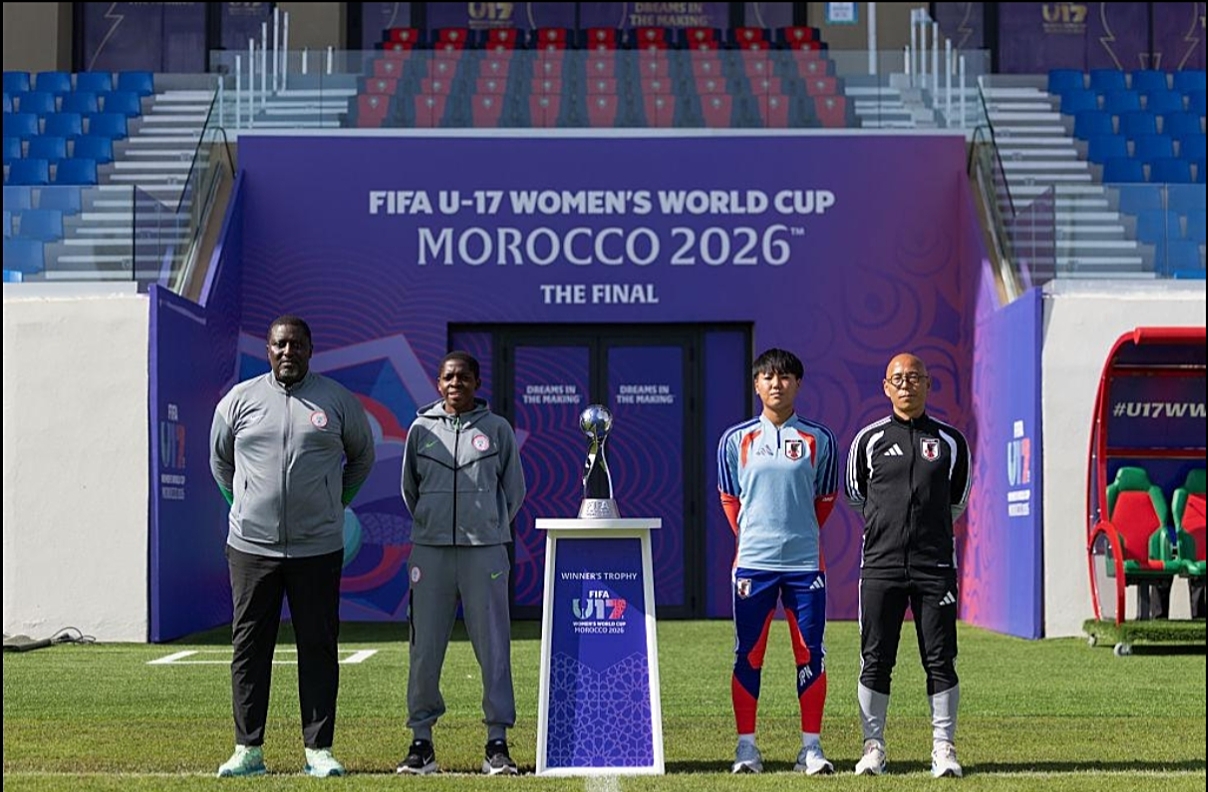
AFRICA HAS ARRIVED: NIGERIA’S FLAMINGOS MAKE HISTORY WITH U-17 WORLD CUP TRIUMPH
A historic victory over Japan signals a new chapter for African women’s football and reinforces the continent’s potential as a global sporting powerhouse.
In a moment that will be remembered in African sporting history, Nigeria’s U-17 women’s national team, the Flamingos, have conquered the world, defeating Japan 2–1 to win the 2026 FIFA U-17 Women’s World Cup in Morocco.
It is more than a football victory. It is a statement of possibility, ambition and the growing strength of African women in global sports.
Goals from Awawu Bashiru and Oluebube Umejiaku secured Nigeria’s historic victory, while Japan’s Fuki Ito scored a late consolation goal. Despite Japan’s attempts to recover, the Nigerian youngsters held their ground to secure a landmark championship.
With this triumph, Nigeria becomes the first African nation to win the FIFA U-17 Women’s World Cup, breaking new ground for the continent and establishing a historic milestone in women’s football.
MORE THAN A NIGERIAN VICTORY
For Africa, the significance of this achievement extends far beyond the celebrations in Nigeria.
For years, African football has produced exceptional talent, competitive national teams and internationally recognised players. Yet, translating that potential into global championship success, particularly in women’s football, has remained a major challenge.
The Flamingos have now demonstrated that African teams can compete with, challenge and defeat the world’s established football powers at the highest level.
Their achievement also gives Nigeria a unique place in football history as the first African country to win FIFA U-17 World Cup titles in both the men’s and women’s categories.
It is a powerful message about the depth of talent emerging from the continent.
A VICTORY THAT SHOULD CHANGE THE CONVERSATION ABOUT WOMEN’S SPORTS
One of the most important implications of this victory is its potential impact on the development of women’s sports across Africa.
For many young African girls, access to professional sporting opportunities remains limited by inadequate facilities, insufficient funding, cultural barriers and a lack of structured development programmes.
The Flamingos have provided something invaluable: visible proof that the pathway from grassroots football to becoming a world champion is achievable.
Their success should encourage governments, sports administrators, private investors and corporate organisations to take women’s football more seriously.
Talent alone cannot build a sustainable sporting industry. Investment, professional structures, quality coaching, competitive leagues and long-term development programmes are equally essential.
This is where Africa must build on the momentum.
THE BUSINESS OF AFRICAN SPORTS
Beyond the emotional significance, the championship presents an important commercial opportunity.
International sporting success attracts attention, creates visibility and opens doors for sponsorship, partnerships, broadcasting opportunities and sports-related investments.
Nigeria’s triumph offers brands and businesses an opportunity to associate with a new generation of African sporting excellence.
It also strengthens the argument for greater investment in women’s football, from youth academies and talent development to professional competitions and sports infrastructure.
African sports must move beyond celebrating victories to building sustainable industries around them.
The real opportunity is to ensure that the next generation of Flamingos has better facilities, stronger institutional support and more opportunities to build successful sporting careers.
THE CHALLENGE AFTER THE TROPHY
History has been made, but the bigger responsibility begins now.
Nigeria and the wider African sporting community must ensure that this achievement does not become another moment of celebration without lasting institutional impact.
The players deserve recognition, meaningful rewards, continued development and a clear pathway into senior international football.
The Nigeria Football Federation, African football authorities, governments and the private sector must recognise that investing in young female athletes is not simply a sporting responsibility; it is an investment in human capital, national identity and the future of the African sports economy.
AFRICA’S NEXT GENERATION HAS SPOKEN
The Flamingos have shown that global sporting success is not beyond African ambition.
Their journey, which began with an opening-match defeat to Poland, became a remarkable demonstration of resilience, determination and competitive character.
They recovered, defeated formidable opponents, overcame Brazil in the semi-finals and ultimately conquered Japan in the final.
That journey carries a message far greater than the trophy itself: setbacks do not define potential; the ability to rise, adapt and deliver does.
For Nigeria, this is a moment of national pride.
For African women, it is a moment of inspiration.
For the continent’s sporting industry, it is a call to invest, build and believe.
The Flamingos have brought the trophy home. Africa must now build the future around the victory.
PR TIMES AFRICA | Reporting on the people, institutions and achievements shaping Africa and the world.